

Last checked: August 2026 · Written by the player-led team at Badminton House
Quick answer
At the check date, Yonex USA publicly listed DUORA Z-STRIKE, BG80, Towel Grip, and POWER CUSHION - 65 Z4 (MENS) for Chou Tien Chen. Public listings do not give his tension, grip build-up, chosen weight or grip size, balance point, or current match-by-match setup.
Start with What the checked Yonex listing records
Use an athlete page as a dated public listing, not a personal setup sheet. Separate the named models from the tension, grip build-up, selected weight or grip variant, balance point, and match-by-match choices that the cited page does not publish.
- Write the exact publicly listed racket, string, grip, and shoe items in one column.
- Write unlisted setup details such as tension, grip build-up, chosen weight or grip size, and current match use in a second column.
- Keep a past listing’s date visible before treating it as a current tournament setup.
- Choose your own equipment from your needs and model information rather than copying an unknown athlete configuration.
Related reading: Carolina Marin Racket: Documented Yonex Gear Listings — for another dated athlete-listing example.
What the checked Yonex listing records
At the check date, Yonex USA listed DUORA Z-STRIKE, BG80, Towel Grip, and POWER CUSHION - 65 Z4 (MENS) in Chou Tien Chen’s athlete kit. Treat that as a dated public listing, not proof that every item is his current match setup. Yonex USA athlete listing

What a public listing cannot establish
The public athlete listings do not state string tension, grip build-up, chosen weight or grip size, balance point, or match-by-match use. Those omissions mean a reader cannot responsibly reconstruct an exact playing setup from the listings alone. Yonex USA athlete listing and Yonex Taiwan athlete profile
| Publicly listed | Not publicly established by the cited page |
|---|---|
| Named racket, string, grip, and shoe items | Tension, grip build-up, selected weight or grip size |
| The page’s published association at its check date | A current match-by-match configuration or personal balance point |

Use athlete references without copying unknown specifications
Yonex Taiwan identifies Chou Tien Chen as an athlete, while the public kit listings leave key setup details unstated. Use those references to distinguish documented categories from unknown specifications, and choose personal tension, grip, or weight through a separate fitting decision. Yonex USA athlete listing and Yonex Taiwan athlete profile

If an athlete reference prompts a purchase question, use the manufacturer’s current model information and an appropriate fitting or stringing conversation. The cited pages do not turn Chou Tien-chen’s public listing into a recommendation for another player.
Use this distinction on court
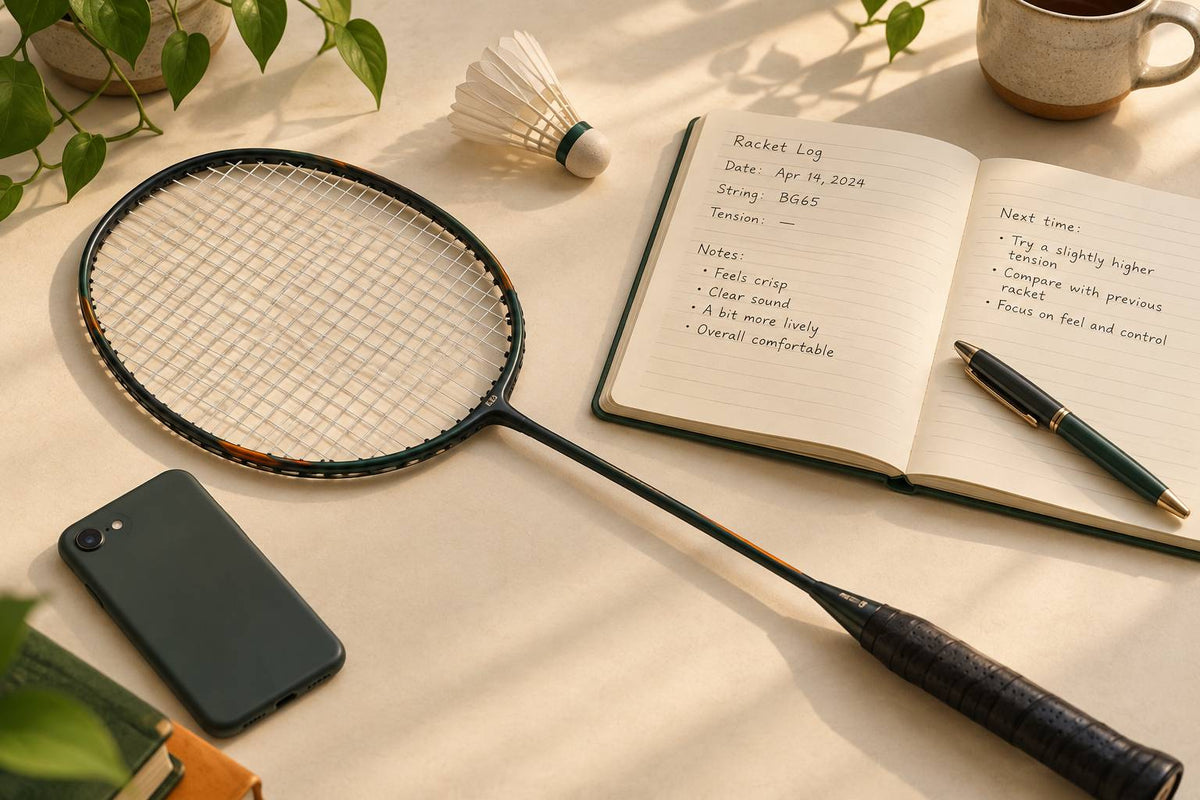
Record the publisher, check date and only the products the page names. Keep tension, selected weight or grip size, grip build-up, balance point and match use in an unknowns column unless an authoritative source publishes them. A later page change is a new record, not proof about an earlier match. Use a separate card for your own equipment needs.
Source-bound context
A photograph, retailer description or forum recollection does not fill a missing athlete specification; keep it unverified unless an appropriate source establishes it.
Questions the cited sources do not settle
- A claim that the listed kit is his current setup in every match.
- Exact tension, weight class, custom grip, or a recommendation to copy the setup.
What to do next
For an equipment decision, use the dated public listing only to identify documented product names, then compare current manufacturer information with your own fit, racket, string, and grip needs. The listing does not supply a professional configuration to copy.
Player-first advice for your next indoor session

Leave a comment
This site is protected by hCaptcha and the hCaptcha Privacy Policy and Terms of Service apply.