
Last updated: July 2026 · Written by the team at Badminton House
Quick Answer: How to Break In Badminton Shoes
Start indoors on carpet with short moving sessions, then increase court intensity only if your feet stay calm.
20–45 min
Best start: wear them at home, move around, and take them off before rubbing becomes a blister.
Add time
Increase wear by 20–30 minutes per session, alternating with a trusted pair so your skin can recover.
Stop
Numbness, tingling, sharp pain, or persistent redness means the fit is not breaking in safely.
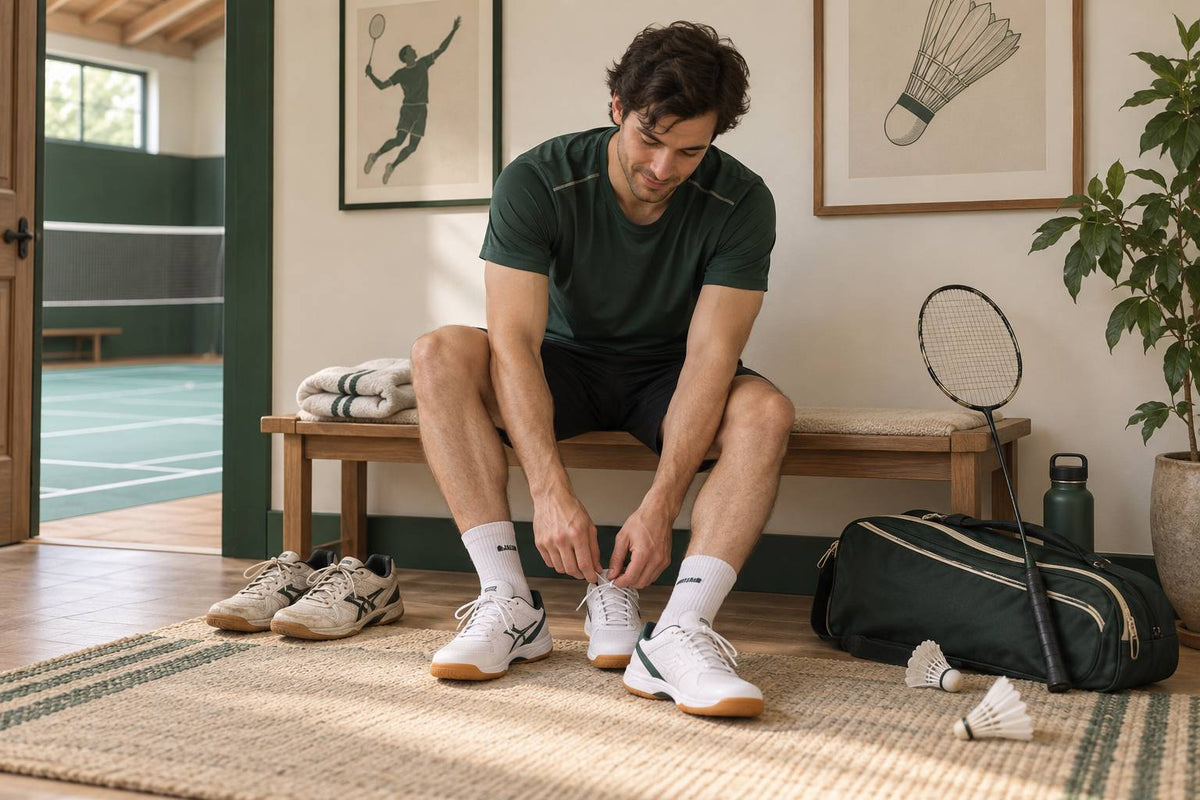
New badminton shoes can feel fine in the shop and turn nasty after the first real rally — heel rub, toe pressure, or a hot spot that shows up the moment you start lunging and recovering. The safest way to break them in is not a full match on day one. Start with short, low-intensity wear on clean indoor flooring or carpet, move around enough to feel where the shoe bends and rubs, then increase court time only if your feet feel normal afterward. Done well, break-in softens the shoe around your foot while protecting your skin before league night or tournament play.
Replacing a pair that is already worn out? Use this guide to break in the next pair properly, and check live availability in badminton footwear when it is time to change shoes.
In This Guide
What breaking in new badminton shoes actually does

Breaking in new badminton shoes is not about making a bad fit magically work. It is a gradual softening and adaptation period: the upper flexes a little more naturally, the heel collar settles, and the shoe starts to conform to the small differences in your foot shape. Even a correctly fitted shoe can feel stiff at first, especially before it has been exposed to badminton-specific movements like lunges, split steps, and side pushes.
The safest place to start is at home on a clean indoor surface, ideally carpet. That lets you feel early rubbing or pressure before court speed turns it into a blister. If the issue feels like true width, toe-box, arch, or heel-pain mismatch, do not try to force the shoe through break-in. Use fit guidance instead: see wide-foot badminton shoe advice or flat-feet and heel-pain shoe guidance.
How to break in badminton shoes: a safe ramp-up timeline

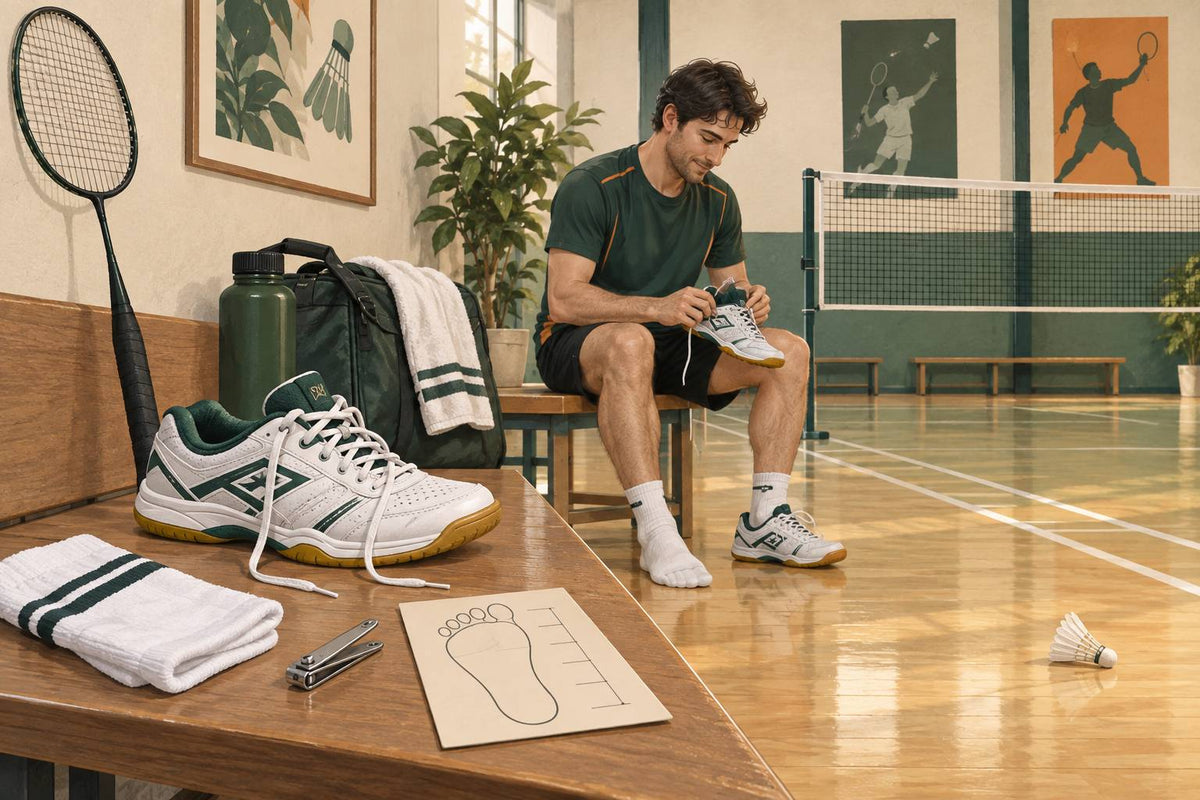
Start at home, indoors, on carpet. Wear the shoes for a short moving session: walk, pivot lightly, rise onto the balls of your feet, and do a few gentle side steps. Do not just sit in them, because badminton discomfort usually appears when the foot slides, flexes, and loads.
For day one, aim for roughly 20–45 minutes on carpet. If your feet feel normal afterward, add 20–30 minutes on later days. If a hotspot appears, stop for the day and let the skin settle before trying again.
Once home wear feels clean, move to a short, low-intensity court session: warm-up movement, controlled footwork, and easy rallies before full match, league, or tournament play. Alternate with a trusted pair so your skin can recover between sessions. Keep badminton outsoles off outdoor surfaces; they are indoor non-marking gum rubber, and outdoor abrasion reduces court grip.
Socks, heel-lock lacing, and hotspot protection during break-in


Use moisture-wicking merino wool or synthetic socks, not cotton. Cotton absorbs sweat and stays wet; moist skin has higher friction than dry skin, so it shears more easily inside the shoe. One study of 35 long-distance runners compared identical padded socks in 100% cotton versus 100% acrylic: the cotton group had twice as many blisters, and those blisters were three times the size. Double-layer socks can also help because the layers slide against each other instead of your skin; thicker socks add cushioning during early home sessions.
- Lace normally to the second-last eyelet.
- Thread each lace through the last eyelet on the same side to make two small loops.
- Cross the lace ends through the opposite loops, pull snug, then tie normally.
The tension should lock the heel without pressing into your ankle or restricting circulation. During carpet sessions, note rubbing at the heel, toes, or side of the foot; protect those spots with blister pads or a little petroleum jelly. Stop if sharp pain or blisters appear.
How upper materials change the break-in feel

The upper material changes how quickly a new badminton shoe starts to feel natural. Badminton uppers are commonly synthetic knit or mesh, synthetic leather, or synthetic polyurethane leather-style materials, sometimes with TPU or PVC details added for structure. Mesh and knit styles usually feel more flexible sooner because the upper gives a little more from the first wear. Synthetic leather, faux leather, and more structured uppers can start stiffer and may need more short indoor sessions before they stop pressing on small hotspots.
For canvas-like or synthetic shoes, wearing them indoors with thicker socks for short sessions can create a gentle stretch without forcing the shoe. Keep that stretch gradual: the goal is softening, not reshaping the shoe.
Skip heat tricks. Do not use hairdryers, hot water, or heat on synthetic, mesh, rubber, or glued shoe constructions. Heat can warp materials, damage mesh or rubber, and weaken glue.
Signs the shoe will not break in safely

Normal break-in can feel firm or slightly awkward. Stop treating it as break-in if the shoe creates nerve, skin, or pressure warning signs.
- Numbness, tingling, or a “pins and needles” feeling during a short wear test.
- Red marks that stay after a brief session, especially across the forefoot or heel collar.
- Open skin, bleeding, or a blister forming before you have even played hard.
- Blisters returning in the same location every time you wear the shoe.
- Toes feeling relieved the moment the shoe comes off, which often points to the wrong toe-box shape.
- Pain that persists after several wears instead of easing as the upper softens.
Socks, heel-lock lacing, and hotspot protection can reduce friction, but they cannot fully rescue a shoe that rubs badly or compresses your foot. Treat repeated, same-spot symptoms as a fit problem to solve before your next session, not something more break-in time will fix.
Which Break-In Path Should You Choose?
Use this check after your first few short indoor sessions: normal stiffness should improve, but pain, numbness, or repeated same-spot rubbing points to fit, not break-in.
| Choice | Choose this if... | Next move |
|---|---|---|
| Keep breaking in | The shoe feels snug, with only mild upper stiffness and no numbness. | Continue short, low-intensity indoor sessions and rotate with a comfortable pair. |
| Change setup | Your heel slides or your toes press forward, but the size and width otherwise feel right. | Try heel-lock lacing with moisture-wicking or double-layer socks. |
| Reassess shape | Your toes feel relieved after removing the shoes, or one hotspot keeps returning. | Read the wide-foot shoe guide or flat-feet and heel-pain guide. |
| Replace the pair | Pain persists after several wears, or you notice numbness, tingling, or persistent redness. | Stop forcing the break-in and plan a full fit reassessment before your next session. |
Get 10% off your first order
Join the Badminton House list and we’ll email you a 10% welcome code — plus training guides, technique advice, and badminton updates.
By subscribing, you agree to receive Badminton House emails and can unsubscribe anytime.
Breaking in badminton shoes is a small job that protects your feet for a lot of court time. We play badminton ourselves, so if a pair feels strange and you’re not sure whether it is normal stiffness or a fit problem, contact us and we’ll help you think it through. Bring details about where it rubs, your sock choice, and how many short sessions you have tried.
When your current pair is worn down, compare court shoes built for badminton movement.

Leave a comment
This site is protected by hCaptcha and the hCaptcha Privacy Policy and Terms of Service apply.