Last updated: July 2026 · Written by the team at Badminton House
Quick Answer: Badminton Black Toenail / Toe Injury
Repeated toe-to-shoe impact can bruise a nail, but unexplained discoloration needs assessment. Get medical help for severe or worsening pain, deformity, bleeding or a significant injury.
Fit
Best first fix: choose court shoes with thumb-width toe room, but secure the heel and midfoot so lunges do not drive your toes into the front.
Lacing
Use a heel-lock/runner’s loop and snug midfoot lacing when hard braking makes your foot slide forward inside the shoe.
Care
Do not self-drain. Minor, low-pain bruising can often be observed; significant pressure or injury signs should be checked promptly.
If your big toe throbs after lunges and jump-smash landings, start with the shoe clues. A badminton black toenail is often a subungual hematoma: blood trapped under the nail after repeated toe-to-shoe impact or a direct hit. On court, the common pattern is hard braking, the foot sliding forward, and the nail taking the stop instead of the laces.
Here’s how to reduce the risk: leave enough toe-box room, lock the midfoot down, trim nails short and straight, and know when pain or nail damage needs medical care rather than another match.
Fit check before you replace your shoes. If your toes hit the front on stops or your heel lifts during lunges, compare court-shoe shapes in our badminton footwear.
In This Guide
What a badminton black toenail actually is

A badminton black toenail is usually a subungual hematoma: blood collected in the space between the nail bed and the toenail. In badminton, that can happen from one clear hit to the toe, but it more often builds up when the toe repeatedly rubs or bangs against the inside of the shoe during hard stops, lunges, and landings.
The first sign may be throbbing pain, tenderness, or a pressured feeling under the nail. The colour can start red or purple, then gradually turn dark brown or black as the trapped blood settles. If pressure builds, the hard nail plate may lift from the tissue underneath, and in some cases the toenail can partially separate. It looks dramatic, but the key issue is pressure and soft-tissue trauma under the nail, not a simple surface bruise.
Why badminton puts so much stress on your toes

Badminton is rough on toenails because the sport repeatedly asks your lower body to accelerate, brake, rotate, jump, and land in very small spaces. Lunges alone make up over 15% of gameplay movements, and a lunge can create an impact load of about 2.5 times body weight. That load does not just travel through the knee and hip; it also drives through the shoe, foot, and toes.
The key moment is the braking phase of a forward lunge. As the front foot hits and stops, the body keeps moving forward for a split second. If the foot slides inside the shoe, the toes become the stopping point and strike the shoe cap. Jump-smash landings add another source of lower-limb load, especially when the landing is hard or uneven. Over a match, that repeated toe-to-shoe-cap contact can irritate the nail bed enough to cause a badminton black toenail toe injury.
How to prevent toe and toenail injuries


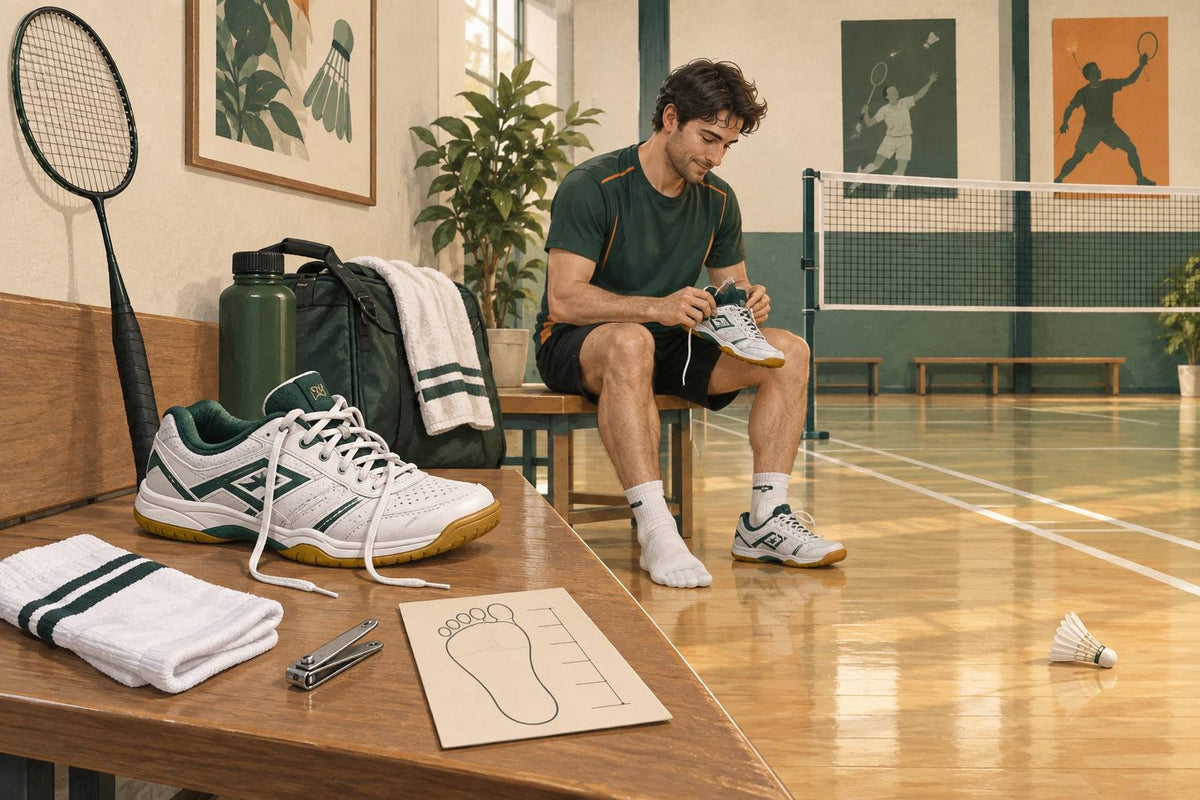
Most prevention is about stopping your foot from becoming a sliding hammer inside the shoe. Use this quick checklist before long sessions or matches:
- Check toe room: aim for about ⅜–½ inch, or roughly a thumb’s width, between your longest toe and the shoe front.
- Avoid sloppy length: extra-long or loose shoes can let the foot slide forward on lunges and hard stops.
- Try shoes later in the day: feet can feel fuller after activity, which gives a more realistic fit check.
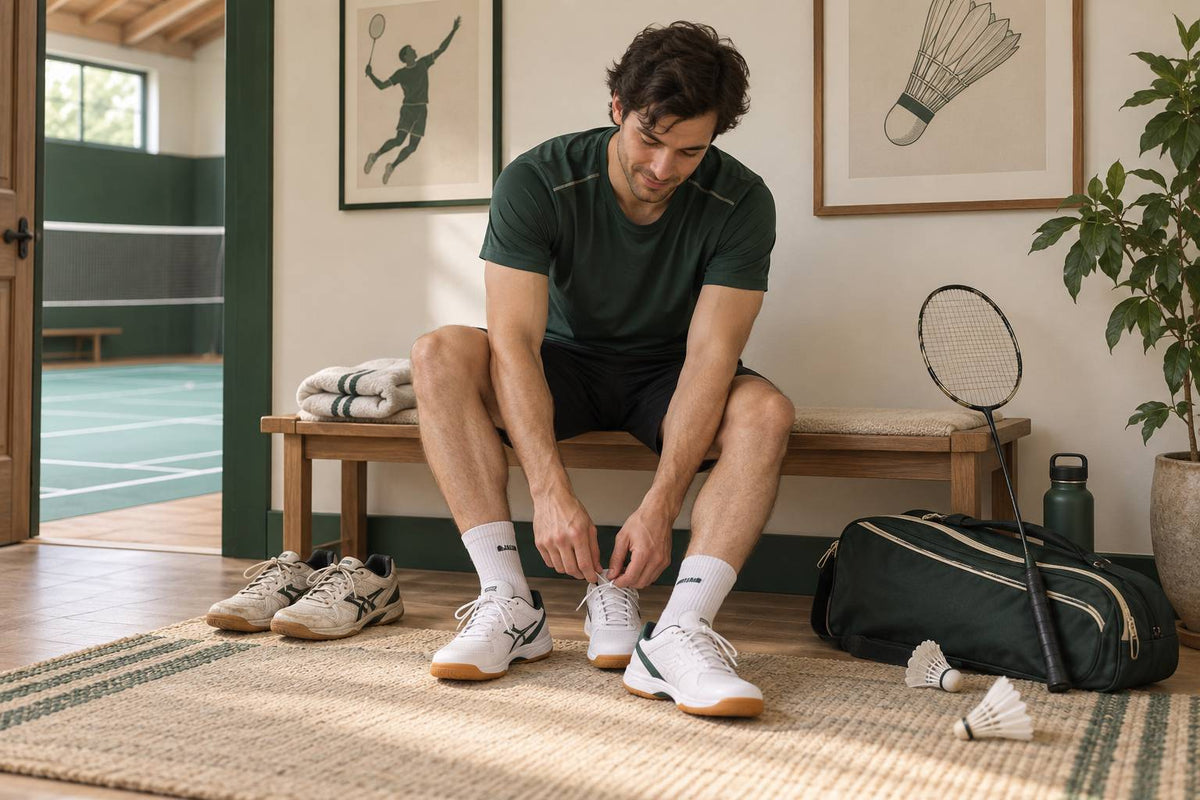
- Lock the midfoot: lace snugly through the middle, then use a heel-lock or runner’s loop. If the toe box feels pressured, try skipping the first eyelet for toe-box relief.
- Trim nails short and straight across: don’t let them extend past the toe.
- Use moisture-wicking socks: less sweat means less slipping; silicone pads under the toes can add extra cushioning.
For fit-related decisions, browse badminton footwear or compare toe-box options in our wide-feet badminton shoe guide.
Home care vs. when to see a doctor

If the dark patch is small, the toe is not very painful, and there is no obvious cut or deformity, a badminton black toenail can often be watched at home while the nail slowly grows out. Do not try to drain it yourself with a needle, paperclip, or heated tool: self-draining raises the risk of infection and permanent nail damage.
Seek care promptly for significant or worsening pain, bleeding, deformity or a possible fracture, regardless of how much of the nail looks dark; clinical guidance considers the whole injury. In the early window, often within 24–48 hours, in-office trephination can make a small opening through the nail to release blood and pressure. Older clots, smaller hematomas, or low-pain cases usually do not benefit from drainage.
- Get checked for a cut to the nail fold, bleeding around the nail, severe pain, toe deformity, or a possible fracture.
- Also get care if another toe injury happened at the same time, such as a crush injury or hard collision.
How this differs from an ankle sprain

An ankle sprain is a different injury pattern: it usually happens when the ankle suddenly rolls and stresses the supporting ligaments. A badminton black toenail or toe-cap bruise is more often the result of repeated forward impact inside the shoe during braking, lunging, and landing, or a single direct crush to the toe.
That distinction changes the recovery decision. Toenail care may mean watching a small, low-pain bruise grow out, or getting medical help if trapped pressure needs proper drainage. It is not the same as rebuilding ankle ligament tolerance with balance work, range-of-motion drills, and progressive return-to-court loading.
If your main symptom is a rolled ankle, swelling around the joint, or instability when you push off, use the dedicated badminton ankle sprain prevention and recovery guide. If the issue keeps coming from shoe fit or forward slide, browse badminton court shoes built for a secure lockdown.
Which should you choose?
Use the pattern, pain level, and timing to decide whether this is a fit problem to fix, a minor nail bruise to monitor, or a medical visit.
| Choose | If... | Next step |
|---|---|---|
| Monitor at home | The injury appears minor, pain is mild and improving, and there is no cut, deformity or other concerning symptom. | Do not self-drain. Protect the toe and let the nail grow out. |
| Fix fit and lockdown | Black toenails repeat after lunges or braking, suggesting forward foot slide into the toe box. | Aim for ⅜–½ inch toe room, snug midfoot lacing, and a heel-lock; if replacing shoes, compare court-shoe options. |
| Get medical care | Pain is significant or worsening, there is bleeding or deformity, or the cause of discoloration is uncertain. | Drainage may help. Go sooner for nail-fold cuts, bleeding around the nail, deformity, or other injury. |
Get 10% off your first order
Join the Badminton House list and we’ll email you a 10% welcome code — plus training guides, technique advice, and badminton updates.
By subscribing, you agree to receive Badminton House emails and can unsubscribe anytime.
We play badminton, so we treat black toenails as a practical setup problem: fit, lockdown, nail care, and smart return-to-play decisions. If you’re unsure whether your shoes are helping or hurting, contact us for player-to-player advice before your next session.
Court shoes that lock in your foot
Shop Badminton FootwearChoose court shoes by fit and lockdown first, especially if hard lunges drive your toes into the front. Check live availability.

Leave a comment
This site is protected by hCaptcha and the hCaptcha Privacy Policy and Terms of Service apply.