
Last checked: August 2026 · Written by the player-led team at Badminton House
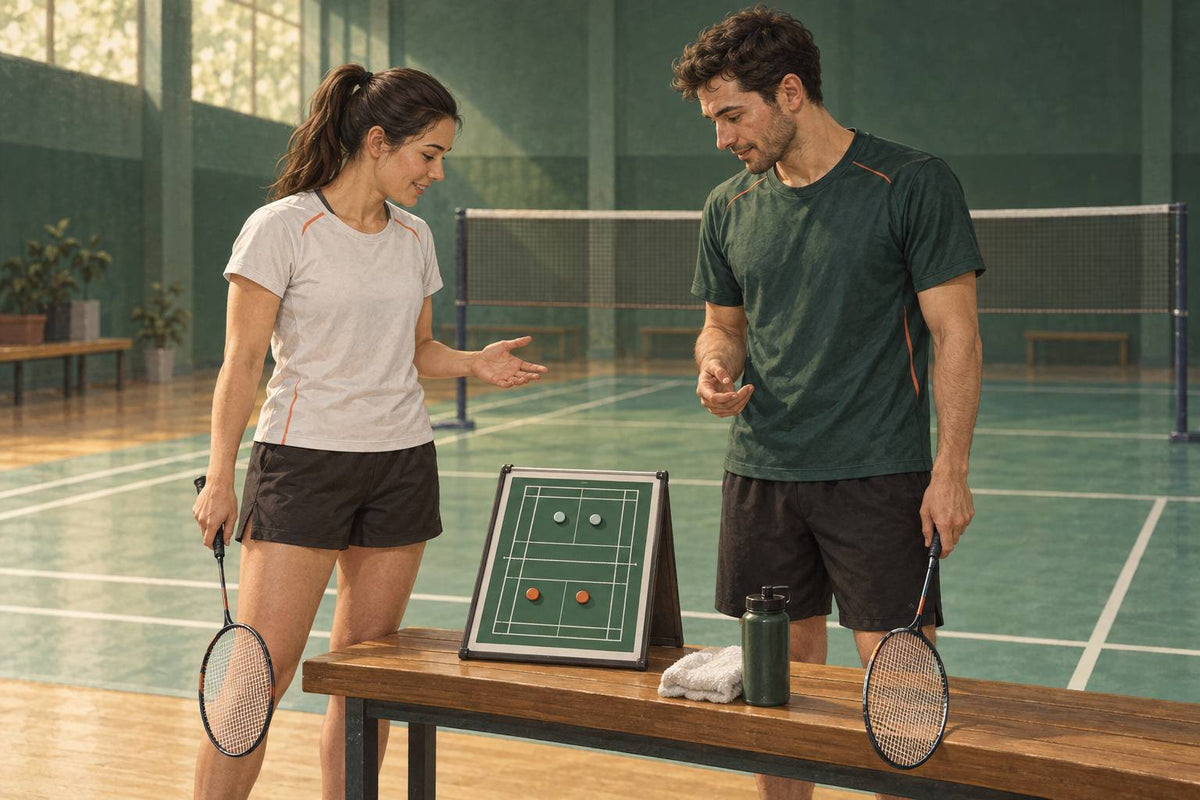
Choose a badminton doubles partner by matching roles, not friendship or raw skill level: one attacking rear-court player paired with one fast-hands front player, a workable handedness combination, and enough temperament and schedule overlap to survive a bad set. Confirm the fit with three trial games using agreed attacking roles, side-by-side defence and normal rotation.
Pick role fit before friendship or skill level
Look for complementary strengths as well as compatible temperament and availability. An attacking pair needs coordinated rear- and front-court coverage; two players who both gravitate to the net leave the rear court empty every time.
BWF's own coach education material frames doubles this way: the attacking pair sets up front and back, while the defending pair sets up side by side, in both men's and women's doubles, per the BWF Coach Education Level 1 manual. That single structural rule explains most club-level pairing trouble. If neither partner claims the back, nobody is there when a return gets lifted deep. If neither claims the net, easy interceptions go unplayed and the rally drags on longer than it should.
Inside that formation, the two roles ask for different instincts. The rear player holds the mid- and rear-court, waits patiently for a genuine opening, and sets up the front player without trying to win the point alone from deep. The front player does the opposite job: crowd the net, take the shuttle early, intercept anything driven or pushed through the middle, and finish points close to the tape. Neither role is easier than the other; they use different stamina and different reflexes, so look for a partner whose natural game already leans toward the role you don't play.
Rotation lets both partners adapt as the rally changes. A well-drilled pair swaps out of these positions when the rear player finds a clean chance to follow their own attack forward, or when the front player reads the situation and commits more centrally to cover the court. If your candidate partner can only ever play one half of the court and freezes when asked to cover the other, that is a bigger red flag than a two- or three-level gap in raw ability.
Match handedness, pace and temperament
After role fit, the next filter is practical: which side of the court each of you naturally covers, how fast you both like to play the shuttle, how you each behave under pressure, and whether your schedules actually overlap enough to practice. Handedness and pace decide positioning; temperament and availability decide whether the partnership survives a bad month.
Handedness changes more than which hand holds the racket. When a left-hander stands on the left and a right-hander on the right, both forehands face the outside sidelines, so each covers a tramline with a natural forehand instead of a stretched backhand. One coaching resource frames that as a mixed-handed pair covering the court better than two players who share a strong side, since each player's weaker backhand corner sits behind their partner's stronger forehand side. BadmintonSQ on left-handed pairing The trade-off shows up down the middle: when the shuttle comes straight at the seam between you, both forehands point away from it, and it is easy for either player to hesitate over whose shot it is. Settle who owns the middle before the match, not mid-rally, because an alert opponent will aim there on purpose, as one coaching guide to playing with a left-handed partner puts it. ShuttleLab on left-right doubles pairs Two right-handers or two left-handers also need a middle-court agreement. Handedness alone does not settle coverage or determine whether a partnership will work.
Pace preference is a simpler gut check: does your candidate partner want to speed the rally up with flat drives and pushes, or slow it down with lifts and patient point-building? Pairing two players who both crave a flat, fast exchange can work if their reflexes hold up, but a rally-first player paired with a drive-first player usually ends up arguing about shot selection mid-game instead of executing a shared plan. Watch how each of you reacts to a lost game point, a bad line call, or three unforced errors in a row; a partner who resets quickly is worth more than one who is a level higher but sulks after a slow start. Finally, check the boring variable: can you actually book the same court time every week? A partnership that only meets once a month never gets far enough into a shared rhythm to test any of the criteria above.
Spot candidates at a drop-in session
A drop-in or club night is the cheapest place to scout a partner because you can watch real habits instead of asking self-reported ones. Three things are visible within a few games: who recovers to a base position after every shot, who calls the shuttle out loud, and who plays the same slot on court regardless of partner.
Recovery to base is the easiest habit to see from the sideline. A player who drifts toward the net after every shot and never resets is going to leave you exposed at the back no matter how good their smash looks in isolation; a player who resets to a ready position between shots, even a slightly wrong one, is coachable. Watch four or five rallies before you judge anyone on a single spectacular point.
Calling matters more than it seems. A player who calls "mine," "out," or "yours" clearly, even in a casual game, is signalling that they think about the court as shared space, not two separate halves. Silence is not automatically a red flag on a first look; some strong players are simply quiet. But persistent silence combined with two players reaching for the same shuttle is worth noting.
The last tell is positional consistency. A player who plays the same slot (rear or front, drive or lift) no matter who they are partnered with that night either has a genuine strength there or has never been asked to develop the other half of their game. Either way, you learn something: partner them for their strength and manage the gap, or accept that you are signing up to cover a hole they will not close on their own.

Run a three-game trial with agreed roles
Before committing to a partner long-term, play three games with preferred attacking roles agreed in advance. Use front-and-back coverage while attacking, side-by-side defence when the opponents attack, and rotate as the rally requires. Treat this as an editorial trial for communication and coverage.
Before serving, agree who prefers the first attacking front/rear positions and how you will cover a lift or a change of attack. Both players must be able to defend and exchange roles. The trial checks whether those changes are understood, not whether either player can stay in one position for an entire game.
During the three games, keep a simple tally rather than trying to judge the whole match in your head. Track how many points you lost specifically because a role broke down (both at net, both deep, a lift nobody covered), how many times you and your partner reached for the same shuttle, and how many times either of you called for help and got it. A pair that loses the occasional point on a bad shot is normal. A pair that loses points because nobody was in the right place is a formation problem, not a skill problem, and it is exactly what the trial is designed to surface.
Afterward, ask three questions together rather than assuming you both saw the same match. Did the attacking roles and transitions feel clear, or did one of you keep drifting back to old habits? Which rallies felt genuinely shared, and which felt like one player carrying the other? And honestly: would you book the same court time again next week without being asked? A hesitant answer to that last question is more informative than any score from the three games.
Related reading: Once shared coverage feels natural, a drive-first doubles game plan turns that role split into a concrete shot-selection and serve-and-return strategy for low-lift rallies.
Pair juniors carefully, and end a pairing well
Juniors need a different pairing approach than adults because partner awareness itself is still developing: BWF's coaching pathway does not expect it as a trained skill until the early-to-mid teens. And every adult pairing eventually ends, so plan a plain, respectful way to say the trial did not work before you need one.
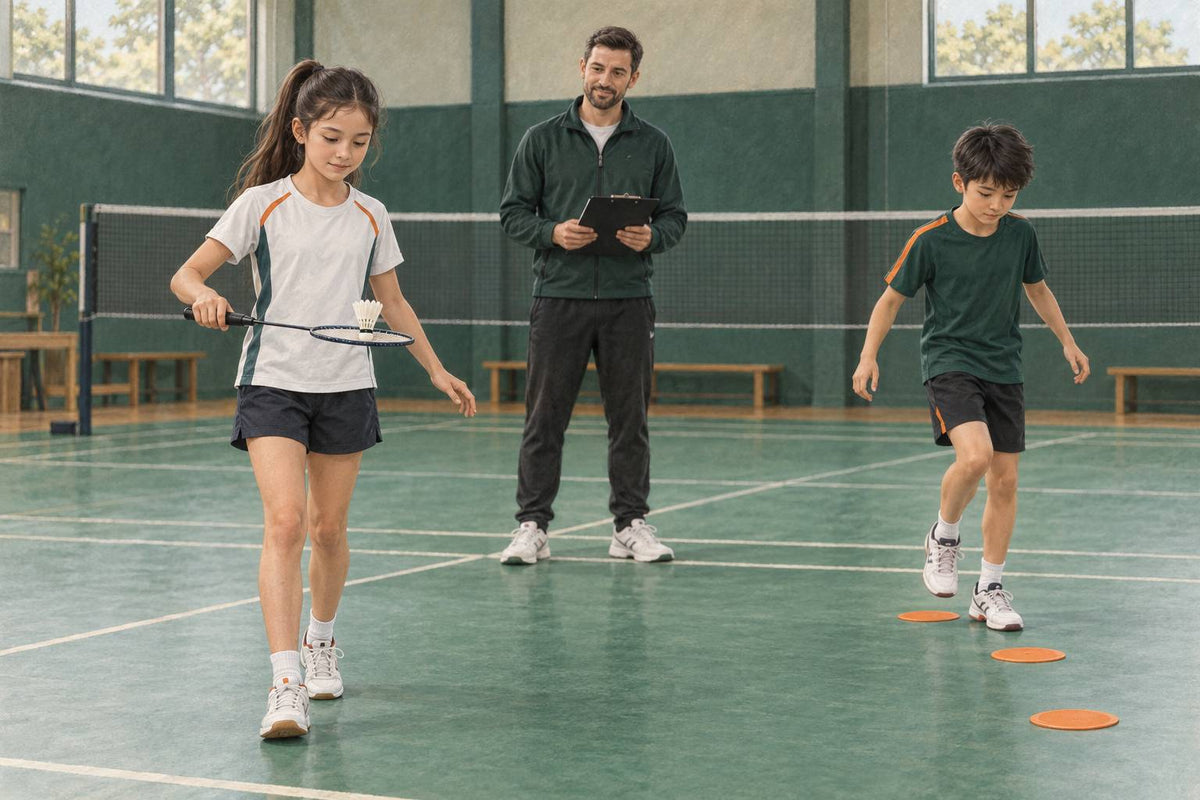
BWF's own player development pathway lists partner awareness as a decision-making skill trained explicitly in the Training to Train stage, roughly ages 11 to 16, one stage after doubles is first introduced with a singles-first bias in the preceding Learning to Play stage. BWF Coach Education Level 1 manual That is a useful signal for coaches and parents: locking two 9-year-olds into a fixed doubles pairing asks them to coordinate a skill that has not been taught yet. Rotate junior pairings through a season instead of fixing them early, and keep pairing choices flexible as training decisions until players are old enough for the role-fit criteria above to mean anything.
Adult pairings end too, and most of the friction comes from how it happens rather than whether it happens. If a three-game trial or a season of play makes it clear the fit is not there, say so directly and early, before the partnership drifts through mounting frustration. Name the specific mismatch (pace, role overlap, availability) instead of making it personal, thank the partner for the games you did play together, and give them enough notice to find a new partner before a tournament or league deadline. A pairing that ends cleanly is much easier to rebuild later than one that ends in a court-side argument, if either of you ever wants to play together again.
Before you commit to a partner
- Name each of your natural roles: rear-court attacker or front-court finisher.
- Check your handedness combination and agree who owns the middle before it matters.
- Book three games with agreed attacking roles and normal defensive transitions; track coverage mistakes as well as the score.
- Ask each other honestly whether you would book the same court time again next week.


Leave a comment
This site is protected by hCaptcha and the hCaptcha Privacy Policy and Terms of Service apply.