
Last updated: July 2026 · Written by the team at Badminton House
Quick Answer: Drive-First Doubles Tactics
Use drive-first as a low-lift rally plan: keep the shuttle flat, pressure the middle and body, and only lift high and deep when you need time to recover.
Default
Drive first: serve low, return with flat pushes or quick drives, and hunt early interceptions so your pair forces a lift instead of giving opponents an above-net attack.
Reset
If your reply is late, off-balance, or your opponents are attacking continuously, lift deep to the baseline rather than forcing another flat drive from a poor position.
Rotate
Treat drive-first as a shared decision rule, not a new formation: move front-back when you earn attack, and side-by-side when defending smashes or locked in flat exchanges.
If your doubles pair keeps losing the attack after one loose lift, the fix is not “drive everything harder.” A drive-first plan means you and your partner agree to keep the shuttle low when you can, use pushes and flat drives to deny easy downward shots, and rotate cleanly between front-back attack and side-by-side defence when the rally changes. At club speed, that usually wins more points through cleaner decisions than through bigger smashes.
Build the tactic first, then check your setup. A low-lift doubles style depends on quick split-steps and lateral pushes, so if your shoes are slipping or collapsing on defence, check live badminton footwear availability before your next club session.
In This Guide
What “Drive-First” Means in Doubles
A drive-first doubles plan is a selective low-lift tactic. The pair tries to keep returns, pushes, blocks, and drives below the opponents’ comfortable attack height so the shuttle does not get handed upward for an easy hit-down opportunity.
That does not mean “never lift.” It means: if you can take the shuttle early, keep it flat or low, and your partner is positioned to cover the reply, you choose the low option first. If you are late, stretched, or off-balance, a forced flat reply can be worse than a high, deep lift that buys time and resets the rally.
Drive-first in one rule
Keep it low only when low is controlled. If the low shot is late, floating, or uncovered, reset instead of forcing the tactic.
The goal is not to win a macho flat-drive contest from half court. Good drive-first pairs still use blocks, soft net replies, body drives, and middle-channel pressure to change pace and make the opponents lift. Once the opponents are forced to lift, your pair can move into attack and hit down.
It is also not a new stroke technique. “Drive-first” describes your pair’s shot-selection priority and court coverage. If you need the separate mechanics of racket preparation, contact point, and recovery for the flat drive itself, start with our badminton flat drive technique guide.
The formation still matters
A low-lift plan does not replace normal doubles formations. It simply changes how often you try to earn or retain the attack before you are forced to defend.
- Front-back attack: when your pair has made the opponents lift or play upward, one player pressures the front court while the other covers the rear attack.
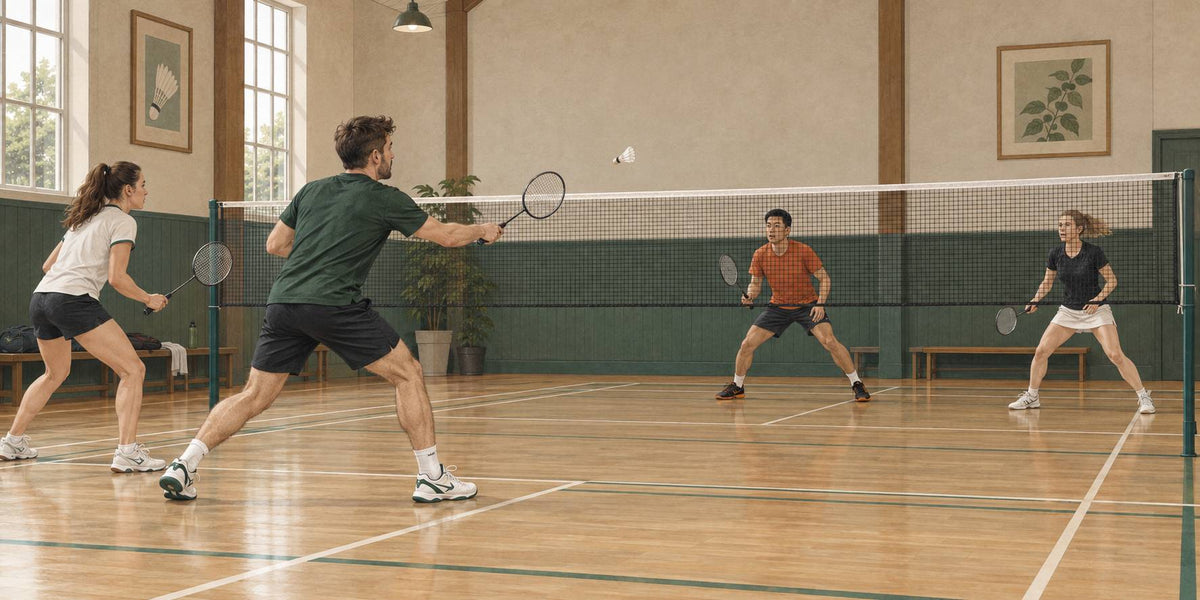
- Side-by-side defence or flat exchange: when the shuttle is fast and level, both players cover a side of the court, absorb pace, and look for a block, counter-drive, or push that turns the rally.
Think “low first,” not “low forever.” The best pairs use the drive-first plan to create pressure, force the lift, and move into attack — not to keep the rally flat when they are already late.
Who a Low-Lift Plan Actually Suits
A drive-first plan suits a doubles pair that wants to become more organized together, not just a pair that can hit harder. The payoff is tactical: cleaner serves, sharper returns, earlier interceptions, clearer responsibility zones, and faster transitions between front-back attack and side-by-side defence.
That matters because a lift gives the other side a chance to attack from above net height. A low-lift pair is trying to keep the shuttle flat, push into awkward spaces, and force the opponents to lift first. But this only works if both partners agree on the same plan. If one player is hunting the net while the other is drifting backwards without a reason, the court opens up quickly.
Best fit: pairs willing to drill the boring details
- Serve-and-third-shot pairs: you are willing to practise low serves, read the return, and decide who covers the net or midcourt reply.
- Return-first pairs: you like using flat pushes, body drives, and soft net returns to make the server lift or play up.
- Rotation-focused pairs: you understand that a low-lift plan still uses both classic doubles formations: front-back when attacking, side-by-side when defending or trading flat exchanges.
- Communication-light pairs: you can agree on zones before the rally, then use short calls only when needed instead of talking through every shot.
This style is especially useful for regular partners who see each other every week. You do not need international-level power to make it work, but you do need repeated practice on positioning and responsibilities so the pair moves like one unit.
Poor fit: pairs who drive just to avoid lifting
Drive-first does not mean drive everything. If the shuttle is too low, too late, or too far behind your body, forcing another flat shot can hand the opponents an easy interception. A forced lift or high deep reset is sometimes the correct choice when the other pair is already attacking continuously.
A useful test is simple: if your drive keeps the shuttle below net pressure and gives your partner time to cover the next shuttle, it fits the plan. If your drive is rushed, floating, or crossing through the opponent’s racket zone, it is no longer tactical discipline; it is just stubbornness.
Footwork matters for this style. Quick lateral pushes and reliable split-steps help you cover flat exchanges without overreaching. If your shoes slide, feel unstable, or are not made for indoor court movement, check live availability in badminton footwear.
Serve, Return, and Third-Shot Plan

A drive-first badminton doubles tactics plan starts before the rally becomes fast. The serve, return, and third shot decide whether your pair gets to keep the shuttle low, force an upward reply, or gets pushed into defence too early.
The goal is not to win every rally with a flat drive. The goal is to deny the opponents an easy downward hit, make them play from below net height, and be ready to punish the first loose reply.
1. Low serve: prevent the first attack
For a drive-first pair, the low serve is the default because it tries to keep the shuttle tight and low. A high serve or loose upward serve gives the receiver a much easier chance to hit down, which immediately works against the low-lift plan.
- Server’s first job: serve low enough that the receiver cannot attack freely.
- Server’s second job: read the return and decide whether to intercept or commit forward to the net.
- Partner’s job: hold midcourt pressure and be ready to pounce on weak flat or lifted replies.
After the serve, do not admire the serve. Split, watch the receiver’s racket face, and prepare for the first flat exchange. If the return comes loose through the middle, the server can block, counter-drive, or take the shuttle early. If the return is soft and tight, the server commits to the net while the partner protects the push and drive lanes behind.
Simple serving cue. Serve low, then read: if the reply is reachable early, intercept; if it drops tight, own the net and let your partner hold the midcourt.
2. Return: choose a low option with a purpose
On return of serve, the drive-first mindset is aggressive but controlled. You are trying to make the serving pair hit up on the third shot, not simply hit hard because the rally has started.
Build your return plan around three options:
- Flat push to the sideline: moves the server’s partner and can open space for the next drive.
- Quick drive to the body: jams the opponent and can force a weak block or upward third shot.
- Soft net return: makes the server lift if they arrive late or contact the shuttle too low.
If you want the return details on their own, read the full badminton doubles return of serve guide. For this system, the key is that every return should either stay low, attack a body/sideline lane, or force the lift you want.
3. Third shot: the partner must create pressure
The third shot is where many club pairs lose the drive-first shape. The server serves well, the receiver replies flat, and the server’s partner stands too far back or waits for a clear winner. Instead, the non-serving partner should be active in the midcourt: racket up, weight forward, ready to intercept.
A useful rule is to treat the middle channel as a pressure lane. Driving or pushing through the centre can create hesitation because both opponents must decide who takes it. It is also a safer attacking zone than trying to thread every drive onto the sideline.
| Situation | Server’s cue | Partner’s cue |
|---|---|---|
| Return is loose and flat | Step in and intercept if the shuttle is reachable early. | Hold midcourt and look for the next drive, block, or weak lift. |
| Return is soft to the net | Commit forward and keep the shuttle tight or kill a loose net reply. | Stay close enough to cover pushes that pass the server. |
| Return pushes past the server | Recover without crossing into the partner’s lane. | Take the shuttle early and drive, block, or push before the opponents settle. |
| You are forced to hit up | Do not force a bad drive just to protect the tactic. | Lift deep if needed, move side by side, and reset the rally. |
4. Do not drive blindly
Drive-first does not mean drive-only. If opponents are waiting with their rackets up, a softer block, a push into space, or a tight net reply can be better than matching their pace. Changing pace can make attacking players lift, hesitate, or contact the shuttle below a comfortable height.
Use this three-shot idea in practice: low serve or aggressive return, early interception, then vary the next shot. If the opponents lift, your pair moves into front-back attack. If they keep it flat, you stay compact and fight for the next early contact. If they force you to hit up, accept the reset and defend side by side.
Club-night setup note
Drive-first doubles depends on repeated split-steps, lateral pushes, and fast recoveries. If your court shoes are sliding or collapsing during flat exchanges, check live availability in our badminton footwear collection before your next session.
Formation Cues Without Constant Calls

A drive-first doubles pair should not invent a third formation. It still lives inside the two classic doubles shapes: front-back attack when your pair can hit down or pressure forward, and side-by-side defence when you are absorbing pace, defending smashes, or covering a flat exchange.
The difference is the trigger. Instead of talking through every rotation, agree on a simple shuttle-height cue before the game starts: if your pair earns a chance to hit down, build front-back attack; if the opponents can hit down, defend side-by-side; if neither pair controls the attack, cover the flat exchange together. For the broader rotation framework, see our badminton doubles positioning and rotation guide.
The call-free rule
Use shuttle height as the first cue, then use short calls only when the picture is unclear.
You earn the attack
Look to attack: step in, close the net/midcourt, and be ready to intercept blocks, pushes, and loose drives.
Opponents can hit down
Respect the threat: split wider, cover your side, and be ready to defend a downward shot or fast flat reply.
How it looks in front-back attack
When your pair earns attack, one player pressures from the rear or midcourt while the partner hunts forward. In a drive-first plan, the front player is not just waiting for a perfect net kill. They should expect three common replies:
- A soft block or net reply that can be killed, pushed, or held tight.
- A lift that lets the rear player continue attacking.
- A cross-court drive that the front or mid player can cut off to maintain pressure.
The useful cue is spacing. The front player should be close enough to threaten pushes and net shots, but not so far forward that every flat drive passes behind them. Think of it as owning the space from the tape to the front half of midcourt, with the racket already up.
How it looks in side-by-side defence or flat exchange coverage
Side-by-side is not a failure of the drive-first plan. It is the correct shape when the opponents can hit down, when you have lifted, or when the rally becomes a fast flat exchange where both sidelines need protection.
In this shape, each player protects a half-court lane. Your goal is to absorb pace without giving up a weak lift. Blocks, controlled drives, and pushes can change the pace and force the opponents to hit up. When your reply forces a weak upward shot, one player can claim the front while the partner covers the rear attack.
| Rally picture | Default shape | Cue to rotate |
|---|---|---|
| Opponents lift | Front-back attack | Rear player attacks; partner covers blocks, net replies, and cross-court drives. |
| Your pair earns a downward attack | Move toward attack | Step in, take the shuttle early, and look for a push, drive, block, or net shot that forces a lift. |
| Opponents can hit down | Defensive or neutral side-by-side | Split wider, cover your lane, and avoid gambling forward too early. |
| Fast flat exchange | Side-by-side with midcourt pressure | Whichever player takes control of a lower contact can move forward while the partner balances behind. |
Use zones first, calls second
Drive rallies are too quick for long instructions. At a busy club night, your partner may not hear a full sentence anyway. Build the pair around clear responsibility zones, then add only short calls such as “mine,” “yours,” or “switch” when the normal rule is not enough.
- Middle channel: agree who takes the forehand or stronger interception when the shuttle travels between you.
- Cross-court drive: the front or mid player should be ready to cut it off instead of watching it pass.
- Emergency lift: if your pair is forced to lift, both players should recover side-by-side immediately.
- Loose block from opponents: nearest player steps in; partner balances behind rather than both players rushing the net.
When to Abandon the Drive-First Plan
A lift gives the other pair a chance to hit down, so a drive-first badminton doubles tactics plan naturally tries to avoid lifting unless it has to. But the key phrase is unless it has to. If your only available reply is late, off-balance, or below a comfortable contact point, forcing another flat drive just to preserve the tactic usually turns into a sitter.
Think of the drive-first plan as a pressure habit, not a law. You are trying to keep the shuttle low, win the front/mid-court exchange, and make the opponents lift first. When the rally state changes, your job is to reset intelligently rather than keep trading speed from a losing position.
Simple rule for club pairs
- If you can contact early and in front: drive, push, or block with purpose.
- If you are late but balanced: use an angled block or slower drive to change pace.
- If you are late and under sustained attack: lift high and deep, recover side by side, and defend the next smash properly.
Lift high and deep when you are genuinely trapped
There are rallies where both players are pinned: one player is reaching around the hip, the other is still recovering, and the opponents are already stepping in. In that situation, a flat counter often feeds their next interception. A high, deep lift is the cleaner reset because it buys time for both partners to spread side by side and cover the full width of the court.
The important detail is depth. A short lift gives the opponents the same attacking chance, only closer to the net. If you are going to abandon the low-lift plan, commit to the reset: lift to the back court, recover quickly, split-step together, and prepare for the smash or drop that follows.
This is especially practical in club-night doubles, where rallies often move quickly from serve pressure into scramble defence. A smart lift is not a failure of tactics; it is a way to stop one messy contact from becoming three more messy contacts.
Use blocks and pace changes before you panic-lift
Not every pressure moment requires a full lift. If you can still meet the shuttle cleanly, an angled block can be better than another straight drive. The goal is to make the attacking pair move forward, hesitate, or hit upward. A soft block to the open front court, a block across the body, or a controlled drive into the middle channel can break the rhythm of opponents who are waiting for predictable pace.
This is where drive-first pairs separate good pressure from blind speed. If the other side is comfortable absorbing your flat drives, change the tempo. Mix a firm body drive with a softer block. Aim through the middle when both opponents are crowding the sides. Make them decide who takes the shuttle instead of giving one player a clear, repeatable counter.
Know the formation switch
A low-lift plan does not replace doubles formations. It only changes how aggressively you try to earn or keep the attack. When you lift from defence, both players should switch immediately into a side-by-side base. When the opponents lift back, one player can move forward while the rear player attacks from behind.
Use shuttle height as the cue. If the opponents are hitting down, respect the defence and cover side by side. If they are forced to hit up, look to rotate into front-back attack again. That shared rule keeps you from needing constant calls during fast exchanges.
For the defensive side of this decision, see Badminton Smash Defense: How to Return a Smash.
Which Doubles Plan Should Your Pair Choose?
Drive-first badminton doubles tactics work best as a default tendency, not a rule you obey on every shot. The right choice depends on shuttle height, your pair’s rotation habits, and whether you are creating pressure or just surviving it.
| Choose this plan | Best fit | Main cue | Avoid this mistake |
|---|---|---|---|
| Drive-first / low-lift default | Pairs who can serve low, return aggressively with pushes or drives, and hold clear responsibility zones in fast exchanges. | Keep the shuttle low, pressure the middle or body, and try to force a lift so your pair can move into attack. | Do not drive a forced, low-quality reply just to preserve the tactic. If the reply is poor, choose the safer reset. |
| Balanced low-first plan | Club pairs still tidying up serve, return, positioning, and rotation, but who want to win more points by playing smarter together. | Read shot direction and available space: build attack when you can hit down, defend when opponents can hit down, and cover a neutral flat exchange together. | Do not treat drive-first as a replacement for normal doubles formations. You still need front-back attack and side-by-side defence. |
| Reset-with-lift plan | Pairs under continuous attack, especially when flat replies are getting intercepted or pushed down. | Lift or clear high and deep to buy recovery time, then move side by side to absorb pace and reset the rally. | Do not lift short. A lift gives opponents a chance to attack from above net height, so the reset needs depth. |
| Smash-oriented attack plan | Pairs who are already forcing lifts with tight net shots, angled drives, or pressure through the middle. | Once the lift comes, one player moves forward while the partner attacks from the rear court. | Do not stay in a flat side-by-side exchange when you have clearly earned front-back attack. |
Gear note for fast club nights. A drive-first pair relies on quick split-steps, lateral pushes, and recovery after flat exchanges, so court shoes matter more than chasing a “drive-only” racket setup. Check live availability in badminton footwear.
Get 10% off your first order
Join the Badminton House list and we’ll email you a 10% welcome code — plus subscriber-only restock alerts, giveaways, and honest gear advice from players.
By subscribing, you agree to receive Badminton House emails and can unsubscribe anytime.
Drive-first doubles works best when both partners understand the same simple rule: keep the shuttle low when you can, reset when you must, and rotate together instead of arguing mid-rally. We play badminton ourselves, so if you are trying to match your tactics with the right court setup, contact Badminton House and we will help you think through your game, footwear, and next upgrade.
Drive-first doubles starts with confident feet: split-step, push, recover, and stay ready for the next flat exchange.
Check Badminton Footwear10% off first order · 14-day returns · Badminton specialty shop


Leave a comment
This site is protected by hCaptcha and the hCaptcha Privacy Policy and Terms of Service apply.