
Last updated: July 2026 · Written by the team at Badminton House
Quick Answer: How to Feed Shuttles
Start with hand feeding for control, then move to racket feeding when the drill needs realistic length, height or pace.
Hand feed
Best starting point: use for beginners, close net work and fixed routes while the stroke stabilises.
Racket feed
Use for clears, smashes and rally-like feeds requiring greater distance, height or speed.
Use both
Hand feed the technical stage, then racket feed as pressure and realism increase.
Feeding looks simple until the worker is late to every shuttle, reaches below a useful contact point, or starts guessing the next corner. In multi-shuttle practice, a missed reply does not stop the drill; the feeder still decides where and when the next shuttle arrives. That makes feed quality (not arm speed) the difference between repeatable technique work and a frantic conditioning set.
This guide shows how to feed shuttles with either hand or racket, organize the stack, set a useful rhythm, and progress placement without overwhelming the player. Treat feeding as its own court skill: begin with control, watch the receiver, and only add pressure when the stroke still holds together.
Need help adapting a feed? Ask Badminton House about your drill setup.
In This Guide
- The Feeder’s Job: Reproduce a Useful Rally Ball
- Hand Feed vs Racket Feed: Which Should You Use?
- Physical Mechanics: Stack, Cork Grip, Release, Stance, and Reset
- Control Tempo and Contact Height—Then Watch for These Warning Signs
- Progress from One Fixed Target to Random Feeding
- Which Should You Choose?
The Feeder’s Job: Reproduce a Useful Rally Ball
Multi-shuttle feeding is continuous delivery with many shuttles. The feeder controls where each shuttle lands, when it arrives, how quickly it travels and the trajectory it follows. The hitter plays each ball, but the feeder makes no attempt to return the response; errors therefore do not end the sequence. Practice stops only when the feeder chooses.
That makes feeding a responsibility, not just a way to keep shuttles moving. A useful rally ball must give the learner a genuine chance to practise the intended movement or stroke. If placement, timing or pace makes the task impossible, or lets poor technique pass unnoticed, the feeder should adjust or stop.
Purposeful feeding is also not the same as coaching. The feeder delivers the planned stimulus; a coach designs the session, observes technique and guides development. Predictable feeds are valuable because they isolate a target, but they are not fully game-like: there is less consequence, randomness and pressure. For specific formats, see Multi-Shuttle Badminton Drills: Training Guide.
Hand Feed vs Racket Feed: Which Should You Use?
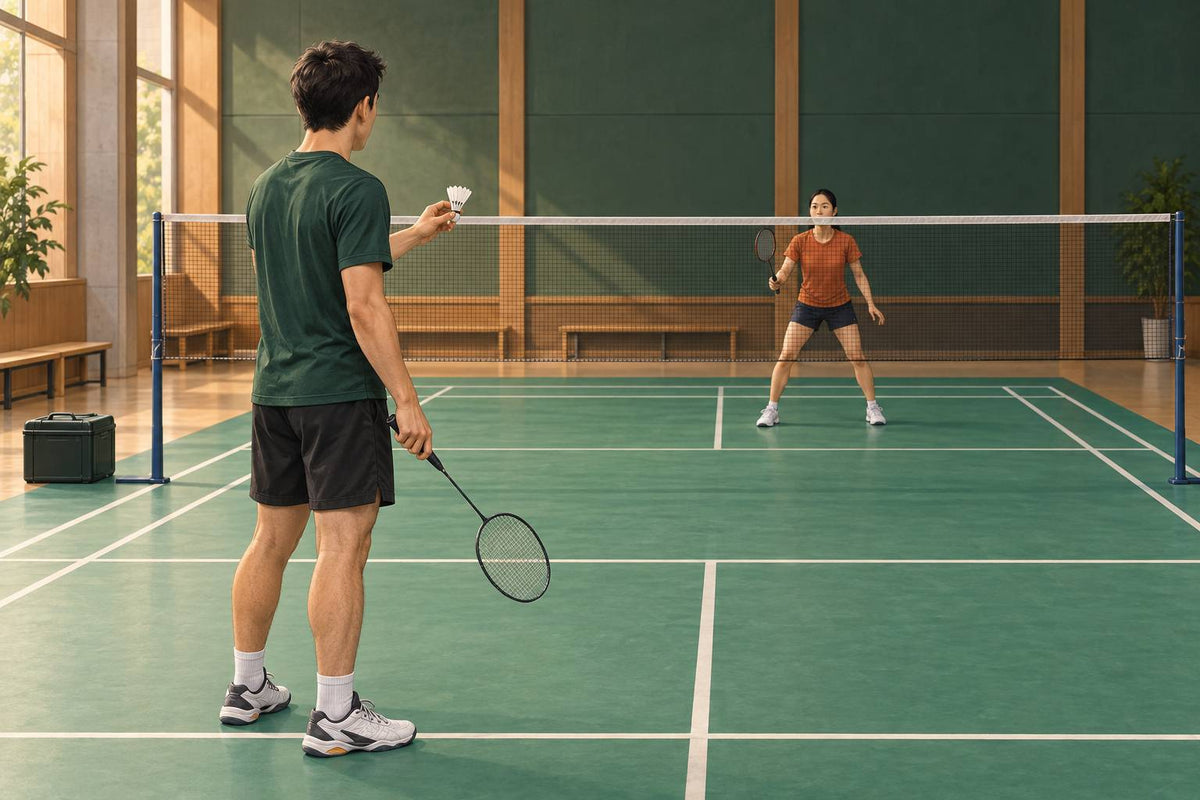
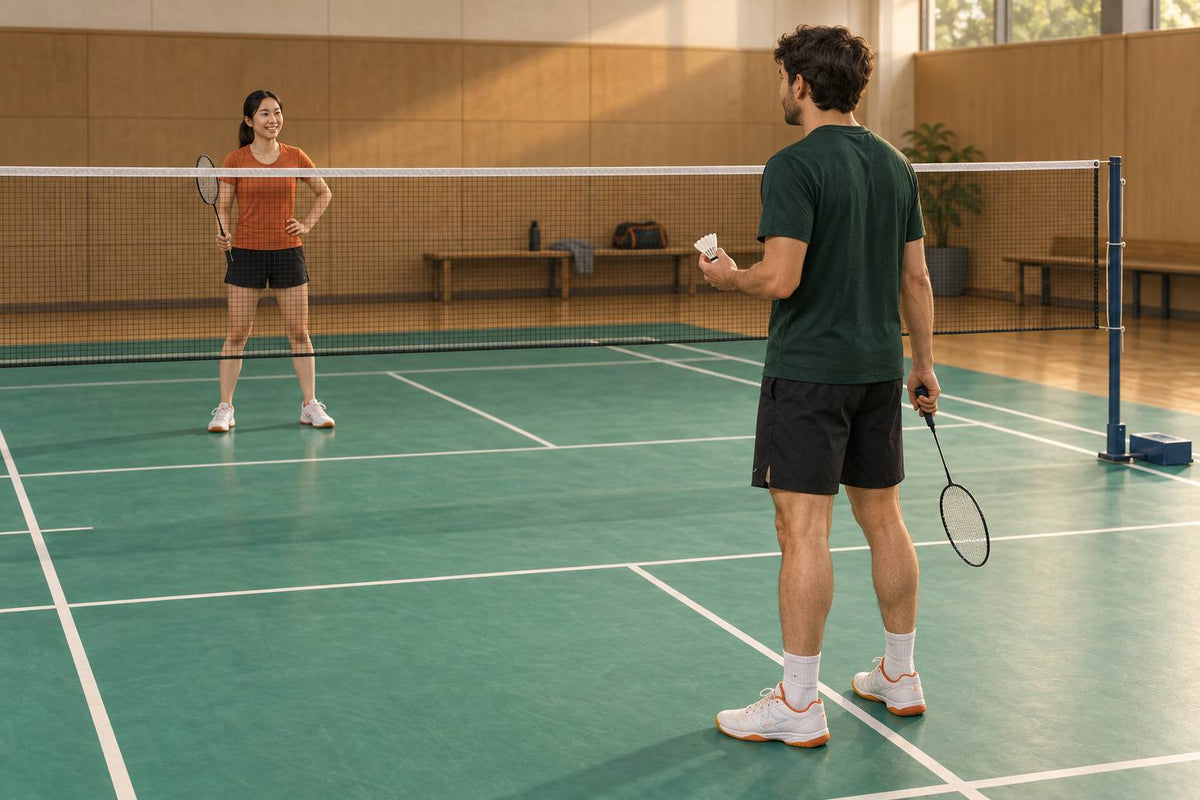
Choose hand feeding for control and simplicity. Throwing is easier to learn than striking each shuttle, making it the better starting point for new feeders. It suits beginners, close net work and fixed movement routes where precise placement matters. A tight hand feed can also deliberately remove preparation time, such as when correcting an oversized net-kill swing.

Choose racket feeding when the drill needs a rally-like flight. The racket can produce more realistic length, height and pace for clears, smashes and other overhead feeds. Around the net, it can send shuttles upward at changing heights, speeds and angles for reaction work.
The verdict: learn with hand throws or one repeated racket-fed target. Move to racket feeding when a hand throw cannot realistically reproduce the intended shot. Neither method is limited to one delivery style: both hand and racket feeds can be underarm or overhead.
Physical Mechanics: Stack, Cork Grip, Release, Stance, and Reset
Carry a workable stack of shuttles in your non-racket hand, arranged so you can take one without disturbing the rest. Hold each shuttle by the cork between your thumb and index finger (never grip the feathers) and release it cork-down for consistent flight.
- Practise the feed first: When feeding from an unfamiliar court position, work alone with a basket until the pickup, release and reset feel smooth.
- Protect the feeder: For net kills or drives, move off court if the normal position puts you in the hitting line. Stop immediately to clear stray shuttles; they are a court hazard.
Control Tempo and Contact Height—Then Watch for These Warning Signs
Use recovery as the clock. Hold the next shuttle until the receiver has reset or loaded for the intended movement. Feeding to your arm rhythm sends the shuttle before recovery is complete and distorts the receiver’s movement shape. Faster-than-match feeding is a deliberate advanced tool, not the default; continuous feeding changes technical work into conditioning.

When an attacking reply is intended, feed with enough height and trajectory for contact at or above neck height. A low, flat ball removes attacking value.
Stop or adjust when:
- Pace outruns recovery or trajectories stay too flat.
- Direction is telegraphed or placement drifts from the target.
- The practice repeatedly breaks down.
- The pattern would not occur in a rally.
- Receiver feedback is ignored.
- Either person shows visible fatigue or deteriorating technique.
Treat the receiver’s feedback as live calibration, not criticism.
Progress from One Fixed Target to Random Feeding
Begin with every shuttle going to one target zone. Keep the placement and tempo predictable until the player can repeat the stroke with stable preparation, contact and recovery. Next, feed to two corners, including a cross-court option, so the player must recognize direction without facing unlimited possibilities.
Only then move to free random feeding. Random does not mean careless: continue sending a high percentage of shuttles to the target stroke while mixing in other locations.
Use working sets of roughly 16 to 30 shuttles with short rests. Increase either tempo or uncertainty (not both at once), then observe whether the stroke remains intact. If preparation, contact or recovery breaks down, return to the previous level. For drill examples built around these progressions, see the multi-shuttle badminton drills guide.
Which Should You Choose?
Choose the feed that creates the ball your drill requires, not the method that looks more advanced.
| Choice | Choose it when… |
|---|---|
| Hand feed | You are training close net work, beginners, fixed routes, or a correction that depends on precise late release. It is easier to learn and can deliberately reduce the receiver’s available time. |
| Racket feed | You need clears, smashes, deep movement, or reaction work with realistic length, height, pace, and changing angles. It demands greater feeding accuracy. |
Start with hand feeding if you cannot repeat one target reliably. Move to racket feeding when trajectory (not just placement) is essential. With either choice, add speed and variety only after accuracy is stable.
Get 10% off your first order
Join the Badminton House list and we’ll email you a 10% welcome code, plus training guides, technique advice, and badminton updates.
By subscribing, you agree to receive Badminton House emails and can unsubscribe anytime.
At Badminton House, we play badminton and know that a useful feeding rhythm takes patient practice. If you want help choosing shuttles for repeat drills or planning a practical training setup, contact us. We’ll give you straightforward advice based on how and where you train.
Keep your feeding sessions ready. Multi-shuttle practice uses repeated sets, so prepare enough shuttles to keep planned work flowing without turning every pause into a collection break.
Browse Training ShuttlecocksCompare options and check live availability.

Leave a comment
This site is protected by hCaptcha and the hCaptcha Privacy Policy and Terms of Service apply.