
Last updated: July 2026 · Written by the team at Badminton House
Quick Answer: How to Feed Shuttles
Start with hand feeding for repeatable technique practice; use a racket when pace or game-like reading matters.
Hand feeding
Best default: easiest for delivering many controlled repetitions while learning to feed.
Racket multi-feed
Choose it when the drill needs pace, faster sequences or sharper downward feeds.
Racket rallying
Choose it for reading racket preparation and rally-like responses, with pace matched to the learner.
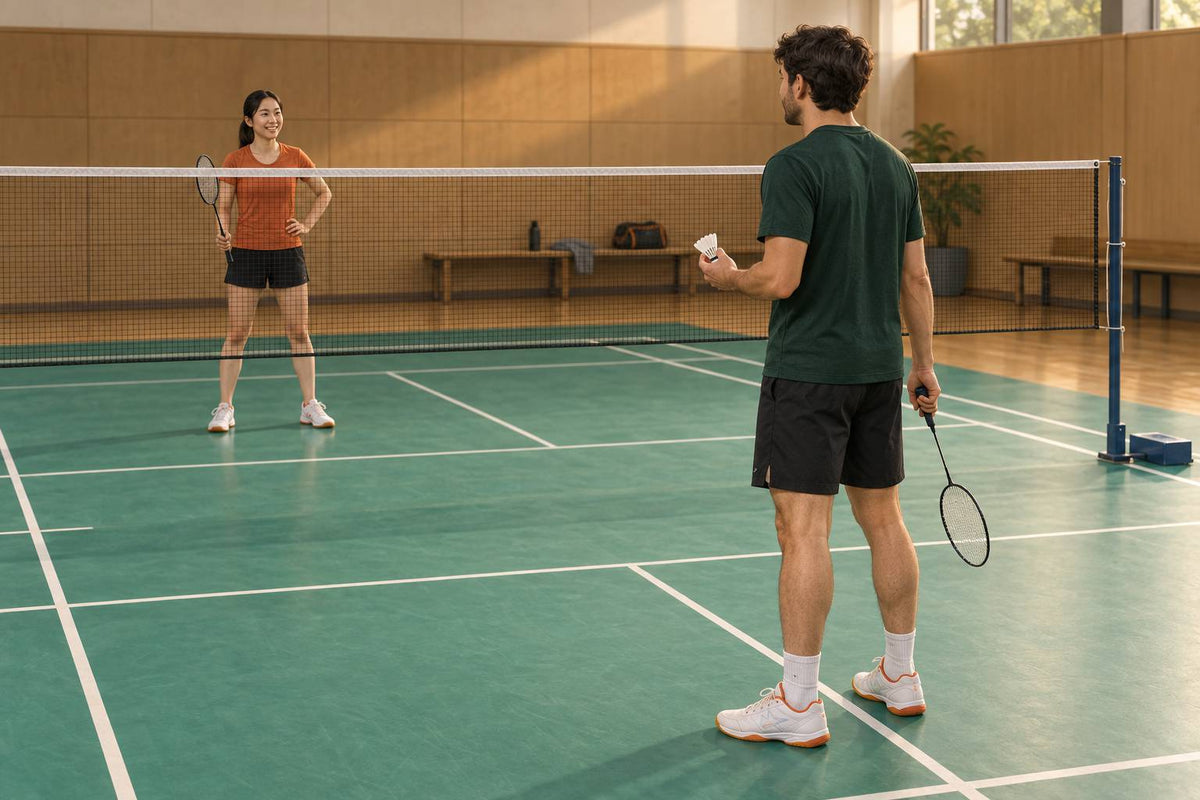
Learning how to feed shuttles is not simply learning to send one within reach. A useful feed follows a repeatable, game-like path and gives the player enough time for the intended stroke and recovery. If your partner is lunging early, waiting under every shuttle or abandoning technique to survive, resist feeding faster: first make the same feed arrive at a consistent height and depth.
Good feeders actively watch the player. They use hand feeding for controlled repetition, switch to racket feeding when realistic pace matters, and adjust when fatigue changes the movement. This guide explains how to manage a stack cleanly, choose a safe position and feed type, tune difficulty without changing everything at once, diagnose breakdowns and support a stronger training partner.
In This Guide
How to Hold and Transfer a Stack of Shuttles
Cradle roughly 15–20 shuttles in your non-racket arm with their corks pointing down. For racket feeding, take the next cork between your thumb and first finger, bring the shuttle in front of or beside your body, then cock the wrist and strike. Keep that order distinct: reach, present, prepare, hit.
The hand-to-racket transfer usually limits feeding speed. If you rush it, you may fumble the stack or begin the stroke before the shuttle reaches a repeatable release position. Rehearse the transfer smoothly before trying to shorten the interval between feeds.
For hand delivery, choose the orientation to suit the feed. With your hand underneath, the fingers must support the entire shuttle—including the cork—to maintain control. Flat, fast feeds are generally easier with the hand over the shuttle. Once this handling feels automatic, apply it within the patterns in our multi-shuttle badminton drills guide.
Choose Your Position and Feed Type
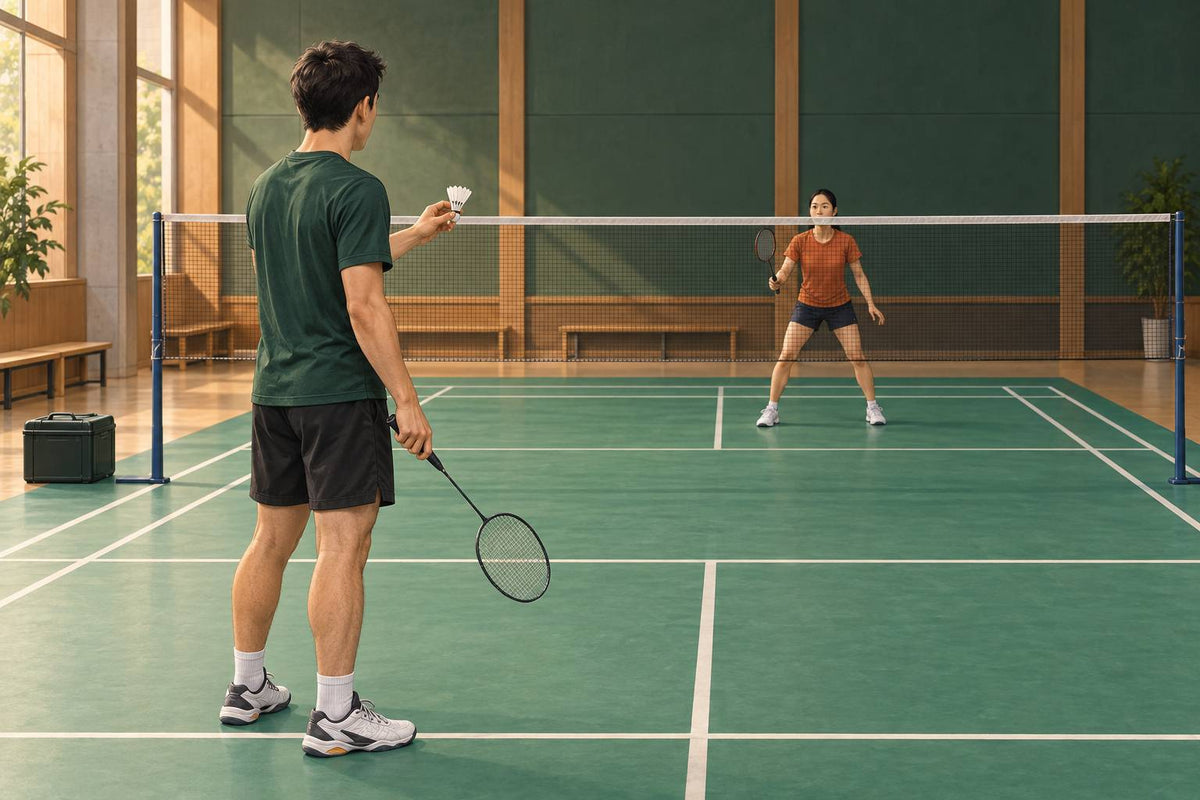
Map your position to the drill rather than measuring a fixed distance. Safety comes first: stay clear of the player’s swing and choose an angle that produces a game-like flight path. Move farther back when a larger movement needs more flight time; move close to the net to accelerate net-spin practice. For net kills, stand just off court instead of facing the player. Use the opposing T for turn-and-react feeds, and the service-line area for downward throws into the mid-front court.
Match the delivery method to the shot being trained. An underarm hand feed provides the height and accuracy needed for overhead practice. An overarm hand feed can imitate downward shots or other overhead actions. Switch to a racket feed when the player must read racket preparation or practise against realistic pace, because a thrown shuttle cannot reproduce the speed of a struck one.
Control Tempo, Height and Depth One Dial at a Time
Treat tempo, height and depth as three separate difficulty dials:

- Tempo: how soon the next shuttle arrives.
- Height: how much time the player has to organize the stroke or movement.
- Depth: where the player must travel and make contact.
Begin with a simple, slow and predictable pattern. The delivery rate should let the player process the previous attempt and prepare properly for the next shuttle. Once the action is reasonably competent, adjust only one dial: increase tempo, alter height or move the target deeper. Changing all three hides whether the player or the feed caused the breakdown.
The feeder controls the reset. If a required grip, racket carriage or ready position is missing, withhold the shuttle until it appears.
Progress toward faster and less predictable feeds gradually, but keep substantial single-shuttle practice: badminton is ultimately played with one shuttle, not a continuous stream.
Bad Feed Diagnostic Checklist
When a drill starts breaking down, diagnose the feed before asking the player to work harder. Use these quick checks:
- Height is creeping upward: feeder fatigue may be changing the release or racket action. Hold the next shuttle, reset, and restore the intended trajectory.
- Depth changes unintentionally: check whether your contact, power or position has drifted. Re-establish the target before continuing.
- Feeds enter the player’s body: unless body feeds are planned, pause rather than forcing an awkward repetition.
- Rhythm becomes uneven: a rushed hand-to-racket transfer often causes a late or mistimed feed. Hold one shuttle and restart at a slower rate.
- Technique deteriorates: if the player’s racket or elbow drops, stroke quality falls, or breakdowns repeat, reduce the rate. If either person is too fatigued to restore quality, stop the drill.
How to Feed a Partner Who Is Better Than You

Do not guess what a stronger partner needs. Ask for the drill goal, intended target areas and desired level of difficulty. Invite direct feedback: “Too fast, too slow, or wrong area?” Changing the feed is part of good practice, not a criticism of the feeder.
Start with accurate hand throws or racket feeds to one predictable location. Your first job is to keep the drill working. Add pace, movement and variety only after you can reproduce the original feed consistently.
A human feeder’s advantage is judgment. You can track the player as their speed changes, hold or alter the next shuttle, and introduce realistic uncertainty. A machine running a fixed programme repeats its configured delivery unless someone pauses or adjusts it.
Overspeed feeding—sending the next shuttle faster than a match rally—is an advanced option, not a licence to overwhelm the worker. Build it gradually after both players can sustain a controlled, accurate pattern.
Which Feeding Method Should You Choose?
Match the method to the skill goal rather than choosing the fastest feed you can deliver.
| Method | Choose it when… |
|---|---|
| Hand feed | The player is learning a movement or contact point and needs many accessible repetitions. It is easier to deliver, but cannot reproduce racket pace or racket-preparation cues. |
| Racket multi-feed | The drill needs greater pace, repeated placements or movement across several areas. Use it after the feeder can control the intended flight consistently. |
| Racket rallying | Reading, timing and decisions matter more than repetition count. Begin predictably, then introduce uncertainty as the player becomes competent. |
A sound progression is hand feed, then racket multi-feed, then racket rallying—but move forward only when the current task is stable.
Get 10% off your first order
Join the Badminton House list and we’ll email you a 10% welcome code — plus training guides, technique advice, and badminton updates.
By subscribing, you agree to receive Badminton House emails and can unsubscribe anytime.
Feeding well takes practice, patience and attention to your partner. We play badminton ourselves, and we know how valuable a purposeful feeder can be during training. If you want help planning a drill or refining your practice setup, contact us for practical advice.
Feeding drills use plenty of shuttles. Stock up before your next multi-feed session and check live availability.
Shop Shuttlecocks

Leave a comment
This site is protected by hCaptcha and the hCaptcha Privacy Policy and Terms of Service apply.