
drills

Multi-Shuttle Badminton Drills: Training Guide

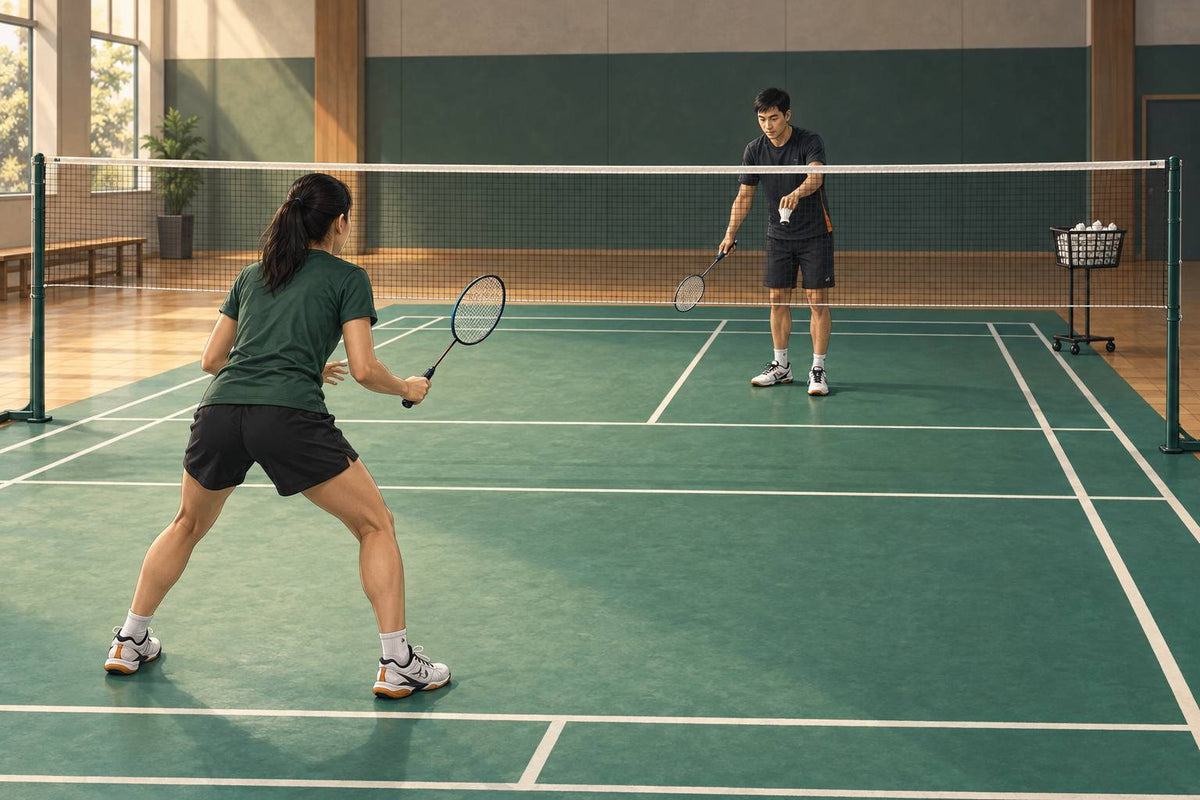
Illustration of a feeder running a multi-shuttle badminton drill on an indoor court

Last updated: June 2026 · Written by the team at Badminton House

Quick Answer: Multi Shuttle Badminton Drills

For most club players, start with planned fixed feeds of 15–30 shuttles per set, rest just long enough to keep technique clean, then progress toward faster and more random feeds.

Default

Best choice: 15–30 shuttles per set over several rounds gives enough repetition for footwork, stroke timing, and recovery practice without turning every set into survival mode.

Beginner

Use 8–15 shuttles per set, longer rest, and predictable placement so the priority stays on clean contact, balanced lunges, and repeatable recovery steps.

Advanced

Build toward 20–40 shuttles per set, shorter rest, and mixed hand-feed or racket-feed patterns that vary pace, interval, and trajectory for match-like pressure.

Training in Canada? Stock up through the shuttlecocks collection and use proper lateral-support court shoes from the footwear collection; Badminton House offers free Canadian shipping on orders over $200.

If your badminton practice is mostly games, you can go weeks without getting enough reps on the shots that actually need fixing. One rally gives you a messy mix of serves, clears, blocks, mistakes, and waiting around. Multi shuttle badminton drills solve that by turning practice into a controlled stream of feeds, so you can repeat the same movement, stroke, recovery, or decision again and again without stopping every time someone makes an error.

In multi-feed training, a coach or partner feeds many shuttles continuously while the hitter returns each one. The feeder controls the placement, tempo, speed, and flight of the feeds, which means the drill can be simple enough for a beginner learning footwork or intense enough for an advanced player training recovery under fatigue. Instead of hoping the right situation appears in a game, you build it on purpose.

For Canadian club players, this is one of the most practical ways to make limited court time count. A focused set of 15–30 shuttles can create more quality repetitions than a casual game, especially when you are working on footwork patterns, smash recovery, net kills, defence, or consistency under pressure.

Training harder? Protect your feet first. Multi-feed drills demand repeated lunges, pushes, and side-to-side recoveries, so use proper indoor court shoes with lateral support. Browse our badminton footwear collection — free Canadian shipping is available on orders over $200.


What Multi Shuttle Badminton Drills Are

Multi shuttle badminton drills are structured on-court drills where one feeder delivers many shuttles in a row while the hitter performs the planned shot, footwork pattern, or tactical response. The feeder is not trying to rally, defend, or return the hitter's shots. Their job is to keep the feed going until the set is finished.

The key difference from a normal rally drill is continuity. If the hitter misses, the drill does not stop. If the feeder mis-feeds, the drill still moves on to the next shuttle. That uninterrupted rhythm is why multi-feed can pack far more repetitions into a short court session than casual hitting or games alone.

A common setup is simple: a coach or training partner stands near the net or mid-court with a stack of shuttles, then feeds them one after another while the player moves, hits, recovers, and prepares for the next feed. The feeder controls the training load by adjusting:

  • Interval: how much time the player has between shuttles.
  • Pace: whether feeds arrive slowly for technique work or quickly for pressure.
  • Trajectory: flat, lifted, pushed, tossed, or driven feeds.
  • Placement: one fixed corner, a two-corner pattern, or wider court coverage.
  • Tempo: steady rhythm, sudden changes, or match-like disruption.
  • Reps and rest: the number of shuttles per set and how long the player recovers before the next set.
Practice type What happens Main purpose
Multi-shuttle drill Feeder sends many shuttles without trying to return the hitter's shots. High-volume repetitions with controlled pace, placement, and rest.
Rally drill Both players keep the shuttle in play and the rally usually resets after an error. Timing, rally tolerance, and shot quality in a cooperative or semi-competitive exchange.
No-court practice Wall work, shadow movement, or home footwork without a feeder controlling live shuttles. Useful supplemental training, but not the same as feeder-driven court repetitions.

In this guide, multi-shuttle means the on-court, feeder-driven version. Solo wall work can still help your touch and reaction speed, but it belongs in a different training bucket; for that, see our badminton wall drills guide.

Canadian training setup note. Multi-feed burns through shuttles quickly, so check the shuttlecock collection before planning a high-volume club, school, or team session. Yonex Mavis 350 nylon shuttlecocks are listed at $16.99 CAD per tube of 6. For the fast stops and lateral pushes these drills create, use proper indoor court shoes; our badminton footwear collection starts at $119.99 CAD. Badminton House offers free Canadian shipping on orders over $200.

Think of multi-feed as a practice laboratory: the feeder controls the problem, the player repeats the solution, and the set keeps moving long enough to expose whether the footwork, stroke, and recovery can hold up under pressure.


Why Multi-Feed Improves Faster Than Games Alone

Games are essential, but they are inefficient if your goal is to rebuild a specific stroke, footwork pattern, or recovery habit. In a normal rally, you might wait several shots before getting the exact movement you need. With multi shuttle badminton drills, the feeder can send that same problem to you again and again, with no pause to retrieve shuttles and no reset after a mistake.

That is the big advantage: multi-feed compresses a high volume of quality strokes and movements into a short training window. A feeder can control the interval between shuttles, the pace, and the flight path, so the player gets repeated exposure to the same technical demand or physical pattern. If the hitter misses, the drill continues. If the feeder makes a slightly imperfect feed, the next shuttle is already coming. The practice stays continuous.

Think of multi-feed as reps, not rallies. Rally play teaches decisions under match pressure; multi-feed builds the repeatable movement base that lets those decisions happen faster.

The four improvements players feel first

  • Muscle memory: Repeating the same stroke and recovery pattern helps the movement become cleaner and more automatic, especially when the feed is fixed to one location first.
  • Reaction speed: As the feeder increases pace or varies placement, the player has less time to prepare and must read the next shuttle earlier.
  • Anaerobic fitness: Short, intense bursts of 15–30 shuttles per set push the body in a way that feels much closer to repeated match sprints than casual hitting.
  • Recovery speed: Because the next shuttle arrives quickly, the player has to recover to base faster than in many normal rallies, where errors or loose shots often create natural pauses.

This is why multi-feed can make real games feel slower afterward. When you have trained under a faster feed rhythm, a regular rally can feel like it gives you more time to see the shuttle, set your feet, and choose the next shot.

It also exposes weak footwork quickly

Multi-feed is honest. If your first step is late, if your lunge is too upright, or if you recover casually after the shot, the next feed punishes it immediately. That is useful, but only if your base footwork is already safe enough to repeat under fatigue. If you are still learning split step timing, lunges, chasse steps, or rear-court recovery, build that foundation first with Badminton Footwork Basics.

The goal is not to survive chaos. The goal is to repeat good movement at a higher tempo. Start with simple, predictable feeds, then raise the pace only when your technique stays clean.

Why games alone are not enough

In games, the rally decides what you practise. In multi-feed, you decide what you practise. That difference matters for amateur players because most improvement does not come from playing more random points; it comes from isolating a weakness, repeating it with intent, and then putting it back into match play.

Keep the balance right: multi-feed should support your badminton, not replace it. Use it to build cleaner strokes, faster reactions, stronger legs, and better recovery habits — then test those habits in real rallies, club nights, leagues, and tournaments.


How to Structure Sets, Reps, and Rest

Good multi shuttle badminton drills are not just “feed until the player is tired.” The feeder should know the pattern, the number of shuttles, the intensity, and the rest target before the set starts. That structure is what lets you train hard without turning the session into sloppy survival badminton.

A useful starting point for most club players is 15–30 shuttles per set, repeated over several rounds with controlled rest. Younger players and less-experienced adults should usually begin at 8–15 shuttles per set with more recovery and a bigger focus on clean technique. Advanced players can handle 20–40 shuttles per set, and some high-level conditioning sets may go beyond 40 shuttles when the goal is technique under fatigue.

Player level Shuttles per set Set examples Rest goal
Younger or less-experienced players 8–15 Around 5 sets of 12 works well when the priority is quality movement and stroke shape. Rest long enough that the next set still looks technically clean.
Typical club player 15–30 5 sets of 20 is a practical prescription for speed drills or attacking patterns such as drop, smash, and half-smash feeds. Keep rest short enough to maintain a high heart rate, but not so short that footwork collapses.
Advanced player 20–40+ Use higher counts for demanding patterns, faster tempo, and technique-under-fatigue work. Rest is still controlled: the goal is pressure, not complete breakdown.

For most Canadian club sessions, think in blocks: pick one drill theme, run several sets, then change the feed pattern or target. For example, you might do 5 sets of 20 shuttles on rear-court attack, rest between sets until your breathing is controlled enough to move properly again, then switch to a front-court speed pattern with fewer shuttles.

Simple rule: if your contact point, recovery step, or split step disappears, the set is too long or the rest is too short. Reduce the shuttle count before you reinforce bad habits.

A clean 30-minute multi-shuttle block

  • Warm-up feeds: 2–3 easy sets of 8–12 shuttles to groove timing and movement.
  • Main technical sets: 3–5 sets of 12–20 shuttles where the feeder controls placement and pace.
  • Conditioning sets: 2–4 sets of 20–30 shuttles if the player can keep form under fatigue.
  • Cool-down quality set: 1 lighter set with slower tempo so the final reps are technically clean.

Rest should be deliberate. If the goal is technique, rest more. If the goal is match fitness, shorten the rest while still protecting form. Multi-feed is excellent for anaerobic pressure because it forces you to move, hit, recover, and repeat faster than normal rally practice. For the broader fitness side, see our badminton stamina and fitness guide.


Fixed Feeds to Random Feeds: The Progression That Matters

The best multi shuttle badminton drills do not start with chaos. They start with control: one feed, one location, one movement pattern, repeated until the player can hit the shot cleanly and recover without guessing.

From there, you make the drill harder in layers. First, increase the tempo. Then add a second location. Then vary the trajectory. Only after the movement and stroke are stable should you move into random feeds that force the player to read, react, and still recover properly.

Training night tip. If your group is running high-volume feeding, plan your shuttle supply before court time. Canadian players can check the shuttlecock collection and build larger orders around Badminton House’s free Canadian shipping on orders over $200.

Stage 1: Fixed feeds for clean technique

Fixed feeding means the player knows where the next shuttle is going. That might be a hand throw to the forecourt, repeated lifts from the net, or racket feeds to the same rear-court corner. The goal is not surprise; the goal is clean repetition.

This is where beginners and intermediate players should spend more time than they think. When the feed is predictable, you can focus on the details that disappear under pressure: split step timing, first step direction, racket preparation, body balance, recovery position, and shot quality.

  • Good fixed-feed example: 12 hand feeds to the forehand net, player plays a tight net shot, then recovers to base after every shuttle.
  • Clear target skill: low stance, controlled racket face, and recovery after the net shot.
  • Good intensity: fast enough to demand focus, but not so fast that the player lunges late and loses shape every rep.

For newer players, sets of about 8–15 shuttles with longer rest make more sense than trying to survive a huge basket. Advanced players can handle higher counts, such as 20–40 shuttles per set, but only if their form stays sharp enough for the drill’s purpose.

Stage 2: Same pattern, faster tempo

Once the player can complete the fixed pattern cleanly, increase the interval between shuttles before you change the pattern. This is one of the simplest ways to make multi-feed more realistic without turning it into random scrambling.

The feeder controls the interval between shuttles, the pace, and the trajectory. A small change in tempo can completely change the drill: the same forecourt feed can become a gentle technique set, a speed set, or a conditioning set depending on how quickly the next shuttle arrives.

Progression What changes What to watch
Slow fixed feed Same location, comfortable rhythm. Stroke shape, footwork pattern, balance, recovery.
Fast fixed feed Same location, shorter time between shuttles. Whether technique holds when the heart rate rises.
Two-location pattern Known sequence, such as rear court then front court. Transition footwork and recovery between corners.
Variable pattern Feeder changes height, pace, or order within a planned theme. Decision quality without abandoning the target skill.
Random feed Player must read the shuttle and react. First step, racket preparation, and calm recovery under pressure.

Stage 3: Add variety, but keep the purpose narrow

Variety is useful only when it supports the skill you are training. If the target is rear-court recovery, the feeder might alternate clears and drops. If the target is net speed, the feeder might vary hand feeds around the mid-front court. If the target is defence-to-attack, the feeder might mix flatter drives with looser balls that can be countered.

This is also where footwear matters. Multi-feed often demands repeated lunges, side steps, and rapid recoveries in a short window, so use indoor court shoes with lateral support rather than running shoes. You can compare current Canadian options in the badminton footwear collection, or read more on why this matters in Badminton Shoes vs Running Shoes.

Stage 4: Random feeds that still have rules

Random feeding is where multi-shuttle starts to look more match-like. The player no longer knows exactly where the shuttle is going, so they must split, read the feed, move, hit, and recover. This is the bridge between isolated technique and live rally decision-making.

But random does not mean careless. A feeder throwing shuttles anywhere with no plan is not the same as a planned random drill. A proper random drill still has a defined shuttle count, rest duration, intensity, and target skill.

Before you start a random set, agree on four things

  • Shuttle count: for many club players, 15–30 shuttles per set is a practical working range; newer players can start lower.
  • Rest: keep rest long enough that form does not fully collapse, but short enough that the set still feels physically demanding.
  • Intensity: decide whether the set is technical, speed-focused, or conditioning-focused before the first feed.
  • Target skill: name the skill clearly, such as first-step reaction, net recovery, smash follow-up, or defence-to-attack transition.

A useful random net drill might use 15 shuttles, 60–90 seconds of rest, medium-high intensity, and one target: recover after every net shot instead of admiring the shot. A useful rear-court random drill might use 20 shuttles, controlled rest, and one target: play the right stroke while keeping your base recovery consistent.

If the player starts guessing, jumping early, or abandoning the split step, the drill has probably progressed too quickly. Step back to a two-location pattern, rebuild the timing, then return to random feeding. For a deeper look at that first movement cue, see Badminton Split Step: Move Faster in Canadian Club Play.


The simple rule: fixed feeds build the movement, random feeds test the movement. If every set has a purpose, a shuttle count, controlled rest, and the right intensity, multi-shuttle becomes structured training instead of a basket of rushed mistakes.


Hand-Feed vs Racket-Feed: Which Should You Use?

Use hand feeds when you want control, clean repetition, and high volume. Use racket feeds when you want the shuttle to feel more like match play, with realistic height, pace, and flight path.

Feed type Best for What it trains Main limitation
Hand-feed Technical work, front-court speed, controlled repetition, beginner-friendly patterns Low body position, first step, racket preparation, clean contact under pressure The shuttle does not always fly like a real rally shuttle
Racket-feed Match realism, doubles pace, rear-court-to-mid-court transitions, varied heights Reading the shuttle, timing the split step, recovery rhythm, adapting to different trajectories Requires a more consistent feeder; poor feeding can make the drill break down

When hand-feeding is the better choice

Hand feeding is usually the safer starting point because the feeder can place the shuttle with more control. It is ideal when the goal is not to trick the player, but to repeat one movement until the footwork and stroke become automatic.

A good example is Throw Downs. The feeder stands around the service line holding a row of shuttles and throws them down one by one to the worker covering the mid-front court. The player stays low, keeps the legs bent, moves quickly to the shuttle, and plays quality lifts or controlled replies while under pressure.

This is useful for Canadian club players who only get limited court time: you can create a lot of front-court repetitions quickly without waiting for a full rally to develop. It also makes it easier for a coach or partner to spot common problems such as standing too tall, reaching instead of stepping, or recovering late after the shot.

  • Choose hand-feed when the player is learning a new movement pattern.
  • Choose hand-feed when you want the same contact point again and again.
  • Choose hand-feed when the player is tiring and you still want technique to stay clean.

When racket-feeding is the better choice

Racket feeding is closer to the way the shuttle behaves in a match. The feeder can change the interval between shuttles, the pace, and the trajectory, which forces the player to read the shuttle instead of simply moving to a known spot.

A strong doubles example is Rear-Mid work, where the feeder hits shuttles at differing heights and paces. That difference matters: a flatter, faster feed pressures your defensive block or drive; a higher feed gives you time to load and hit from the rear court; a shorter mid-court feed tests whether you can move forward without over-running the shuttle.

This is where the drill starts to feel more like doubles. The player has to time the split step, adjust the racket preparation, and recover for the next ball. If that timing is the weak link in your movement, pair this section with our badminton split step guide.

  • Choose racket-feed when the player already understands the movement and needs more realism.
  • Choose racket-feed when the drill needs different heights, speeds, and angles.
  • Choose racket-feed for doubles patterns where pace and recovery are the main training goals.

Simple rule: control first, realism second

If the player is missing because the feed is messy, slow the drill down or switch to hand feeding. Multi-shuttle is not just “throw shuttles as fast as possible.” The feeder should have a clear job: where the shuttle goes, how fast it arrives, and what response the player is trying to train.

Once the movement looks stable, move from hand-feed to racket-feed, then from fixed placement to more random placement. That progression keeps the drill useful: first you build the stroke and footwork, then you test whether the player can still execute when the shuttle comes with match-like pace.

Feeder checklist

  • Tell the player the pattern before the set starts.
  • Keep the interval consistent unless the drill is designed to vary tempo.
  • Stop the set if the player’s form breaks down completely.
  • Use racket feeding when trajectory and pace are part of the lesson.
  • Use hand feeding when precision and repetition are the priority.

For high-volume sessions, plan your consumables and footwear before court time. Badminton House carries training shuttles through the shuttlecocks collection, including Yonex Mavis 350 nylon shuttles when available, and court shoes through the badminton footwear collection for the repeated side-to-side movement these drills demand.


Sample Multi-Shuttle Court Drills to Try

These are court-based multi shuttle badminton drills: you need a net, court lines, a feeder, and enough shuttles to keep the set moving without constant collecting. If you are training in a basement, garage, condo gym, or hallway instead, use our no-court options in Badminton Drills at Home rather than trying to force these patterns into a small space.

Keep the drill planned, not random chaos. Before each set, agree on the feed location, tempo, number of shuttles, and rest. The feeder controls the interval, pace, and trajectory, so the quality of the session depends heavily on clear feeding.

1. Throw Downs: Low Front-Court Movement + Lifts

This is a great starting drill when you want fast front-court movement without needing full racket-fed pace. The feeder stands around the service line holding a row of shuttles and throws them down one by one into the mid-front court. The worker stays low, keeps the legs bent, moves explosively to each shuttle, and plays a quality lift under pressure.

  • Feed: hand-thrown shuttles down into the front court.
  • Worker goal: stay low, recover quickly, and lift with control rather than popping the shuttle short.
  • Best for: singles players building low-position footwork, front-court recovery, and lift quality.
  • Progression: start with one predictable front-court zone, then alternate forehand and backhand front corners.

For newer players, keep the first few sets small enough that the lift shape stays clean. The point is not just to survive the feed; it is to build a repeatable lunge, hit, and recovery pattern.

2. Smash-Kill: Rear-Court Attack Into Net Finish

The Smash-Kill format links two aggressive actions: a rear-court smash followed by a fast move forward to finish a loose reply at the net. A practical starting prescription is around 5 sets of 12 shuttles, with enough rest that the player can still move explosively and keep the racket up.

Step What Happens Coaching Cue
Feed 1 Feeder sends a shuttle to the rear court for an attacking shot. Hit with balance first; do not chase raw power if recovery disappears.
Feed 2 Feeder places the next shuttle near the net for the kill. Move forward immediately after landing, racket head up, short compact kill.
Set target Around 5 sets of 12 shuttles. Stop the set if footwork collapses or the player starts reaching instead of moving.

3. Drop, Smash, Half-Smash Pattern: Controlled Rear-Court Variety

This format is useful when a player can reach the rear court reliably but needs better shot variation under fatigue. Feed to the rear court and cycle through drop, smash, and half-smash choices. A common prescription is 5 sets of 20 shuttles.

  • Fixed version: call the shot sequence before the set, such as drop, smash, half-smash, repeat.
  • Decision version: feeder calls the shot just before contact so the hitter has to adjust without losing footwork rhythm.
  • Quality target: drops should land tight enough to matter, smashes should recover into the next movement, and half-smashes should stay controlled rather than becoming tired full smashes.

Use this drill for attacking variety, not just conditioning. If every shot turns into the same tired swing, slow the feed or reduce the shuttle count.

4. Multi-Feed Speed Drill: Fast Feet, Clean Recovery

A speed-drill format uses the same multi-feed idea but puts the focus on movement tempo. The feeder sends shuttles continuously to planned court areas, and the worker tries to hit, recover, and split again before the next feed arrives. A useful template is 5 sets of 20 shuttles.

Version Feed Pattern Use It When
Two-corner Alternate forehand front and backhand front, or rear forehand and rear backhand. The player needs clean rhythm before adding randomness.
Four-corner Feed to all four singles corners in a planned sequence. The player can recover to base but needs faster transitions.
Random court Feeder varies placement while keeping the tempo controlled. The player is ready to react, read, and recover under pressure.

For all of these court drills, choose a shuttle count that lets the worker keep technique. Less-experienced players may need smaller sets and longer rest; stronger players can handle higher counts and shorter rest as long as movement quality stays intact.

Check Training Shuttles

Free Canadian shipping on $200+ · 14-day returns · Canadian badminton specialty shop

Shuttles, Shoes, and Mistakes to Avoid

Multi shuttle badminton drills are simple in theory, but they are demanding on equipment. You need enough shuttles to keep the feed continuous, shoes that can handle repeated lunges and side-to-side recovery, and a plan that does not turn high-volume training into sloppy movement.

Training in volume? Start with enough shuttles and proper court shoes: browse shuttlecocks for feeding reps and badminton footwear for lateral support. Badminton House offers free Canadian shipping on orders over $200.

Shuttles: choose durability for high-volume feeding

A normal rally drill can run on a handful of shuttles. Multi-feed is different: the feeder may work from a stack of 15–30 shuttles, feeding continuously until the set is complete. That is why durable nylon shuttles make sense for many club training sessions, school practices, and beginner-to-intermediate repetition work.

The Yonex Mavis 350 Nylon Shuttlecocks are listed at $16.99 CAD per tube of 6. They are recommended for club play and training, come in White/Yellow, and use Green, Blue, and Red speed caps. They are also built to last up to 4–5 times longer than an average nylon shuttlecock, which is useful when you are repeating the same feed pattern over and over.

One practical Canadian tip: pay attention to gym temperature. The Mavis 350 speed options are Green/Slow, Blue/Middle, and Red/Fast, and the correct speed depends on your local gym conditions. High temperatures make the air thinner and require a slower shuttle. In winter, some Canadian gyms feel cool at the start of a session and warmer once the building fills up, so shuttle speed can matter more than players expect.

Stock note: the Yonex Mavis 350 is currently sold out, so use the shuttlecock collection to check the latest availability before planning a team or club order.

Gear Current Badminton House option Why it matters for multi-feed
Shuttles Yonex Mavis 350 Nylon Shuttlecocks — $16.99 CAD per tube of 6, currently sold out Durable nylon option for repeated feeds, club play, and training volume.
Shoes Babolat Shadow Tour Men’s Badminton Shoes – Orange — $119.99 CAD, in stock Court shoe option for the rapid side-to-side movement that feeding drills demand.
Stability shoe option Yonex SHB65Z4M Men’s Badminton Shoes – White — $184.99 CAD, currently sold out Power Cushion stability shoe listed for high-volume footwork, but not currently available.

Shoes: lateral support matters when the feed gets fast

Multi-feed exposes weak footwear quickly. The player is not moving once and resetting casually; they are lunging, pushing off, braking, and recovering repeatedly under fatigue. For rapid side-to-side feeding drills, use indoor badminton shoes with lateral support rather than general running shoes.

The footwear collection currently starts from $119.99 CAD. The Babolat Shadow Tour Men’s Badminton Shoes – Orange are in stock at $119.99 CAD, while the Yonex SHB65Z4M Men’s Badminton Shoes – White are listed at $184.99 CAD and currently sold out. If you are unsure why court shoes matter, this guide on badminton shoes vs running shoes explains the difference in plain language.


Common mistakes to avoid

  • Poor feeding. A bad feeder makes the drill break down. The feed should match the drill’s purpose: placement, pace, trajectory, and interval all need to be controlled enough for the hitter to train the intended skill.
  • No communication. The hitter should tell the feeder when the pace is too fast, too slow, too high, too flat, or no longer matching the goal. Multi-feed works best when both players know the pattern, rep count, and rest time.
  • Overloading the player. More shuttles are not always better. If footwork collapses, strokes get wild, or the player starts reaching instead of moving, the set is too long or the rest is too short. Build volume gradually to reduce injury risk.
  • Ignoring feeder fatigue. Feeding is physical work too. A tired feeder often loses accuracy and rhythm, which turns a planned drill into random chaos. Rotate feeders or reduce set length when the feed quality drops.
  • Doing only multi-feed. Multi-shuttle training builds repetition, speed, and technique under fatigue, but it does not replace match-realistic practice. Your weekly training should still include enough gameplay so you learn shot selection, pressure, serve/return patterns, and rally decision-making.

Use multi-feed as a sharp tool, not the whole toolbox. When the shuttles, shoes, feeding quality, and workload are right, it becomes one of the most efficient ways to turn practice time into cleaner movement and more repeatable strokes.


Which Multi-Shuttle Drill Setup Should You Choose?

Pick the setup based on what you need most: clean technique, more realistic pace, reaction training, or conditioning. The best choice is usually not the hardest drill — it is the drill you can repeat without your form falling apart.

Choose this Best if... How to run it
Fixed hand-feed You are learning a movement pattern, rebuilding clean technique, or need very controlled placement. Start with simple feeds to the same place. Hand throwing gives the feeder control and lets the player focus on footwork, contact point, and recovery.
Fixed racket-feed You already know the pattern and want more realistic shuttle flight, height, and pace. Keep the placement predictable, but have the feeder hit shuttles at controlled pace. This bridges technical repetition with match-like timing.
Random multi-feed You can maintain technique under fatigue and want to train reading, reaction, and recovery. Vary the interval between shuttles, speed, trajectory, and placement. Keep the drill planned rather than simply throwing shuttles with no purpose.
Beginner volume You are newer, younger, or still losing form when the pace rises. Use fewer shuttles per set, often in the 8–15 range, with longer rest and a stronger focus on technique than speed.
Club or advanced volume You can hold shape, recover quickly, and want a stronger conditioning effect. Build toward 20–40 shuttles per set, or higher for advanced players, with rest kept long enough to preserve form but short enough to keep the heart rate high.
Gameplay instead You have only been doing feed drills and need decision-making, scoring pressure, and rally rhythm. Keep multi-shuttle as a training tool, not the whole week. Weekly practice should include more gameplay than multi-practice.

Training in Canada? Multi-feed uses a lot of shuttles, so check current options in our shuttlecock collection before you plan a high-volume session. Canadian orders over $200 ship free.

If your multi-shuttle work includes repeated lunges, recoveries, and side-to-side movement, use proper indoor court shoes rather than running shoes. You can compare current options in our badminton footwear collection, or read the full guide to badminton shoes vs running shoes.

Get Canadian badminton gear advice + restock alerts

Join the Badminton House list for buying checklists, restock alerts, and practical gear advice for Canadian players.

By subscribing, you agree to receive Badminton House emails and can unsubscribe anytime.

Multi-shuttle work is simple on paper, but the details matter: feed quality, sensible rest, clean footwork, and the right shuttles and shoes for repeated reps. We play badminton ourselves, so if you want help setting up drills for your level or choosing gear for high-volume training, contact Badminton House for advice.

Build your multi-shuttle training kit with a Canadian badminton specialty shop.

Check Shuttlecock Availability

Free Canadian shipping on orders over $200 · 14-day returns · Canadian badminton specialty shop
Reading next

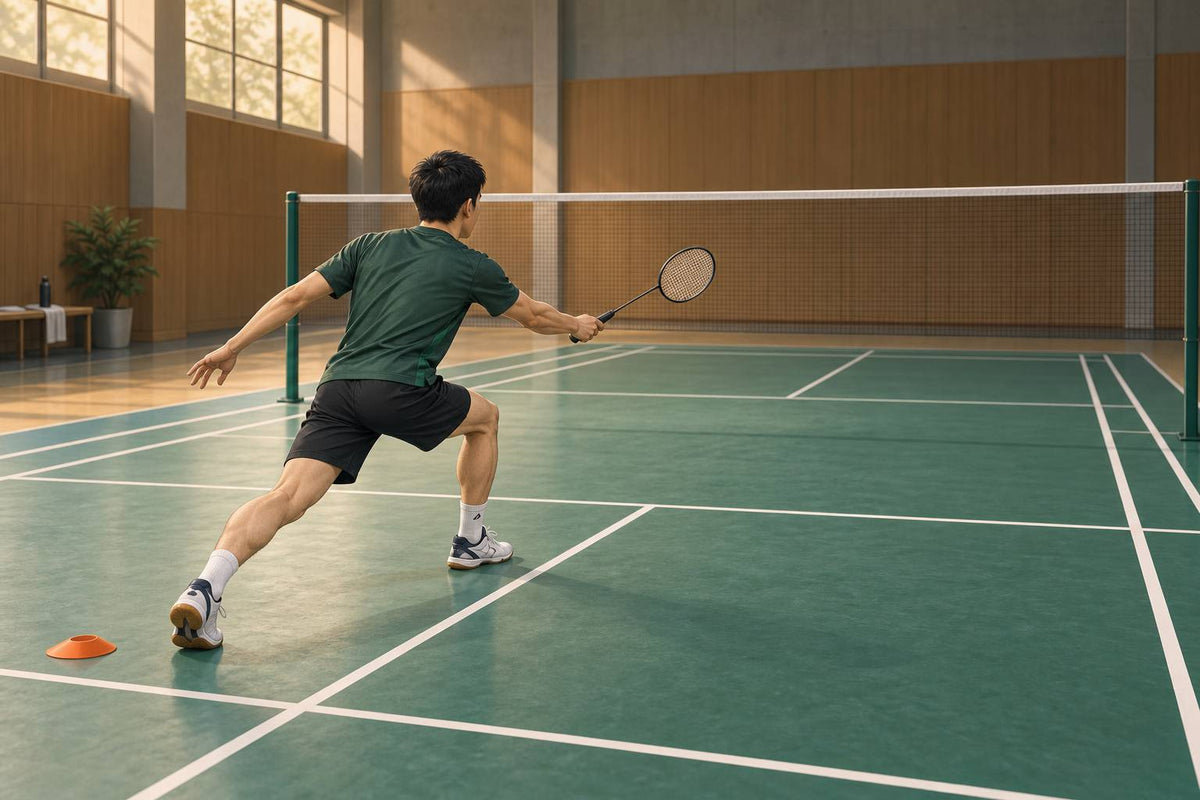
Illustration of a badminton player lunging at the net to hit an underarm lob shot toward the back court
Illustration of a badminton player practising six-corner shadow footwork on an indoor court without a shuttle

Leave a comment

This site is protected by hCaptcha and the hCaptcha Privacy Policy and Terms of Service apply.