Last updated: July 2026 · Written by the team at Badminton House
Quick Answer: How Badminton Players Get Paid
Judge a playing career by its full support package—not tournament winnings alone.
Federation
Most supported: contracts, carding or squad funding may cover pay, coaching, travel and medical services.
Team/club
Company, institutional and European club contracts exchange employment or fixture availability for income.
Independent
Prize money, sponsorships and exhibitions fund the player, who also carries operating costs.
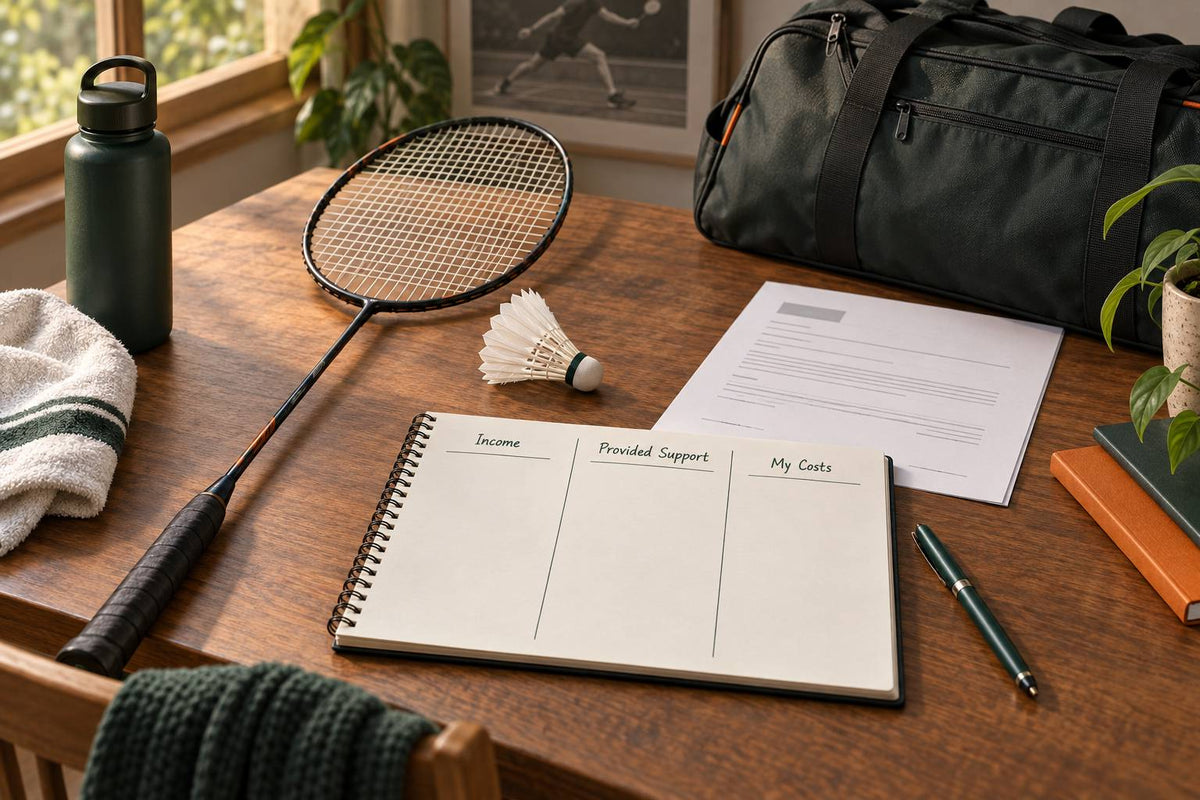
A tournament prize fund is not a player’s paycheque. In doubles, listed awards are per pair; at major sanctioned events, money can pass through a national association, with withholding tax applied before the player receives it. Travel, coaching and training costs then determine what remains. If you are judging whether elite badminton can support a career, do not start with the winner’s cheque—ask who covers expenses and whether income continues after an early exit.
How badminton players get paid depends heavily on the system around them. Income may come through federation support, company or institutional employment, European club contracts, equipment sponsorships and sanctioned exhibitions. Coaching often becomes the next career. This guide separates those streams and explains what players and families should examine before treating competitive results as a financial plan.
In This Guide
- How Badminton Players Get Paid From Tournaments—and What Remains
- Federation Contracts, Carding and National Squad Support
- Company Teams, Institutional Jobs and European Club Contracts
- Equipment Sponsorships and Exhibition Fees
- Coaching After Competition—and What Families Should Understand
- Which Income Path Fits?
How Badminton Players Get Paid From Tournaments—and What Remains
BWF World Tour prize money follows mandatory distribution tables, not an organizer’s discretionary split. Depending on event level, a singles champion receives 7–8% of the total fund, while a doubles title receives 7.4–8.4% per pair. That “per pair” point matters: partners divide one award. At Levels 2–3, a last-32 singles player receives only 0.10% of the fund.
Payment also requires a confirmed result; receiving a first-match bye alone does not qualify. For every World Tour event and any tournament with at least US$75,000 in prize money, organizers route payment through BWF or the continental confederation to the player’s national association. The association must normally pass it on in full within four weeks of receipt, unless it and the player mutually agree to another schedule or a deduction.
The published award is therefore gross, not take-home income. Withholding tax may be taken at source, while travel, accommodation, coaching and other support costs further reduce what remains. The headline prize fund is never one player’s payday.
Federation Contracts, Carding and National Squad Support
For an association-contracted player, getting paid can mean a tiered monthly salary or allowance rather than relying entirely on tournament results. The federation may also arrange coaching, training support, medical treatment, sports science, tournament entries, travel and accommodation. Those services have real financial value even when they never appear in the athlete’s bank account.

An independent professional carries the other side of that equation: choosing and paying coaches, securing training venues, finding sponsors and managing tournament logistics. Independence can offer more control, but it also shifts both cost and administration onto the player.
Carding is a separate model. Select athletes may receive direct grants alongside programme-funded coaching, sports science, medicine and travel support. Awards can be means-tested and commonly depend on an athlete agreement, demonstrated performance potential and continued participation in the high-performance programme. Federation oversight may also shape sponsorship and other commercial arrangements.
Company Teams, Institutional Jobs and European Club Contracts
Corporate-team systems can treat players as company employees competing against teams from other businesses. Athletes may train and compete at elite level while still spending part of the day learning or performing workplace duties. Formal employment contracts can govern matters such as contract length, salary and permitted increases.
India offers another salaried route through sports-quota recruitment into the railways, defence forces, public-sector enterprises and banks, with badminton included among eligible sports. These are institutional posts rather than prize-money arrangements.
European club leagues work differently. In Denmark, for example, a club may contract a player’s availability for a season of team fixtures. Some international players live and train locally; others fly in specifically for league matches. These agreements are not casual invitations: registration and transfer rules can make contractual obligations enforceable. If a club or association proves that a player remains under contract, BWF can rule on the dispute and impose ineligibility for up to 12 months.
Equipment Sponsorships and Exhibition Fees
Equipment agreements can create income and reduce costs. Personal or programme-level packages may cover rackets, strings, apparel, shoes, bags, shuttlecocks, stringing and technical support. Personal deals can include annual payments, while national-team agreements often bundle equipment and services across several years. A manufacturer’s federation deal funds the programme; it is not automatically salary paid to each athlete.
Shirt advertising space is limited. BWF rules allow no more than five advertisements in total across listed shirt positions, with size limits; national flags and emblems count. National associations may supervise players’ sponsorship arrangements, so personal agreements must fit federation and event rules.
Appearance money belongs to a separate category. Players may receive money or goods for sanctioned exhibition matches, but not an extra appearance fee simply to enter an ordinary competitive match beyond official prize money. Company- or individually promoted exhibitions require sanction from the relevant national association for domestic play or BWF for international play.
See the frames and strings pros play with in the badminton racket collection.
Coaching After Competition—and What Families Should Understand
Coaching can be a designed second career, not merely a fallback. BWF coach-education courses help active and retired players enter its coaching pathway, while credential equivalency can recognize national qualifications as BWF Level 1 or Level 2. That matters because coaches may work across countries, and associations that support elite squads also employ coaches.
For families, the visible route may run from school and community play through high school, university, club, federation or company systems. But those systems do not finance development in the same way: one may provide coaching, travel and support services, while another leaves more of those costs and logistics to the player and family. Ask who pays at each stage, what selection or contract controls support, and what education remains available outside badminton.
Junior results may open a pathway, but they do not guarantee a future salary. Build progression around health, learning and sustainable motivation; the guide to junior burnout warning signs can help families recognize when ambition is becoming overload.
Which Income Path Fits?
No route guarantees a living. Choose by comparing financial stability with control over coaching, competition and commercial deals.
| Path | Choose this if… |
|---|---|
| Federation-managed | You value salary or allowances plus centrally managed coaching, medical support, travel and tournament planning. |
| Independent professional | You want control and can secure sponsors while paying for your own coaching, venue and travel. |
| Company or institutional team | You prefer salaried employment and accept work duties or team-contract conditions alongside badminton. |
| European club contract | You can add paid league fixtures to a broader competition schedule. |
| Post-career coaching | You are planning portable work after competition through recognised coach education. |
Get 10% off your first order
Join the Badminton House list and we’ll email you a 10% welcome code — plus training guides, technique advice, and badminton updates.
By subscribing, you agree to receive Badminton House emails and can unsubscribe anytime.
We play badminton ourselves, and we know that a professional setup only makes sense when it suits the player. If you want practical advice on racket choice, string feel or maintaining your gear, contact us and we’ll help you think through the decision.
See the gear behind the game
The frames and strings pros play with are here; check live availability.
Browse Badminton RacketsNeed help choosing? Contact us anytime.

Leave a comment
This site is protected by hCaptcha and the hCaptcha Privacy Policy and Terms of Service apply.