
Last updated: July 2026 · Written by the team at Badminton House
Quick Answer: Junior Badminton Canada Pathway
For junior badminton in Canada, start with age-appropriate lessons, use provincial events to test readiness, and treat Junior Nationals as a ranking-based pathway rather than the first tournament goal.
Default
Best path: lessons first, then local or provincial junior events once the player can rally, serve, move safely, and handle basic scoring under pressure.
Lessons
For younger beginners, Shuttle Time and NCCP Community Sport–Initiation are entry points focused on fundamentals before ranking points matter.
Nationals
For serious U13, U15, U17, and U19 players, track provincial eligibility, age cutoffs, and ranking results early because Junior Nationals sit at the end of the competitive pathway.
If your child has gone from school-gym rallies to asking about tournaments, junior badminton in Canada can feel surprisingly hard to decode. There are lessons, club programs, provincial circuits, age categories, rankings, selection lists, gear rules, and eventually Junior Nationals, and most parents are trying to understand it while also figuring out whether their kid actually needs a new racket, shoes, or feather shuttles yet.
The pathway is real, but it does not have to be intimidating. More than 2 million people in Canada have picked up a badminton racquet and played, and at the competitive end, the 2026 Canadian Junior Championships concluded in Winnipeg on June 9, 2026 with 453 entries from across the country. Between those two points is the practical parent question: what is the next right step for your junior (lessons, local events, provincial tournaments, or national-level preparation)?
Getting a junior ready for court? Start with footwear that belongs on a badminton court. Browse badminton shoes from a Canadian badminton specialty shop with free Canadian shipping.
In This Guide
- What Are the Junior Age Categories in Canada?
- From First Lessons to Structured Coaching
- How Do Provincial Junior Circuits Work?
- How Do Provincial Results Lead to Junior Nationals?
- When Do Juniors Need Real Badminton Gear?
- Parent Gear Checks Before Sanctioned Events
- Local Events Can Be the First Competitive Step
- Which Junior Badminton Path Should You Choose?
What Are the Junior Age Categories in Canada?
In Canadian junior badminton, the main national age divisions are U13, U15, U17 and U19. The “U” means “under”: a player must stay under that age for the full calendar year in which the National Championships are held.
That calendar-year detail matters. It is not based only on the player’s age on tournament weekend. If a player turns 15 at any point during the Nationals year, they are not U15 for that season’s national age category.
Parent shortcut. Start by checking the birth-year chart from your provincial association, then confirm the tournament prospectus before entering. Provincial add-ons and play-up rules can change by province and event level.
| Category | Plain-English meaning | 2026 BC birth-year example |
|---|---|---|
| U13 | Player remains under 13 throughout the Nationals calendar year. | Born 2014 or later |
| U15 | Player remains under 15 throughout the Nationals calendar year. | Born 2012 or later |
| U17 | Player remains under 17 throughout the Nationals calendar year. | Born 2010 or later |
| U19 | Player remains under 19 throughout the Nationals calendar year. | Born 2008 or later |
Provincial age groups can be wider than Nationals
The national pathway focuses on U13 through U19, but provincial circuits may add younger divisions. Some provinces run U11 events. In Alberta, the minimum age for any sanctioned junior event is 8 years old. Ontario also trialed a U9 category in the 2024–25 season, with U9 players not permitted to play up because of Long Term Athletic Development requirements.
So if your child is younger than U13, the first competitive step is usually provincial or local rather than national. That is normal: younger divisions are often used to build court confidence, rules knowledge and tournament habits before the U13–U19 pathway becomes relevant.
Playing up, playing down and category fit
A player should not expect to enter a younger category just because it feels more comfortable. Players are not permitted to play down an age category. In Ontario, players may compete one age category up, while playing more than one category up requires approval from the Competitions Committee.
For parents, the practical question is not only “Can my child play up?” It is “Should they?” A strong U13 player may gain useful experience in U15, but a rushed play-up can also mean faster rallies, heavier hitting and less time to apply developing technique. Coaches usually have the best read on whether the challenge is productive or simply overwhelming.
Eligibility checklist before entering
- Check the player’s birth year against the current provincial age chart.
- Confirm whether the event uses national U13–U19 divisions or includes U11/U9 options.
- Do not enter a lower age category.
- If playing up, confirm how many categories are allowed and whether approval is required.
- Read the tournament prospectus before registration, especially for sanctioned provincial events.
From First Lessons to Structured Coaching
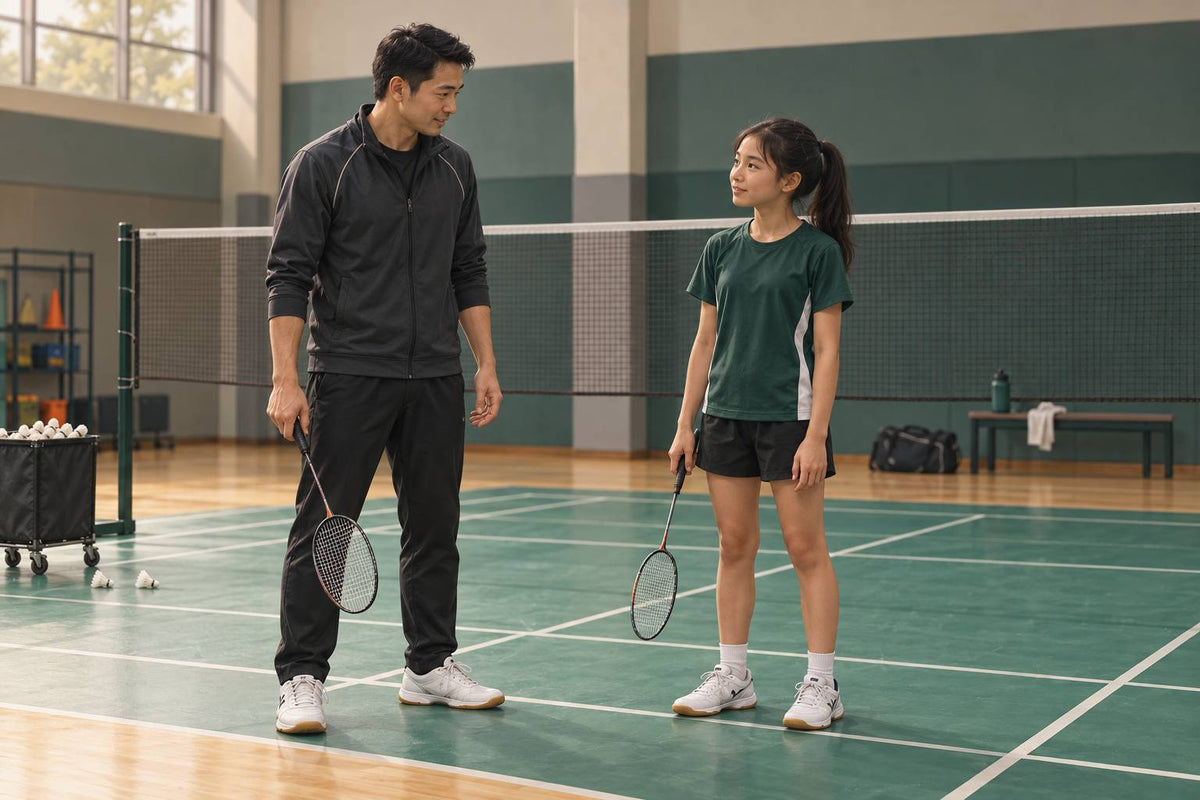
For most families, the junior badminton pathway in Canada should start with movement, coordination, and a clean technical base, not rankings. A good first program helps kids learn how to hold the racket, move to the shuttle, and make simple shots before tournament pressure enters the picture.
Parent shortcut: if your child is new to badminton, look for a beginner program built around fundamentals first. Pair lessons with simple at-home habits from our badminton footwork basics guide before worrying about advanced rackets or tournament seeding.
Shuttle Time: the grassroots starting point
Shuttle Time is a grassroots entry program designed by the Badminton World Federation and adapted by Badminton Canada to introduce fundamental badminton skills to beginners. The skills introduced include basic grip, net shots, lifts, clears, and drops.
In British Columbia’s after-school version, Shuttle Time is taught by NCCP-certified coaches for kids ages 8–12, with players grouped by physical literacy. That grouping matters: an athletic 9-year-old who moves well may need a different starting pace than a 12-year-old who is brand new to racket sports.
| Stage | Typical focus | What parents should watch for |
|---|---|---|
| First lessons | Grip, basic contact, net shots, lifts, clears, drops | The child can rally safely, follow instructions, and enjoy the court without being rushed into competition. |
| Structured beginner coaching | Movement patterns, repeatable strokes, simple tactics | The coach corrects technique early instead of only feeding shuttles and running games. |
| Pre-competition group | More consistent footwork, serving, doubles rotation, match routines | Training starts to look more organized, but the goal is still long-term development rather than chasing every event. |
| Competitive pathway | Provincial junior events, ranking points, event preparation | The coach understands the relevant provincial circuit and the child has the maturity for wins, losses, travel, and longer days. |
Where NCCP coaching fits
Badminton Canada’s NCCP Community Sport–Initiation stream targets children ages 6–10 with little to no badminton experience. That is the right mindset for early junior badminton: teach the game in a way that matches the child’s age, attention span, and physical development.
As players move toward sanctioned events, coaching credentials scale with the level of play. Regional Coach certification is required to coach on court at provincial junior series, provincial championships, and Badminton Canada Junior/Senior Elite series events. Provincial Coach certification is required at National Championships. Competition Development certification is required at the Canada Winter Games and for National Team programs.
Questions to ask before signing up
- Is this program meant for first-time players, developing juniors, or tournament players?
- What age range is the group built for, and are children grouped by physical literacy or ability?
- Which fundamentals are taught in the first few weeks (grip, net shots, lifts, clears, drops, footwork, or match play)?
- What NCCP training or certification does the coach hold for this level?
- When does the program recommend a child try local or provincial junior events?
How Do Provincial Junior Circuits Work?
Once a junior moves beyond lessons and club play, the season usually starts to revolve around provincial events. Each province names its pathway a little differently, but the pattern is similar: regional or developmental events help newer competitors learn tournament routines, while higher-performance events are used for stronger players, seeding, ranking points, and provincial championship pathways.
For parents, the key is not just “which tournament is nearby?” It is “which tier fits my child right now?” Entering too high too early can mean expensive weekends with very little court time; staying too low for too long can slow development once a junior is clearly ready for stronger matches.
| Province | Example junior structure | What parents should understand |
|---|---|---|
| Alberta | Junior GOLD is the high-performance stream for juniors training several times a week. It includes U11 through U19; eligible U13–U19 results can feed the National Junior Ranking, while U11 events have no national ranking. | Lower-tier circuit points count provincially only, so the right event depends on whether the goal is development, provincial ranking, or exposure to the national pathway. |
| Ontario | Ontario uses Jr High Performance A, Jr Competitive B, and Jr Regional C tournaments, all of which count toward Ontario ranking points. | Memberships are required per division and run September through August. Popular junior events may use pre-registration selection lists, where only selected players may register. |
| British Columbia | BC protects its Junior B pathway by making players ranked in the top 16 singles positions ineligible for the BC Junior B Series and B Provincials. | BC Junior Ranking is calculated from a player’s four best results in a discipline across sanctioned BC Junior Series events, BC Junior Provincial Championships, and National Circuit Events. |
Parent translation: “A,” “B,” “C,” “GOLD,” and “regional” do not mean exactly the same thing in every province. Read your provincial tournament regulations before entering, especially if your child is changing age groups or travelling outside your usual circuit.
How points usually shape the season
- Pick the correct level first. A high-performance event is usually meant for juniors already training seriously and playing other strong athletes in their age group. A regional or lower-tier event is often the better first step for learning match routines, scoring pressure, and tournament pacing.
- Rankings are usually discipline-specific. Singles, doubles, and mixed doubles can develop at different speeds. A junior may be ready for a stronger doubles draw before they are ready for the same level in singles.
- Protected tiers matter. BC’s top-16 singles exclusion for Junior B events is a good example of how provinces try to keep developmental draws meaningful instead of letting top players dominate every level.
- Best-results systems reward consistency. In BC, the ranking calculation uses a player’s four best results in a discipline, so one poor weekend does not necessarily define the season.
- Registration is not always first-come, first-served. Ontario’s popular junior events can use selection lists: only selected players may register, and waitlisted players who register anyway are removed and refunded less a $25 admin fee.
- National ranking mechanics come next. Provincial tiers are the weekly pathway; the next section explains how provincial results can connect to Junior Nationals.
If your junior is moving into sanctioned events, it is also worth building a repeatable tournament routine early. A simple bag checklist, spare grip, water, snacks, and the right court footwear remove avoidable stress before the first match. For a practical packing baseline, see our badminton tournament bag checklist; for shoes, start with the badminton footwear collection. Badminton House ships free across Canada.
How Do Provincial Results Lead to Junior Nationals?

For competitive juniors, provincial events are not just “more tournaments.” The right events can feed into the Junior National Ranking, which helps shape who gets into higher-level national opportunities.
Badminton Canada’s Junior National Ranking is based on a player or pair’s best four results from Provincial, National, and International events hosted in Canada. That “best four” structure matters for families planning a season: one poor result does not define the year, but juniors still need enough quality events to build a ranking profile. Our Badminton Canada rankings explainer walks through the national points tables, the senior-versus-junior counting rules and how ranking feeds seeding.
Ranking note for parents
- Best four results count: the national junior ranking uses the player or pair’s best four eligible results.
- Age-category move-ups reset momentum: when a player moves up an age category, only 30% of their existing points carry over.
- Doubles matters separately: singles, doubles, and mixed doubles are different disciplines, so families should think about partner consistency and event selection early.
That 30% carry-over rule is a big reason U15-to-U17 and U17-to-U19 transition years can feel different. A player who was near the top of one age group may need time to rebuild points against older, stronger athletes. For parents, this is a good moment to focus less on a single weekend result and more on training quality, recovery, and choosing the right events.
Where the Junior Super Series fits
Badminton Canada added three Junior Super Series events to create higher-level competition for top-ranked juniors. These events sit above the everyday local tournament experience: they are designed to give strong juniors more meaningful matches against players chasing similar national goals.
Entry into Junior Elite Series events is merit-based rather than simply first-come, first-served. Entries are seeded, and top-ranked athletes are accepted into the main draw. In practical terms, this means a junior’s ranking and eligible results can affect whether they get into the events that offer the strongest competitive environment.
What Junior Nationals looks like
At Junior Nationals, athletes can compete in up to three events across the four junior age categories: U13, U15, U17, and U19. Each age category is contested in five disciplines: Men’s Singles, Women’s Singles, Men’s Doubles, Women’s Doubles, and Mixed Doubles.
| Junior Nationals element | What it means for families |
|---|---|
| Up to three events | A junior may enter multiple disciplines, but match load, recovery, and partner readiness should be considered. |
| Four age categories | U13, U15, U17, and U19 players compete within the national junior pathway. |
| Five disciplines | Singles, level doubles, and mixed doubles are all part of the championship structure. |
| National field | The 453-entry field mentioned earlier shows the scale: Junior Nationals brings together players from across Canada, not just one province or region. |
For older juniors, Nationals can also connect to the international pathway. U19 players at the 2026 event could earn ranking points toward the VICTOR BWF World Junior Championships 2026 in Cairo in October.
Parent tip: do not rely on old provincial eligibility pages when planning a Nationals run. Provincial-to-national qualification rules can change by season, and families should confirm current requirements with their provincial association before building the tournament calendar.
When Do Juniors Need Real Badminton Gear?

Starter sets are fine for the first stage of junior badminton in Canada: getting kids rallying, moving, and enjoying the sport. The upgrade point usually comes when lessons become regular, the coach starts correcting technique, or the player enters sanctioned events where consistency matters more than just having a racket in hand.
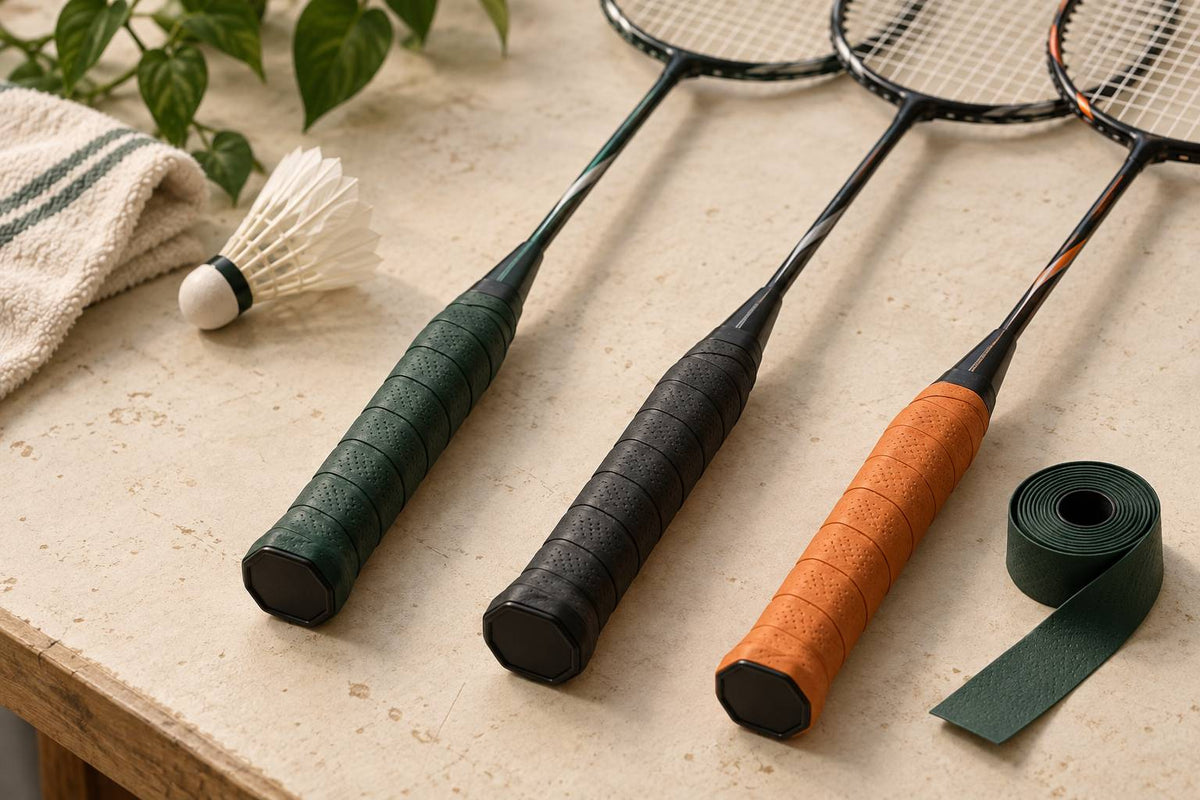
Racket length is the first thing to check. Babolat lists junior badminton racket lengths as 540 mm for ages 6–9, 620 mm for ages 10–14, and full-length 662 mm or 675 mm rackets for players over 14 and adults, with earlier movement to full length depending on level. Other sizing guidance is a little more flexible: kids over ten are often ready for adult-sized rackets, but height and coordination still matter. Some children can manage a full-size racket from around age 8, while others are better served by a junior racket until around age 11.
Simple parent check: if your child has to grip far up the shaft to swing comfortably, the racket may be too long. If the racket is too short, consistent hitting becomes harder as rallies get faster.
| Player stage | Gear signal | What to consider |
|---|---|---|
| First lessons | Learning grip, clears, drops, lifts, and net shots | A comfortable junior length is more important than buying the most advanced racket. |
| Regular coaching | The player can rally consistently and swing without choking up on the shaft | This is often the right time to compare proper badminton rackets, especially lighter options. |
| Provincial pathway | Training intensity increases and shuttles become part of the weekly cost | Higher-level junior programs may require players to supply feather shuttlecocks, even if nylon shuttles are included at earlier levels. |
| Tournament-ready | Strings are wearing out, tension feels inconsistent, or the racket was never strung for the player | Use a badminton-specific stringing service for junior tension advice instead of guessing. |
Weight matters as much as length. Badminton rackets use a “U” weight system where a lower U number means a heavier racket: 3U is roughly 85–89 g, 4U is 80–84 g, and 5U is 75–79 g. Lighter U-weight rackets are usually the better starting point for juniors and beginners because they are easier to swing repeatedly, especially in doubles, defence, and fast net exchanges.
That does not mean every junior needs the lightest possible racket. A taller U17 or U19 player with strong technique may prefer something more solid, while a younger U13 player may need the easiest swing possible. The useful question is not “What age is my child?” but “Can they swing this racket at full speed with correct grip, relaxed shoulders, and no compensation?”
Shop Badminton Rackets for Junior Progression
Choose by fit, swing speed, and coaching stage, not just age.
Parent Gear Checks Before Sanctioned Events

Once your junior starts entering sanctioned events, the gear check becomes more than “do they have a racket?” A small miss (eyewear, shorts length, court shoes, spare grip) can create stress on tournament morning.
Parent shortcut: pack for the rules first, then performance. Protective eyewear, uniform compliance, and proper footwear should be checked before you worry about strings, grips, or spare rackets.
| Check | What parents should confirm | Why it matters |
|---|---|---|
| Protective eyewear | In Ontario sanctioned junior events, all junior participants must wear protective eyewear meeting the ASTM F803 standard whenever more than two junior players are on the same court. | Doubles warm-ups and matches can put four juniors on court, so eyewear is not something to leave in the car. |
| Uniform | Sanctioned junior events require players to comply with Badminton Canada’s Competition Uniform Policy. Shorts extending below the knee are deemed inappropriate. | A comfortable practice outfit may not meet event expectations, especially as juniors move into higher-level provincial events. |
| Footwear | Teen juniors moving past gym sneakers should be in proper badminton court shoes. See our badminton footwear collection, including the Babolat Shadow Tour Men’s Badminton Shoes - Orange. | Junior footwork gets faster in competition, and badminton-specific shoes are a better match for repeated lunges, stops, and directional changes than general gym sneakers. |
| Racket and strings | Check for frame cracks, loose grommets, fraying strings, and a grip that is not slipping. If your junior is competing regularly, do this the week before the event rather than the night before. | A broken string during warm-up is manageable only if there is enough time, a backup racket, or access to stringing support. |
| Bag basics | Pack eyewear, event-compliant clothing, shoes, racket, water, towel, spare shirt, and any shuttles the event or coach has told your junior to bring. | Sanctioned events often involve waiting between matches, so juniors need to stay ready without relying on a parent to run home. |
Footwear is usually the first serious upgrade for teen juniors
Parents often focus on the racket first, but shoes become critical as rallies get faster. A teen who is now split-stepping, lunging, recovering, and playing doubles defence is no longer moving like a casual gym-class player.
If you are deciding whether running shoes are still acceptable for badminton, start with our guide to badminton shoes vs running shoes. It explains why indoor court movement is different from straight-line running, which is especially important for juniors who are training multiple times per week.
A simple pre-event routine
- One week out: check racket condition, grip, strings, shoes, and whether any uniform or eyewear rule applies to the event.
- Two days out: pack the tournament bag and confirm your junior has event-compliant clothing, including shorts that do not extend below the knee.
- Match morning: put eyewear, shoes, racket, water, and clothing in the bag before anything else.
For Canadian families buying last-minute essentials, ordering from a domestic badminton specialty shop can help avoid international shipping delays, and Badminton House offers free Canadian shipping.
Local Events Can Be the First Competitive Step
If Junior Nationals still feels far away, step back to the most practical next step: local events. District-level junior tournaments can give a young player a real match-day routine before the family commits to a heavier provincial calendar.
Ottawa is a useful example. The Ottawa District Badminton Association lists local junior ranking tournaments, and its tournament calendar has also included an Ontario Junior C stop hosted in Ottawa. That kind of event can help juniors learn how to arrive prepared, check in, warm up, manage nerves, and play multiple matches in a structured setting. If you have never registered a junior for one, our guide to entering a first badminton tournament in Canada covers provincial memberships, entry fees, flight choice and how online entry works.
Why local events matter before bigger travel
- They make competition familiar. A first sanctioned-style day is easier when the venue is local and the family already knows the routine.
- They reveal practical gaps. Parents quickly learn whether the junior needs better court shoes, spare grips, extra shirts, snacks, or a calmer pre-match warm-up.
- They build confidence gradually. A junior does not need to start by chasing national points; learning how to compete well locally is part of the pathway.
- They connect families to the local badminton community. Coaches, clubs, and other parents are often the best source of next-step guidance.
For Ottawa families, pairing a local event calendar with nearby practice options is a sensible first move. Use our Ottawa badminton facilities guide to find clubs, drop-ins, and courts where a junior can get more touches before entering a bigger tournament.
Before registering, read the event page carefully and confirm details such as age category, eligibility, registration process, eyewear rules, uniforms, shuttles, and check-in timing. The goal is simple: make the first competitive step feel organized, not overwhelming.
Which Junior Badminton Path Should You Choose?
The right path depends less on age alone and more on training commitment, tournament readiness, and whether your child is trying to learn, get ranked, or qualify upward. Use this quick comparison to place your junior in the right lane without rushing the process.
| Choose this path | Best fit | What to watch |
|---|---|---|
| Intro lessons or Shuttle Time | Kids learning basic grip, net shots, lifts, clears, and drops before entering tournaments. | Look for age-appropriate coaching: Badminton Canada’s Community Sport–Initiation stream targets ages 6–10, while BC’s Shuttle Time after-school version is for ages 8–12. |
| Local district events | Juniors who want a first competitive step before committing to a full provincial circuit. | District feeder tournaments exist below provincial level, including Ottawa District junior ranking tournaments and an Ontario Junior C stop hosted in Ottawa. |
| Regional or B/C-level provincial events | Players ready for sanctioned competition but not yet in the top provincial tier. | These tiers can be protected: for example, BC excludes top-16 singles players from its Junior B pathway, and Ontario uses A/B/C-style junior tiers. |
| Top provincial circuit | Juniors training several times per week and chasing stronger seeding or national ranking progress. | Expect ranking math to matter: Alberta GOLD connects to provincial and national points, BC rankings use best-four results, and national ranking also uses a best-four-results model. |
| Junior Super Series or Junior Elite Series | Top-ranked juniors who need higher-level matches against the strongest Canadian fields. | Entry is merit-based rather than first-come-first-served, with seeded entries and top-ranked athletes accepted into the main draw. |
| Junior Nationals track | U13 to U19 athletes aiming at the Canadian Junior Championships and, for U19 players, possible world-stage ranking opportunities. | Plan early: athletes can enter up to 3 events, and players moving up an age group carry only a partial points transfer. |
If your junior is entering sanctioned events or training more often, prioritize proper court footwear before premium rackets; you can browse Canadian badminton footwear; Badminton House offers free Canadian shipping.
Get 10% off your first order
Join the Badminton House list and we’ll email you a 10% welcome code — plus subscriber-only restock alerts, giveaways, and honest gear advice from players.
By subscribing, you agree to receive Badminton House emails and can unsubscribe anytime.
If your junior is moving from first lessons toward tournaments, keep the gear choices practical: a racket they can swing cleanly, strings that suit their level, and proper indoor court shoes before they start sliding around in gym sneakers. We play badminton ourselves, so if you are unsure what your child actually needs next, contact us for advice and we will help you choose the right next step.
Free shipping in Canada · 14-day returns · Canadian badminton specialty shop

Leave a comment
This site is protected by hCaptcha and the hCaptcha Privacy Policy and Terms of Service apply.