
Last updated: July 2026 · Written by the team at Badminton House
Quick Answer: Same Tension Feels Different
The requested pounds describe a machine reference, not a guaranteed final feel. Compare the full setup before changing the number.
Same recipe
For the closest repeat: keep the racket, string, reference tension, and process consistent.
Small shift
Change one input at a time, play with it, and record what actually changed.
Quality check
When the result surprises you, verify the recorded inputs and ask how the job was produced.
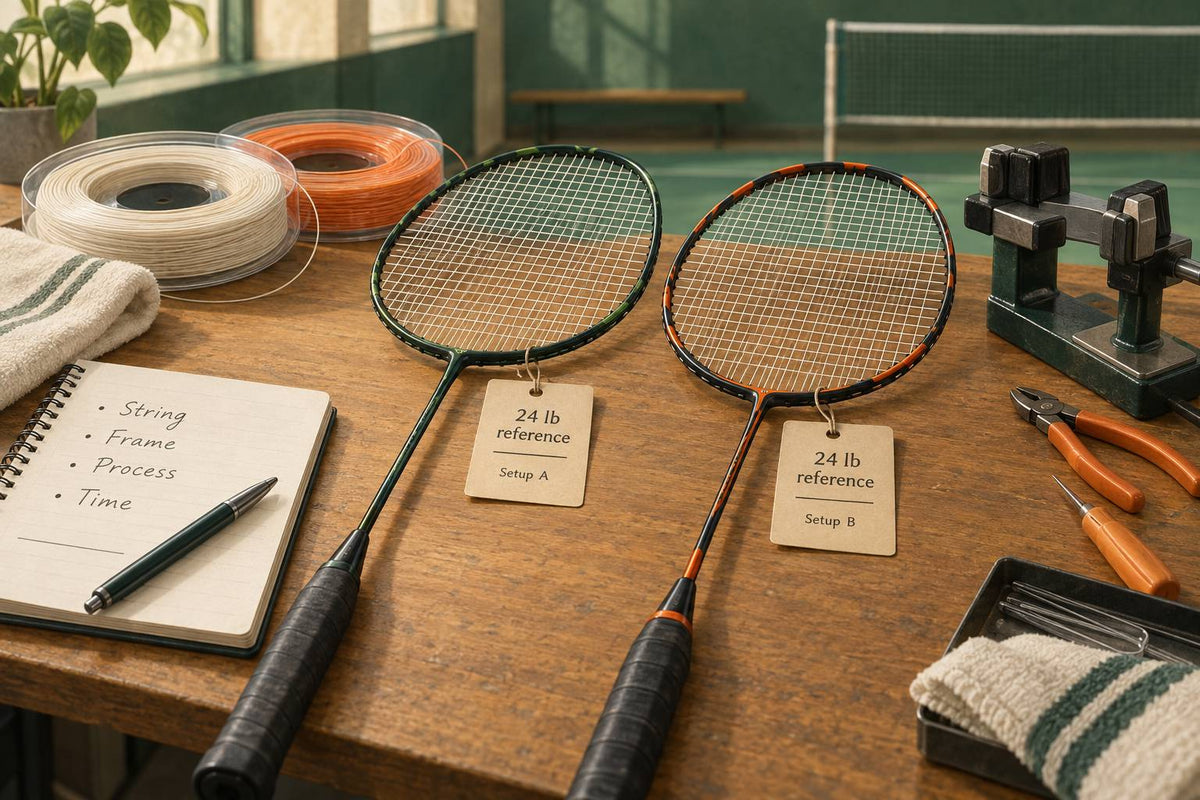
Two rackets carrying the same requested tension can still feel different: one may respond more crisply while the other seems to hold the shuttle a little longer. That does not automatically mean a mistake was made. The entered number is a reference for the pulling step, while the finished string bed reflects the machine, calibration state, clamps, timing, string, pattern, frame, and conditions around the job.
This distinction matters most when you move between stringers or try to repeat a favourite setup months later. Instead of treating pounds as a universal score, preserve the surrounding details and compare changes one variable at a time.
In This Guide
Same Reference Tension, Different Pulling System
When players say the same badminton string tension feels different, the first thing to separate is reference tension from final string-bed feel. The number entered on the machine is the target the machine pulls toward; it is not a portable guarantee that every racket will leave every shop feeling identical.
A lock-out tension head reaches its reference and then stops pulling. A constant-pull head continues responding while the string elongates until it is clamped. Those are different ways of controlling the pull, so the same displayed value is not automatically portable between them. Neither design by itself guarantees a better string job; consistency of the complete process matters more than treating the machine label as a quality grade.
Timing also belongs to the method. String continues relaxing while it is held under load, so the interval between reaching the reference, placing the clamp, and moving to the next string can influence the finished bed. An experienced operator develops a repeatable rhythm around the machine being used.
If you are choosing an initial reference number rather than reproducing a known setup, begin with the badminton string tension guide. Once you have a useful baseline, record the machine or pulling system when known instead of applying a universal conversion between systems.

Calibration, Grippers, and Clamps Change the Actual Pull
Calibration connects a machine’s displayed reference with its physical pull. It is one part of repeatability for both mechanical and electronic equipment, but it is not a home adjustment exercise. Machine owners should use only the manufacturer’s operating or service procedure for their exact model.
The GAMMA 7500 Els manual illustrates why model-specific guidance matters: it treats calibration, gripper condition, and clamp adjustment as separate parts of operating the machine. A display can be accurate while another contact point still changes how much tension remains in the string between pulls.
Grippers must hold the string without slipping or crushing it. Clamps then preserve the completed pull while the next string is tensioned. Clamp pressure, placement, and the timing of release all affect how much tension is transferred or lost locally. Different string gauges and constructions can require different clamp handling, which is a process variable rather than evidence that one operator or machine is inherently superior.
When two jobs feel far apart, ask for the recorded machine and process details and confirm that the equipment was maintained according to its manufacturer documentation. That is more useful than assuming the displayed number tells the entire story.
String, Pattern, and Process Shape the Result
String material, construction, gauge, and elapsed time after stringing influence how the bed responds after the pull. Two different strings at one reference tension are not controlled equivalents: they can stretch, slide at intersections, and return energy differently. Even a fresh job with the same string can change if the mains and crosses are installed with a different sequence or reference.
Pattern creates friction wherever crosses weave over and under mains and wherever string changes direction through a grommet. That friction means tension is not redistributed instantly or perfectly across the whole bed. Pull sequence, weaving, straightening, clamp placement, and tie-offs therefore form part of the outcome, even when the machine display never changes.
Cross and Bower measured tennis rackets, not badminton rackets. Their work should not supply badminton-specific offsets, percentages, or adjustment rules. It is useful here only for the general mechanisms they observed: stress relaxation in string, friction within the woven bed, and frame distortion during installation. Together, those mechanisms explain why pull tension and finished string-bed stiffness are related but not identical.
Frame and Environment Complete the Setup
The racket is not a passive holder. Head shape, stringing pattern, grommet condition, and how the frame is supported during the job all influence the geometry in which the bed is built. Two models can therefore produce different feel with the same string and reference tension. Stay within the racket manufacturer’s stated tension range and do not treat a preferred number from one frame as automatically suitable for another.
Elapsed time matters as well. A newly finished bed is still settling, so compare rackets at similar points after stringing and after similar amounts of play. Temperature and humidity can also change the string and the player’s perception of response; the heat and humidity guide covers that interaction in detail.
For a useful setup record, note the racket model, exact string, reference mains and crosses, date, machine or pulling system if known, and the time between stringing and first play. Add a short description such as crisp, comfortable, lively, or demanding after the first comparable session.
When testing a change, hold the rest of that record steady. Change one input, play under comparable conditions, and keep the result before deciding on another change. This controlled comparison is slower than chasing a suggested pound offset, but it produces information that is actually portable to your own racket and preferences.
Which Should You Choose?
Choose the next step from the evidence you already have. The goal is repeatability and a controlled comparison, not selecting a machine type as the automatic winner.
| Choice | Choose this if... | Next action |
|---|---|---|
| Same recipe | You liked the result and want the closest repeat. | Reuse the recorded racket, string, main/cross reference, process, and first-play timing. |
| Small shift | You want to change feel without losing your baseline. | Change one variable, play under comparable conditions, and record the result before changing another. |
| Quality check | The result is unexpectedly different from a documented repeat. | Confirm the inputs and ask whether machine, clamps, timing, or pattern differed; do not assume a mistake. |
If you want help turning your notes into a clearer request, contact us before your next restring.
Need fresh strings or grips?
Keep your next setup focused on the string and grip choices you intend to compare.
Browse Badminton AccessoriesStrings, grips, and setup essentials for badminton players.



Leave a comment
This site is protected by hCaptcha and the hCaptcha Privacy Policy and Terms of Service apply.