
Last updated: July 2026 · Written by the team at Badminton House
Quick Answer: Badminton String Tension Humidity
When a venue feels different, keep a record of string age, condition and feel before changing your next restring; humidity alone does not determine the right tension.
Humid
Best choice: compare repeated sessions before adjusting tension; material softening does not establish a universal correction.
Dry
Discuss persistent harsh feel or breakage with your stringer rather than assuming one weather-based adjustment.
Gauge
Choose gauge by the specific string’s feel and durability; humid air alone is not a reason to go thinner.
Nylon-based badminton strings can respond to moisture and temperature. That can contribute to changes in material behaviour, but an installed stringbed also changes through use, settling and wear. The useful comparison is your actual setup over repeated sessions, not an automatic humid-versus-dry tension formula.
This guide explains what is happening in the string bed, how it affects power, control, and breakage risk, and how to adjust your next restring without overcorrecting.
Dial in your next restring. After you understand the climate effect, check live availability for strings and grips in our Accessories collection.
In This Guide
Why Nylon Strings React to the Air

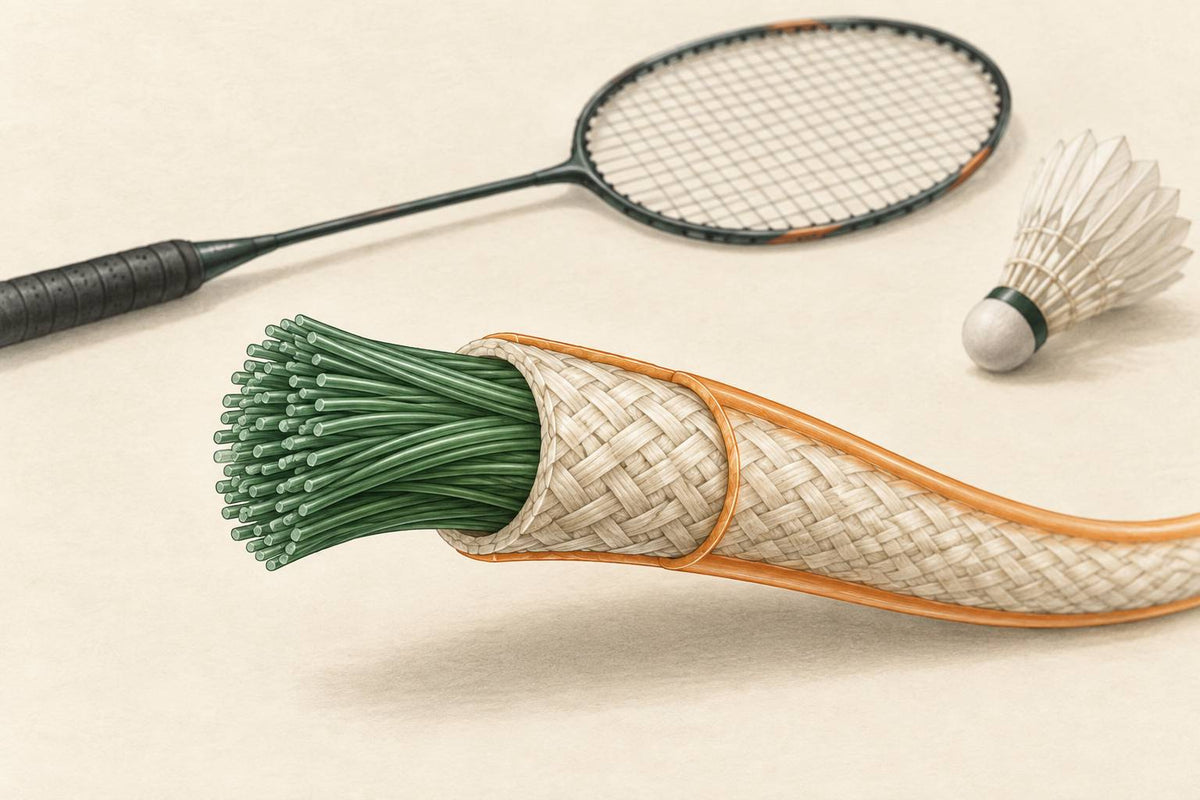
Badminton string tension humidity changes start with the material itself. Badminton strings are nylon-based, and nylon is a polyamide: its polymer chains contain polar amide groups that attract water molecules and can form hydrogen bonds with them. In plain English, the string is not sealed off from the air around it.
That makes nylon hygroscopic. In a humid hall, water molecules can move into the tiny spaces between polymer chains. In drier air, the process reverses and moisture leaves the material. The string bed is always moving toward equilibrium with the immediate surroundings, so it does not have one permanent “air condition” state.
A venue or storage change may contribute to a different feel, but so can string age, wear, shuttle speed and contact. Avoid assigning the change to humidity from a few rallies alone.
What Humidity Does to String Tension and Feel

Absorbed water acts like a plasticizer inside nylon: it lets polymer chains move more easily, which reduces stiffness and strength while increasing elongation and toughness. In badminton terms, the string bed can stretch a little more under the same hit instead of rebounding with the same crisp resistance.
This is why badminton string tension humidity changes are not just “feel.” A badminton-string materials study found humidity had the greatest influence on the string’s modulus of elasticity — its resistance to being stretched — ahead of tensile rate and temperature. That study tested the material response of a particular nylon string under controlled conditions; it did not measure a universal installed-tension loss or prescribe a 1–2 lb adjustment.
If your usual setup suddenly launches shuttles higher, sounds duller, or feels less precise on a muggy club night, compare string condition, shuttle speed and contact as well as the environment. For baseline tension choices, see our badminton string tension guide.
Why Cold, Dry Air Can Make Strings Feel Harsh

On the dry side, the problem is not just “less humidity” — it is how nylon responds when it releases moisture back into the surrounding air. In dehumidified spaces, nylon can dry out enough to become more brittle, which raises the chance of small cracks and sudden string failure. Dry conditions can also make strings contract and feel tighter, so the string bed may play firmer than the number on the machine suggests.
String breakage is not a reliable humidity meter. Wear at crossings, damaged grommets, mishits, age and a demanding setup can all matter; do not infer a particular impact force or cause from a broken string. Use the storage habits in our badminton racket care guide to reduce avoidable damage.
How to Adjust Your Next Restring

Treat climate as one input to a future restring. Material stiffness measured in a tensile test is not the same as installed tension; coatings, construction and use also matter. Replace a worn stringbed rather than trying to retension strings already installed.
Before your next restring, tell your stringer the conditions you actually play in most: a warm, humid gym several nights a week, or a cold, dry hall through winter. A stringer can weigh tension and gauge together for that pattern, rather than only chasing a single number pulled from a chart.
Change one variable at a time and give it a full session or two before adjusting again — judging a string bed after a handful of rallies can be misleading while it is still settling into the room's air. If you move regularly between a humid summer venue and a dry winter one, a spare racket can provide a comparison if you already have one; make any change at the next complete restring and stay within the frame’s instructions.
Which Setup Should You Choose?
Use your usual string tension as the baseline, then adjust for the court conditions you actually play in most.
| Condition | Choose this |
|---|---|
| Humid or warm | Keep a baseline and compare repeated sessions; humidity alone does not justify adding tension or choosing a thinner string. |
| Cold and dry | Investigate persistent harsh feel or breakage with your stringer, including wear, contact, gauge and the current setup. |
| Mixed conditions | Stay near your normal tension and change only after repeated sessions; nylon keeps re-equilibrating with its surroundings. |
| Frequent breaks | Choose a thicker gauge before adding tension; thicker strings are generally more durable. |
When in doubt, move one step at a time and reassess after your next few sessions rather than swinging tension or gauge dramatically in a single change.
Get 10% off your first order
Join the Badminton House list and we’ll email you a 10% welcome code — plus training guides, technique advice, and badminton updates.
By subscribing, you agree to receive Badminton House emails and can unsubscribe anytime.
Small string choices can change comfort, control, and breakage risk more than players expect. If your usual tension feels different after a venue or season change, ask us before your next restring — we play badminton and can help you choose a sensible tension and gauge. Send your questions through our contact page.
Need strings, grips, or restringing supplies?
Shop AccessoriesBrowse accessories and check live availability before your next setup change.

Leave a comment
This site is protected by hCaptcha and the hCaptcha Privacy Policy and Terms of Service apply.