
Last updated: July 2026 · Written by the team at Badminton House
Quick Answer: Badminton Mental Game Nerves
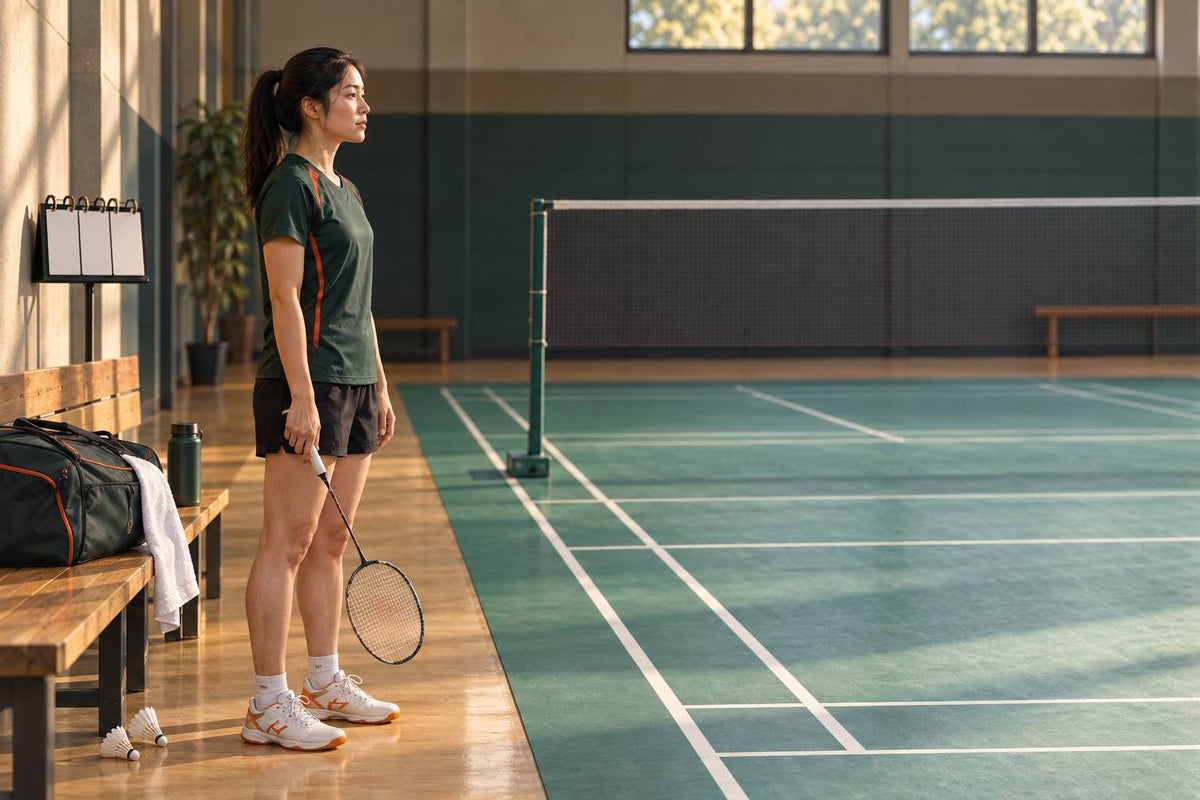
Use a repeatable between-rally reset first: steady your breathing, rehearse the next shot, and return to the same pre-point routine no matter the score.
Default
Best choice: build a simple pre-point routine and use it after every rally at every score (club night, league, or a first tournament in Canada).
Tension
If your body feels rushed, use box breathing: inhale, hold, exhale, and hold for four seconds each to create a controlled reset between rallies.
Spiral
If you lose several points in a row, stop analyzing the last error and switch to one cue: visualize the next quality shot, say a useful phrase, and play the next rally as a challenge.
Your legs feel heavy in warm-up. Your serve hand gets tight at 19-all. You know the right shot, but the rally starts and your brain jumps to the score, the opponent, the crowd, or the fear of missing. That is the frustrating part of badminton mental game nerves: they do not always mean you are unprepared. Often, they show up because the match matters.
The goal is not to become emotionless on court. A calm match player is not someone who never feels pressure; it is someone who has a repeatable way to steady the body, narrow attention, rehearse the next shot, and reset before one bad rally turns into five. That skill matters on a Canadian club ladder, at a first tournament, and in a tight doubles game on a cold gym night alike.
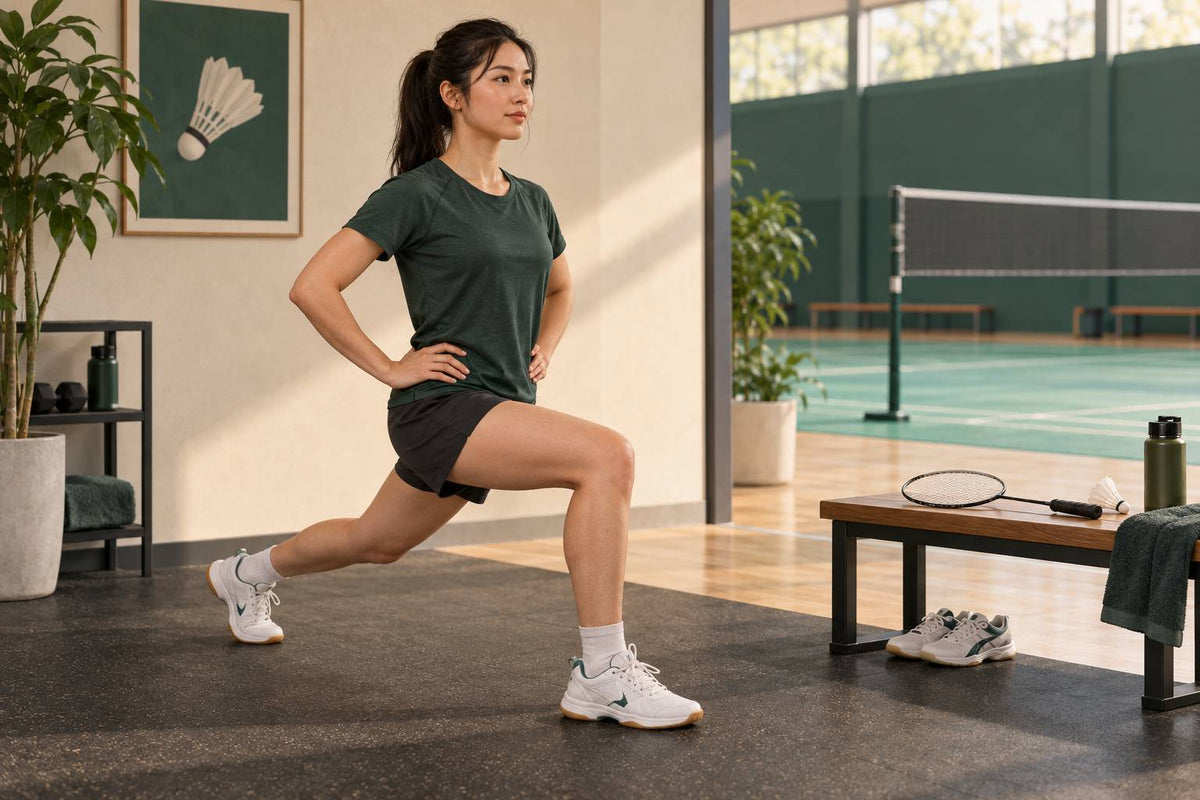
This guide gives you practical tools you can actually use between rallies: simple breathing, a pre-point routine, visualization, self-talk, reframing, and a reset plan for bad patches. Treat them like footwork or serve practice. The more consistently you train them, the more available they become when the score gets uncomfortable.
Build the full match routine, not just the mental one. When your gear, bag, and warm-up are organized, there is less to worry about before you step on court. Browse Badminton House’s Canadian badminton hub and essentials at our collections page. Free Canadian shipping is available on orders over $200.
In This Guide
- Why are badminton mental game nerves normal?
- How does box breathing steady the body between rallies?
- Build a pre-point routine that does not change with the score
- Use visualization and self-talk as shot rehearsal
- Reframe nerves as readiness, not danger
- Use a challenger mindset and reset after bad patches
- Which mental-game tool should you choose first?
Why are badminton mental game nerves normal?
Badminton mental game nerves are not a personality flaw. They are a normal response to playing a match that matters: a first tournament, a league playoff, a club ladder challenge, or even a tight third game at drop-in where everyone is watching the final rally.
A helpful benchmark from competitive racket sports: research cited for tennis found that about 73% of competitive players experience significant anxiety before important matches. Badminton is different from tennis, but the pressure pattern feels familiar: you care about the result, the score is public, and every serve or return can swing momentum quickly.
The key point: nerves are information, not a verdict.
The same fast heartbeat, alertness, and extra energy can feel like panic if you label it as danger, or like readiness if you label it as your body preparing to compete.
That interpretation matters. In one sport-performance summary, 25.5% of athletes said stress hindered performance through decreased concentration and physical tension, while 34% described stress as beneficial because it improved focus and motivation. The stress response itself was not the whole story; the athlete’s interpretation changed how useful it became.
For Canadian badminton players moving into more competitive settings, this is reassuring. You do not need to become a different person to compete better. You need a repeatable way to handle the normal surge: breathe, choose a target, rehearse the next shot, and reset after mistakes.
- If you are entering your first event: pair this mental-game guide with How to Enter Badminton Tournament Canada: First-Timer Guide.
- If you are starting regular competitive play: read Badminton League Canada: How to Find and Join One so the match environment feels less unknown.
The goal is not to eliminate nerves completely. A completely flat player often lacks urgency. The goal is to make nerves useful: enough energy to move sharply, enough calm to see the court, and enough trust to play the shot you already know how to hit.
How does box breathing steady the body between rallies?

When badminton mental game nerves hit, they usually show up in the body first: rushed breathing, tight shoulders, jumpy feet, or that feeling that the next rally is suddenly bigger than it is. Box breathing gives you a repeatable way to steady the body instead of simply telling yourself to relax harder.
Box breathing is a four-stage breathing cycle (inhale for 4 seconds, hold for 4 seconds, exhale for 4 seconds, hold for 4 seconds) used as a between-rally reset. Athletes use it as a focus tool under stress because it turns breathing into a trained performance protocol, not a vague hope that nerves will disappear.
The 4-4-4-4 box breathing cycle
- Inhale for four seconds: breathe in smoothly through the nose if that feels natural.
- Hold for four seconds: keep the body quiet without bracing your neck or shoulders.
- Exhale for four seconds: let the air out under control rather than dumping it quickly.
- Hold for four seconds: pause briefly, then repeat if there is enough time.
The reason this works is physical as much as mental. Slow, controlled breathing suppresses sympathetic activity and increases parasympathetic responses. In plain badminton terms, it helps shift you away from the “panic and rush” state and toward a steadier state where your hands, feet, and decision-making have a better chance to match your training.
Use the full cycle in practice, then shorten it for matches
A full box-breathing cycle is easiest to learn off court, before practice, or during rest breaks. In a match, you may not always have time for the full four-stage pattern between rallies. That is fine. The goal is not to perform a perfect breathing exercise; the goal is to have a reset you have practiced enough that it appears automatically under pressure.
- Full reset: use one complete 4-4-4-4 cycle during a longer pause, after a change of shuttle, or before stepping back into receive or serve position.
- Quick reset: take one controlled inhale and one controlled exhale while walking back to base or preparing for the next serve.
- Extended exhale: when time is tight, make the exhale slightly longer and smoother than the inhale to avoid rushing straight into the next rally.
Make it a trained cue. If you only try box breathing when you are already tense, it will feel awkward. Add it to warm-ups, shadow footwork breaks, and practice matches so the pattern becomes familiar before tournament pressure arrives.
What it should feel like on court
Box breathing should feel like you are taking back the tempo between rallies. You are not trying to erase adrenaline. You are giving your body a simple job: breathe, pause, release, pause. That small structure can stop one rushed point from turning into three more rushed points.
Keep the breath smooth and comfortable. Do not turn the holds into a contest, and do not make the technique so dramatic that it distracts you from the next tactical choice. The best version is almost invisible: a calm walk, a controlled breath, eyes back to the court, and then commitment to the next rally.
Common mistakes to avoid
- Waiting until panic mode: practice it when you are calm so it is available when the score feels heavy.
- Breathing too forcefully: the cycle should steady you, not create more tension in your chest, jaw, or shoulders.
- Using it as an escape: breathe to reset, then return to a clear badminton intention such as serve quality, first three shots, or holding base position.
Think of box breathing as the body-control layer of your mental game. You still need tactics, shot selection, and routines, but a steadier body makes those skills easier to access when nerves show up.
Build a pre-point routine that does not change with the score

When nerves start pulling your attention toward the score, the crowd, or the last mistake, a pre-point routine gives your focus a reliable home. A pre-point routine is a designed, pre-planned sequence of task-relevant thoughts and actions that prepares you physically, emotionally, and mentally before the next rally.
The key word is pre-planned. A routine is not a superstition and it is not something you invent at 19-19. It is a small script you repeat until your body recognizes, “This is how I get ready to play the next point.” Pre-performance routines have measurable performance value because they reduce decision-making in the moments right before execution.
A simple badminton pre-point routine
- See the next shot. Briefly visualize the serve, return, lift, net shot, or first movement pattern you want to commit to.
- Take one controlled breath. Use the breath as a reset so the previous rally does not keep accumulating in your body.
- Do one repeatable action. Set your grip, settle your feet, look at the target area, and move into your ready position the same way every time.
For a server, that might look like: check the receiver’s position, picture the low serve path, exhale, set the shuttle and racket, then serve. For a receiver, it might be: choose your return intention, breathe, soften your grip, split your attention between the server’s racket and shuttle, then hold your ready stance.
Keep the routine short enough that you can actually use it in a Canadian club night, league match, school tournament, or first sanctioned event. If it takes too long, you will abandon it when the score gets tight. If it is simple, you can repeat it when you are fresh, tired, winning, losing, or trying to close out a game.
The rule: same routine, every score. Use it at 0-0, 10-10, 19-19, after a great rally, and after a miss. The routine only works as an anchor if it does not change with the opponent, the scoreboard, or the emotion of the previous point.
This is especially useful after a loose error. Without a routine, many players rush the next serve or return because they want to “fix” the mistake immediately. With a routine, you give yourself a clear job: see the next action, breathe, set, play. That does not guarantee the point, but it stops one mistake from turning into three rushed rallies.
If you are preparing for your first competitive event, build this habit before match day so it feels familiar under pressure. The same approach fits the practical preparation in our first badminton tournament in Canada guide: remove as many surprises as possible, then give your attention one repeatable task at a time.
Use visualization and self-talk as shot rehearsal
Visualization works best when you treat it like a short rep, not a motivational movie. Before the next serve, you are rehearsing one clear action: the first three steps to cover a tight net shot, the shape of your lift, the contact point on your low serve, or the calm body language you want after an error.
Imagining an action uses the same part of the brain as doing it for real, which helps prepare the brain to execute the shot more accurately, quickly, and efficiently. Imagery interventions have also shown a medium overall effect on motor performance, motivation, and emotional outcomes. That is why it is common at the highest levels: about 70–90% of elite athletes report using motor imagery to improve performance.
A 5-second badminton imagery rep
- Pick one job. Do not visualize the whole rally. Choose the next task: low serve, deep clear, fast first step, or calm return of serve.
- See the flight. Picture the shuttle path and landing area. Keep it specific enough that your body knows the target.
- Feel the movement. Add the grip pressure, split step, swing rhythm, or recovery step you want.
- Use one cue word. Finish with a simple phrase like “smooth,” “front foot,” “lift high,” “early,” or “attack the space.”
The key is to visualize the action you can control, not the result you hope for. “Win this point” is too vague. “Serve low to the T and recover with my racket up” is useful because it gives your body an instruction.
Pair the picture with useful self-talk
Self-talk is not pretending everything is fine. It is the language you use to keep your attention on the next playable action. After a missed smash, “I always choke” gives you nothing to do. “Hit through the shuttle and recover” gives you a next rep.
This matters because negative self-talk is not harmless venting. It can increase error rates in subsequent points by about 20%. In badminton, that can turn one loose net shot into four rushed rallies if you let the commentary run unchecked.
| Moment | Unhelpful self-talk | Better cue |
|---|---|---|
| Missed serve | “I can’t serve under pressure.” | “Same routine. Loose fingers. Push through.” |
| Lost net exchange | “Their net game is too good.” | “Get there earlier. Show racket. Hold.” |
| Shanked clear | “My timing is gone.” | “Turn shoulder. Contact high. Recover.” |
| Down several points | “This match is slipping away.” | “One pattern. High percentage. Play the next rally.” |
Build your cue words in practice before you need them in a match. During drills, say the same short cue before the same shot. For example, use “early” before a fast drive exchange, “space” before attacking the gap in doubles, or “height” before a defensive lift. Over time, the word becomes attached to the action.
Playing your first event in Canada? Pair this mental routine with the practical steps in our first badminton tournament guide, so your brain is not also guessing about registration, format, and match-day logistics.
A good mental cue should be short, action-based, and believable. You do not need to say “I am unbeatable.” You need a phrase that gets your eyes, feet, racket, and breathing back on the next shuttle.
Reframe nerves as readiness, not danger

One of the most useful shifts in the badminton mental game nerves conversation is this: the body signals of stress and excitement can feel almost identical. Elevated heart rate, sharper focus, and extra energy can show up before a serve, a return, or a tight point. The question is not whether those sensations appear. The question is what meaning you attach to them.
If you label the feeling as danger, your attention often moves toward avoidance: “Don’t miss,” “Don’t serve into the net,” “Don’t give them another point.” If you label the same feeling as readiness, your attention can move toward action: “See the shuttle,” “Commit to the serve,” “Take the first step.”
Use this cue: “I’m excited. My body is ready.” It works better than pretending you feel nothing, because it gives the energy a job.
Alison Wood Brooks’ 2014 paper, “Get Excited: Reappraising Pre-Performance Anxiety as Excitement,” tested this idea in public speaking, karaoke singing, and math performance. Participants who said “I am excited” before performing did better, felt more confident, and were perceived as more competent than participants who said “I am calm.”
That matters for badminton because “calm down” is not always realistic at 19-all. Trying to become calm quickly means trying to reduce arousal on command. Reframing works with the arousal that is already there: your heart is up, your focus is high, your body has energy. Now point it toward the next shot.
How to apply the reframe before a tight point
- Name it without drama: “This is nerves” or “This is energy.” Avoid making it a verdict on your ability.
- Convert it into readiness: “I’m excited” or “I’m ready to play this point.” Keep the phrase short enough to use between rallies.
- Attach it to one action: serve low to the T, hold the return, recover to base, or take the shuttle early. The cue should lead to a badminton decision.
- Repeat it at ordinary scores too: do not save the reframe only for match point. Practice it at 3-2, 11-8, and 16-14 so it feels normal when the score gets loud.
A practical version for serving might be: “I’m excited: low serve, full follow-through.” For receiving: “I’m ready: split, see the shuttle, attack the short serve.” For a long rally after you feel your legs tighten: “Energy is up: breathe, recover, play the next lift.”
The win is not removing nerves. The win is making nerves useful. When the same physical sensations stop meaning “something is wrong” and start meaning “my body is preparing to compete,” you give yourself a better chance to play freely under pressure.
Use a challenger mindset and reset after bad patches
Bad patches are where badminton mental game nerves become expensive: one rushed serve, one tight lift, then three more points where you are playing not to lose instead of playing to win the rally in front of you. A challenger mindset gives you a practical way to stop that spiral.
The challenge-versus-threat idea is simple. Athletes are more likely to experience a challenge state when they feel capable, feel some control, and stay focused on approaching the task. They are more likely to fall into a threat state when they feel low control and become focused on avoiding mistakes.
Badminton translation
- Challenge state: “I can still choose a good serve, recover my base, and make them play one more shot.”
- Threat state: “Do not miss. Do not lift short. Do not lose another point.”
- The reset: move attention from the score and consequences back to the next controllable action.
This matters because both states can feel physically similar. Your heart may be up, your grip may feel tighter, and the hall may suddenly feel louder. The useful question is not “How do I make the nerves disappear?” It is “Can I interpret this energy as readiness and use it toward the next rally?”
The 20-second bad-patch reset
Use the same reset after two lost points, five lost points, or a game-point mistake. The score changes; the process does not.
| Step | What to do | Why it works |
|---|---|---|
| 1. Name the fact | “I lost three points.” Not “I am choking.” | Facts keep the moment smaller. Stories make one patch feel like the whole match. |
| 2. Breathe once | Use one slow breath or a short box-breathing cycle between rallies. | A practiced breathing reset helps steady the body so your next action is not driven by panic. |
| 3. Return to routine | Grip check, target, cue word, serve or receive stance. | A consistent pre-point routine acts like a circuit-breaker when emotions start carrying over from rally to rally. |
| 4. Choose approach | Pick one positive action: “serve tight,” “hit through the rear court,” “take the net early.” | Approach-focused thinking supports a challenger mindset better than avoidance cues like “do not miss.” |
Use self-talk that points to the next action
Positive self-talk does not have to be dramatic. In badminton, the best cue is usually short, believable, and linked to a shot or movement pattern you can actually execute.
- Instead of: “I always mess up at 18-all.” Use: “Same serve routine.”
- Instead of: “Do not lift short.” Use: “High and deep to the back line.”
- Instead of: “They are better than me.” Use: “Make them win one more rally.”
- Instead of: “I cannot lose this game.” Use: “Win the first four shots.”
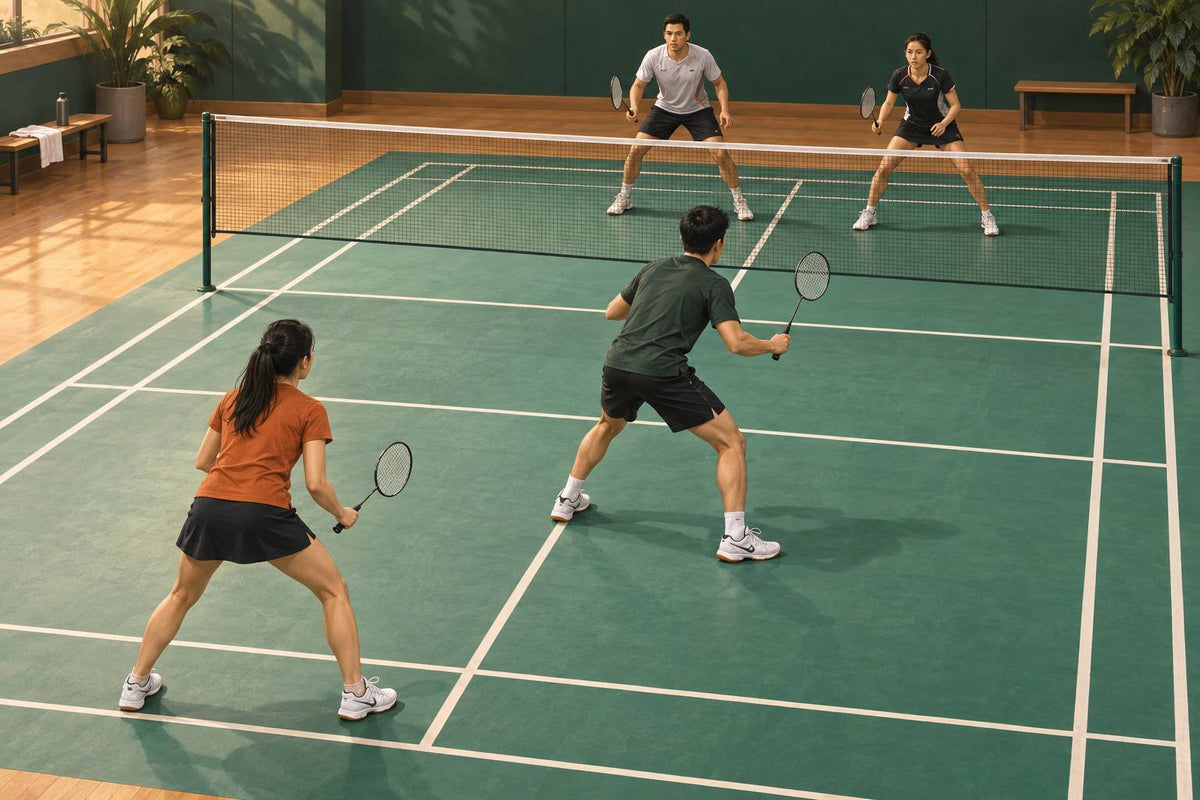
That last cue is especially useful in doubles. When pressure rises, players often rush the serve, stand up too early on defence, or try to finish a rally from a neutral position. “Win the first four shots” brings your mind back to serve quality, return quality, base position, and the first attacking chance.
Prepare the controllables before match day
A challenger mindset is easier when small logistics are already handled. Pack early, know your warm-up plan, and remove avoidable stress before you arrive at the gym. If you are heading into a club event, league night, or first tournament, use our badminton tournament bag checklist so you are not using mental energy on grips, water, snacks, spare shirts, or paperwork at the last minute. Arriving fuelled and rested also steadies the body before nerves add to it; our badminton nutrition and recovery guide covers how to eat and hydrate around matches.
If checking your gear helps you feel organized, you can browse our Canadian badminton collections as a general prep path. But no product is required to improve the mental game. The core tools are free: breathe, repeat your routine, rehearse the next shot, and choose an approach-focused cue.
Simple match cue: after every bad patch, ask, “What is the next useful action?” If your answer is specific, controllable, and aggressive enough to play forward, you are back in challenger mode.
Which mental-game tool should you choose first?
You do not need every mental skill at once. Pick the tool that matches the problem you feel most often in matches, then practise it until it becomes automatic between rallies.
| If this happens in matches | Choose this first | Why it fits | Simple cue |
|---|---|---|---|
| Your body feels rushed: fast breathing, tight grip, heavy legs, or panic before serve receive. | Box breathing | A four-stage cycle of inhale, hold, exhale, hold for four seconds each gives you a repeatable way to steady the body. Slow, controlled breathing supports the shift away from stress arousal and toward better physiological balance. | “Breathe first, play second.” |
| Your mind changes with the score: relaxed at 3–3, tense at 19–19, careless after a big lead. | Pre-point routine | A routine is a pre-planned sequence of task-relevant thoughts and actions. Its value comes from staying the same no matter the score, opponent, or previous rally. | “Same routine, every point.” |
| You know the right shot, but under pressure you hesitate or picture the mistake. | Visualization | Imagery works best as shot rehearsal: picture the intended serve, lift, net shot, or smash target before you move. Imagery interventions have shown medium-sized benefits across sport performance, motivation, and affective outcomes. | “See the shot, then hit it.” |
| One error becomes three because your inner voice turns negative. | Positive self-talk | Positive self-talk is a trainable coping strategy for managing pre-competition stress and emotional swings. Keep the phrase short, specific, and action-based. | “Next rally: height and depth.” |
| You feel nervous before an important match and keep trying to force yourself to calm down. | Reframe nerves as readiness | Stress and excitement can feel physically similar: elevated heart rate, sharper focus, and more energy. Reframing anxiety as excitement works with that arousal instead of fighting it. | “I’m ready.” |
| You go passive against stronger players or after losing several points in a row. | Challenger mindset plus reset | A challenge state is linked with higher perceived control, self-efficacy, and an approach focus. The practical goal is not to feel fearless; it is to choose the next controllable action. | “One point. One plan.” |
Best default for most players: start with a pre-point routine, then add one breathing cue and one self-talk cue. If you are preparing for your first Canadian event, pair this mental routine with our first badminton tournament guide and tournament bag checklist.
Get new badminton guides by email
Join the Badminton House list for occasional emails with new guides, technique tips and news from our club in Moncton.
By subscribing, you agree to receive Badminton House emails and can unsubscribe anytime.
Badminton mental game nerves are something we work on in our own matches, too. If you are preparing for a first tournament, league night, or a big club match and want practical gear or preparation advice from players who understand the sport, contact Badminton House and tell us what you are getting ready for.
Build your game with a Canadian badminton specialty shop.
Browse Badminton GearFree Canadian shipping on $200+ · 14-day returns · Canadian badminton specialty shop

Leave a comment
This site is protected by hCaptcha and the hCaptcha Privacy Policy and Terms of Service apply.