

Last checked: August 2026 · Written by the player-led team at Badminton House
Quick answer
A late contact point means the racket meets the shuttle behind or beside your body instead of in front of your racket shoulder, and it quietly caps every other overhead technique a self-taught player tries to learn. This guide is a diagnostic, not a stroke tutorial: how to spot late contact on video, the three timing and position causes behind it (a late split step, a late arm, and drifting under the shuttle instead of behind it), and a four-step drill ladder that moves your meeting point earlier and higher.
Start with How to spot late contact on video
Run the three-part video check first, then read the cause that matches what you actually saw before you touch a single drill.
Related reading: Badminton Contact Point: Five Ways Players Get It Wrong — the wider fault map. This guide is a deep dive on just one of those five faults: contact drifting behind the body.
How to spot late contact on video
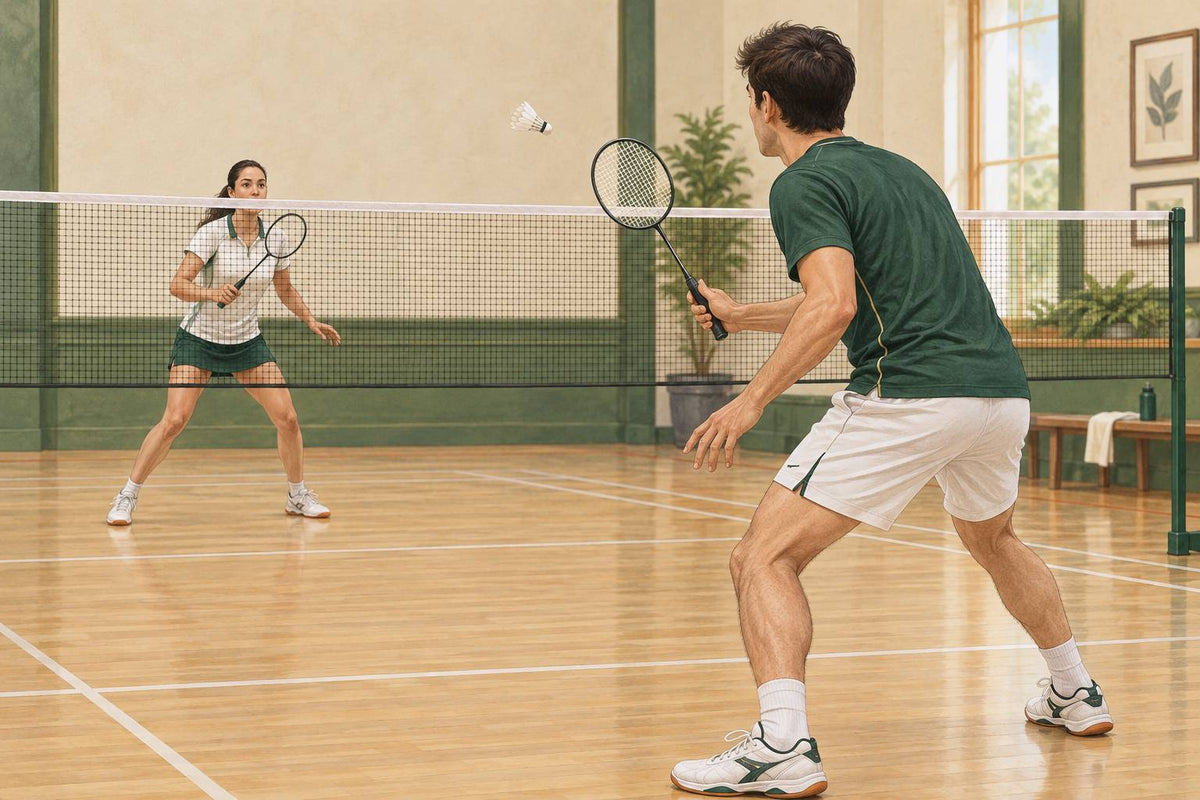
Late contact shows up on video as three things happening together: the shuttle meets the racket behind or level with your racket shoulder instead of in front of it, your body is still under or behind the shuttle rather than side-on to it, and your front foot has not finished landing before the racket swings forward.
- Shuttle-to-shoulder position: pause the clip at the instant the strings meet the shuttle. If the shuttle sits behind or level with your racket shoulder instead of in front of it, that is late contact, whatever shot you were attempting.
- Body position: check whether your hips and chest have turned side-on toward the corner, or whether you are still square to the net and reaching backward for the shuttle. Reaching while square is the single clearest tell.
- Front foot landing: watch your lead foot. If it is still airborne, or lands at the same instant the racket fires forward, your base was not set in time to hit on schedule.
BWF's own coach-education technique notes give the target for that first check, and the wording is not identical across strokes. For the clear, the forward-swing cue is to strike the shuttle "powerfully above/slightly in front of racket shoulder." The dropshot uses the same "above or slightly in front" phrasing. The smash's own forward-swing table drops "above" entirely and reads only "impact in front of striking shoulder." BWF Level 1 forehand technique notes Treat that difference as a shot-specific detail rather than one rule to blend across all three: on video, judge each stroke against its own cue, and keep the clear and drop’s above-or-slightly-forward zone distinct from the smash’s forward impact cue.
None of this needs a coach in the room. A phone propped at knee height and angled down the sideline catches your shoulder, your hips and your feet in one frame, which is all three checks in a single ten-second clip per rep.
The three causes of a late contact point
Three faults push contact point late: a split step that lands after the shuttle should already be tracked, or does not happen at all; a racket arm that starts its forward swing only after the body has arrived, instead of preparing early; and footwork that drifts straight under the shuttle instead of turning side-on and behind it.
A late or absent split step. BWF's own coaching notes define the split step as a shallow jump that lands with or just after the moment your opponent hits the shuttle, letting your body rebound off the floor and move off immediately instead of starting from a dead stop. BWF's split-step coaching notes Skip that jump, or land it late, and every step behind it inherits the delay. Arrive at the base a beat behind schedule and you arrive at contact a beat behind schedule too.
A late arm. BWF's own preparation cues for the clear and dropshot put the racket in an "overhead ready position" with the front arm already raised before the backswing even starts, not something you lift once your feet have arrived. The smash's preparation cue is worded differently (a "relaxed ready position" with the grip already set), but the principle is the same across all three: the racket is prepared before the swing, not during it. A racket arm that starts loading late has to catch up to the shuttle's schedule instead of working ahead of it. A peer-reviewed motion-capture study of the forehand smash backs up why that gap matters: skilled players finish rotating the trunk before the elbow and wrist begin their own rapid flexion, while less-skilled players in the same study struck the shuttle with the trunk still turning. Peer-reviewed motion-capture study of the forehand smash A late-loading arm and an unfinished trunk rotation tend to show up together, and either one alone is enough to push contact back and down.
Drifting under the shuttle instead of behind it. Reaching the rearcourt on time is not enough on its own; you have to arrive in the right shape. BWF's own movement-pattern coaching notes for the rearcourt describe backward running steps that follow a slightly curved path specifically so the player ends up side-on to the shuttle, not squared underneath it. BWF's rearcourt movement-pattern notes Back-pedal in a straight line and you end up standing directly under the shuttle with nowhere to put the racket but up and backward. Arc the same steps and you end up beside and slightly behind it, with room to swing forward and down.

A four-step drill ladder
Fix a late contact point with four drill stages run in order: a fixed high feed with a floor marker, the same feed with a called depth you must judge, feeds at random unannounced depths, and finally live rallies with one contact-point cue. Advance only when the stage before it holds up on an ordinary rep, not a lucky one.
| Stage | Setup | What it trains | Exit test |
|---|---|---|---|
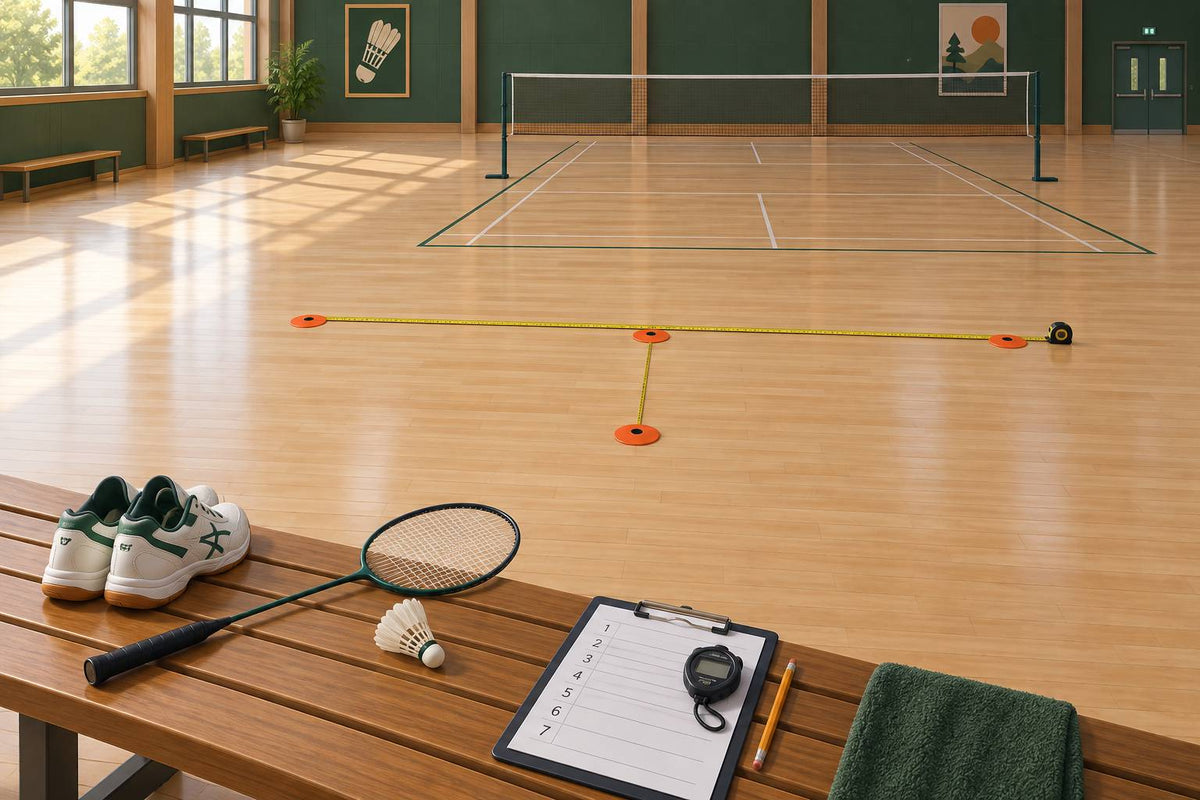
| 1. Fixed feed + floor marker | A partner sends the same high, slow feed to the same rearcourt spot every time. A strip of tape marks where your back foot should land. | A single, repeatable meeting point at a known height and depth, with no timing pressure. | 8 of 10 reps land your back foot on the marker and meet the shuttle in front of your racket shoulder. |
| 2. Feed with a called depth | Same feed height, but your partner calls "short" or "long" a half-second before releasing, so you judge depth before you move. | Reading depth early enough to still reach the marker, instead of relying on memorised timing. | 7 of 10 reps still land on the correct marker and meet the shuttle in front of the shoulder. |
| 3. Random depth feeds | Feeds vary in depth and pace with no call, so you track the shuttle itself rather than a script. | Split-step timing and shot recognition together, closer to a real rally. | 6 of 10 reps keep the same contact point as the marker drill, with no signal from the feeder. |
| 4. Live rallies + one cue | Play out points. A partner or coach calls a single cue word only when your contact drifts late. | Holding the fix under real decision-making and fatigue, where the fault usually returns first. | The cue is needed on fewer than 2 of 10 rearcourt shots by the end of a session. |
This order is not arbitrary. BWF's own guidance for designing practice sets out the same three axes used above: simple to complex, slow to fast, and predictable to unpredictable, and it is explicit that a player should not move up a stage until reasonably competent at the one below. BWF's guidance on designing progressive practice Skipping to random feeds because rung one felt easy is the fastest way to make this ladder stop working.
Two or three short sessions of ten to fifteen minutes are enough to move through all four stages once. Repeat the ladder whenever contact drifts back late, which it usually does after a break from the game or a rushed warm-up.
How to confirm the fix is working
Length comes back before disguise does, so track them in that order. Once a corrected contact point is holding, your clears should reach the back third of the court again on an ordinary swing; only after that improves reliably will your clear, drop and smash start looking the same to an opponent watching from the other side of the net.
Length returns first because it is the more forgiving fix: even an imperfect but earlier contact point gives the swing room to send the shuttle along the intended trajectory. BWF's own coaching material frames the value of hitting the shuttle early, in both height and closeness to the net, as more chances to hit downward, more pressure on the opponent from less time, and more choice over which stroke to play next. A contact point that has only partly recovered still buys back some of that.
Disguise takes longer because it needs consistency, not a single good rep. BWF's own guidance is direct about why: tricking an opponent depends on strokes looking the same as each other for as long as possible before contact, and clear, drop and smash only look the same when all three are meeting the shuttle from roughly the same zone in front of the racket shoulder. One clean repetition does not buy that back. A session where the fault has stopped reappearing under a live rally is what finally lets an opponent stop reading your shot early.
If length has returned but your opponents still call your shots before you have hit them, go back to the video check in the first section before you touch the drill ladder again. A contact point that is early enough for a clean clear is not automatically early and consistent enough to hide a smash.
Run this over your next three sessions
- Film ten rearcourt shots this week and score them against the three-part video check.
- Identify which of the three causes shows up most often, and start the drill ladder at rung one even if a later rung feels tempting.
- Track your clears' depth for the first two weeks before you worry about disguise at all.
- Move to the next drill rung only after the exit test passes on two separate days, not once.

Leave a comment
This site is protected by hCaptcha and the hCaptcha Privacy Policy and Terms of Service apply.