
Last checked: August 2026 · Written by the player-led team at Badminton House
Quick answer
The cited sources do not establish five drop-and-lift progressions. They do establish that an overhead drop places the shuttle in the opponent’s forecourt and can encourage a lift, while a higher defensive lift can move an opponent rearward and give recovery time.
Start with Use the drop to place the shuttle in the opponent’s forecourt
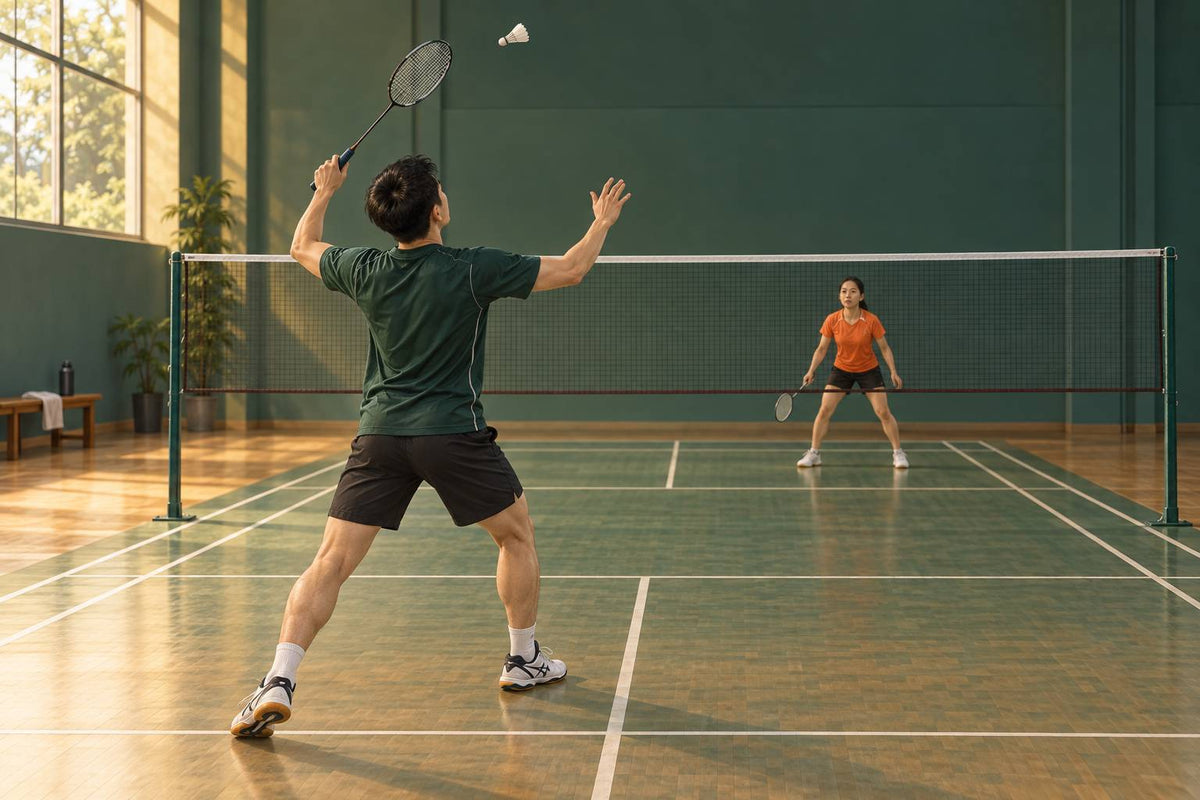
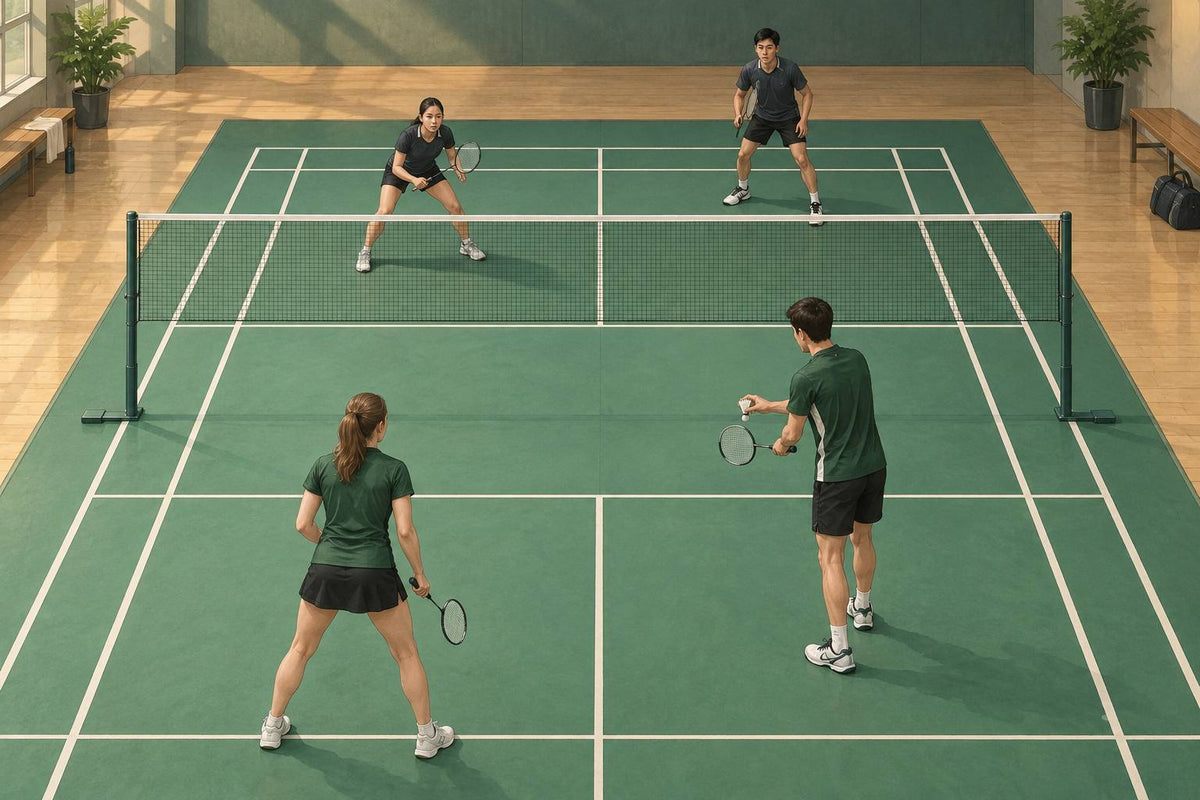
Use a drop-and-lift exchange as a local two-player drill, not a source-backed set of five progressions. The cited sources distinguish an overhead forehand drop to the opponent’s forecourt from a higher defensive lift that moves an opponent rearward and can create recovery time.
- Give one player the role of playing a controlled forehand overhead drop and the other the role of replying with a high defensive lift.
- Use one agreed starting feed and reset to it after an error or a shuttle that leaves the intended exchange.
- Swap roles after a short local block so both players practise the two decisions.
- Change one variable—starting position, target, or reply—only after the pair can describe the forecourt-and-rear-court exchange.
Related reading: Badminton Drop Shot Technique Guide — for the separate technique question behind the drop.
Use the drop to place the shuttle in the opponent’s forecourt
A forehand overhead drop places the shuttle in the opponent’s forecourt and can encourage a lift. The BWF teaching manual describes the drop’s forecourt placement and intended reply. The manual provides a teaching principle, not a fixed protocol. BWF Shuttle Time Manual

Use the defensive lift to send the opponent rearward
A higher defensive lift can push an opponent toward the rear court and give the defender recovery time. The teaching material explains the lift’s space and time function. Exact local practice choices remain outside the manual’s scope. BWF Shuttle Time Manual

Build a locally staged drop-and-lift rally
BWF Level 1 includes lift, drop, and net work within a progressive practice approach. The manual uses these strokes in staged practice examples. Choosing the sequence for a particular group and session is a local coaching choice. BWF Level 1 Manual

The cited sources do not establish five standard progressions, repetitions, or a match-transfer result. Add one local variable at a time, pause after an error, and return both players to the same agreed start before continuing.
Run one observable local version
- Agree the feed and assign one player an overhead drop to the forecourt.
- Have the receiver send a high defensive lift toward the rear court.
- Reset after an error, then swap roles before the next block.
This is a local practice design, not a BWF progression or a match-transfer promise. Change one field—the feed, target, or reply—only after recording what happened in the first version.
Separate the shot purpose from a local result
| The teaching source supports | The local pair still needs to observe |
|---|---|
| A drop can place the shuttle in the opponent’s forecourt | Whether the intended forecourt area was reached in this exchange |
| A higher defensive lift can send the opponent rearward and offer recovery time | Whether the agreed reply and reset were clear to both players |
| The manuals use staged examples | Which one local variable is worth changing next |
Questions the cited sources do not settle
- A fixed drill sequence, number of shuttles, or claim that it guarantees attacking improvement.
- A rule that every lift should be high or every drop should be used under pressure.


Leave a comment
This site is protected by hCaptcha and the hCaptcha Privacy Policy and Terms of Service apply.