
Last checked: August 2026 · Written by the player-led team at Badminton House
Quick answer
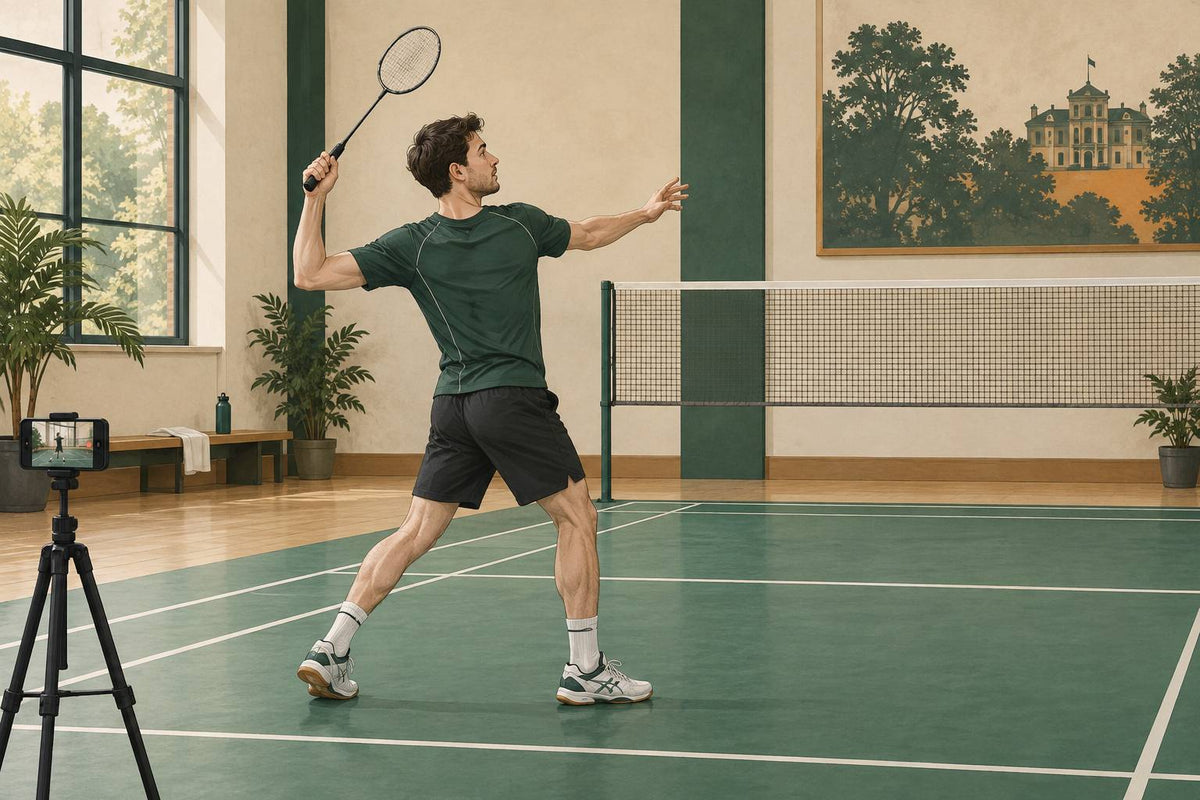
A lifted elbow and a driven elbow look similar but are not the same fix. Lifting means the racket head starts the arc while the elbow only follows; driving means the elbow moves up and forward first, ahead of the forearm and wrist. Video from behind and the side shows the difference in one rep.
Start with What elbow-lifting looks like on video
Film two angles, run the two feel drills below, then confirm the fix by what the shuttle does rather than by feel.
Related reading: How to Hit a Badminton Clear — the full swing this elbow check feeds into.
What elbow-lifting looks like on video
Elbow-lifting is when the racket head starts moving before the elbow does, so the arm rises but never drives. Film from behind and the side: check whether the elbow leads the racket toward the target, whether it gets ahead of the hand, and whether the swing stalls near ear height instead of continuing through.
From behind, pause the clip at the top of the backswing. BWF coach education material describes this step plainly: the rear shoulder and elbow move upwards and forwards, driven by a push off the rear leg and hip. A correctly loaded elbow already points toward the target before the racket head starts to accelerate. If your elbow is still low or tucked behind you while the racket head is already swinging up, that is the fault on tape.
From the side, pause one frame before contact. A driven elbow is still opening as the forearm and wrist take over; a lifted elbow has already stopped, so the late speed comes from the wrist alone. BWF splits this into two phases: an elbow-forward backswing, then a forward swing where the arm rotates inward to strike. If your clip shows the wrist snapping while the elbow angle has not changed for several frames, it finished its job too early, or never started it.
Why a lifted elbow costs you length and disguise
A lifted elbow shortens the chain that builds racket-head speed and runs part of it out of order, so less speed reaches the shuttle even when the swing looks fast. It also costs disguise, because the racket has to change direction earlier and more visibly to make up for the elbow that never drove.
Peer-reviewed motion analysis of the forehand smash found that the elbow ends its backswing and starts extending to add speed before the wrist begins accelerating at all; the wrist only takes over once trunk rotation and shoulder flexion have already finished. Skip the elbow's part and the wrist has to start earlier and work harder, which is exactly the arm-only feel behind a shot that looks effortful but lands short.
The same research found skilled players use about 30% more elbow flexion-extension range than novices during the smash (roughly 71 degrees against 54). That range builds real racket-head speed before the wrist ever fires. Those group averages are not a target angle or a diagnosis for an individual player.

Two drills that build the drive
Two drills isolate the missing elbow drive without needing a coach to watch every rep. A slow shadow swing that pauses at the elbow-forward checkpoint rebuilds the correct order by feel, and a high fed shuttle that forces early contact rewards the same order under real timing pressure.
- Paused shadow sequence: stand side-on with a basic grip and no shuttle. Load the racket back, then swing in slow motion and freeze the instant your elbow has driven up and forward. Hold two seconds and check your elbow, not the racket head, got there first. Ten slow reps, then ten at half speed without the pause.
- High-feed early contact: have a partner feed a high, easy serve to your rear court. Feel your elbow arrive at the top-forward position first, then let the forearm and wrist open into the shuttle. If the elbow gets there first, contact feels early and unhurried; if not, you end up snatching at the shuttle late.
Both drills borrow directly from BWF's own coaching progression for the forehand clear: basic grip, fed shuttle, then "push rear hip forwards, commit elbow up and forwards" before the forearm rotates. Repeating that order slowly turns it into a habit fast enough to survive a rally.
Confirm the fix by shuttle outcome, not feel
Feel is unreliable early in a technical change, so confirm the fix with what the shuttle actually does. Three checkable outcomes replace guesswork: shots reach deeper without extra visible effort, the shot follows its intended trajectory more consistently, and training partners start reacting later because the racket path no longer gives the shot away.
- Length: with the same feed and effort, clears should reach deeper into the rear court than before. If you have to swing visibly harder for the same depth, the elbow still is not doing its share.
- Trajectory: check whether clears reach the intended height and depth and smashes keep the intended downward angle; a flatter flight is not automatically better.
- Opponent reaction: ask a partner to call clear or smash the instant they think they know which is coming. Count how often they call it early before the change and again after two weeks of drills; a driven elbow should push that number down.
Once your overhead reliably drives instead of lifts, it becomes the shot that makes real doubles tactics possible. Our senior doubles tactics guide covers the placement and pace decisions that only work once the stroke is solid.
Run this two-week elbow-drive check
- Film ten overheads from behind and from the side before you change anything.
- Run the paused shadow sequence and the high-feed drill for five minutes each, three sessions a week.
- Film the same ten overheads again and compare elbow position frame by frame.
- Track length, trajectory, and how often a partner reads the shot early, and keep the drills until all three move.

Leave a comment
This site is protected by hCaptcha and the hCaptcha Privacy Policy and Terms of Service apply.