
Last updated: July 2026 · Written by the team at Badminton House
Quick Answer: Badminton Feel and Timing
Start with the four-question self-test; train the perception that produces the clearest error, not the stroke that looks worst.
Unsure
Run the self-test first: one question each for shuttle flight, racket contact, body position and arrival.
Mishits
Begin with racket-face tapping and slow contact; they reveal off-centre impact and whether the racket recovers cleanly.
Late
Train reading where the shuttle will be and when with varied feeds; shuttle speed can fall from 67 m/s to about 7 m/s in roughly 0.6 seconds.
When your swing looks right but the shuttle still catches the frame, lands shorter than expected, or reaches you before your feet settle, the problem may not be the stroke itself. A shuttle can slow from 67 m/s to roughly 7 m/s in about 0.6 seconds, so badminton feel and timing depend on reading a flight that changes dramatically after contact. Repeating the full motion harder can simply rehearse the same late or off-centre contact.
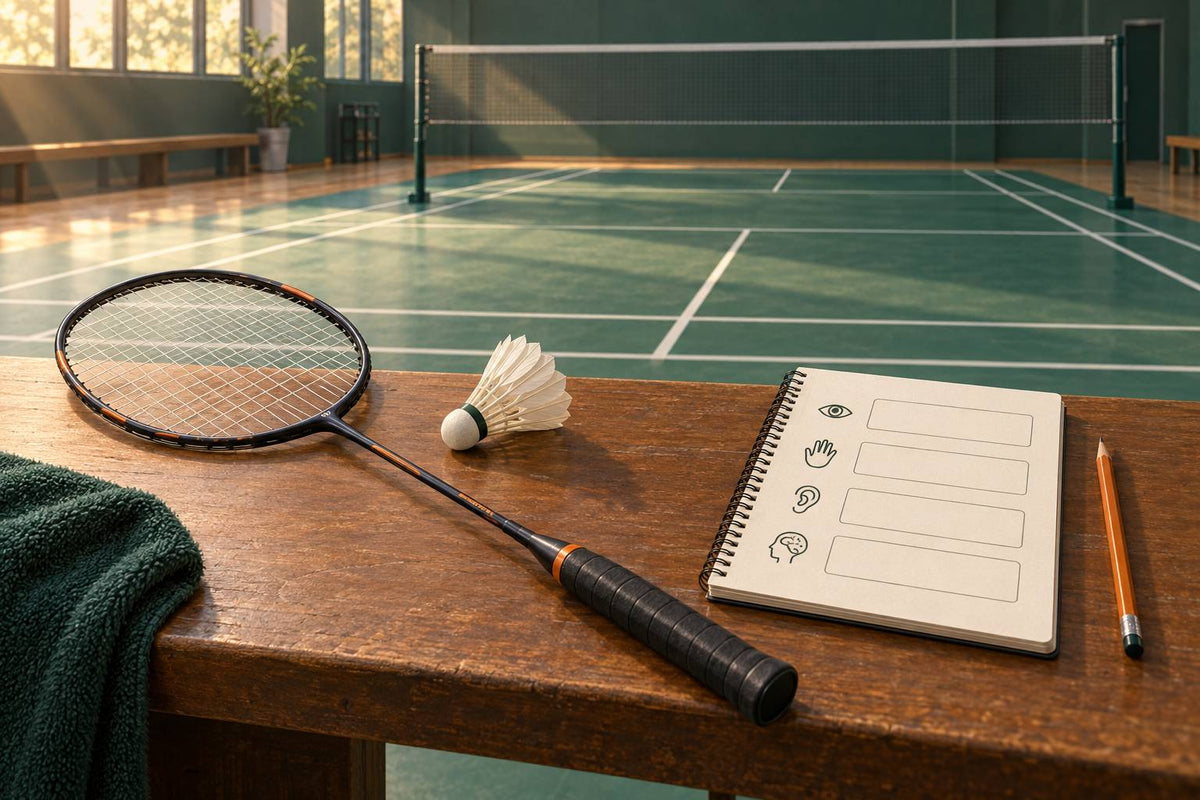
Coaches therefore build four perceptions deliberately: the shuttle’s weight and flight, the racket’s response at impact, your body’s position without visual checking, and the meeting point between arrival, space, and time. Treat these as trainable inputs to technique, not a talent you either have or lack. The sections ahead isolate each sense, then finish with a four-question check to show where your practice should begin.
In This Guide
Feel for the shuttle: learn its weight and flight
A feather shuttle weighs only 4.74–5.50 grams and has 16 feathers. Its open conical shape creates exceptional drag, so it slows more sharply in flight than any other airborne sporting implement. Reading that rapid slowdown is not natural talent: it is a perception you can train before adding a racket and finished strokes.
Drill 1: straight throws and catches
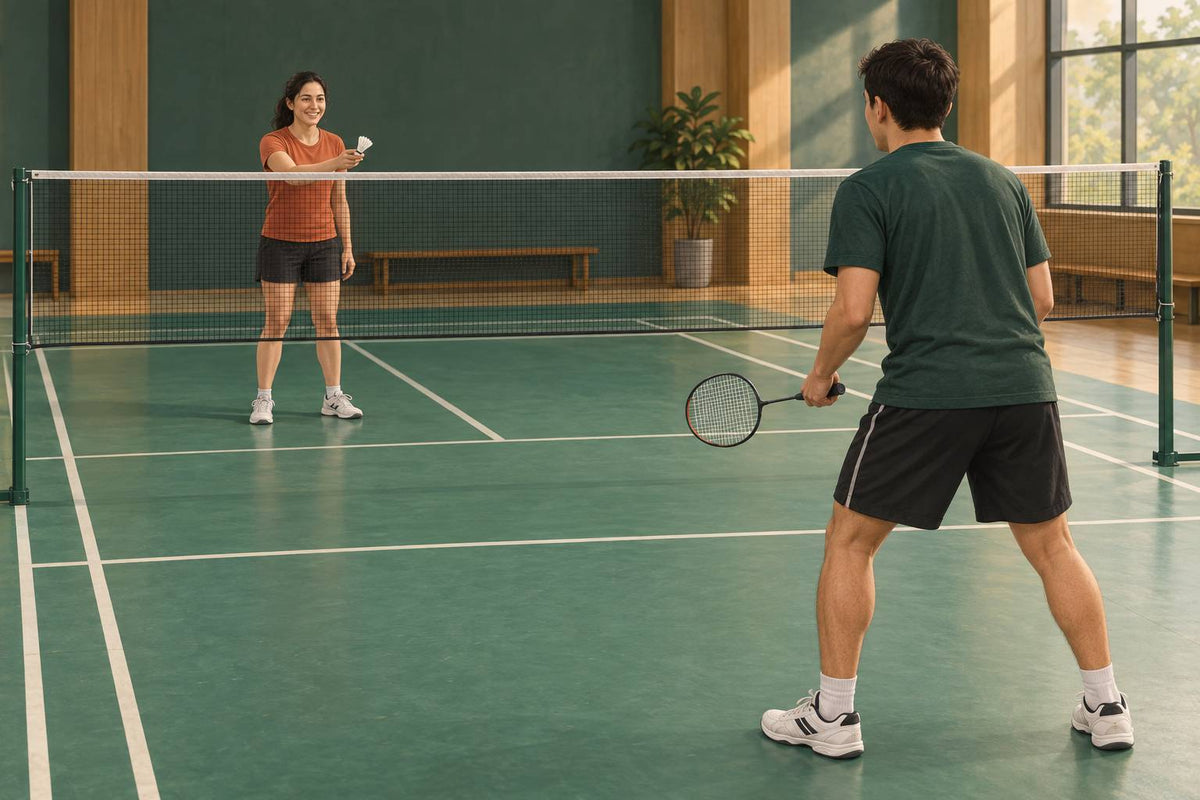
Stand opposite a partner with the net between you. For 10 minutes, throw the shuttle straight over the net by extending your arm and flexing your wrist. Step forward as you release it, then watch and catch your partner’s return. Keep the flight straight rather than trying to make the throw difficult.
Drill 2: change the distance
Repeat the same exchange, but vary how far each throw travels. The catcher must adjust to the changing arc and slowdown rather than settle into one receiving spot. Continue until you complete 20 clean catches.
Feel for the racket: recognise contact and recovery
Racket feel is not simply whether a shot felt “clean.” It is your ability to locate where the shuttle met the string bed, notice how the frame and shaft recover for the next action, and use impact sound as well as vibration through the hand. Contact is fleeting: elite-player analysis has examined just 0.06 seconds before to 0.03 seconds after impact. Slow work makes that window readable. String tension also changes measured shuttle rebound. With earmuffs on, only 27% of athletes distinguished tensions about 11 lb apart, while 37% distinguished differences of about 22 lb. Sound clearly contributes to tension judgement.

Drill 1: centred taps
Tap a shuttle upward on the racket face. Aim for 25 consecutive centred contacts; restart when the shuttle reaches the frame or forces a large correction.
Drill 2: cushion and lift
Have a partner feed slow drops onto your strings. Cushion each contact, lift the shuttle vertically, then catch it. Your target is 10 of 12 rebounds caught without moving your feet.
Body awareness: know where you are without looking
Body awareness is knowing your position and movement without relying on sight. Badminton demands continuous balance adjustments as you react to the shuttle, keep your centre of gravity over your support and move the racket arm asymmetrically. Simply playing does not guarantee improvement: amateur players have shown better serving accuracy than active controls without better balance or eye–hand coordination.
Work before fatigue, which can impair postural control. Clear shuttles and bags from the court, with a partner nearby but outside your movement path.
Drill 1: Eyes-closed base return
Mark your base. Close your eyes, make one controlled step in each of six directions and return after every step. Open your eyes to check each finish. On four of six attempts, aim to finish within one 40 mm court-line width of your mark.
Drill 2: Single-leg stand
Close your eyes and balance on one leg for 10 seconds, then switch. Complete three rounds per leg. Have your partner stop you if you drift toward anything.
Sense of time and space: match arrival to position
Timing needs separate practice because the shuttle does not travel at one predictable pace. Its speed can fall from about 67 m/s to 7 m/s in roughly 0.6 seconds, while in-game speeds range from 5.5 m/s to more than 80 m/s. Your task is to judge both where it will arrive and when to meet it.
Drill 1: three-speed catches
Take 15 feeds: five slow, five moderate and five fast. Mix the order gradually, catch each shuttle cleanly and record your score out of 15. Evidence for random practice is mixed, and excessive variation may overwhelm beginners, so begin with obvious speed differences before making the sequence less predictable. See when to vary drills versus repeat them.
Drill 2: hidden-flight predictions
Watch 12 partly hidden feeds and call both left or right and short or deep. Keep separate correct totals for side and length. Side predictions are generally easier, so the depth score often reveals the more useful training target.
Four-question self-test: find the weakest perception
Use your recorded results rather than judging how coordinated you felt. Ask these questions in order:

- Did the throw-and-catch target fail? If so, shuttle feel is the first weakness: you are not yet judging the shuttle’s weight and flight consistently.
- Did centred tapping break down? A low or inconsistent count points to racket feel, particularly your recognition of clean contact and controlled recovery.
- Did eyes-closed returns miss the 40 mm band? That identifies body awareness as the priority.
- Did catch and prediction scores fall when feed speed changed? That points to your sense of time and space.
The failed target or lowest score identifies what to train first. If two results tie, choose the first failed question in this sequence. Return to that perception’s existing Drill 1 and repeat it at its original numbered target.
Which Perception Should You Train First?
Choose the perception linked to your most frequent error, not the most advanced-looking drill. Treat each channel separately: balance and eye–hand coordination do not necessarily improve together, while anticipation depends on both spatial and temporal accuracy.
| Choose | Choose this if… |
|---|---|
| Feel for the shuttle | You misjudge weight, flight or how quickly the shuttle slows. |
| Feel for the racket | Contact feels indistinct, or you cannot identify centred versus off-centre hits. |
| Body awareness | You lose position or balance when visual guidance is removed. |
| Sense of time and space | You know where the shuttle is going but still arrive too early, too late or at the wrong depth. |
Get 10% off your first order
Join the Badminton House list and we’ll email you a 10% welcome code — plus training guides, technique advice, and badminton updates.
By subscribing, you agree to receive Badminton House emails and can unsubscribe anytime.
Count errors, not just repetitions: note where contact lands, whether recovery feels clean, and how early or late you arrive when feed speed changes. That makes badminton feel and timing specific enough to improve. We play badminton ourselves, so if you want help connecting shuttle feel, racket feel, or timing drills to your practice setup, contact us for practical advice.
These drills need a reliable tube of shuttles. Check live availability before your next practice.
Shop Shuttlecocks — Check Live Availability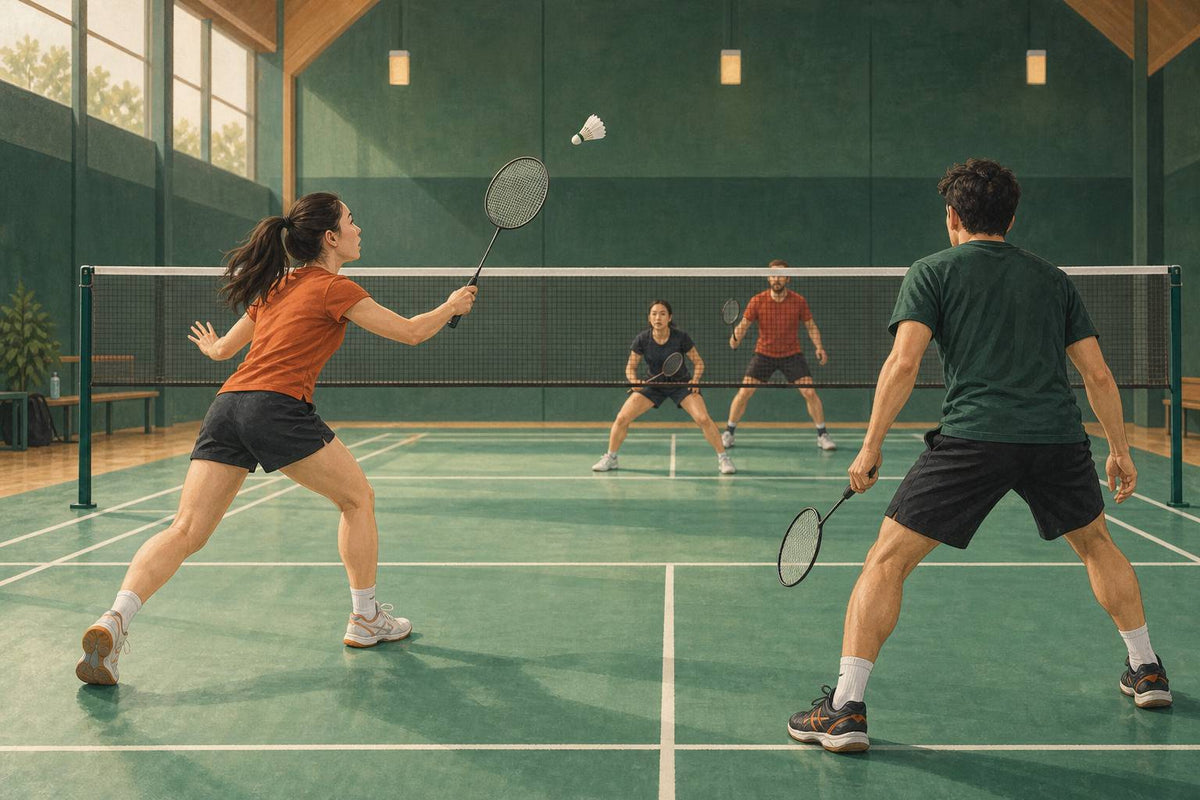

Leave a comment
This site is protected by hCaptcha and the hCaptcha Privacy Policy and Terms of Service apply.