
Last updated: July 2026 · Written by the team at Badminton House
Quick Answer: Badminton Footwork Braking
Stop cleaner by treating the final lunge as the brake: arrive with small setup steps, land heel-to-toe just before contact, then push off the racket leg.
Default
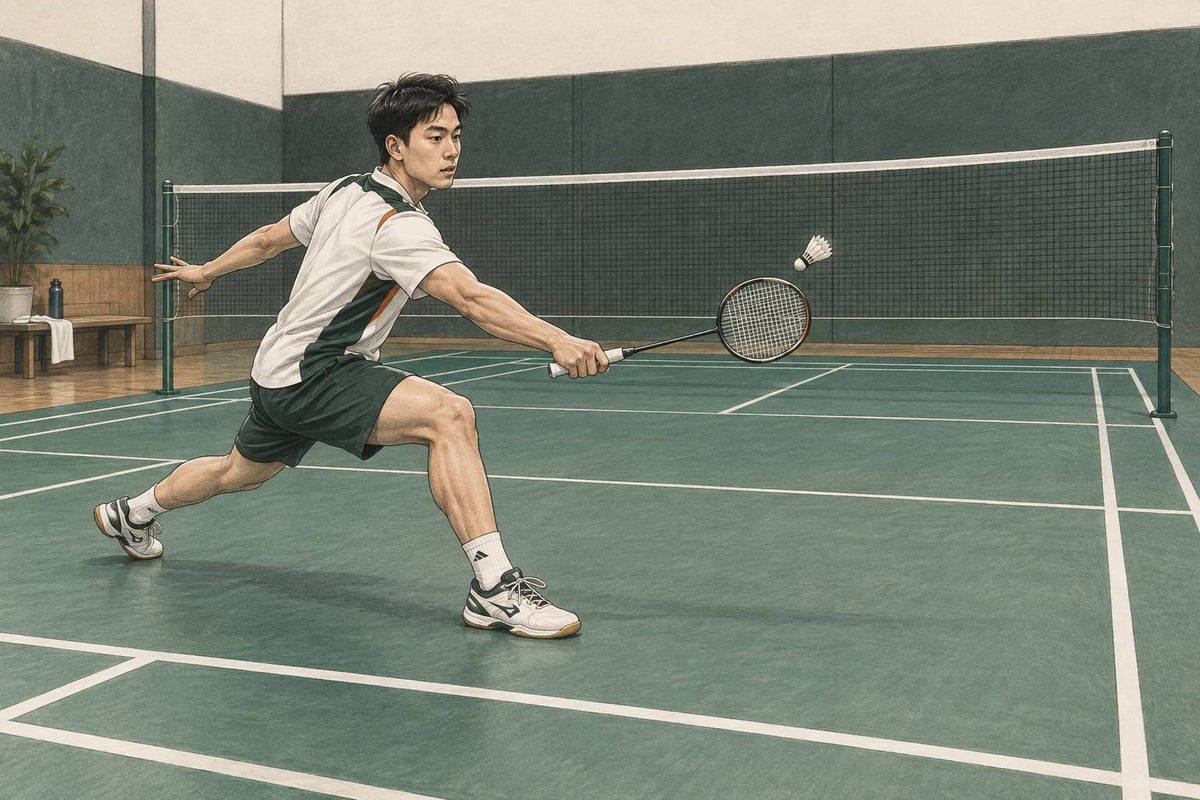
Clean lunge: brake on the racket foot with toes facing the shuttle and the knee tracking over the foot.
Rushed
Use shorter chassé steps first; if you stretch too far, you lose control before the hit.
Recover
After contact, push off rather than stand up; recover only as far as the likely reply requires.
If you often arrive at the shuttle on time but feel jammed, off-balance, or late recovering, the issue may not be speed — it may be badminton footwork braking. Good movement is not one long run. You split-step, travel with small steps or shuffles, then use the final lunge to slow the body, land under control, hit, and push back out. The simple cue: stop before you swing, not after. This guide breaks that braking moment into practical pieces you can feel on court.
First checkpoint. If your upper body keeps drifting after the racket foot lands, shorten the travel steps and make the final lunge the clear braking step.
In This Guide
Separate the Rally Into Move, Brake, Hit, and Recover
Badminton footwork braking makes more sense when you stop treating the rally as “run to the shuttle.” A clean pattern is: ready position, split-step, travel steps, braking stride, contact, then push-off. Start in a balanced base: feet about shoulder-width, knees slightly bent, and weight biased toward the balls of the feet.
The split-step is the switch between waiting and moving. Time it immediately after your opponent strikes, so the small load through your legs can use the stretch-shortening cycle and pre-activation to help you start faster. If that timing is late, every later phase feels rushed. For a deeper timing breakdown, see our badminton split-step guide.
After the split, choose the travel step that fits the distance: small adjustment steps for fine positioning, chassé or shuffle steps when you want the feet to stay in relationship, and cross steps when you need more court quickly. Only then should the final stride act as the brake, setting up a stable hit and a fast push-off back toward the next likely shot.
Badminton Footwork Braking: The Final Lunge
In badminton, the final lunge is not just a reach for the shuttle; it is the court-specific braking mechanism. This matters most in singles, where forward lunges are common, and where the racket-side foot often has to stop your body from a steep approach rather than from a smooth running stride.
Land the racket foot heel-first, then roll pressure toward the toe as the knee bends. Keep the toes facing the shuttle so the braking force lines up with the shot. For coaching purposes, think of the braking phase as the moment from initial heel contact to your deepest knee flexion.
Contact Stability: Land Just Before You Strike

Clean badminton footwork braking is not just about reaching the shuttle; it is about being quiet enough at contact to choose the shot. Aim for your racket foot to land just before you strike. If it lands too early, you lose the last small adjustment. If it lands too late, your upper body is still travelling while the racket is trying to be precise.
At the shot, check the line from hip to knee to foot. The knee should track in the same direction as the foot, not collapse inward or bow outward. During braking, the knee acts mainly as a buffer and stabiliser, while the hip helps you adjust stride length dynamically so you do not overreach.
- Good sign: you can hold the landing shape for a beat after contact.
- Technique goal: a well-executed lunge improves deceleration and landing-position stability, setting up the push-off instead of fighting it.
Progressive Drills for Braking and Faster Push-Off
Build braking in layers, not by throwing yourself into maximum lunges on day one. Start with shadow footwork: from a ready stance, move forward, backward, and laterally using small steps and non-crossing chassé steps. Keep the rhythm light so you can stop without your upper body drifting past your base.
- Layer 1: shadow the route only, then freeze in balance.
- Layer 2: add the final lunge or small jump that simulates reaching the shuttle.
- Layer 3: repeat game-like patterns, such as rear corner to front corner, so braking leads straight into push-off.
- Optional load: use a light band for side steps, lunge steps, or cross steps when your mechanics stay clean.
Judge each drill by the recovery: push off the racket leg, add the small non-racket-leg hop when you need extra distance, and recover only as far as the likely reply demands.
Which Braking Cue Should You Choose?
Pick the cue that fixes the first leak in your movement chain. Do not try to change every detail at once.
| If this happens | Choose this cue | Why it fits |
|---|---|---|
| You arrive late | Split-step immediately after the opponent hits | The split-step helps you move from stillness into the lunge faster. |
| You skid through contact | Heel first, then roll to toe | Badminton lunges use steep footstrike angles, so the final stride must brake before push-off. |
| Your knee wobbles | Knee tracks over the foot | Alignment keeps the landing stable while you control the shot. |
Get 10% off your first order
Join the Badminton House list and we’ll email you a 10% welcome code — plus training guides, technique advice, and badminton updates.
By subscribing, you agree to receive Badminton House emails and can unsubscribe anytime.
Clean braking is a skill, not just effort. We play badminton ourselves, so if you’re unsure whether your footwork issue is technique, timing, or shoe setup, contact us and we’ll help you think it through.
Set your base before you chase speed.
Court shoes matter most at the stop: heel contact, outsole grip, and the push-off back to base.
Check Live Footwear Availability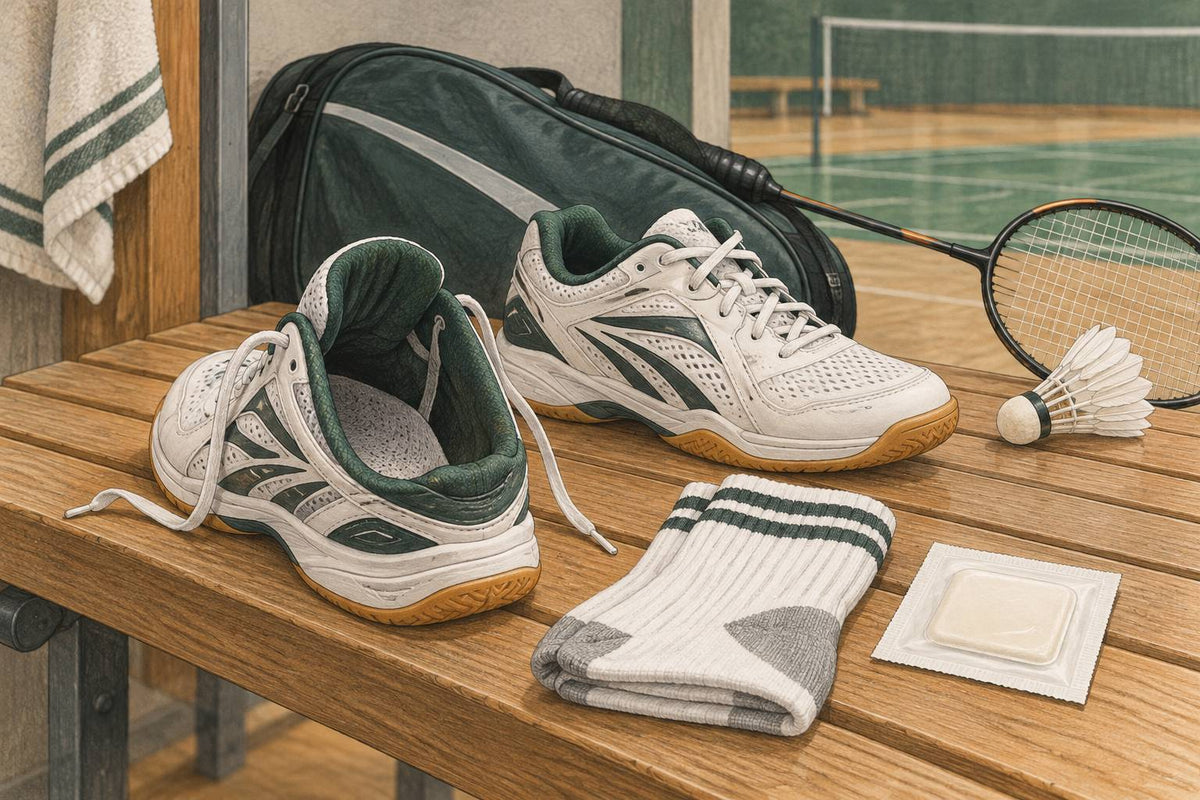

Leave a comment
This site is protected by hCaptcha and the hCaptcha Privacy Policy and Terms of Service apply.