
Last updated: July 2026 · Written by the team at Badminton House
Quick Answer: Badminton Foot Blisters
Treat the first stinging hot spot as your cue to stop, reduce shear, and protect skin before fluid fills.
Hot spot
Best choice: pause play, inspect and adjust the source, then resume only if the skin is protected and pain-free.
Intact blister
Leave the roof on; pad around it and avoid more lunging until pain settles.
Get help
Seek qualified care for an unusual, recurrent, infected-looking, or very painful blister.
If your heel starts stinging midway through a game, don’t just tighten your shoe and hope it behaves. Badminton foot blisters usually show up where your foot, sock, and shoe are not moving together during hard lunges, split-step landings, braking, and direction changes. The problem is repeated shear inside the outer skin layer, not simple surface rubbing, which is why the same “fix” can help one player and fail another.
In this guide, we’ll keep it practical: how to recognize the hot spot before a full blister forms, how to troubleshoot shoes, socks, and moisture without chasing magic hacks, when to ease back into play, and when a blister needs qualified medical assessment instead of locker-room advice.
In This Guide
Why badminton foot blisters are shear injuries, not simple rubbing
A badminton foot blister is better understood as a small shear injury inside the skin, not as the top layer being rubbed off. Friction blisters are intraepidermal tears within the epidermis, specifically in the stratum spinosum just above the basal layer. The key ingredients are bone motion, high friction force, and repeated shear events.
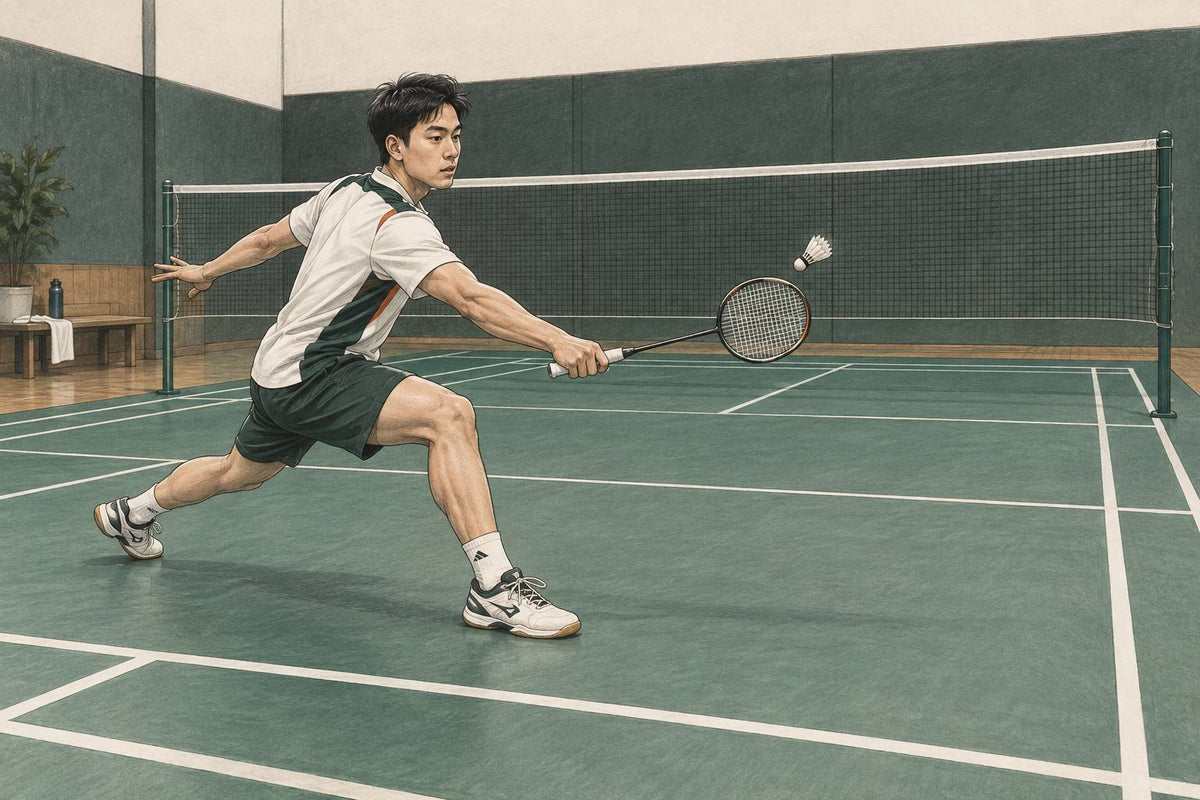
Applying that mechanism to badminton is a sport-specific inference: starts, lunges, braking, recoveries, and direction changes repeatedly move the bones of the foot relative to skin held by the sock or shoe. If the foot, sock, and shoe move together, shear is lower; if they fight each other, the same corner lunge can become a hot spot. The warning usually progresses from a rubbing feeling under load, to stinging, then sharp pain as the tear forms. Visibly, the area may go from redness to blanching, a small skin pleat, and then fluid filling.
Act at the hot spot before the blister fully forms
A hot spot is not something to “play through.” It is an early warning that a blister is forming, and the useful move is to stop the cause before the skin separates further. Step off court, take the shoe off, expose the area, and reduce the repeated load that created the problem.
This timing matters because a blister does not fill with fluid immediately after the epidermal tear starts, but it can be fully filled within about 2 hours. In practical terms: the moment you notice a hot, stinging, or unusually tender patch, pause the session instead of waiting for a visible bubble.
Check what changed: a new shoe, a different sock thickness, wetter socks, harder drills, longer rallies, or more lunges than usual. If the skin remains intact, resume only after the source is adjusted, the area is protected, and movement is pain-free. Stop for the day if discomfort returns.
Troubleshoot shoes, socks, moisture, and return to play without magic fixes

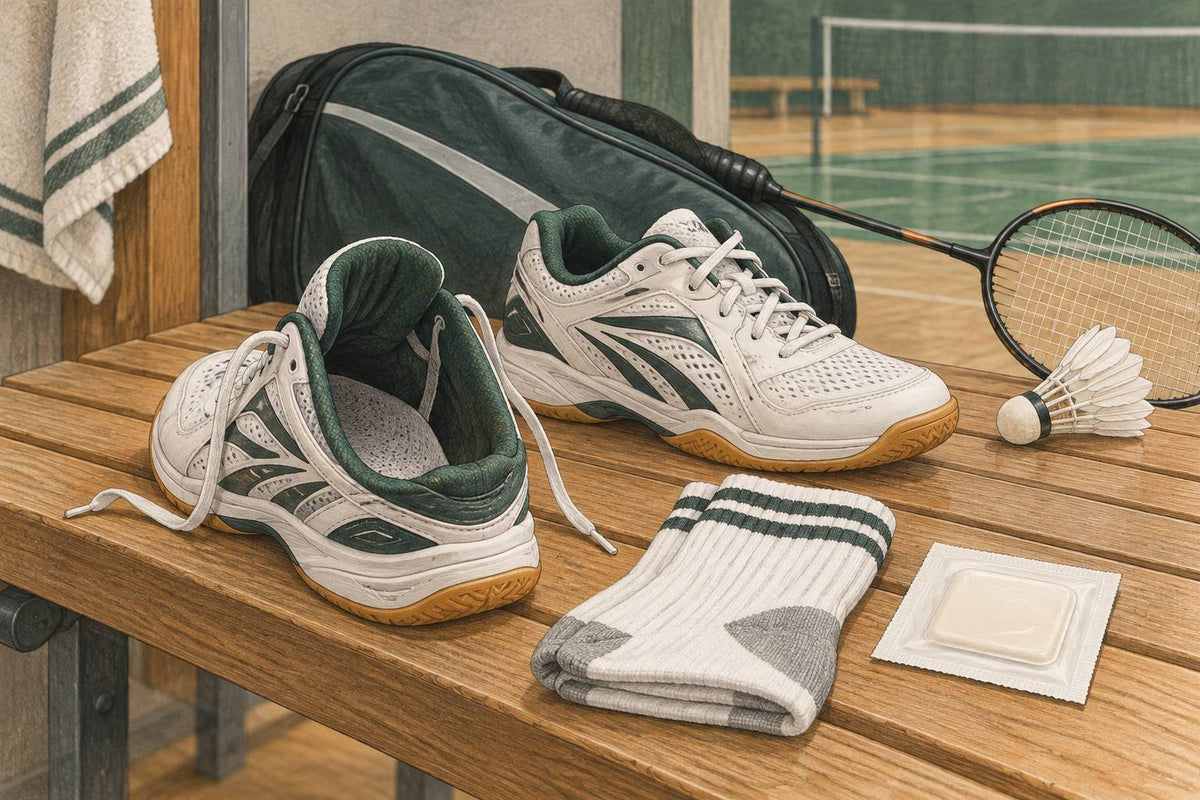
Treat the fix like a controlled test, not a product hunt. First, check shoe volume: if your foot slides inside the shoe during lunges or braking, the skin may not move with the bone. If the shoe feels secure but the hotspot remains, change one variable at a time: sock thickness, sock seam position, insole feel, or lacing pressure. For setup context, see why indoor court shoes matter and how to break in badminton shoes.
Be skeptical of magic fixes. Moisture from sweat can increase friction force, and hotter conditions make blisters more common, but friction blisters are not heat burns. Tape can protect a surface without removing the shear underneath, and evidence for many popular fixes—including powders, antiperspirants, double socks, lubricants, tape, fibre choice, and “perfect fit” claims—is mixed, limited, or absent. Start with gradual adaptation plus a shoe-and-sock combination that limits internal movement. Add court time in small steps only while the skin stays comfortable.
Safe care boundaries and red flags that need qualified assessment

For an ordinary badminton foot blister, keep the roof intact if the skin is unbroken. That top layer is a natural barrier, so avoid popping, piercing, cutting, or peeling it. If the blister opens on its own, let fluid drain, leave loose skin in place, and cover it with a dry sterile dressing. A hydrocolloid dressing can also protect the area and reduce pain.
Do not treat every blister as simple friction. Get qualified assessment for a very painful, recurrent, unexplained, burn-like, allergic-looking, fungal-looking, blood-filled, or infected-looking problem. Seek care promptly for heat, pus, spreading colour change, or increasing pain or swelling. A large and very painful blister also needs qualified care. Many blisters heal in roughly one to two weeks, but worsening or unusual symptoms matter more than the calendar. For related foot-care reading, see badminton toe and toenail injuries.
Which Should You Choose?
Match the condition to the next action. This table is a court-decision shortcut; the sections above explain the mechanism, adjustments, and care boundaries.
| Condition | Next action |
|---|---|
| Hot spot | Pause, inspect the exact contact point, and adjust one source of shear. Resume only if the skin is protected and movement is pain-free. |
| Intact blister | Keep the roof intact, cover and pad it, and stop the activity that caused it until it has healed. |
| Get help | Use the red-flag section above: do not self-treat an unusual, recurrent, infected-looking, or very painful blister. |
Get 10% off your first order
Join the Badminton House list and we’ll email you a 10% welcome code — plus training guides, technique advice, and badminton updates.
By subscribing, you agree to receive Badminton House emails and can unsubscribe anytime.
We play badminton too, so our advice is practical: treat hot spots early, respect pain, and make fit changes one at a time. If you’re unsure whether your shoes are part of the problem, contact us and we’ll help you think through fit, socks, and next steps.
Need a better court-shoe fit?
Shop Badminton FootwearBrowse indoor court shoes chosen for badminton movement and fit.

Leave a comment
This site is protected by hCaptcha and the hCaptcha Privacy Policy and Terms of Service apply.