
Last updated: July 2026 · Written by the team at Badminton House
Quick Answer: Badminton Split Step
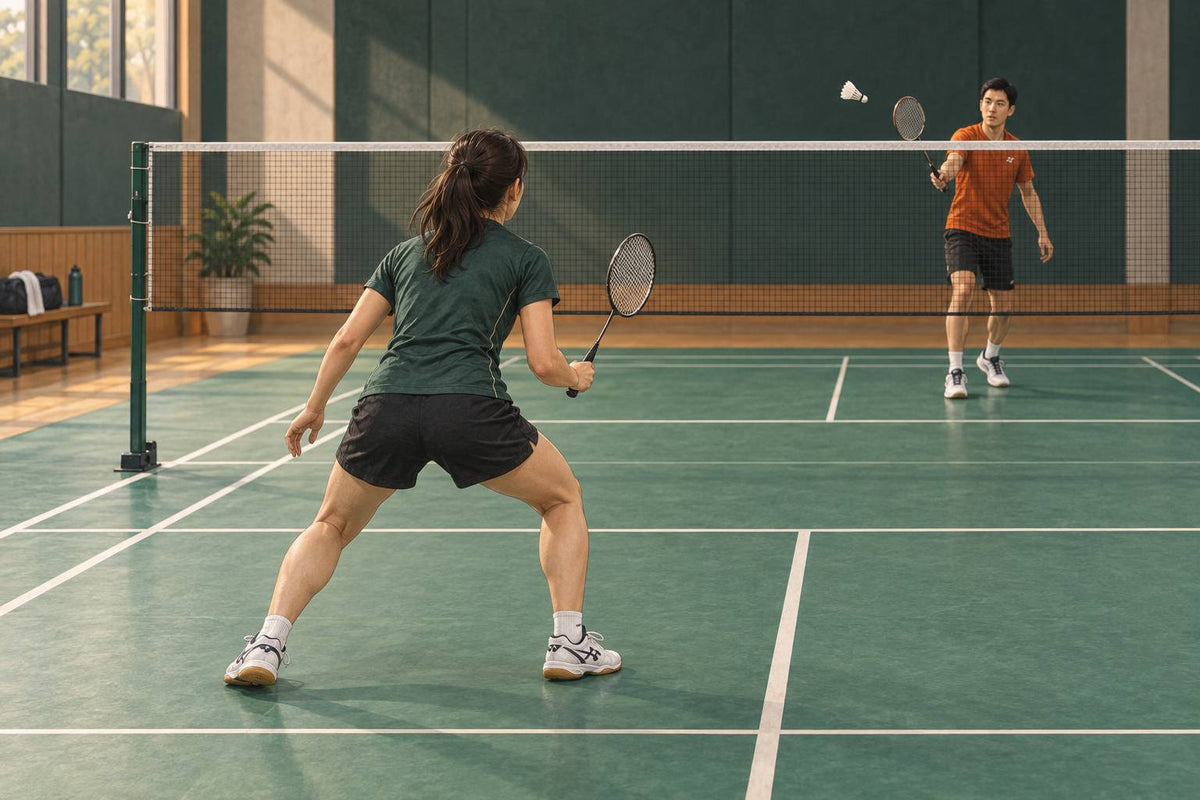
For Canadian club play, make the split step small and low so you land as the opponent hits the shuttle, then push off immediately toward the shot.
Default
Best choice: hop just before contact and land lightly on the balls of your feet as the shuttle direction becomes clear, with knees loaded and bodyweight ready to move.
Too early
If you split before the opponent commits to the shot, you lose the bounce and may still be stuck when the shuttle goes somewhere else.
Too high
A big jump wastes time; keep it as a quick drop-and-bounce, and use responsive, well-cushioned court shoes for the repeated hop-and-push-off.
If you feel like every rally at club night starts one step too late, the problem might not be your cardio. It might be that you are waiting from a standstill. The badminton split step is the small, fast hop that loads your legs as your opponent strikes the shuttle, so you can react while already primed to move instead of restarting from zero.
Done well, it helps you reset your momentum, change direction quickly, and turn the first push-off into the start of your footwork pattern. Done too early, too high, or flat-footed, it loses the bounce that makes it useful and can leave you late anyway.
This guide breaks the split step down for Canadian club players: what it actually does, when to time it, how small the hop should be, where to use it on court, and how to build it into drills until it becomes automatic.
Footwork starts from the floor. If your shoes feel dead, slippery, or unstable during repeated hop-and-push movements, browse our responsive, well-cushioned court shoes.
In This Guide
- What does the badminton split step actually do?
- When should you time the split step?
- How to do a small, fast split step
- Where should you split step on court?
- Directional split step: turn the hop into your first push
- Split-step drills that build the habit
- Why do court shoes matter for repeated hop-and-push-off?
- Which split-step focus should you choose?
What does the badminton split step actually do?
Think of the badminton split step less as a jump and more as a reset button. As your opponent strikes the shuttle, you make a small hop so your body is already primed to move instead of starting from a dead stop.
That matters because badminton is full of direction changes. You may be recovering from a net shot, preparing for a lift, or trying to cover a fast drive in doubles. The split step helps you reset your momentum, then redirect it instantly toward the shuttle once its flight becomes clear.
The key idea: the split step lets you react while already in motion. For the broader movement patterns around it, see our Badminton Footwork Basics guide.
When you land from the split step, your legs are loaded and ready to push. Instead of stopping, thinking, and then moving, you use the bounce from the landing to take your first step. This is why players who add a well-timed split step often feel quicker without needing better cardio first.
It also explains why the split step is often described as a foundation for badminton footwork. Clears, drops, drives, net shots, smash defence, and doubles interceptions all depend on the same first problem: can you start moving in the right direction quickly enough?
Without that reset, many club players end up flat-footed. They see the shuttle, but their weight is stuck in the wrong place, so the first step is late. Against stronger players, that small delay is enough to turn a reachable shuttle into a rushed lunge or a weak return.
There is also a physical reason the habit matters. A 2024 motion-capture study in the journal Bioengineering found that the split step significantly changes lower-limb mechanics during badminton lunges, including a faster loading rate of the first ground-reaction-force peak. In plain club-court language: the split step is not just a style cue; it changes how your body loads and pushes into the next movement.
Because that hop-and-push-off repeats constantly in Canadian club play, your footwear has to support it. If your shoes feel dead, slippery, or harsh under repeated landings, browse responsive, well-cushioned court shoes; Badminton House ships footwear across Canada.
When should you time the split step?

The badminton split step only helps if it is timed to the opponent’s hit. The goal is not simply to hop; it is to land lightly as the shuttle information becomes available, so your legs are already loaded when you know whether to push forward, sideways, or back.
That is why good players look like they are reacting instantly. They are not waiting flat-footed, seeing the shot, and then starting from zero. They are already in a tiny load-and-release cycle, ready to redirect their momentum into the first step.
Simple timing cue: start the split as the opponent is about to strike, and aim to land as the shot becomes readable. If you land and pause, you were early. If you are still in the air after the shuttle is clearly leaving, you were late.
Mistiming can remove the benefit completely, and in some rallies it can even make you slower. If the hop happens too soon, the stored energy from lowering your centre of gravity fades before you need to push. If it happens too late, your body is still settling while the shuttle is already moving away from you.
This is also why deception is so effective. A deceptive hold, delayed hit, or disguised direction does not just fool your eyes; it attacks your split-step rhythm. When your opponent disrupts the moment you expect to land and push, you either arrive late or arrive off-balance. For the tactical side of that battle, see our guide to badminton deception and disguise technique.
In Canadian club play, this matters most in fast doubles exchanges and awkward singles recovery points. You may not have time to return perfectly to base before every opponent contact. Prioritize the timing: split step wherever you are when the opponent hits, then push from that loaded position.
As you build the habit, focus on rhythm before height. A small, quiet, well-timed split step beats a big jump that looks athletic but lands too early. If you are doing a lot of hop-and-push-off repetitions in practice, responsive, well-cushioned badminton court shoes help handle the repeated loading better than casual footwear.
How to do a small, fast split step

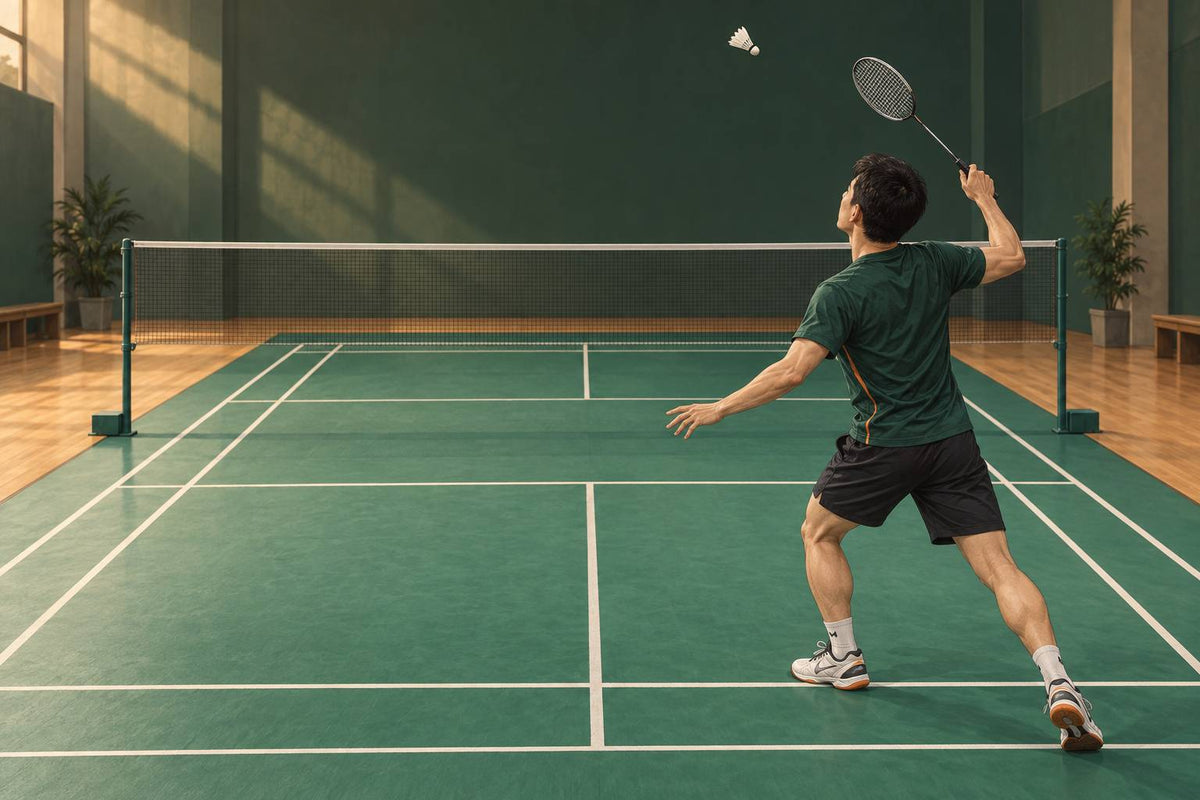
A good badminton split step is small enough that it almost feels like a quick drop, not a jump. The goal is not to get height. The goal is to load both legs so you can push off the instant you read the shuttle.
Start with your feet slightly wider than shoulder-width apart. As the opponent is about to hit, make a very quick lowering motion: knees bend, your centre of gravity drops, and your legs widen slightly. Keep your bodyweight leaning forward so you are ready to move off the balls of your feet instead of rocking back onto your heels.
- Feet: slightly wider than shoulder-width, not narrow and upright.
- Drop: fast and compact, not a high jump.
- Knees: bent and loaded so your legs can spring into the next step.
- Bodyweight: slightly forward, with pressure on the balls of both feet.
- Landing: light and quiet, not flat-footed or heavy.
The common beginner mistake is making the split step too tall. If you jump high, you spend too long in the air and cannot move to the shot as soon as its direction becomes clear. Keep it low, quick, and springy.
| Cue | What to feel | Avoid |
|---|---|---|
| Small hop | A quick load into the floor | Jumping upward for height |
| Loaded knees | Bent legs and a lower centre of gravity for speed and control | Standing tall with straight legs |
| Forward bodyweight | Pressure on the balls of both feet | Landing flat-footed or leaning back |
| Light landing | Ready to push as soon as the shuttle direction is clear | Landing heavily and pausing |
A simple self-check: if your split step makes you feel quicker into the first step, it is probably the right size. If it makes you feel stuck in the air or delayed on landing, make it smaller.
Where should you split step on court?
A common beginner mistake is treating the split step like a reward for getting back to base: recover first, arrive at the perfect central position, then split. That sounds tidy, but it breaks down quickly in real Canadian club play where rallies are messy, shots are late, and your previous shot may not have bought you enough time.
The better rule is simpler: make the badminton split step at the right time wherever you are when your opponent hits. If you are already at base, great. If you are still recovering from the front court, still do it. If you are a step behind because your clear was short or your net shot sat up, still do it. The timing matters more than the location.
Think timing before geometry. Base position helps, but the split step only works when it loads your legs as the opponent’s shot becomes readable. If you delay it until you reach the “perfect” spot, you often end up reacting from a standstill.
This is why the split step is often described as a reset of momentum. Instead of stopping your recovery, waiting, seeing the shot, and then starting again, you use the small hop to absorb your current movement and redirect it. That is the whole advantage: you are not frozen when the shuttle leaves your opponent’s racket.
| Situation | Where to split step | Why it works |
|---|---|---|
| You recovered cleanly after a good shot | Near your normal base | You have time to be balanced and central before the opponent hits. |
| Your previous shot was weak or rushed | Wherever you are when the opponent is about to hit | Waiting to reach base can make you late; the split step gives you a chance to react immediately. |
| You are still moving back from the net | During your recovery, just before the opponent’s hit | The split step helps reset your momentum so you can push forward, sideways, or back again. |
| You are late leaving the rear court | Before you fully reach base, if the opponent is already striking | A small, timed load is better than running through the opponent’s contact and reacting late. |
Base is still useful — just not more important than timing
This does not mean base position is irrelevant. Good recovery patterns still matter because they give you better coverage and more shot options. If you want a wider foundation for that, start with Badminton Footwork Basics and then connect those movements to your split-step timing.
But base is a target, not a pause button. If your opponent is already hitting, stop chasing the ideal court position and load your legs. A split step from an imperfect location is usually more useful than reaching base half a beat too late and standing flat-footed.
A simple cue for club rallies
Use this cue during games: “Can I reach base before contact?”
- If yes: recover to base, stay light, and split as the opponent strikes.
- If no: stop trying to finish the recovery first. Make the small split step where you are and push toward the shuttle once its direction is clear.
That one decision cleans up a lot of beginner footwork. You stop rushing through the opponent’s contact, you stop planting flat-footed, and you start treating the split step as the trigger for every movement rather than an extra move you add only when there is time.
Directional split step: turn the hop into your first push

Once your basic badminton split step timing is reliable, the next refinement is making the landing slightly directional. This is not a separate footwork pattern to memorize for every corner. It is a small adjustment that helps the split step become your first push, instead of a hop followed by a pause.
If both feet land at exactly the same time, your bodyweight can still be travelling downward for a moment. That can make you feel planted before you move. In a directional split step, the leg furthest from the direction you want to travel lands a fraction first, so your loaded legs can redirect the bounce into the next step.
Simple cue: land, then push. Do not turn the directional split step into a big jump or a guess. The timing of the opponent’s hit still matters more than the shape of the landing.
How it feels in real club rallies
Think of a common Canadian club rally: you lift, recover, and your opponent is about to play either a drop, clear, or smash. As they strike the shuttle, you make your small split step. If the shuttle is going to your right, the left leg is the leg furthest from that direction, so it lands just before the right and helps you push right. If the shuttle is going to your left, the right leg lands just before the left and helps you push left.
The difference is subtle. From the outside, it may still look like a normal split step. From the inside, it should feel like your first step has already started because your centre of gravity is loaded and ready to move across the court.
| Version | What happens | Best use |
|---|---|---|
| Basic split step | You land lightly on the balls of both feet with bent knees, ready to push in any direction. | Use this first. It builds the habit of reacting while already loaded. |
| Directional split step | The leg furthest from the direction of travel lands a fraction first, helping your body push toward the shuttle. | Add this after your timing is consistent and you can stay balanced under pressure. |
A safe progression
- Start neutral: practise the small hop and light landing without worrying about direction.
- Add a cue: have a partner point left or right as you split, then push off in that direction.
- Keep the hop low: if you jump upward, you will not be ready to move as soon as the shuttle direction becomes clear.
- Stay honest: do not pre-jump toward the corner you think is coming. The split step works because it lets you react, not because it rewards guessing.
For extra movement training away from match play, pair this with simple change-of-direction work like badminton agility ladder and cone drills. Just keep the priority clear: ladder work can sharpen coordination, but the directional split step only transfers to rallies when the timing matches the opponent’s shot.
Split-step drills that build the habit
The split step becomes useful only when it shows up automatically under pressure. That means your drills should not just be about moving fast to a corner; they should pair a feeder or shadow cue with a deliberate hop-and-react on every repetition.
Use this progression: start with isolated movement, add a simple shuttle feed, then build it into patterned routines that look more like Canadian club rallies.
| Stage | Drill | What to focus on |
|---|---|---|
| 1 | Bench drop and move to a court corner | Drop, load, then push off. The goal is to create energy into the first step, not to jump high. |
| 2 | Friend hand-feed to one area | Start the split-step movement just before the shuttle is thrown, then react to the feed and move. |
| 3 | Patterned routines | Attach the split step to every change of direction so it becomes part of the rally rhythm. |
1. Bench drop and move to a corner
This is the cleanest way to feel what the split step is supposed to do. Drop off a bench, land lightly, then move to a chosen court corner. The exercise helps build quick response off the floor and breaks the habit of treating the split step like a big jump.
- Start by deciding the corner before you begin: front right, front left, rear right, or rear left.
- Drop down, land with bent knees and your weight ready to push.
- Move immediately to the corner instead of pausing after the landing.
The important feeling is not height. It is the quick load-and-go: your legs absorb the landing, then transfer that energy into the first step.
2. Friend hand-feed to an area
Once the movement feels natural without a shuttle, bring in a simple feed. Have a friend hand-feed to an area while you start your split-step movement just before the shuttle is thrown. This connects the habit to the same timing problem you face in a rally: you have to be landing as the shuttle information becomes clear, then move.
- Feeder cue: the feeder shows or starts the throw.
- Your cue: make the small hop-and-load just before the shuttle leaves the feeder’s hand.
- Reaction: push to the feed, play the shot, recover, then repeat with the same deliberate split step.
Keep the first version simple. Feeding to one area lets you focus on timing. After that, the feeder can alternate between two areas so you must react instead of pre-planning the movement.
3. Patterned routines
Patterned routines are where the split step starts to look like normal club play. Choose a repeatable sequence, such as rear court to front court, side defence to net, or two-corner movement. The rule stays the same: every feed or shadow cue gets a deliberate split step before the push-off.
Good habit cue: do not count a repetition unless you actually split step before moving. Fast footwork without the hop-and-react cue can train you to rush from a standstill instead of reacting from a loaded base.
If you are training at home, use the same idea without a shuttle: create a visual or verbal cue, split step, then move to the target. For more no-court options, see our badminton drills at home guide.
Why do court shoes matter for repeated hop-and-push-off?
A good badminton split step is small, but it is not passive. You are landing lightly on the balls of your feet, keeping the knees loaded, then using that bounce to push off toward the shuttle. That means your shoes are part of the movement: they have to handle the repeated load of the hop and still feel ready for the first explosive step.
This matters most during club nights, ladders, and multi-game sessions, where you are not just split-stepping once. You are doing it again and again between clears, drives, net shots, lifts, and defensive reactions. If your shoes feel dead, sloppy, or unstable under that hop-and-push-off rhythm, it becomes harder to stay light and timed.
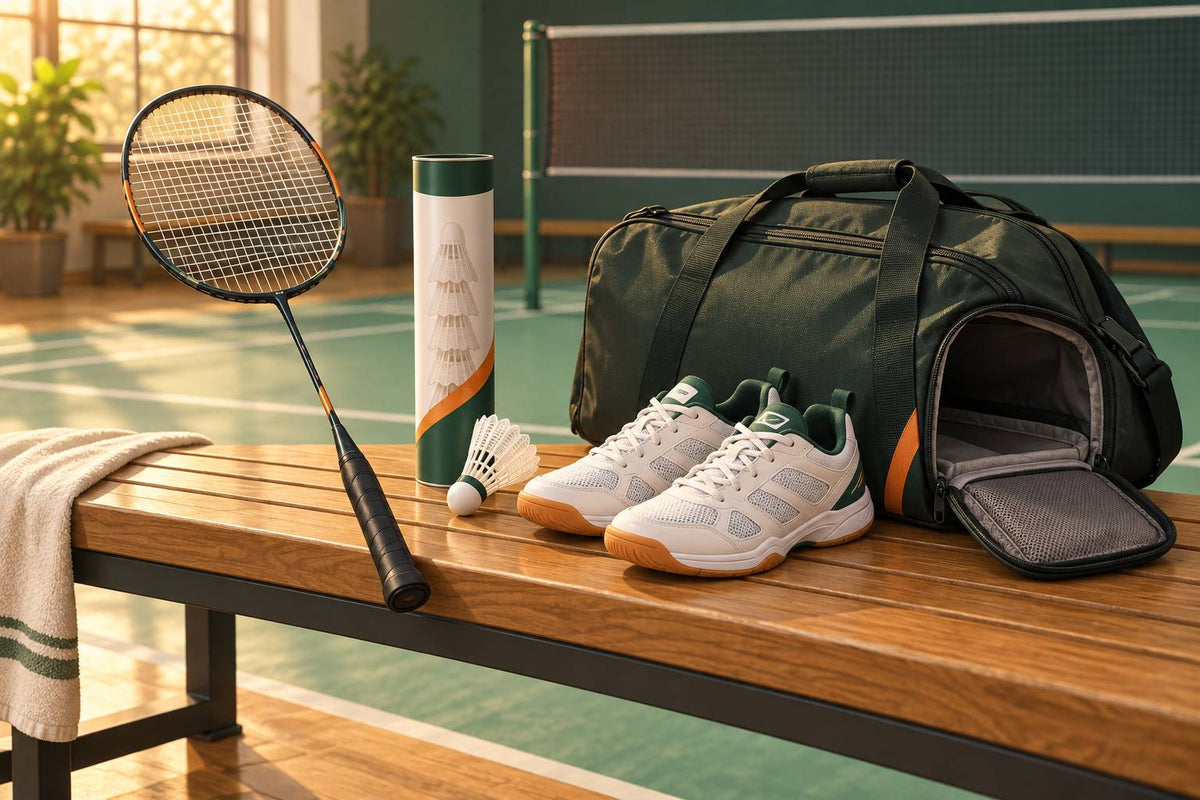
Gear note for Canadian players. If you are building the split-step habit, look for responsive, well-cushioned badminton court shoes that suit repeated landing and push-off. Badminton House ships footwear across Canada.
Shoes will not fix late timing. If you split too early, land flat-footed, or stand too tall, the movement still loses its value. But once the timing is improving, proper court footwear helps the habit feel more repeatable: small hop, loaded knees, balls of the feet, first push.
If you are unsure whether your current pair is helping or holding you back, compare how you feel during the first few rallies versus late in a session. The goal is not a bigger jump; it is a lighter, faster reset that lets you move as soon as the shuttle direction becomes clear. For a deeper shoe-specific guide, see Badminton Shoes vs Running Shoes.
Which split-step focus should you choose?
If you only change one thing, choose timing. A small, low split step that lands as the opponent hits is more useful than a bigger hop, a prettier base position, or a drill you only do in warm-up.
| Choose this focus | Best if... | What to do | Avoid this mistake |
|---|---|---|---|
| Default: small, timed split step | You want the highest-leverage habit for club rallies. | Keep the hop low, feet slightly wider than shoulder width, knees bent, and bodyweight forward on the balls of the feet so you can push off instantly. | Do not jump high or land flat-footed. You will lose the quick bounce you need for the first step. |
| Timing-first split step | You split early, wait, then still feel late to the shuttle. | Start the movement around the opponent’s hitting action so you are landing when the shuttle direction becomes clear. | Do not split too soon. If the energy is gone before you know where the shuttle is going, the split step stops helping. |
| Directional split step | You can see the likely direction and want a faster first push to a corner. | Land the leg furthest from your target first, then drive off it toward the shuttle. | Do not always land both feet at exactly the same time when you are trying to explode in one direction. |
| Split wherever you are | Your previous shot was weak and you have no time to recover fully to base. | Make the split step at the opponent’s hit from your current position, then react from there. | Do not rush back to base so hard that you miss the timing of the split step. |
| Feeder or pattern drill | Your split step looks fine in shadow practice but disappears once a shuttle is involved. | Have a partner hand-feed to an area, begin your split-step movement just before the shuttle is thrown, then progress into patterned routines. | Do not leave the skill in isolated footwork drills only. It has to connect to the shuttle cue. |
| Bench/drop drill | You keep thinking of the split step as an upward jump. | Drop off a bench and move to a court corner, focusing on quick response off the floor and a strong push-off. | Do not chase height. The goal is to create usable push-off energy, not airtime. |
Gear note: For repeated hop-and-push-off work, browse responsive, well-cushioned court shoes, including the Babolat Shadow Tour Men’s Badminton Shoes – Orange, a non-marking option built for repeated stop-start landings.
For a broader movement plan, pair this habit with Badminton Footwork Basics and badminton agility ladder and cone drills.
Get 10% off your first order
Join the Badminton House list and we’ll email you a 10% welcome code — plus subscriber-only restock alerts, giveaways, and honest gear advice from players.
By subscribing, you agree to receive Badminton House emails and can unsubscribe anytime.
Keep the badminton split step small, sharp, and timed to your opponent’s hit — then make it automatic on every rally. If you want help choosing gear that supports quicker club-court movement, contact us. We play badminton ourselves and are happy to give practical advice for Canadian players.
Build your first step from the floor up.
Responsive, well-cushioned court shoes help with the repeated hop, landing, and push-off that make the split step work.
Shop Badminton FootwearShips across Canada · 14-day returns · Canadian badminton specialty shop

Leave a comment
This site is protected by hCaptcha and the hCaptcha Privacy Policy and Terms of Service apply.