
Last updated: August 2026 · Badminton House
Quick answer
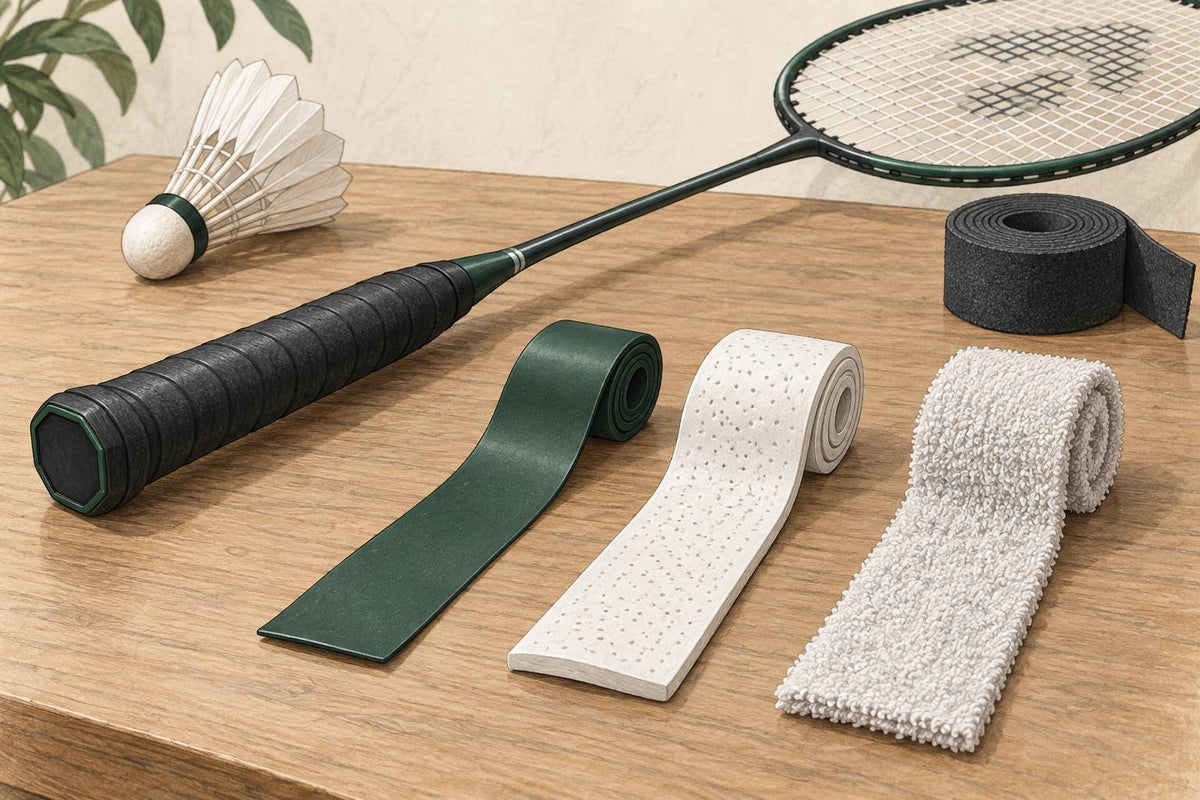
Most players want an overgrip wrapped over the grip the racket came with. It is thin, cheap, and quick to replace when it goes slick.
Use a replacement grip when the original underneath has hardened or smells. Use a towel grip if your hands sweat heavily — it absorbs rather than repels, at the cost of a much shorter life.

The Grip Types, Compared
| Type | Thickness | Goes | Lasts |
|---|---|---|---|
|
Overgrip also called grip tape |
About 0.6 mm | Over the existing grip | 10–20 hours of play |
|
Replacement grip rubber or PU grip |
About 1.6 mm | Instead of the original — strip it first | 3–6 months |
| Towel grip | About 1.35 mm | Either way — usually replacing the original | 5–10 hours of play |
| Cushion / foam wrap | Varies, thickest option | Under a grip, to build the handle up | Until you rewrap |
The thicknesses shown are product examples, not fixed category standards. Yonex’s 2026 catalogue includes overgrips from 0.4 to 0.8 mm, a 1.35 mm cotton towel grip and a 1.6 mm PU grip. Installed bulk also depends on overlap, base layers and material compression.
A racket commonly arrives with a base grip that can be replaced when worn. Adding an overgrip is one option if the existing layer is sound and the finished handle remains comfortable.
Towel Grip vs Rubber (PU) Grip
This is the choice that actually divides players, and it comes down to what your hands do.
| Towel (terry cotton) | Rubber / PU | |
|---|---|---|
| Handles sweat by | Absorbing it into the fabric | Staying tacky, then eventually going slick |
| Feel | Soft, grippy, cushioned. Muffles feedback slightly | Direct and connected to the handle |
| Lifespan | Short — 5–10 hours before it needs changing | Months for a replacement grip |
| Downside | Can become heavy and unpleasant when saturated; dry and replace as condition requires | Sweat response varies with surface and material; compare what stays secure for you |
| Choose it if | You sweat heavily or play in humid heat | You want feel, low maintenance, or play in dry or air-conditioned halls |
Towel grip users generally also carry grip powder. The two go together: the powder keeps your palm dry, the towel takes what gets through.
Match the grip to your climate
| Where you play | Best choice |
|---|---|
| Hot and humid halls | Towel grip plus grip powder, changed often |
| Air-conditioned halls | Tacky PU overgrip — sweat is manageable and you keep the feel |
| Dry or cold halls | Tackier overgrip; dry hands need the grip to come from the tack, not from friction |
How Many Overgrips Change Your Grip Size?
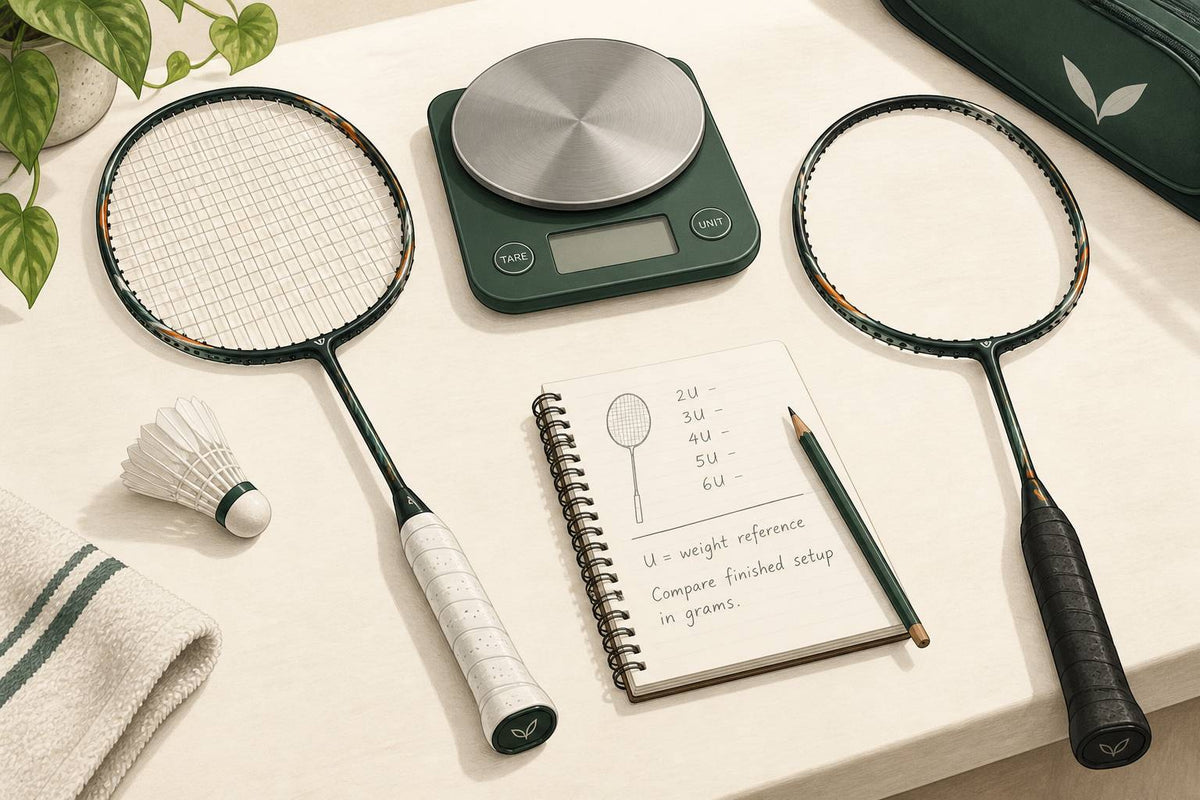
There is no fixed overgrip-to-G-size conversion. Grip thickness, stretch, overlap and the existing handle layers all affect the finished circumference.
A smaller base handle leaves room to build up, but that is a fitting option rather than a rule for everyone. Compare the finished grip you can hold securely and change comfortably.
If you are between sizes, compare the intended wrap on both rather than automatically sizing down. For the base size, see our G4 vs G5 vs G6 grip size guide.
When to Change It
Judge condition and secure handling first. The hours and calendar intervals below are rough planning examples, not lifespan guarantees; storage and moisture can also affect a grip.
| Grip | Hours of play | At 3 sessions a week |
|---|---|---|
| Overgrip | 10–20 | Every 2–4 weeks |
| Towel grip | 5–10 | Every 1–2 weeks |
| Replacement grip | Many | Every 3–6 months |
Signs it is finished: the surface is shiny rather than matte; you are gripping harder to stop the racket turning; the wrap has unravelled at the butt end; or it smells. Any one of those is enough.
Replace a worn overgrip when it no longer provides a secure, comfortable hold; check the underlying layer at the same time.
How to Wrap One, Briefly
- Start at the butt cap and work up toward the shaft. The tapered end of the grip goes on first.
- Peel the backing as you go, not all at once.
- Overlap about a third of the width on each turn. Less overlap means a thinner, harder grip; more means thicker and softer.
- Keep the tension light and even. Pulling hard stretches the grip thin and it will unravel.
- Cut at an angle where you finish and seal it with the finishing tape in the packet.
Right-handed players wrap anticlockwise seen from the butt end, left-handed clockwise, so the overlap runs with your hand rather than against it. Our step-by-step overgrip guide covers it properly, and removing the factory grip covers the replacement case.
Common Questions
What is the difference between an overgrip and a replacement grip?
An overgrip is thin, about 0.6 mm, and goes over the grip already on the racket. A replacement grip is thicker, about 1.6 mm, and goes on instead of it after you strip the old one off.
Do you put an overgrip over the original grip?
Yes, that is what it is for. Leave the original on unless it has hardened, flattened or started to smell.
Is a towel grip good for badminton?
Yes, if your hands sweat a lot. It absorbs rather than repels, which is the right answer in humid conditions. The trade-off is a much shorter life — expect to change it every few sessions.
Does an overgrip make the handle bigger?
An overgrip adds circumference, but the amount depends on its thickness, stretch, overlap and underlying layers. Compare the finished handle rather than treating one wrap as half a G size.
How often should I change my overgrip?
Check regularly and replace it when it becomes slick, unravels or no longer feels secure. The 10–20 hour range above is an example, not a requirement or promise.
Racket turning in your hand? Check grip condition and fit together — see why your grip slips in sweat and heat, or how to build up a handle if it genuinely is too small.

Leave a comment
This site is protected by hCaptcha and the hCaptcha Privacy Policy and Terms of Service apply.