
Last updated: July 2026 · Written by the team at Badminton House
Quick Answer: Hand Numbness After Badminton
Stop playing, note which fingers are affected, and choose the path that matches what happens after the session.
Settles quickly
Default: Rest, then test one change to grip pressure, contact, grip build, tension, or session length.
Persists or maps
Numbness that remains or repeatedly affects specific fingers needs medical assessment.
Weak or discoloured
Stop playing and seek prompt assessment for weakness or blue or white fingers.
Last updated: July 2026
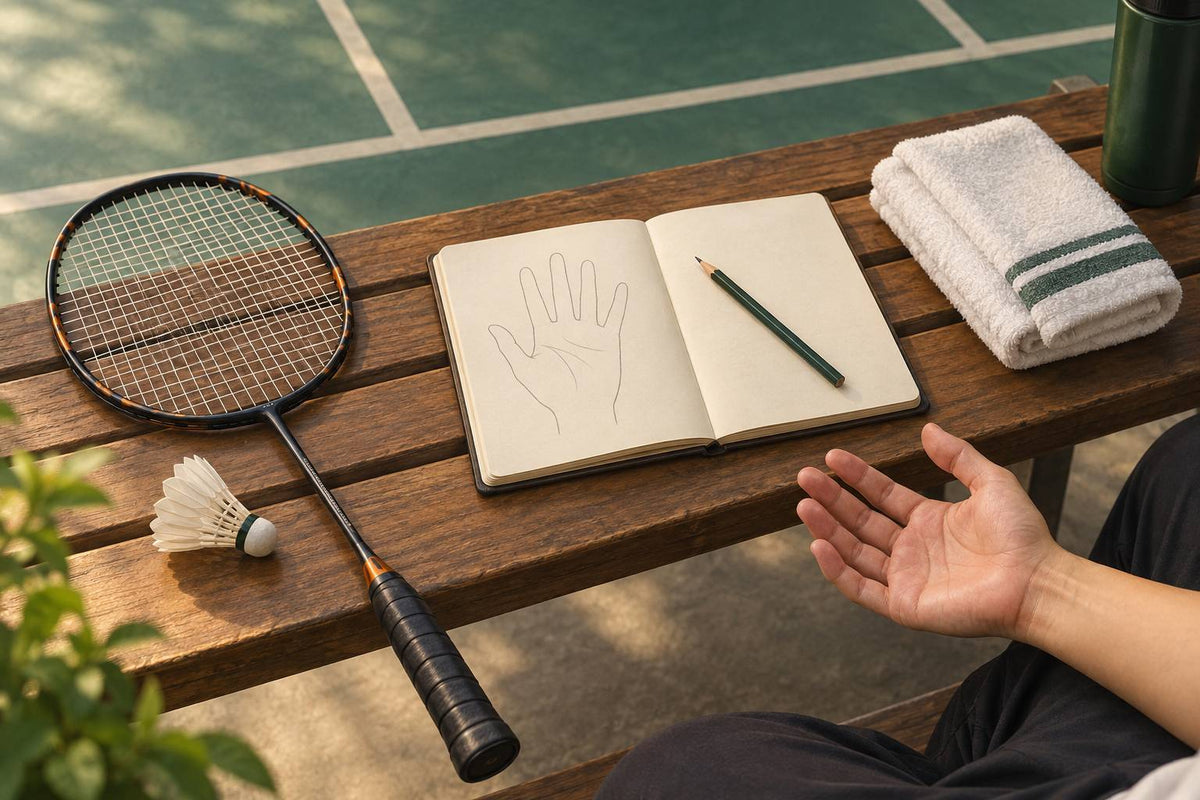
If your racket hand goes numb after a hard session, do not immediately blame the strings—or keep playing to “shake it out.” Note exactly which fingers are affected, when the sensation starts, and how long it lasts. Little-and-ring-finger symptoms follow a different nerve pattern from numbness centred on the thumb, index, and middle fingers, so location is the most useful first clue.
In badminton, a recent tension increase, repeated off-centre contact, an undersized or slippery grip, constant clenching, and a long session can all raise the load reaching the hand. This guide shows you how to sort those variables without changing everything at once—and when persistent, localized, or weakness-related symptoms deserve clinical assessment rather than another equipment adjustment.
In This Guide
First, Map Where the Numbness Is
Before blaming strings or tension, note exactly where the sensation appears. Finger distribution gives a more useful starting point:

- Little and ring fingers: this can follow an ulnar-side pattern. Also note poor grip, weak pinching, or difficulty spreading and closing the fingers.
- Thumb, index, middle and thumb-side of the ring finger: this fits a median-nerve pattern. Night waking, shock-like sensations, clumsiness during fine movements, or dropping objects are important accompanying details.
- Palm or changing finger colour: record buzzing or tingling in the palm and whether any fingers become blue or white, because colour change can indicate a blood-flow problem rather than ordinary racket feedback.
Write down the affected fingers, timing and associated weakness after each session. Do not equate occasional racket vibration with long-term hand-arm vibration exposure: permanent vibration-related illness is associated mainly with regular, frequent exposure to vibrating tools, while occasional low exposure is unlikely to cause it.
Check the Likely Badminton Causes in Order
- A recent tension increase: Higher tension absorbs less shock and sends more impact through the handle, especially on mishits. Lower tension deforms more and provides a larger, more forgiving sweet spot.
- Frequent off-centre contact: Frame hits and contact away from the sweet spot produce more jarring and vibration than clean central contact.
- An insecure grip build: A worn, slippery or undersized grip encourages harder squeezing. Aim for the smallest build that remains secure when hitting hard; cushion underwrap or a ribbed grip can soften handle vibration.
- Constant grip pressure: Keep the hand relaxed during preparation, squeeze briefly at impact, then soften again rather than clenching throughout the rally.
- Long or repeated sessions: Add rest breaks and vary drills to reduce uninterrupted exposure to the same gripping and impact load.
See the related arm-load guide. Pain specifically on the little-finger side of the wrist is covered separately in the TFCC and ECU guide.
Use a Change-One-Thing Test Over Two or Three Sessions

Use this test only when the numbness is brief and fully settles between sessions. For each session, record:
- Affected fingers and when the sensation began
- Total session length, racket and string tension
- Obvious frame hits and whether the grip felt thin, slippery or secure
Before the next session, change one variable only. If symptoms followed a recent tension jump, return to a more suitable lower tension; 20–22 lb is a practical beginner baseline, with future increases limited to 1–2 lb. Alternatively, track mishits and correct one likely cause, refresh or minimally build up the grip, or practise a loose–squeeze–loose cycle: relaxed preparation, brief pressure at contact, then relaxed again.
Keep the comparison clean. Changing tension, grip and technique together may alter the result, but it will not show which change helped.
When Hand Numbness Needs Medical Assessment
Stop playing and arrange a medical assessment if numbness persists after the session, repeatedly follows the same area of your hand, or wakes you at night. Get checked promptly if it comes with hand weakness, lost fine control, dropped objects, difficulty lifting light objects, or fingers turning blue or white. Pain lasting more than two weeks despite rest also warrants assessment.
This guide is not a diagnosis. A softer string bed, different grip build, or reduced grip pressure may change racket load, but equipment changes cannot rule out nerve compression or another medical cause. A clinician can examine where the symptoms originate and may use objective testing, such as nerve-conduction studies, to measure nerve function and guide the next step.
Comfort changes come after safety. Once medical concerns have been addressed, explore grip and cushioning accessories, or contact us for setup guidance.
Which Change Should You Test First?
Choose the row that best matches what changed before the numbness began. Test only one variable at a time so you can tell what actually helps.
| Choose this | If this matches your sessions |
|---|---|
| String tension | Symptoms followed a tension increase, especially with frequent off-centre contact. |
| Mishits | The handle jars most when you hit away from the sweet spot. |
| Grip build | The handle feels insecure unless you squeeze hard. |
| Grip pressure | You stay clenched during preparation and follow-through. |
| Session length | Symptoms emerge gradually during longer or repetitive sessions. |
If numbness persists after play, follows a specific finger pattern, or comes with weakness, stop testing equipment changes and seek medical assessment.
Get 10% off your first order
Join the Badminton House list and we’ll email you a 10% welcome code — plus training guides, technique advice, and badminton updates.
By subscribing, you agree to receive Badminton House emails and can unsubscribe anytime.
We play badminton too, and we know that hand numbness deserves more care than a quick equipment guess. If you want help thinking through grip build, tension, or recent setup changes, contact us for practical gear advice—but seek medical assessment when symptoms persist, recur in a specific area, or include weakness.
Once nerve symptoms have been properly addressed, explore grips and cushioning accessories for a more secure, comfortable handle setup.
Explore Badminton Accessories

Leave a comment
This site is protected by hCaptcha and the hCaptcha Privacy Policy and Terms of Service apply.