
Last updated: July 2026 · Written by the team at Badminton House
Quick Answer: Badminton Injury Rules
The key distinction is whether the incident requires quick assessment, blood control, or retirement; none creates a player-controlled treatment break.
Injury
Report it immediately. The referee decides whether the tournament doctor comes on court; time-consuming treatment is not allowed there.
Blood
Play is delayed until bleeding stops or the wound is suitably dressed and the court is playable.
Retire
Confirm retirement with the umpire; it normally withdraws you from your other events at that tournament, subject to limited exceptions.
Twist an ankle at 17–16 or feel a cramp tightening between rallies, and your first instinct may be to sit down or call for treatment. In a sanctioned badminton match, that can create a second problem: play is meant to remain continuous, and an injury does not automatically give you a player-controlled medical timeout. Stop safely, make the umpire aware, and follow the official’s directions rather than leaving the court or stretching the delay yourself.
This guide explains the typical BWF procedure for reporting an injury, how officials distinguish a quick between-rally need from a longer stoppage, why active bleeding must be stopped or suitably dressed before play resumes, and what formally retiring can mean for the rest of a tournament. Event-specific regulations can modify the process, so check the current conditions of competition before you play.
In This Guide
What Happens When You Report an Injury
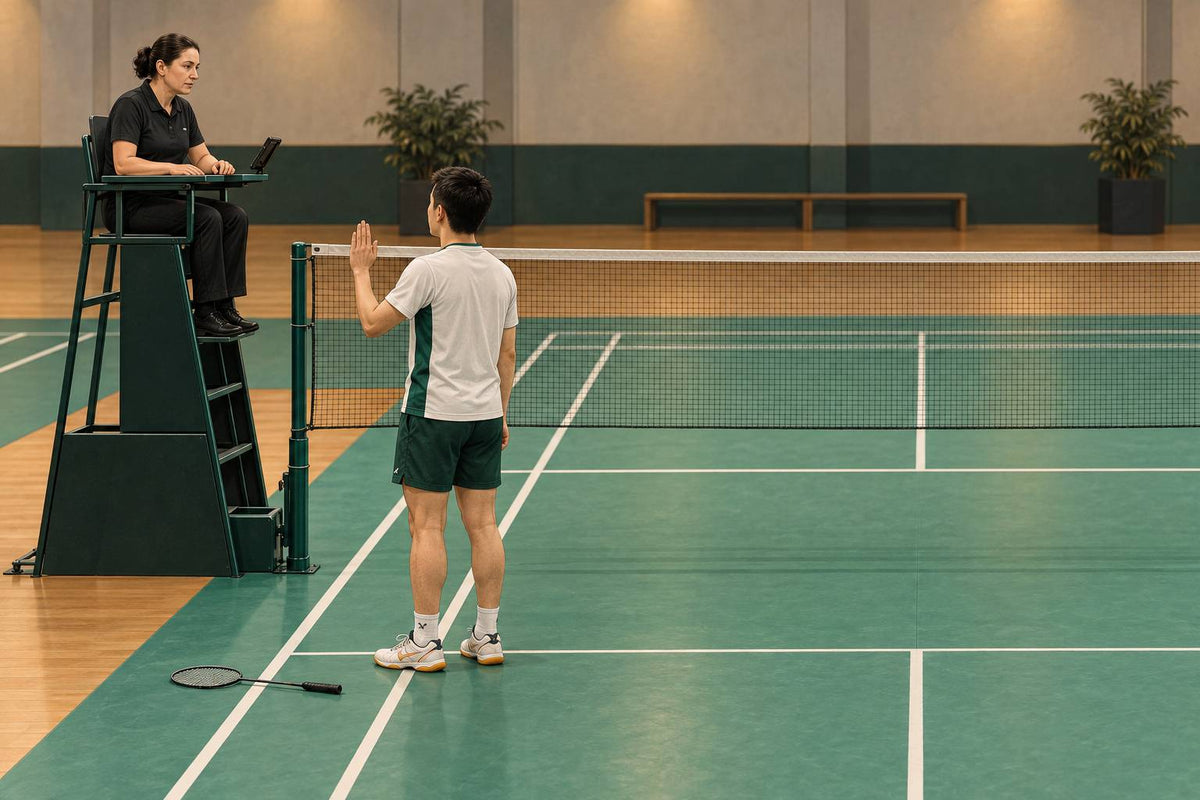
Badminton injury rules start from continuous play: a medical timeout is not an automatic break that a player can control. If you are hurt, raise a hand, tell the umpire what happened and remain on court unless the umpire gives permission to leave.

The usual sequence is:
- The umpire quickly assesses the situation and begins timing the injury-related delay.
- If necessary, the umpire summons the referee, who decides whether the tournament doctor or other assistance is required.
- The doctor examines the player and advises whether continuing is medically advisable.
- Quick relief may be authorized, such as a bandage or spray, but time-consuming on-court treatment is not allowed.
- The player then resumes play or confirms retirement.
A severe emergency overrides this normal sequence so necessary first aid can begin immediately. For care and prevention guidance rather than match procedure, see badminton ankle sprains and common badminton injuries.
Cramp and Problems That Build Between Rallies
Cramp is not a separately named entitlement to a medical timeout. It is handled through the same injury-or-illness procedure as other physical problems, with the umpire deciding whether a delay is justified. Play cannot be delayed merely to let a player recover strength or wind.
If tightness, pain or another problem develops gradually, tell the umpire clearly between rallies. Do not try to create recovery time by walking around the court, and do not leave the court without permission. The umpire may allow a quick towel or a towel and drink when this does not unduly hold up play, but that permission is discretionary.
Plan around the scheduled intervals. Longer attention belongs in the interval of up to 60 seconds when the leading score reaches 11, or the intervals of up to 120 seconds between games.
What Happens When There Is Blood
A blood-flowing injury delays the game until the bleeding has stopped or the wound has been suitably dressed. This is not simply a chance for the player to recover: the immediate purpose is to control the bleeding and make it safe to continue.

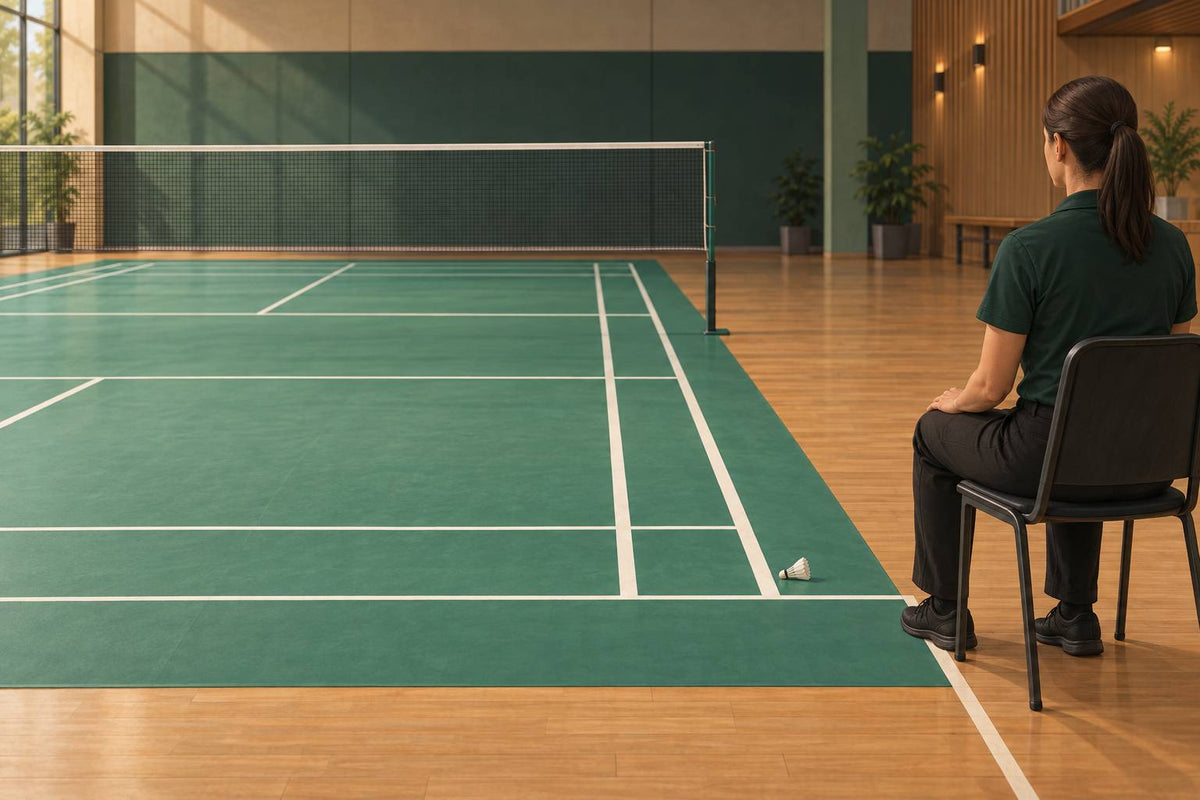
Before play resumes, any blood on the court or its immediate surroundings must be removed and the affected area made suitable for play. Court attendants may be asked to wipe the surface. Players should wait for the umpire’s instruction rather than trying to restart the rally or clean the playing area themselves.
If the surface is temporarily unplayable: the umpire calls the referee and suspends play until the court and its surroundings are suitable again. The existing score stands, and the match resumes from that point.
Retiring From a Match and What Happens Next
To retire, tell the umpire you wish to stop. The umpire asks, “Are you retiring?” A confirmed answer leads to the appropriate announcement. If the umpire is uncertain about the injury or illness, the referee may be called onto court.
In typical sanctioned-tournament practice, retiring from one event also removes you from your other events at that tournament, subject to limited regulatory exceptions. In a team tie, retirement removes the player from later matches in that tie, but not necessarily future ties. If a player does not complete a group stage, all of that player’s or pair’s group results may be deleted.
Retirement is a player’s confirmed decision to stop; it is not disqualification. Check the event’s current conditions of competition because event-specific rules can apply. The referee is in overall charge of the tournament.
Rules check: BWF Laws of Badminton and Instructions to Technical Officials. Details verified as of July 2026.
Which Response Fits the Situation?
Choose based on what is happening now—not on how much recovery time you want. The umpire controls delays and decides whether the referee is needed.
| Situation | Choose this response |
|---|---|
| Injury or illness | Report it immediately and let the umpire assess whether to call the referee and tournament doctor. |
| Cramp or building problem | Use a scheduled interval when possible. Between rallies, only a quick towel or drink may be allowed at the umpire’s discretion. |
| Blood | Stop and report it. Play cannot resume until bleeding has stopped or the wound is suitably dressed. |
| Retirement | Choose this when you will not continue. Confirm retirement clearly, then check the event regulations because other entries may also be removed. |
Get 10% off your first order
Join the Badminton House list and we’ll email you a 10% welcome code — plus training guides, technique advice, and badminton updates.
By subscribing, you agree to receive Badminton House emails and can unsubscribe anytime.
Badminton injury rules are easier to handle when you remember the chain: raise your hand, tell the umpire, and let the officials manage the injury stoppage. Play resumes only after bleeding is stopped and the court is safe; retiring can also affect your other events. We play badminton, so if you want help preparing for tournament play, contact us for practical advice.
Review footwear for grip and ankle-support considerations before your next event.
Explore Court FootwearCompare court-shoe options and check live availability.

Leave a comment
This site is protected by hCaptcha and the hCaptcha Privacy Policy and Terms of Service apply.