
Last updated: July 2026 · Written by the team at Badminton House
Quick Answer: Badminton Line Judge Signals
Wait until the shuttle touches the floor, judge only your assigned line, and never anticipate the umpire. Your decision stands unless the umpire is beyond reasonable doubt that it was clearly wrong.
Out
Call “out” promptly, no matter how far out; speak loudly enough for players and spectators, with both arms extended horizontally.
In
Stay silent and point to the line with your right hand while looking toward the umpire.
Unsighted
If your view was truly blocked, cover your eyes with both hands; the umpire decides or plays a let.
The job looks simple until a shuttle clips the floor beside your line, both players turn toward you and the umpire waits for a decision. A badminton line judge needs more than sharp eyesight: you must watch only the assigned line, wait until the shuttle lands, then give the correct signal promptly and clearly.
This guide prepares first-time volunteers for the chair, from positioning and the three standard signals to handling a blocked view or an overrule without losing focus. Your event may set its own age, uniform and shift requirements, so confirm those details and your exact line assignment at the pre-tournament briefing. Once play starts, judge the landing you actually see—not the players’ reactions or the apparent direction of flight.
In This Guide
Your Role, Assigned Line, and Chair Position
A badminton line judge has one tightly defined responsibility: decide whether the shuttle landed in or out relative to the line—or lines—assigned to you. Follow that line rather than trying to judge the whole court. Depending on the tournament level, as many as 10 line judges may work around one court, each responsible for a particular boundary.

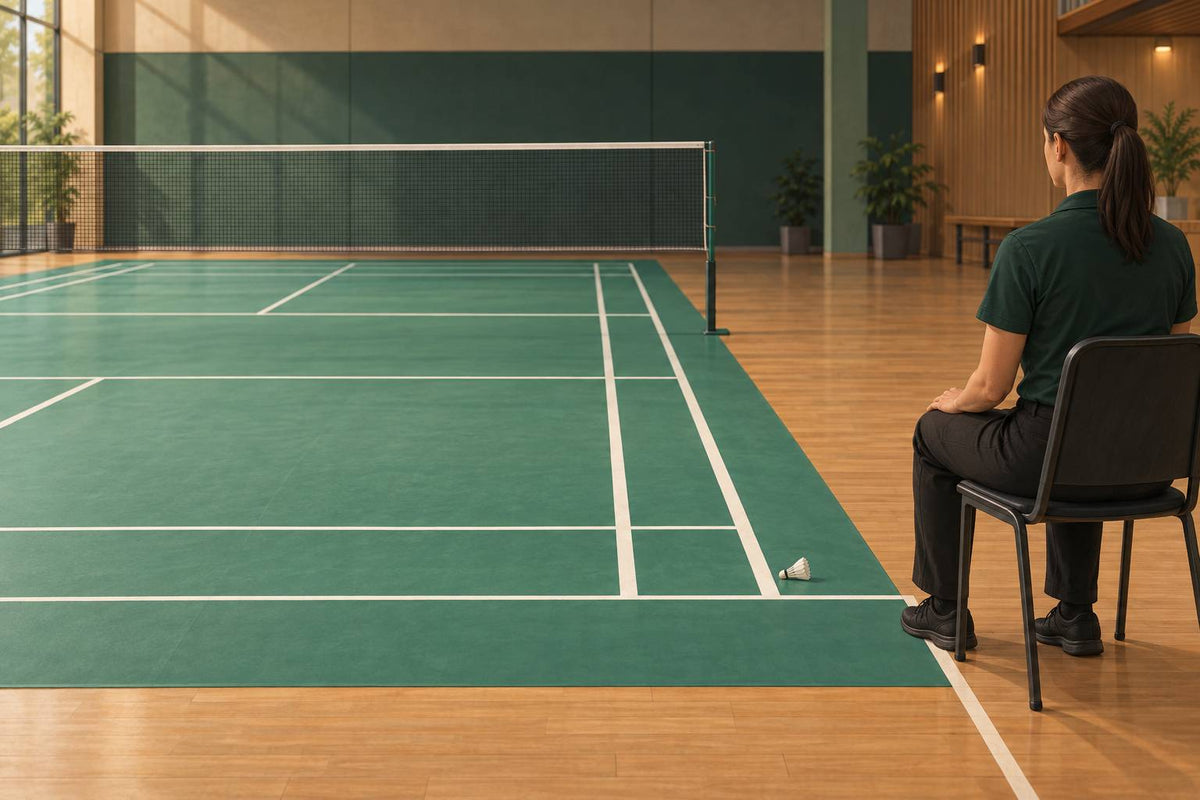
Your chair should sit in the prolongation of the assigned line: directly in line with the marking so you can look straight along it. The preferred position is opposite the umpire and, where practical, 2.5–3.5 metres beyond the court boundary, protected from spectators or other outside interference.
Before play, confirm both your assigned line and chair position with the umpire during the officials’ briefing. If the singles, doubles, service, or boundary markings are unfamiliar, review this badminton court dimensions and lines guide beforehand.
The Three Badminton Line Judge Signals
Wait until the shuttle touches the floor. Do not anticipate the landing, then use the signal that matches what you actually saw:

- Out: Call “out” promptly and clearly. At the same time, extend both arms fully and horizontally to your sides, with your fingers together and palms facing toward the court.
- In: Make no verbal call. Point to the assigned line with your right hand, keeping your fingers together and your palm facing down.
- Unsighted: Make no verbal call. Raise both hands separately to cover your eyes, keeping your hands and arms uncrossed.
Use “unsighted” only when your decisive view was genuinely blocked—for example, when a player obscured both the line and shuttle at the landing moment. It is the correct signal when you could not see, but it is not a way to avoid making a close decision.
Overrules, Unsighted Decisions, and Pressure
A line judge’s factual decision stands unless the umpire is beyond reasonable doubt that the call was clearly wrong. Only then does the umpire overrule it. Where an Instant Review System is available, a player or pair may use the applicable review process; the umpire may also request a review when an unsighted call cannot otherwise be decided.
If your view is genuinely blocked, signal unsighted immediately rather than guessing. The umpire then makes the decision. If neither the umpire nor the Instant Review System can determine where the shuttle landed, the umpire calls a let.
Pressure does not change your task. Sit upright, stay focused on your assigned court and signal promptly after the shuttle touches the floor. Make clear eye contact with the umpire, not the players or spectators. Never anticipate a decision, delay for a reaction or alter your call because someone celebrates, protests or makes a confident gesture.
What a Line Judge Does Not Decide
Your authority ends with whether the shuttle landed in or out on your assigned line. Service faults belong to the service judge or umpire. Player-contact faults—including a shuttle touching clothing—belong to the umpire, as do conduct faults and lets. Even if you clearly see contact that the umpire misses, do not call the fault; make the normal line decision if the shuttle subsequently lands near your line.
Before your first chair assignment, attend the event briefing and confirm exactly which line you have and which signals are expected. Follow the organiser’s requirements for minimum age, uniform, visible badge, electronic devices and shift timing. These details can vary by event, so do not assume that procedures from another tournament apply.
A damaged shuttle does not automatically remove your responsibility. If it remains in one piece, judge where it lands and give the normal in, out or unsighted signal. The umpire decides whether the rally qualifies as a let.
Rules note: BWF Laws of Badminton and officiating instructions; details verified as of July 2026.
Which Signal Should You Choose?
Wait until the shuttle touches the floor, then choose among the same three signals using what you actually saw—not how close or difficult the landing looked.
| What you saw | Choose | Decision guide |
|---|---|---|
| The shuttle touched your assigned line or landed inside it. | In | Point to the line with your right hand; do not make a verbal call. |
| The shuttle landed beyond your assigned line, even by a large distance. | Out | Call “out” promptly and give the horizontal two-arm signal. |
| A player or another obstruction prevented you from seeing the landing. | Unsighted | Cover both eyes with your hands. Use this only when your view was genuinely blocked—not merely because the call was close. |
Get 10% off your first order
Join the Badminton House list and we’ll email you a 10% welcome code — plus training guides, technique advice, and badminton updates.
By subscribing, you agree to receive Badminton House emails and can unsubscribe anytime.
A confident badminton line judge watches only the assigned line, waits for the shuttle to land, and gives the clearest honest signal—even when that signal is unsighted. The umpire may overrule only when a call is clearly wrong beyond reasonable doubt. Confirm your line assignment and signals at the event briefing. We play badminton, so if you need practical advice on choosing match shuttles or planning club stock, contact us.
Running a junior draw? Consistent match shuttles help every court use the same setup.
Check Live Shuttlecock Availability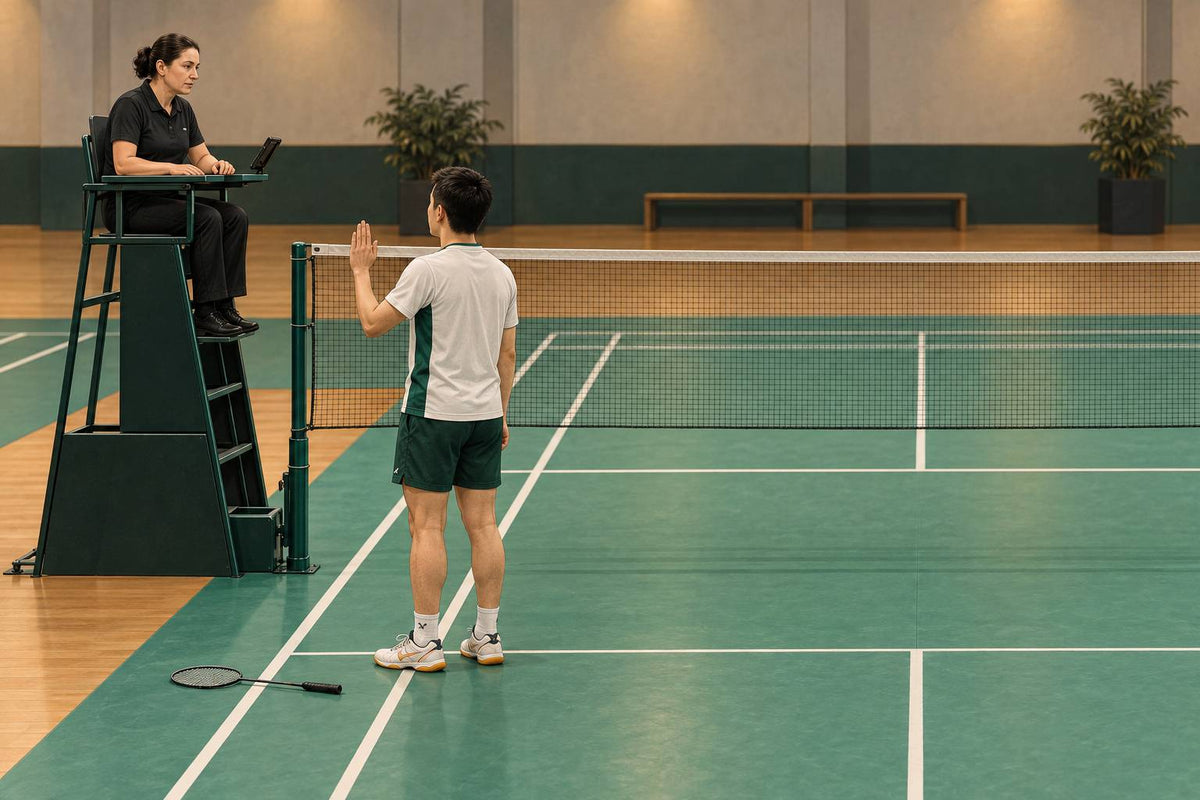

Leave a comment
This site is protected by hCaptcha and the hCaptcha Privacy Policy and Terms of Service apply.