
Last updated: July 2026 · Written by the team at Badminton House
Quick Answer: Badminton Net Shot Technique
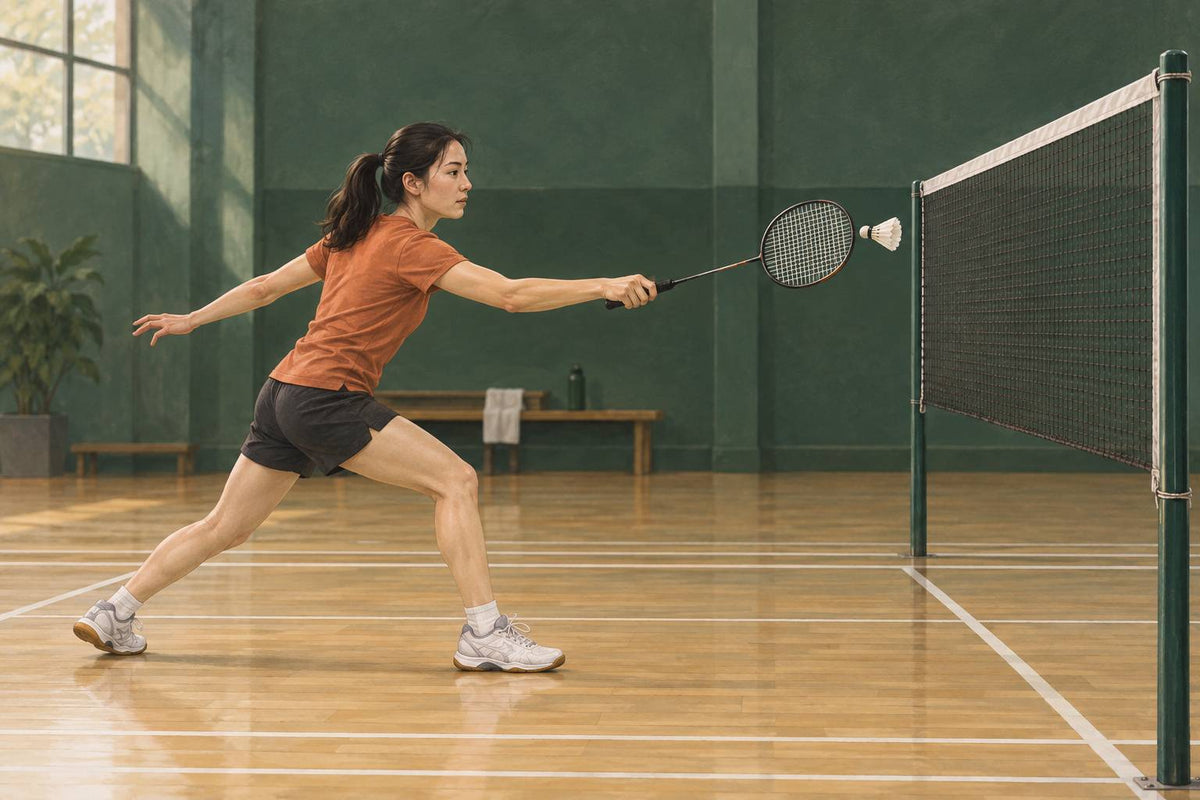
Start with a standard net shot: meet the shuttle early on your side, keep a relaxed grip and use a short, controlled contact to send it close over the tape. Add brushing spin once that touch is reliable.
Default
Best choice: practise a low, tight standard net shot first; a tumbling variation is useful when you arrive early and can control the brushing contact.
Simple
Use a standard net shot when you need consistency: loose grip, soft contact, and just enough height to make the opponent hit upward.
Late
If you arrive late or contact the shuttle too low, avoid forcing heavy spin; choose a safer lift, push, or cross option from the same front-court approach.
If your net shots keep sitting up, drifting too far from the tape, or turning into easy kills, the problem usually is not effort — it is touch. A good badminton net shot technique is soft, early, and controlled: the shuttle should cross close to the net so your opponent has to hit upward instead of attacking down.
Need more feel from your setup? Technique comes first, but a fresh, appropriate string job can help restore control at the net. Canadian players can check our badminton stringing service for restringing support.
In This Guide
- What Does a Good Badminton Net Shot Do?
- Standard vs Tumbling Net Shot: What’s the Difference?
- Grip and Touch: Loose Fingers, Gentle Squeeze
- Footwork and Contact Point at the Net
- How to Create Spin: Slice, Brush, and Stay Soft
- Five Front-Court Options From the Same Approach
- What Gear Helps Net Feel and Control?
- Which Net Shot Should You Choose?
What Does a Good Badminton Net Shot Do?
A badminton net shot is a soft underarm front-court shot played from near the net, with the shuttle landing on your opponent’s side as close to the net as possible. The net stands 1.524 m (5 ft) high at the centre, so a tight net shot clears the tape by only a few centimetres before dropping. The goal is not to swing hard or “push” the shuttle deep. The goal is to make your opponent arrive late, reach upward, and take the shuttle from an uncomfortable position.
A perfect net shot can win the rally outright, especially if it tumbles tightly over the tape and drops before your opponent can reach it. More often, though, a good net shot wins the next shot: it forces the opponent to hit upward, which usually leaves them with only two safe choices.
- They play another net shot. If their reply sits even slightly high, you can step in and attack it with a tap or net kill.
- They lift. If they cannot keep the shuttle tight, they lift to the back court and give you or your partner an attacking chance.
Think pressure, not perfection. At Canadian club nights and league sessions, a consistent tight net shot is often more valuable than one spectacular spinning winner every ten tries.
That is why good badminton net shot technique starts with control. The shuttle should travel just over the tape, then drop quickly enough that your opponent cannot take it above net height. Once they are forced to contact below the tape, they are no longer attacking — they are rescuing.
The simple tactical picture
| Your net shot does this | Opponent’s likely reply | Your next advantage |
|---|---|---|
| Drops tight to the tape | Late net reply | Chance to pounce on a loose shuttle |
| Forces contact below net height | Lift to the rear court | You get the first attacking shot |
| Tumbles or spins after crossing | Unstable contact | Higher chance of a weak reply |
For beginners, the first target is not maximum spin. Start by learning to land the shuttle softly and close to the net. Once that touch is reliable, you can add slice and brushing action to make the shuttle tumble. If your footwork is still inconsistent, pair this guide with badminton footwork basics; if your grip feels too tight at the net, review how to hold a badminton racket before adding spin.
Standard vs Tumbling Net Shot: What’s the Difference?

A standard net shot and a tumbling net shot have the same basic job: get the shuttle over the tape and make it land as close to the net as possible. The difference is what happens while the shuttle crosses the net.
With a standard net shot, the shuttle is guided softly over the tape. It may still be a very good shot if it is low and tight, but it usually travels in a cleaner, more predictable path. With a tumbling net shot, also called a spinning net shot, the shuttle tumbles end-over-end just above the net. That tumble makes the shuttle harder to read, harder to control, and much harder to return tightly or attack aggressively.
| Shot type | What it does | Best use |
|---|---|---|
| Standard net shot | Pops or guides the shuttle softly over the tape, aiming to keep it low and close to the net. | Reliable choice when you are late, stretched, or still building touch at the front court. |
| Tumbling net shot | Makes the shuttle tumble and spin just above the net so it becomes difficult to return tightly or aggressively. | Strong option when you take the shuttle early and can play with a soft, controlled touch. |
The biggest mistake is trying to “force” the tumbling net shot. More power does not create a better tumble. In fact, too much racket speed usually sends the shuttle too high, giving your opponent a chance to tap it down. The spinning net shot is a finesse shot: soft fingers, small contact, and just enough slice or brush to make the shuttle roll over the tape.
Practical rule: learn the standard net shot first, then add tumble. If your regular net shot is not consistently low, the spinning version will usually become a high sitter instead of a pressure shot.
Grip and Touch: Loose Fingers, Gentle Squeeze
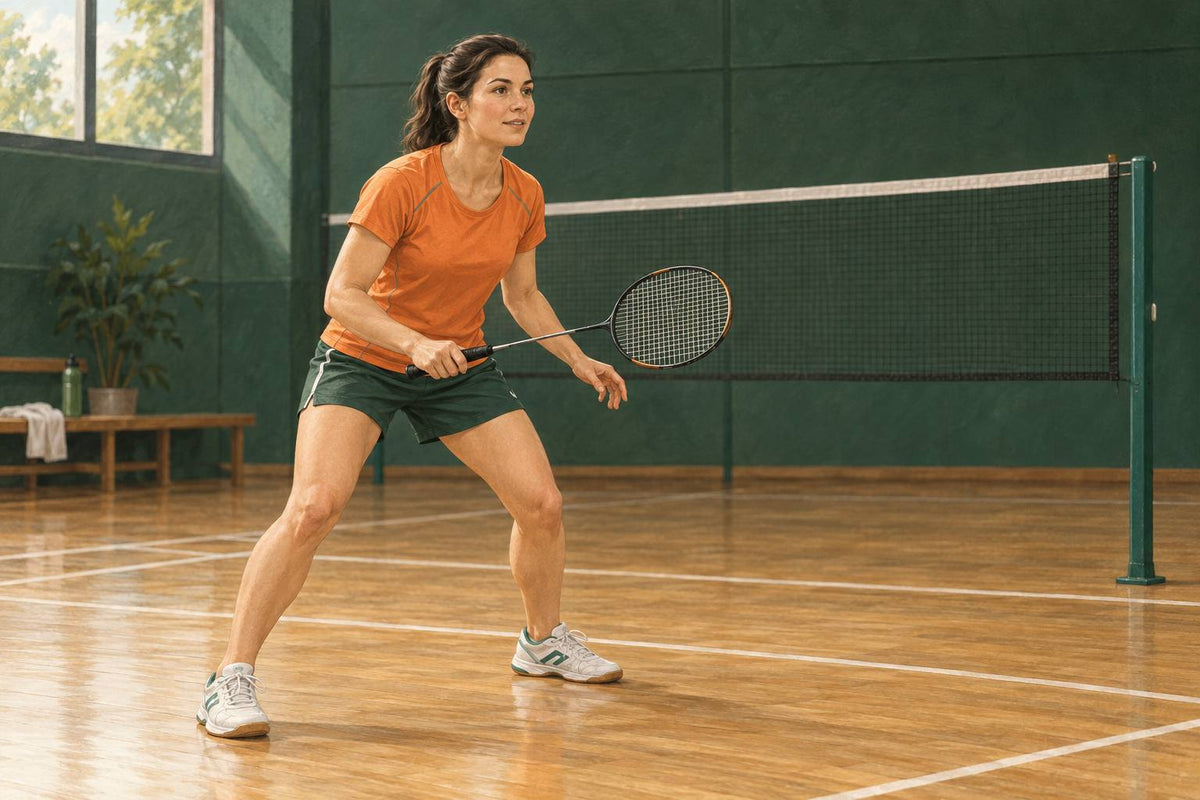
A good badminton net shot starts with the hand, not the arm. If your grip is tight before contact, the racket face becomes locked and the shuttle tends to pop up. For better touch, hold the racket loosely and let the fingertips do the fine work.
Use the tips of your thumb, index finger, and middle finger to control the racket. Your ring finger and little finger should rest gently on the handle to support the racket’s weight, not squeeze it like a hammer. This relaxed setup gives you the sensitivity needed to guide the shuttle close to the tape.
Grip refresher: If forehand, backhand, bevel, and panhandle grips still feel mixed together, review our full badminton grip guide before drilling net shots.
Use a light squeeze at contact
At the net, you are not trying to swing through the shuttle. The touch comes from meeting the shuttle softly on the strings and adding a small finger squeeze at impact. That squeeze gives just enough firmness to send the shuttle over, while keeping the shot tight and controlled.
Approach with a relaxed hand, make one clean contact and relax again afterward. Do not catch, carry or hold the shuttle on the strings; deception comes from delaying the stroke before contact.
| Grip feeling | What usually happens | Better cue |
|---|---|---|
| Tight fist before contact | The shot becomes a hit, and the shuttle can sit up too high. | Start loose, then squeeze only at impact. |
| Loose but unsupported | The racket face wobbles and timing becomes inconsistent. | Let the last two fingers support the handle lightly. |
| Finger-controlled grip | The racket face stays adjustable for soft net shots and spinning variations. | Guide with the thumb, index, and middle finger. |
Forehand or backhand grip: choose by shuttle position
Net shots can be played with either a forehand grip or a backhand grip. The right choice depends on where the shuttle is relative to your body and which grip gives you a natural racket face at the point of contact.
- Forehand-side net shots: use a forehand-based grip when the shuttle is comfortably on your racket-hand side.
- Backhand-side net shots: use a backhand-based grip when the shuttle is on the opposite side or when the backhand face gives you cleaner control.
- Late or awkward shuttles: prioritize a stable, open racket face over forcing the “perfect” grip. A controlled net reply is better than a rushed pop-up.
The grip change should be small and early. If you wait until the shuttle is already dropping, you will often compensate with a jab or wrist flick. That adds force when the net shot needs finesse.
A simple touch drill
Stand close to the net with a partner feeding gentle shuttles. On each shot, check three things: loose fingers before contact, a light squeeze at contact, and no big follow-through after contact. Your goal is to make the shuttle cross the tape softly, not to push it deep.
Footwork and Contact Point at the Net

Good badminton net shot technique starts with the feet. The hand creates the touch, but your footwork decides whether you contact the shuttle early enough to keep it tight, add spin, and avoid poking upward from below net height.
Move toward the shuttle, lunge with the racket-side foot and prepare the racket in front of you. Meet the shuttle as high as you can control on your own side of the net; the racket’s height depends on the incoming shot, rather than a fixed shoulder-height target.
Front-Court Contact Checklist
Racket foot
Lunge forward with the racket-side foot. This brings your body close enough to touch the shuttle softly instead of reaching with a stiff arm.
Racket arm
Prepare the racket early in front of your body and adjust its height to the shuttle so you can make a controlled contact.
Early
Take the shuttle early. Early contact gives you more chance to create tumble and keep the shuttle tight to the tape.
Recover
As soon as the shuttle leaves your strings, start recovering toward your ready base position.
Why Early Contact Matters
A net shot is not a rescue shot. If you wait until the shuttle has fallen well below the tape, you usually have to lift it upward just to clear the net. When you arrive earlier, you can contact the shuttle higher, keep the racket face soft, and use a small brushing action to make the shuttle tumble over the net.
The goal is not to hit harder; it is to give the opponent less time and fewer attacking choices. A tight net shot can force the other player to lift, which gives you or your partner the next attacking opportunity.
Do Not Freeze at the Net
After contact, do not admire the shot. Recover as soon as the shuttle leaves the strings. If your net shot is good, the opponent may lift, play another tight net shot, push, or try to tap if it sits up. Your recovery gives you a chance to cover the next reply instead of being stuck in the lunge.
For the bigger movement pattern behind this, see our badminton footwork basics guide. The better your base recovery becomes, the easier it is to arrive early at the front court without rushing your fingers at impact.
Simple Practice Cue
- Move first: get the racket foot into the lunge before trying to play the shuttle.
- Racket ready: prepare the racket early and adjust its height to the incoming shuttle.
- Touch early: meet the shuttle high enough for a controlled standard or brushed net shot.
- Recover immediately: once the shuttle leaves your strings, push back toward your ready base.
If your net shots keep floating too high, check the contact point before blaming your hands. Many players have enough touch to spin the shuttle, but they arrive late and are forced to guide it upward from a poor position.
How to Create Spin: Slice, Brush, and Stay Soft

The key to a spinning net shot is that you are not trying to hit the shuttle forward. You are trying to make the strings slice or softly brush across the shuttle so it tumbles over the tape and becomes awkward to take cleanly.
Think of it as a soft contact skill: open racket face, relaxed hand, tiny brushing action, then stop. If the racket keeps travelling through the shuttle like a mini-drive, the shot usually carries too far or sits up for your opponent.
Net-shot spin cue: brush the shuttle, do not punch it. If you need more control at the fingers, review how to hold the badminton racket before adding slice.
1. Arrive soft, then let your body create the slice
A common mistake is trying to manufacture spin with a sharp wrist flick. Instead, move into the shuttle with your lunge and let your forward body momentum help create the brushing contact. Your arm and hand stay quiet; the racket face meets the shuttle softly and slightly across it.
- Approach: racket up before you reach the shuttle.
- Grip: loose fingers, with only a gentle squeeze at contact.
- Racket face: soft and slightly open so the shuttle clears the tape without being punched upward.
- Contact: brush across the shuttle, then stop the racket quickly.
2. Slice across the shuttle, not through it
For a basic tumbling net shot, the racket face should feel like it is cutting across the shuttle rather than driving it forward. On the forehand side, that can feel like a small outside-to-inside brush. On the backhand side, it can feel like the reverse: a soft brush with the racket face controlled by the thumb and fingers.
Keep the motion small. The shuttle is already close to the net, so you only need enough touch to make it clear the tape. The spin comes from the slicing contact, not from a big swing.
| Cue | What it should feel like | Common miss |
|---|---|---|
| Brush | The strings skim across the shuttle with a soft, cutting contact. | You swing through it and the shuttle floats too high. |
| Open face | The racket gives the shuttle just enough lift to cross the tape. | The face closes and the shuttle catches the net. |
| Soft fingers | The grip stays relaxed until a tiny squeeze at contact. | You tighten early and lose feel. |
| Body momentum | Your lunge carries the racket into position so the hand can stay quiet. | You stop moving, then jab with the wrist. |
3. Take it high whenever you can
The safest spinning net shots are played when you take the shuttle high and close to the net. From there, the shuttle spends less time sitting above the tape, so your opponent has less chance to step in and tap it down.
If you wait until the shuttle drops low, you can still play a net shot, but the shuttle must climb longer before it falls. That extra time above net height makes it more vulnerable. This is why front-court footwork matters so much: early contact gives your technique room to stay soft. If your timing breaks down before the shot, revisit badminton footwork basics and practise arriving balanced.
"The spin comes from the slice; the safety comes from taking the shuttle high."
4. Do not over-slice
More slice is not always better. A subtle brush can make the shuttle tumble. Too much slicing can add power, sending the shuttle higher than you intended. Once the shuttle sits up above the tape, a good opponent can take it early and attack.
Use this simple test during practice: if the shuttle is spinning but landing loose or floating high, reduce the racket movement. If it is tight but not tumbling, keep the same soft touch and add only a slightly cleaner brushing angle.
A simple spin drill for club night
Stand close to the net with a partner feeding shuttles softly to your forehand side. Your goal is not to win the rally. Your goal is to make ten controlled contacts where the shuttle clears the tape with a soft brush. Then repeat on the backhand side.
- Round 1: no spin attempt — just soft, tight net shots.
- Round 2: add a tiny slice and watch whether the shuttle tumbles.
- Round 3: take the shuttle as high as possible and compare how much less vulnerable the shot feels.
- Round 4: recover to base immediately after contact so the drill starts to feel like a real rally.
Five Front-Court Options From the Same Approach
A useful net-play principle from Han Jian is that the same front-court approach should keep five choices available: tumble, tap, cross, push, or lift. In practical terms, your lunge, racket height, and relaxed grip should not announce the shot too early. The opponent should have to wait for the shuttle to leave your strings.
This is where badminton net shot technique becomes more than “just play it tight.” A good front-court player arrives early, delays the stroke before contact, and chooses the final direction or pace at the last moment.
| Option | What it asks of your touch | When it helps |
|---|---|---|
| Tumble | Slice or brush the shuttle softly so it tumbles just over the net. | Use it to force an upward reply or make the opponent play another tight net shot. |
| Tap | Keep the racket up and use a compact finger action rather than a big swing. | Use it when the shuttle is available high enough at the front court to attack downward. |
| Cross | Keep the same preparation, then change the face angle late. | Use it as the deceptive option when the opponent is leaning into your straight net shot. |
| Push | Use a firmer finger squeeze while keeping the stroke short. | Use it when you want the shuttle to travel past the immediate net area instead of sitting tight. |
| Lift | From the same front-court preparation, send the shuttle upward instead of brushing it tight. | Use it as the safe release when the tight net shot is not on. |
Training cue: rehearse the same first two beats every time — racket up, relaxed fingers, racket-foot lunge — then choose the shot only at contact. For the movement base, review our badminton footwork basics and racket grip guide.
Where the net kill fits
The net kill is related to the tap, but it has a more aggressive intention. Keep the racket up, step in aggressively, use a short panhandle grip, then finish with a quick finger squeeze and slight wrist snap so the racket brushes the shuttle steeply downward.
The key difference is intent: the tumbling net shot is soft and controlled, while the net kill is a short, decisive attack at the front of the court.
What Gear Helps Net Feel and Control?
Clean net shots come mostly from technique: early contact, loose fingers, a soft brush, and recovery. Gear will not create a tumbling net shot by itself, but the right setup can make the racket easier to control in the last few centimetres before contact.
For net play, racket balance matters. Head-light rackets improve manoeuvrability and control at the net because the head comes through quickly and is easier to adjust during fast exchanges. Head-heavy rackets are typically associated with more clear and smash power, while even-balance rackets sit between those profiles for players who want a mix of rear-court power and front-court handling.
| Setup choice | What it tends to help | Net-shot takeaway |
|---|---|---|
| Head-light racket | Fast handling, defensive reactions, quick racket preparation | Best fit if you play a lot of doubles, hunt at the tape, or want easier last-second racket-face changes. |
| Even-balance racket | All-around play from front court, mid-court, and rear court | A safe middle ground if you want net control without giving up too much power from the back. |
| Head-heavy racket | Clear and smash power | Still playable at the net, but it usually asks for cleaner preparation and softer hands because the head feels less quick. |
Strings also change how the shuttle feels on delicate shots. Rough or bite-focused string coatings can improve spin, slice, shuttle hold, and control, which is useful when you are brushing the cork instead of punching through it. If your current strings feel slippery, dead, or too bouncy near the tape, a restring can make your touch practice more consistent.
- Start with racket balance: browse badminton rackets and look for a balance profile that matches how often you play at the front court.
- Keep the handle predictable: check badminton accessories for grip-related essentials so your fingers can stay relaxed without the racket twisting.
- Refresh feel at the string bed: use our badminton stringing service if you want help choosing a more control-oriented setup for touch shots, slices, and tight net play.
The simple rule: choose the most manoeuvrable racket you can still control from the back court, then pair it with a string setup that gives you enough bite and feedback to feel the shuttle. After that, the real improvement comes from repeating the same soft approach until your standard net shot, tumble, cross, push, lift, and tap all look identical for as long as possible.
Which Net Shot Should You Choose?
Use the simplest net shot that solves the point in front of you. A tight standard net shot is the reliable base. Add tumble when you can take the shuttle early and high. Use the other front-court options when the same approach lets you disguise a different finish.
| Choose this | When it fits | Key technical cue |
|---|---|---|
| Standard tight net shot | Use it as your default front-court shot: a soft underarm shot that lands as close to the net as possible and can force the opponent to hit upward. | Keep the grip relaxed, let the shuttle meet the strings, then add a gentle finger squeeze instead of a hit. |
| Tumbling / spinning net shot | Use it when you can take the shuttle early and high near the tape. The tumble makes it difficult for the opponent to return tightly or attack aggressively. | Slice or brush softly. Avoid a big swing: too much slicing adds power and sends the shuttle too high. |
| Tap / net kill | Use it when the reply is loose enough to finish at the front. Think of it as the attacking option from your net approach. | Finish with a short downward brush — see the net kill explanation above rather than turning it into a full swing. |
| Cross, push, or lift | Use these as variations from the same front-court approach. Han Jian’s net-play principle groups the five choices as tumble, tap, cross, push, or lift. | Make the approach look the same first; change the finish late with fingers and racket-face control. |
For gear, prioritize feel and manoeuvrability if net play is your main focus. Head-light rackets improve control at the net, while head-heavy rackets are more associated with power on clears and smashes. If you want to compare balance choices, see our head-heavy vs head-light racket guide.
Store note for Canadian players: the Yonex Astrox 100 ZZ Kurenai, Dark Navy is built for improved shuttle hold, but it is an extra-stiff, head-heavy power frame better suited to attacking play than pure net touch. For net-focused setup help, start with our badminton rackets page and stringing service.
Get 10% off your first order
Join the Badminton House list and we’ll email you a 10% welcome code — plus subscriber-only restock alerts, giveaways, and honest gear advice from players.
By subscribing, you agree to receive Badminton House emails and can unsubscribe anytime.
Net shots are one of those skills that look simple until you try to keep the shuttle tight under pressure. We play badminton ourselves, so if you are working on touch, string tension, grip feel, or choosing a racket that helps at the front court, contact us and we will help you sort through the options for your level and playing style.
Build a setup that gives you better touch at the net.
Browse Badminton RacketsShips across Canada · 14-day returns · Canadian badminton specialty shop

Leave a comment
This site is protected by hCaptcha and the hCaptcha Privacy Policy and Terms of Service apply.