
Last updated: July 2026 · Written by the team at Badminton House
Quick Answer: Badminton Serve Hits Net
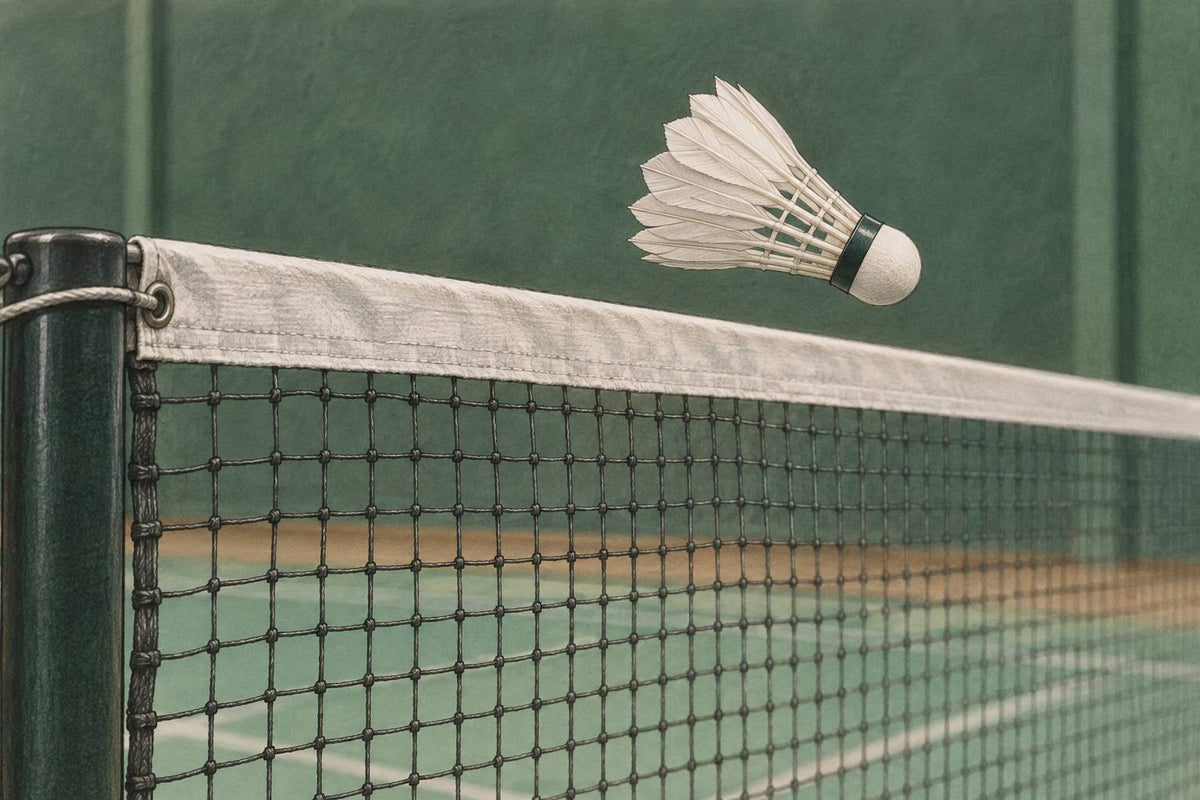
Under BWF rules, don’t call a let just because the serve clips the tape; judge whether it crosses and lands in the correct service court.
Default
Legal serve: if it touches the net, goes over, and lands on or inside the receiver’s service court, play continues.
Fault
Receiver’s point: if it fails to cross, falls back, lands short, or lands outside the service boundaries.
Let
A net catch after the serve has been returned can be a let; a caught served shuttle is a fault.
If your serve kisses the tape and drops over, don’t stop the rally just because it touched the net. Under BWF-style badminton rules, the key question is simple: did the shuttle pass over and land in the correct service court? If yes, play continues. If it falls short, wide, long, or back on your side, it’s a fault. This catches a lot of players because tennis treats many net-cord serves differently, but badminton does not give you an automatic replay for a net clip.
In This Guide
The BWF Rule: A Net-Cord Serve Can Be Legal

Short answer: yes — under BWF-style badminton rules, a serve that hits the net can still be legal. The serve is not replayed just because it touched the tape. A correct service requires that “the flight of the shuttle shall be upwards from the server’s racket to pass over the net so that, if not intercepted, it shall land in the receiver’s service court,” including on or within the boundary lines.
So the key test is simple: did the shuttle pass over the net and land in the correct receiver’s service court? If it clips the net cord, tumbles over, and lands in, play continues and the receiver has to play it if possible. If you want the full mechanics behind making that low serve reliable, see our badminton serving technique guide.
How to Decide the Point When the Serve Clips the Net

On a club court, use a simple test: once the shuttle clips the tape, watch where it goes next. Do not stop the rally just because you heard or saw net contact.
- It crosses and lands in the correct service court: play it. The receiver should attempt the return, even if the shuttle tumbles awkwardly after the net.
- It lands short of the front service line: fault on the server; the receiver wins the point.
- It lands wide, long, or in the wrong service court: fault on the server; the receiver wins the point.
The best habit is to call only what you can clearly see: the landing spot, the relevant service lines, and whether the shuttle actually crossed. If you are unsure in casual play, ask the closest player with the best angle before resetting for the next point.
Why This Feels Different from Tennis

The confusion usually comes from tennis. Under standard tennis rules, a serve that clips the net and still lands in the correct service box is treated as a let, so the server repeats it. Badminton does not use that tennis-style net-cord let on serve: if the shuttle touches the tape, crosses, and lands in the correct service court, the rally is live.
Badminton also does not give the server a tennis-style second serve. A serve either meets the service requirements and starts the rally, or it is a fault. That is why a low serve that catches the tape can feel harsh to tennis players: there is no automatic replay just because the net was involved.
For a broader look at how the two sports differ beyond serving, see Badminton vs Tennis.
Exceptions, Edge Cases, and Net-Cord Etiquette

The stage of play matters. Under BWF Laws 13.2 and 14.2.3, a served shuttle caught on top of the net, or caught in it after crossing, is a fault. After the serve has been returned, those net-catch situations are lets in standing badminton and the rally is replayed; the laws specify a wheelchair-badminton exception. A normal serve that clips the tape and continues into the correct service court has no automatic replay.
One more wrinkle: recreational or intramural events sometimes play a house “let serve” variation for casual matches, replaying a net-cord serve that otherwise lands in the correct service court. Confirm the event’s rules before a social game so both sides score the same way.
Etiquette matters too: when a net cord tumbles over and benefits you, a small hand raise or quick acknowledgement is commonly expected.
Which Call Should You Make?

| Situation | Decision | What to do |
|---|---|---|
| Serve clips the net, crosses, and lands in the correct service court | Legal serve | Receiver plays it, even if it tumbles over. |
| Serve crosses but lands short of the service line, wide, or out | Fault by server | Receiver wins the point. |
| Shuttle hits the net and falls back on the server’s side | Fault by server | Call the point for the receiver. |
| Served shuttle is suspended on top or caught in the net after crossing | Fault by server | Receiver wins the point. |
Get 10% off your first order
Join the Badminton House list and we’ll email you a 10% welcome code — plus training guides, technique advice, and badminton updates.
By subscribing, you agree to receive Badminton House emails and can unsubscribe anytime.
Small rule misunderstandings can change a rally, especially on tight low serves. We play badminton ourselves, so if you are unsure about serving technique, match rules, or what to practise next, send us a note through our contact page and we will point you in the right direction.
Practise low serves with shuttles that suit your sessions.
Shop ShuttlecocksCheck live availability before your next practice.

Leave a comment
This site is protected by hCaptcha and the hCaptcha Privacy Policy and Terms of Service apply.