
Last updated: June 2026 · Written by the team at Badminton House
Quick Answer: Feather vs Nylon Shuttlecocks
Use feather for serious club, league, and tournament play; use nylon for casual, beginner, school, or outdoor play.
Feather
Best choice: required for sanctioned tournaments and best for authentic flight, touch, deception, and skill development.
Nylon
Lasts weeks of casual play and costs less, but flies flatter and is not permitted in official competition.
Speed
Most Canadian players should buy speed 77 or 78, with 76-77 working better in Calgary and Edmonton.
Feather shuttlecocks are mandatory for tournaments and deliver the authentic badminton flight — but they break fast and cost more. Nylon shuttlecocks last weeks and cost less — but can't match the flight of feather. Choosing the wrong type wastes money and holds back your game.
This guide breaks down the differences between feather and nylon shuttlecocks, explains how to check quality, shows which speed you need in Canada, and recommends the best shuttlecock for your level and budget.
Best for tournaments
Choose tournament-grade feather shuttles with consistent flight and BWF-grade quality.
Best for club nights
Choose reliable goose feather options that balance consistency, durability, and cost.
Best for beginners
Choose nylon if durability, budget, schools, casual play, or outdoor use matters most.
Need shuttlecocks for club night or tournament play? Browse our full shuttlecock collection — 10% off your first order + free Canadian shipping on $200+.
In This Guide
Feather vs Nylon Shuttlecocks — What's the Difference?
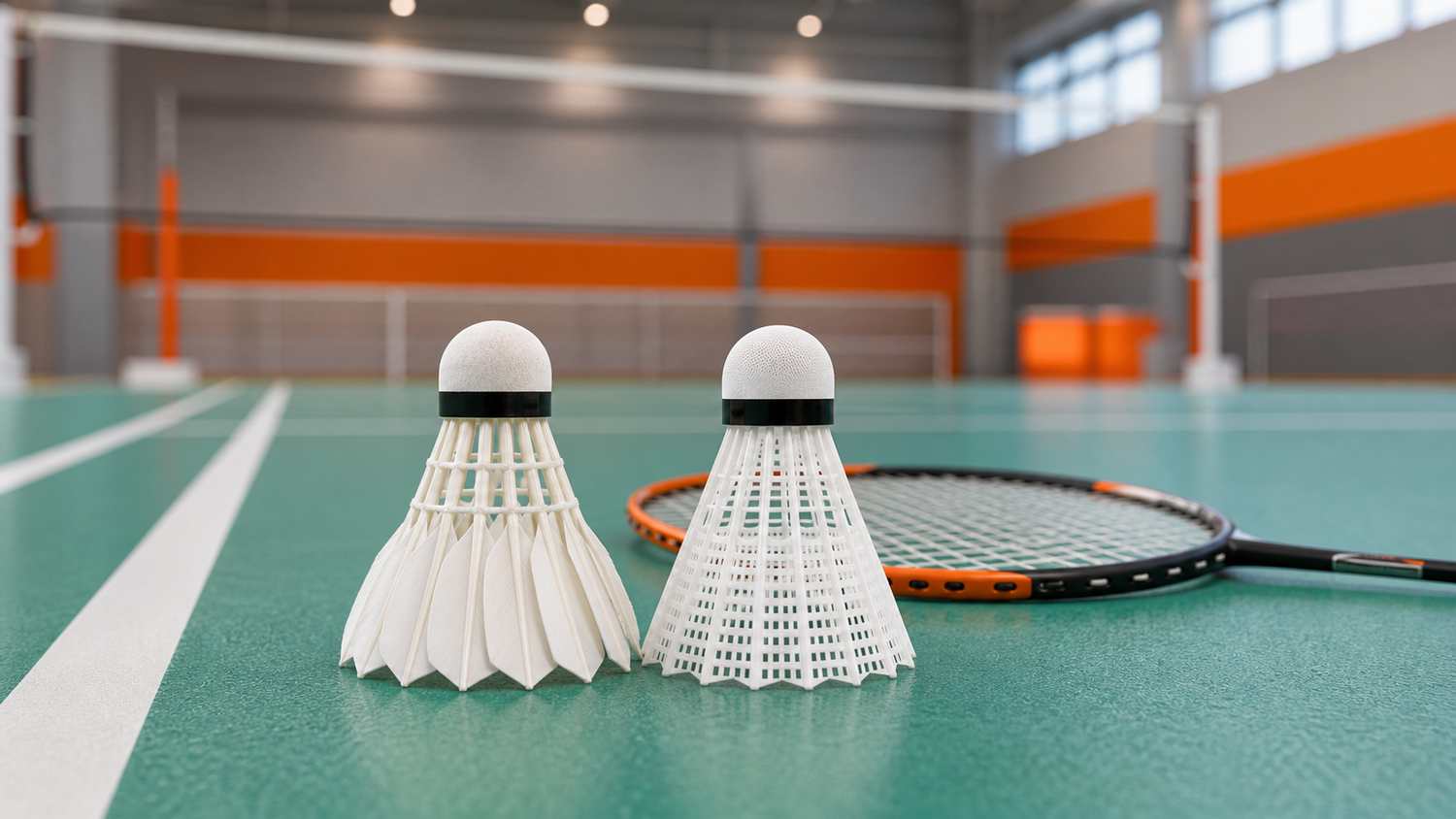
A feather shuttlecock uses 16 natural goose or duck feathers fixed into a cork base. A nylon (synthetic) shuttlecock has a plastic skirt on a synthetic or composite base. The difference affects flight, feel, durability, cost, and whether you can use it in competition.

| Property | Feather Shuttlecock | Nylon Shuttlecock |
|---|---|---|
| Material | 16 goose or duck feathers + cork base | Nylon skirt + synthetic or cork base |
| Flight | Steep arc with sharp drop — authentic badminton feel | Flatter trajectory, floats longer |
| Speed control | Decelerates naturally — enables touch shots and deception | Maintains speed longer — harder to control at the net |
| Sound | Crisp, satisfying "crack" on impact | Duller, plastic-like contact |
| Durability | Low — 15–45 minutes of competitive play | High — lasts weeks of casual play |
| Cost | $25–$70 CAD per tube of 12 | $15–$35 CAD per 6-pack |
| Tournament use | Required for all sanctioned events | Not permitted in official competition |
| Best for | Club play, leagues, tournaments, skill development | Beginners, casual play, outdoor play, schools |
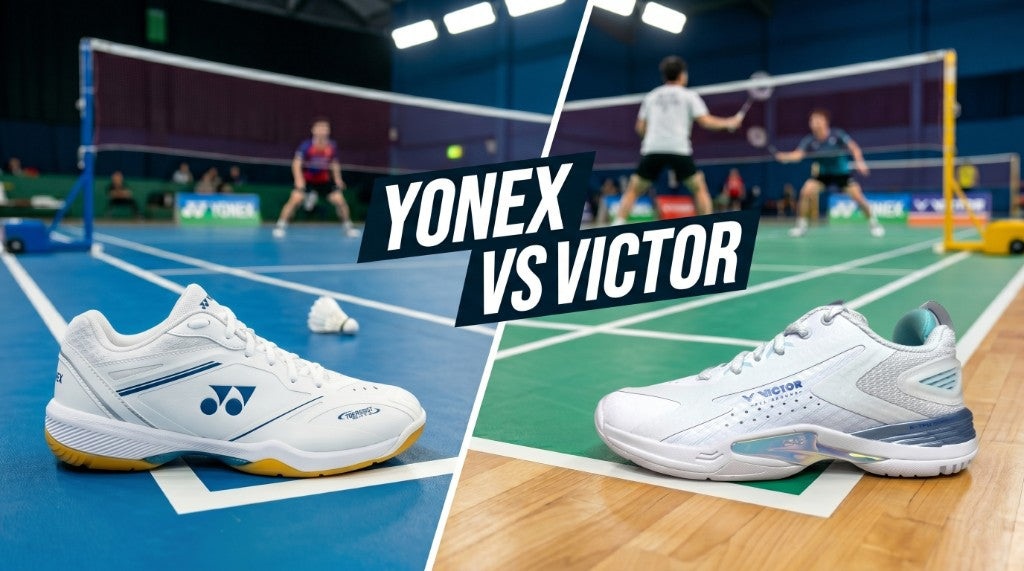
Bottom line: If you play regularly at a club and want to improve, use feather. If you're just starting, playing outdoors, or on a tight budget, nylon is the practical choice. Club nights also mean lots of lateral movement — see our Yonex vs Victor shoe comparison and court footwear.
How Do Feather and Nylon Shuttlecocks Fly Differently?
The biggest reason competitive players prefer feather shuttlecocks is the flight path. A feather shuttle leaves the racket fast, then decelerates sharply and drops steeply — creating a parabolic arc. This steep drop is what makes badminton tactics work: clears land deep, drops fall tight to the net, and smashes dive downward.
A nylon shuttlecock flies on a flatter, more linear trajectory. It doesn't slow down or drop as quickly, which makes net play less precise and defensive returns easier to read.

Feather also gives you better deception. Because the shuttle slows down after the initial hit, you can disguise drops, lifts, and net shots more effectively. With nylon, the shuttle maintains speed longer — so your opponent reads your shots earlier.
"A feather shuttlecock decelerates up to 3× faster than nylon — that's what makes deceptive shots possible."
Building a full setup? Pair the right shuttle with our visual racket guide and Yonex vs Victor shoe comparison.
How to Check Natural Feather Shuttlecock Quality
Not all feather shuttlecocks are equal. The difference between a $25 and $70 tube comes down to three things: feather type, cork base, and quality control. Here's how to tell what you're getting.
1. Feather Type — Goose vs Duck
Goose feathers are stiffer, more uniform, and more durable. They produce a consistent flight path and better feel. All tournament-grade shuttles use goose feathers.
Duck feathers are softer, less consistent, and break faster. They cost roughly half the price — adequate for training and casual play, but not for matches.
2. Cork Base — Natural vs Composite vs Synthetic
- Full natural cork: Best impact absorption, consistent bounce. Found in tournament-grade shuttles ($40+ CAD).
- Composite cork: Natural cork layered with synthetic material. Slightly harder feel, lower cost. Found in mid-tier shuttles ($25–40 CAD).
- Synthetic/foam: Cheapest option. Found only in budget nylon shuttles.
3. Quality Control — Consistency Across the Tube
Premium shuttles are sorted for feather curvature, stiffness, and weight uniformity. Every birdie in a tournament-grade tube flies the same way. Budget tubes have wider tolerances — some birdies may fly noticeably different from others in the same tube.
Quick Quality Check — What to Look For
- Feathers: Should be uniform in shape and length. Inconsistent curvature means lower grade.
- Cork: Press your thumbnail into the base. Natural cork dents slightly and springs back. Foam or synthetic feels hard or hollow.
- Thread binding: The thread wrapping the feather shafts to the cork should be tight and even. Loose thread means feathers will splay out faster.
- Spin test: Roll the shuttle on a flat surface by the cork. It should roll smoothly without wobble. Wobble means the feathers are uneven.
Best Feather and Nylon Shuttlecocks in Canada (2026)
Five brands sell shuttlecocks in Canada: Yonex, Victor, Li-Ning, RSL, and Aeroplane. Here's how they compare across tiers — from tournament grade to budget training.

| Tier | Yonex | Victor | Li-Ning | RSL | Aeroplane |
|---|---|---|---|---|---|
|
Tournament BWF-approved, goose feather |
AS-50 ~$65–70 |
Master Ace ~$60–65 |
A+600 ~$55–69 |
No. 1 Tourney ~$55–65 |
Black Label ~$45–55 |
|
Competition League / provincial, goose feather |
AS-40 ~$55–60 |
Master No. 1 ~$50–55 |
A+300 ~$40–48 |
No. 2 Tourney ~$45–50 |
Red Label ~$38–45 |
|
Club Regular club play, goose feather |
AS-30 ~$40–45 |
Gold Champion ~$35–40 |
G700 ~$56–57 |
Classic Tourney ~$35–40 |
Green Label ~$30–38 |
|
Training Drills, warm-up, duck feather |
AS-20 / ACB-33 ~$18–35 |
Gold No. 1 ~$25–30 |
G300 ~$35–39 |
DTL 80 ~$25–30 |
— |
|
Nylon Casual, outdoor, beginner |
Mavis 350 ~$25–33 (6-pack) |
— | — | — | — |
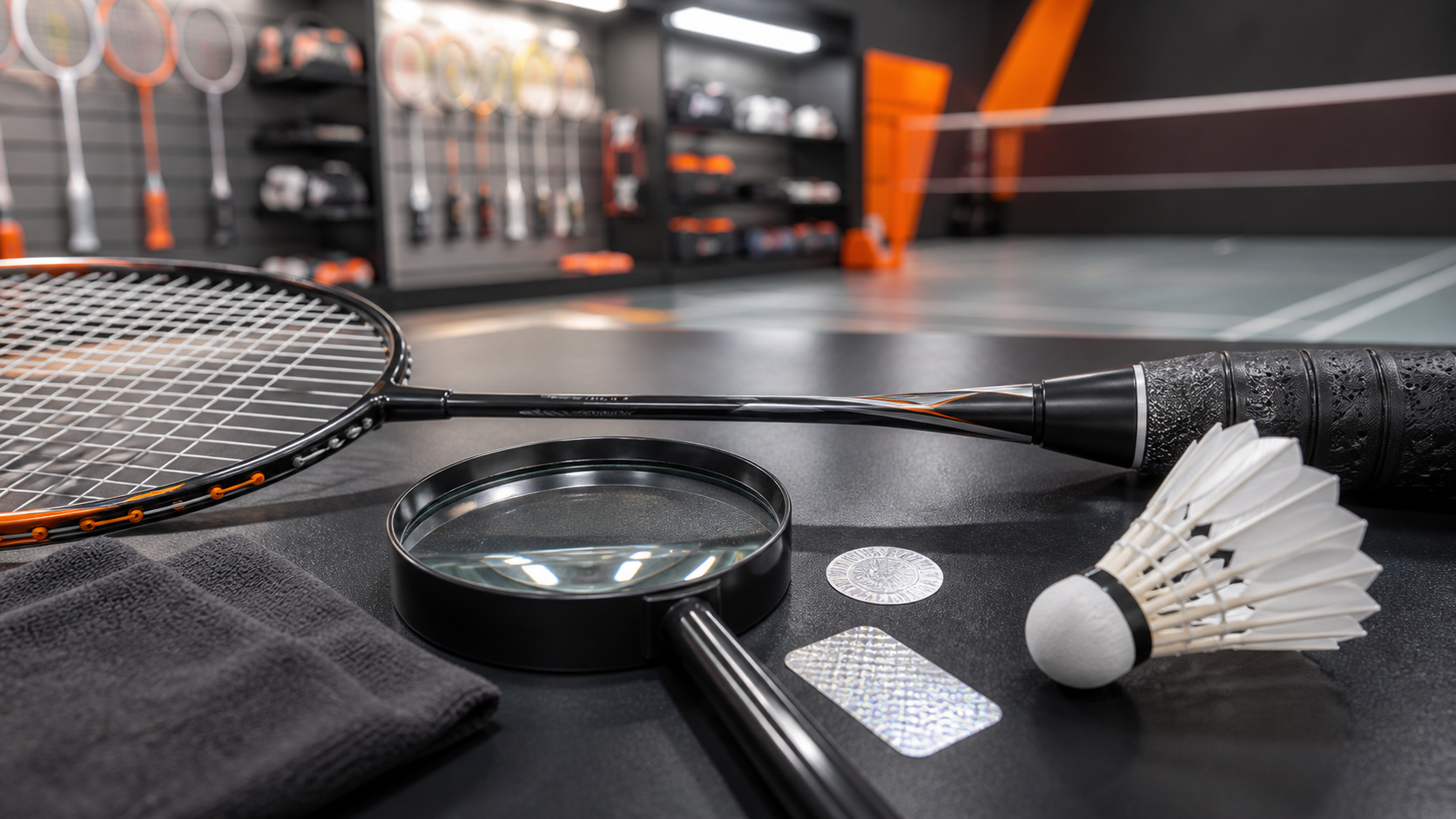
Prices in CAD per tube of 12 (unless noted). Checked April 2026. Buying a premium racket? Read how to spot a fake Yonex, Victor, or Li-Ning racket before you checkout.
Best Value Picks
Best Tournament Value: Aeroplane Black Label — BWF-approved, flight comparable to the Yonex AS-50, but ~$15–20 cheaper per tube.
Best Club Shuttle: Yonex AS-30 — The gold standard for club play in Canada. Consistent, durable, and available everywhere.
Best Budget Feather: Li-Ning A+300 — Used by the Chinese national team. Strong flight quality at ~$40–48 CAD.
Best Nylon: Yonex Mavis 350 — A single tube lasts weeks of casual play. Blue cap (medium speed) for most Canadian gyms.
Which Shuttlecock Is Right for You?
Not sure where to start? Follow this decision chart:

Beginner / Casual
Just Starting Out
Playing once a week or less. Still learning. Playing outdoors or at a rec centre.
Pick: Yonex Mavis 350 (nylon)
Intermediate / Club
Regular Club Nights
Playing 2–3 times per week. Can rally consistently. Want to develop your game.
Pick: Yonex AS-30 or Li-Ning A+300
Competitive / League
Tournaments & Matches
Competing in provincial events or leagues. Need consistent flight and BWF-grade quality.
Pick: Yonex AS-40, Aeroplane Red Label, or RSL No. 2 Tourney
Tournament / Elite
National & International
Competing at the highest level. Need BWF-approved shuttles with perfect consistency.
Pick: Yonex AS-50, Victor Master Ace, or Aeroplane Black Label
How to Make Feather Shuttlecocks Last Longer
Feather shuttles are consumable — they will break. But these five habits extend their life significantly:
- Steam before play. Hold each birdie feathers-down over steam from a boiled kettle for 10–15 seconds. The moisture rehydrates feathers and reduces breakage on smashes.
- Store tubes upright with the cap on. Don't leave birdies loose in your bag — feathers get crushed.
- Rotate 2–3 birdies per session. Give feathers time to recover between hits.
- Avoid extreme temperatures. Don't leave tubes in your car — Canadian winter cold makes feathers brittle; summer heat dries them out.
- Use a humidifier for dry climates. Calgary and Edmonton players report shorter shuttle life due to low humidity. A small humidifier near your shuttle storage helps.
"Steaming your shuttles before play is the single most effective longevity trick — and it costs nothing."
Frequently Asked Questions
"Best badminton shop in Canada. They actually know their gear and helped me pick the right string tension."
— Alex P., Calgary, AB
Get Shuttle Speed Cheat SheetFree shipping across Canada on $200+ · 14-day returns · Canadian badminton specialty shop
Get the shuttle speed cheat sheet + club buying notes
Join the Badminton House list for shuttle speed guidance, club buying notes, restock alerts, and Canadian badminton updates.
By subscribing, you agree to receive Badminton House emails and can unsubscribe anytime.

Leave a comment
This site is protected by hCaptcha and the hCaptcha Privacy Policy and Terms of Service apply.