
Last updated: July 2026 · Written by the team at Badminton House
Quick Answer: Shuttlecock Cost Calculator
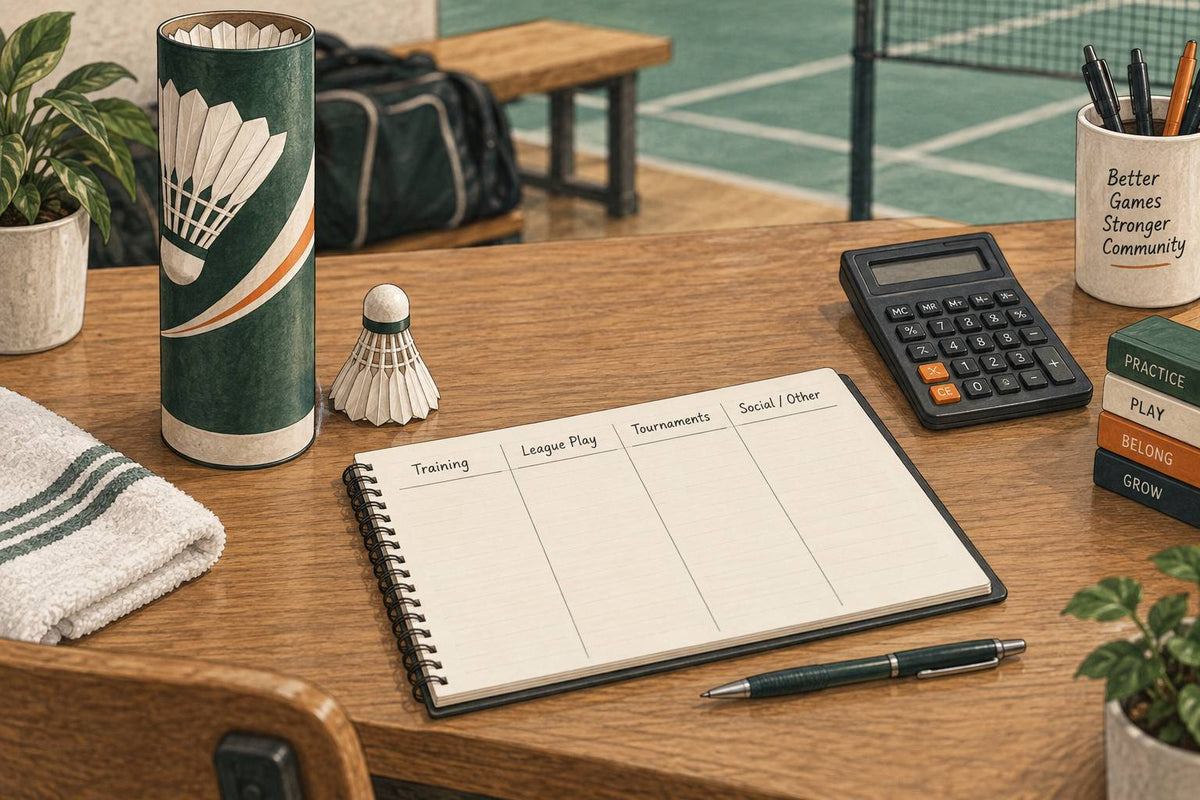
Monthly shuttle cost = sessions per month × active courts × games per court per session × shuttles per game ÷ shuttles per tube × landed cost per tube. The examples below assume 12-shuttle tubes and an illustrative $35–$45 CAD tube cost; use your actual pack size and quote.
Formula
Best start: calculate tubes from usage, then add a small buffer for breaks, testing, and new-player sessions.
Feather
Budget by tube, not by night. Match quality, humidity, and player level can change burn rate quickly.
Nylon
Useful for schools, beginner blocks, and rec programs where durability beats match feel.
For clubs, shuttlecocks are not a one-time equipment purchase. They are a recurring consumable cost, closer to court time or staffing than rackets. A club that guesses its shuttle budget will either run short or overbuy the wrong speed and grade.
Use the formula and sample scenarios below for club nights, school teams, leagues and tournaments. For flight and material basics, start with our feather vs nylon shuttlecock guide.
How Do You Calculate Shuttlecock Costs?

Use this formula for feather shuttles, then adjust after two or three real sessions. The division by 12 converts shuttles used into tubes, because a standard tube holds 12 shuttlecocks:
Monthly tube count = sessions × active courts × games per court × shuttles per game ÷ 12
Monthly shuttle cost = monthly tube count × landed cost per tube.
| Input | How to Estimate | Common Mistake |
|---|---|---|
| Sessions | Count planned club nights, team practices, and match days per month. | Using a perfect four-week month when a season has tournaments and holidays. |
| Active courts | Use average courts actually playing, not total courts booked. | Ignoring warm-up courts, coaching courts, or empty late-session courts. |
| Games per court | Track one normal night, then use the average. | Counting only match games and forgetting drills or warm-up shuttles. |
| Shuttles per game | Start with a range, then adjust from actual tube use. | Assuming every level burns shuttles at the same rate. |
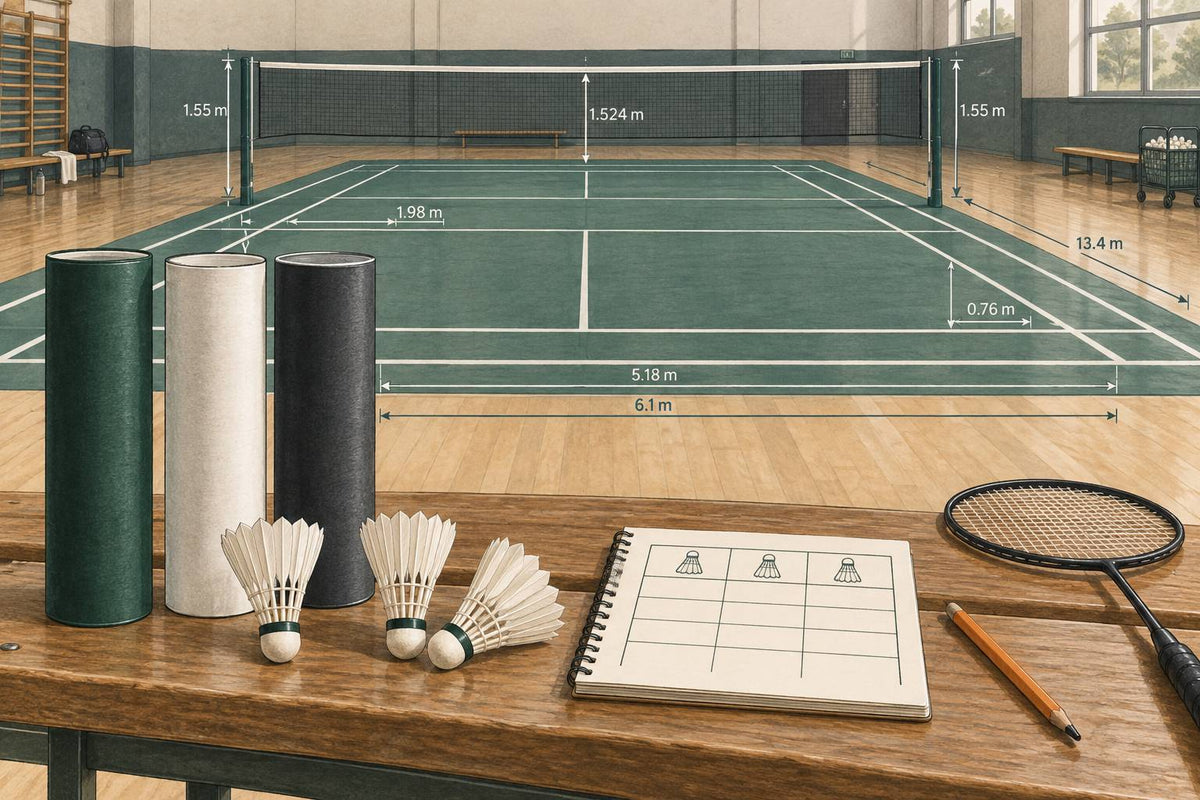
The BWF Laws define shuttle speed testing by where a full underhand hit lands on court; club buyers can use that same idea practically: test before bulk buying and reorder based on real court behaviour, not just the speed printed on a tube. See the official BWF Laws of Badminton for the formal shuttle speed test.
What Do Canadian Clubs Actually Spend Per Month?
These examples are planning scenarios, not promises. Your real cost depends on shuttle grade, speed, humidity, player level, and whether the group reuses playable shuttles for drills.
| Scenario | Assumption | Estimated Tubes | Illustrative cost at $35-$45/tube |
|---|---|---|---|
| Small rec club | 4 sessions, 3 courts, 6 games/court, 0.5 shuttle/game. | About 3 tubes/month. | About $105-$135/month. |
| League night | 8 sessions, 5 courts, 7 games/court, 0.75 shuttle/game. | 17.5 tubes used; budget 18 whole tubes. | About $630-$810 for 18 whole tubes. |
| Competitive training | 12 sessions, 6 courts, 8 games/court, 1 shuttle/game. | About 48 tubes/month. | About $1,680-$2,160/month. |
| School program | Beginner classes use mostly nylon, with feather demo tubes. | Low feather burn; budget nylon separately. | Usually driven by class size and replacement packs. |
For a real club budget, track actual tube openings for a month and divide by court-hours. That gives you a local burn rate you can use for season planning.
Shop Shuttlecocks for Club Nights
Free shipping on $200+ · Canadian badminton specialty shop
How Can Clubs Reduce Shuttle Waste?

- Test before bulk buying: buy a few tubes in the likely speed and grade before ordering a case.
- Separate match and drill shuttles: retired match shuttles can still serve feeding drills.
- Control storage: avoid hot cars, dry furnace rooms, and damp storage closets.
- Match grade to session: use better feather for league play and durable options for drills or beginners.
- Centralize distribution: one organizer opening tubes reduces accidental overuse.
If speed is the recurring issue, see our Canadian shuttlecock speed guide. If material choice is the issue, compare feather vs nylon.
Shuttlecock Cost FAQ
How many shuttles does a badminton club need per night?
Using the scenarios above, a 3-court rec night uses under one tube of 12 (about 9 shuttles), a 5-court league night uses roughly two tubes, and a 6-court competitive session about four tubes. Player level and game format shift these numbers, so track actual tube openings for the best local figure.
Should clubs buy cheaper shuttles to save money?
Not always. A cheaper tube that breaks faster or flies inconsistently can cost more per usable rally. Test durability and flight before choosing only by sticker price.
Can nylon shuttles reduce school or beginner costs?
Yes. Nylon shuttles are often practical for beginner classes, schools, and casual rec programs. Feather is still better for competitive training and match feel.
"The best club shuttle budget starts with usage, not guesswork."
— Badminton House, Canada
Ask About Club Shuttle OrdersBulk planning help · Canadian shipping · Player-run badminton shop

Leave a comment
This site is protected by hCaptcha and the hCaptcha Privacy Policy and Terms of Service apply.