
Last updated: July 2026 · Written by the team at Badminton House
Quick Answer: Singles Serve Return Strategy
Plan the opening as three linked decisions, then adjust when the actual shuttle breaks your expectation.
Serve plan
Choose a question: use low, high, or occasional flick placement to invite a manageable reply, not a promised winner.
Return plan
Set your stance for the opponent, read serve quality, and choose a reply you can control.
Third shot
Recover before guessing, cover the likely lanes, and respond to the shuttle that arrives.
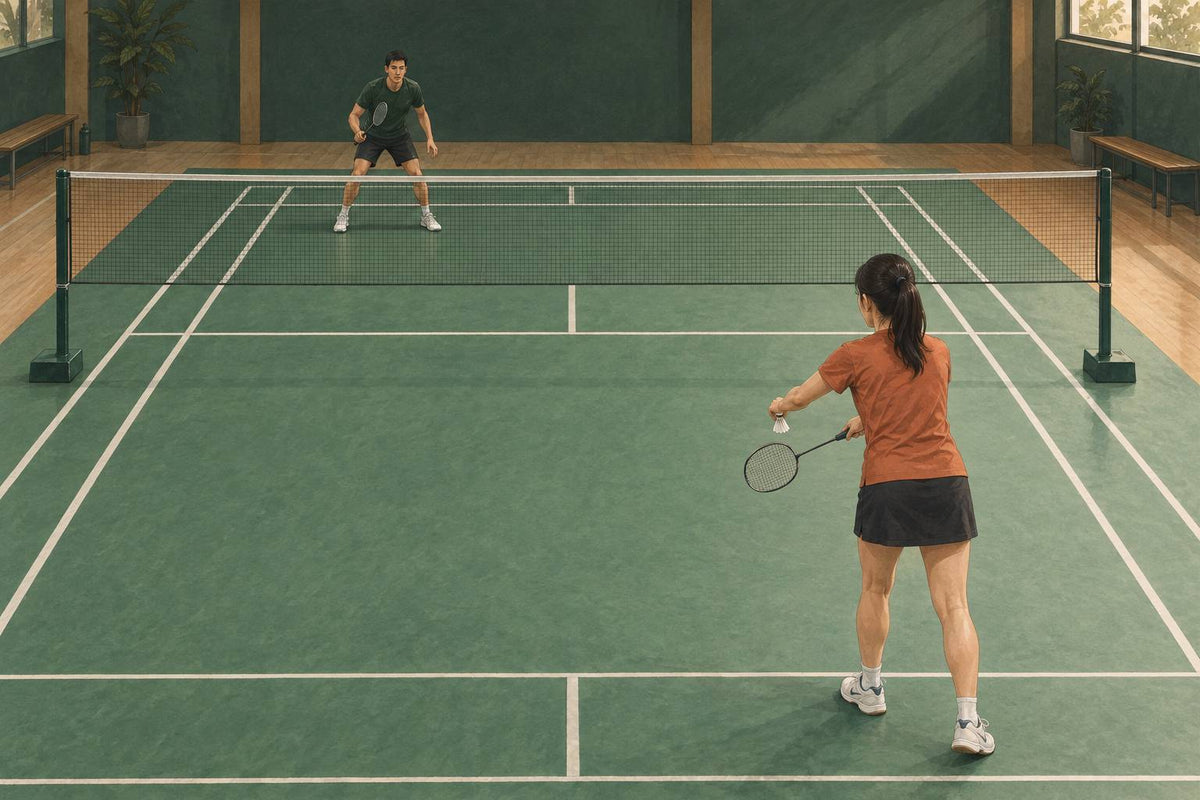
Most singles serve-return mistakes start before the shuttle crosses the net: the server has no third-shot idea, or the receiver stands in one “ready” position for every opponent. In singles, the service box is long and narrow, so low, high, and flick serves ask very different questions. A low serve dares the receiver to lift or play tight net; a high serve gives time but invites rear-court pressure; a flick serve works only if it punishes a receiver leaning forward.
This badminton singles serve return strategy guide is about planning three shots without pretending the rally is scripted. You choose an opening, recover to cover the realistic replies, then read the next shuttle instead of forcing a pattern that is no longer there.
In This Guide
Why a Three-Shot Plan Is Not a Guaranteed Pattern
A badminton singles serve return strategy should give you an intention for the next exchange, not a script you expect the rally to follow. You might serve low hoping to invite a lift, receive a high serve planning a fast drop, or use a flick serve to catch a forward stance — but the point is still decided by serve quality, the opponent’s contact, and your recovery.
That is why the first three shots are better treated as a decision tree. If the opponent anticipates a high serve, they can prepare an aggressive return from the back; if you serve low too predictably, they can crowd the front and take time away. The plan still matters because it gives your feet and racket a priority: know what reply you are trying to encourage, then adjust to the shuttle you actually receive. For broader rally choices after the opening, see Badminton Singles Strategy for Beginners.
Badminton Singles Serve Return Strategy: Low, High, and Flick Serve Choices
In singles, build your serve menu around low serves and high serves. A good low serve travels tight over the net into the diagonally opposite service court, usually near the service T or toward the receiver’s position. Avoid wide low serves, because they open better return angles and make your next court coverage harder.
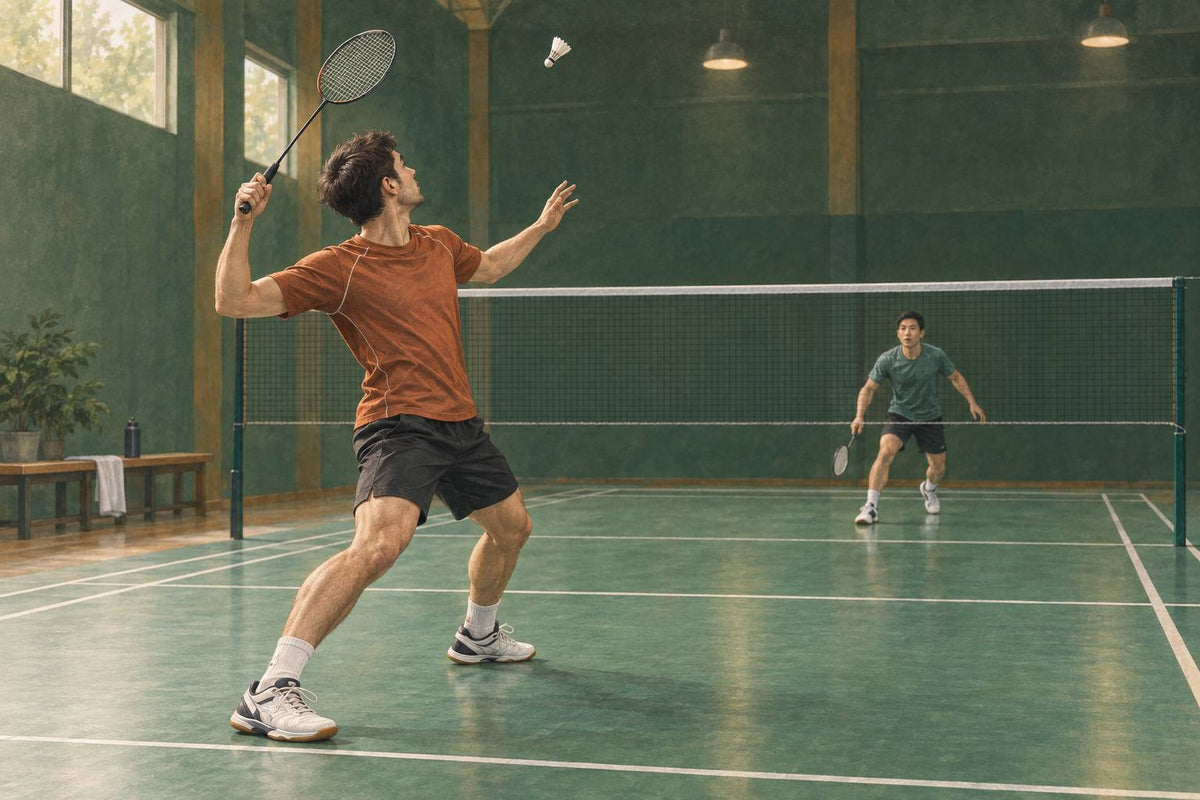
Use the high serve when you want depth and time. The goal is a steep, deep flight that pushes the receiver towards the back boundary. It is less disguised than a low serve, so its value comes from quality, depth, and choosing it against players who are less comfortable starting from the rear court.
Keep the flick serve as a punishment, not a habit: show low-serve preparation, then send the shuttle past a receiver who is rushing forward. Drive serves are usually too risky in singles; if the receiver is ready, they can attack immediately.
Whatever you choose, the serve must travel upward into the receiver’s service court, the whole shuttle must be below 1.15 m at impact, and some part of both feet must remain stationary and in contact with the court from the start of service until delivery.
Receiver Stance and Likely Return Options
Your receiving stance is not a template. Shift it with the opponent: some players love the low serve to the T, some keep pushing high to your backhand corner, and some flick only when you creep forward. The server should be reading too; before serving, watch the receiver’s feet and court position so the serve choice is not automatic.
- Against a low serve: expect a lift, net shot, or deceptive backhand net shot. In Badminton Insight’s sample of professional returns, lifts accounted for roughly 56% of low-serve replies; that describes the observed matches, not a target percentage for your game.
- Against a high or flick serve: expect a clear, drop, or straight slice. Drops are common, but clears still matter; vary the target corner instead of clearing to the same rear court repeatedly.
In that same analysis, deception appeared in about 10% of returns, so treat it as a surprise layer, not a base pattern. A smash return usually belongs only when the serve is loose, the defender is weak, or the situation strongly favours it.

Third Shot: Recover First, Then Read the Reply
The third shot starts before you know what the return is: it starts with recovery. After a low serve, do not admire the serve or lean forward hoping for a loose net reply. Recover fast enough that you can still cover the front court if the receiver tumbles the shuttle, and the back court if they lift over you.
A high serve changes the timing. Because it sends the receiver deep, it can give you more time to see the return and move into a balanced base. Watch whether the receiver takes the shuttle on balance and whether the reply travels straight or cross-court. Then time your split step to their contact and choose the third shot from the shuttle’s actual height and depth.
If recovery positioning feels vague, review badminton receive footwork and recovery and apply the same split-step discipline after your serve.
Decision Helper: Which Three-Shot Plan Should You Choose?
Use the three phases as a live checklist. Each choice should narrow your priorities without locking you into a scripted reply.
| Phase | Make this decision | Update when... |
|---|---|---|
| Serve plan | Pick low, high, or occasional flick according to the receiver’s position and the reply you can cover. | The receiver changes stance, anticipates the placement, or attacks a serve that lacks quality. |
| Return plan | Read serve height and depth before choosing a controlled lift, net reply, clear, drop, or slice. | Contact is later or lower than expected; choose the safer available reply instead of forcing the original target. |
| Third shot | Recover to a balanced base, cover the likely front and rear replies, then read the opponent’s contact. | The return travels somewhere else; abandon the prediction and play from your actual balance and reach. |
Get 10% off your first order
Join the Badminton House list and we’ll email you a 10% welcome code — plus training guides, technique advice, and badminton updates.
By subscribing, you agree to receive Badminton House emails and can unsubscribe anytime.
Serve-return planning improves fastest when you test it against real opponents, not just ideal patterns. Keep notes on which serve drew which reply, then revise one phase of the plan at a time.
Replacing or comparing your current racket?
Browse Badminton Rackets

Leave a comment
This site is protected by hCaptcha and the hCaptcha Privacy Policy and Terms of Service apply.