
Last updated: July 2026 · Written by the team at Badminton House
Quick Answer: Badminton Receive Footwork
For most receives, start low and wide, use a tiny counter-step load instead of a big jump, take the shuttle in front, then push back to balance immediately.
Default
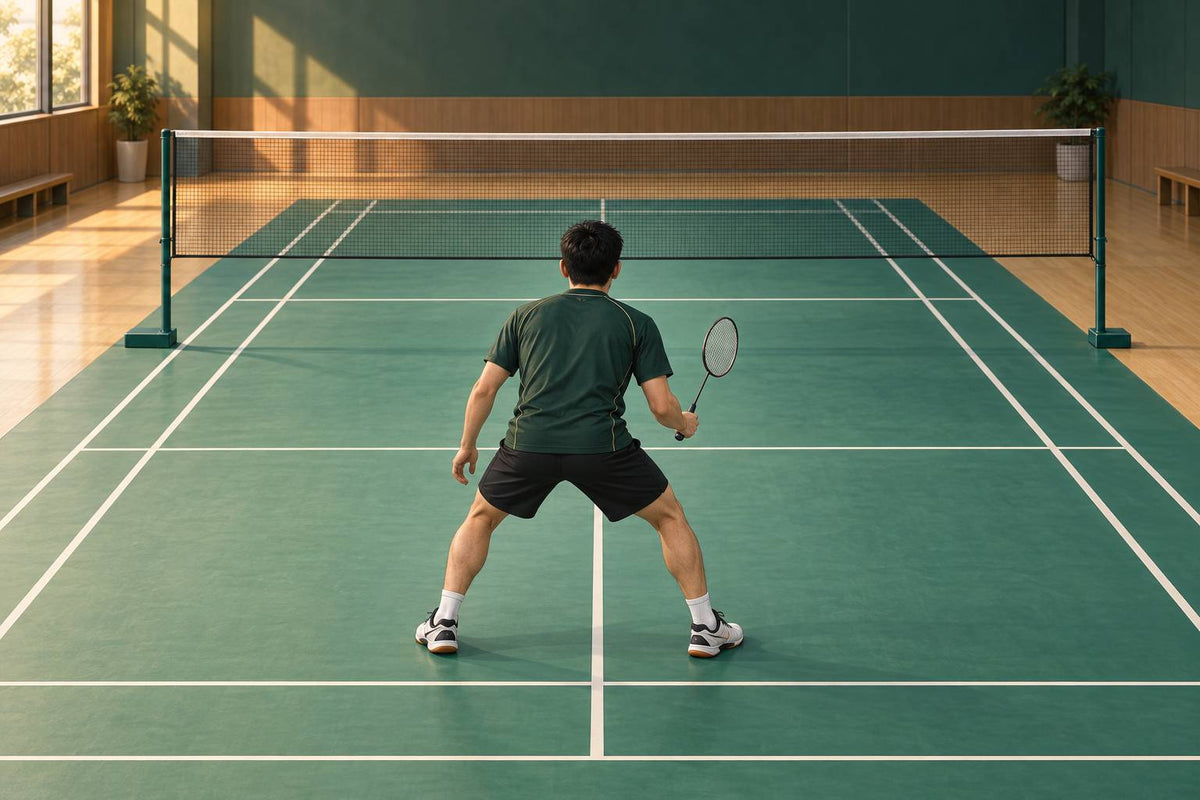
Low, wide base: hinge at the hips with soft knees and your racket up so your body stays balanced for compact blocks, lifts, and quick recovery.
Side ball
Load lightly onto the opposite leg and push sideways; do not reach late with only the racket arm, because the base and push-off create the extra coverage.
Court grip
If your feet slide during receive practice, use proper indoor badminton shoes for grip and lateral support; see Badminton House footwear, which ships across Canada.
If your smash defence feels late, the problem often starts before the shuttle is hit. Many players wait too tall, bounce too high, or reach with the racket instead of moving their feet first. The result is familiar: blocks pop up, lifts come from behind the body, and the next shot feels impossible to recover for.
Good badminton receive footwork is not about running harder. It is about starting from a low, wide base, using a small counter-step load, keeping the knees soft, contacting the shuttle in front, and pushing back to balance immediately after the receive. When those pieces connect, you cover wider angles with fewer steps and stay ready for the follow-up attack instead of being stuck in the corner or at the net.
Footwork starts with court grip. If you are sliding on receives, check Badminton House’s badminton footwear collection for indoor court shoes with the traction and lateral support needed for fast direction changes.
In This Guide
- Build the Low, Wide Base for Badminton Receive Footwork
- How Big Should Your Counter-Step Load Be?
- How Do You Cover Side and Front Receives Without Reaching Late?
- Keep Contact in Front for Compact Blocks and Lifts
- How Do You Recover After the Receive?
- Practice the Pattern With Shadow Footwork and Court Grip
- Which Badminton Receive Footwork Cue Should You Choose?
Build the Low, Wide Base for Badminton Receive Footwork

Good badminton receive footwork starts before the shuttle is hit. Your base should be low, wide, and balanced: feet a little wider than shoulder-width, knees soft, centre of gravity lowered, and racket held up in front of the body.
The key detail is how you get low. Do not only squat by bending the knees. Add a small hip hinge, as if you are sitting your hips slightly back while keeping your chest active and your eyes forward. This lets your legs stay springy, keeps your body over a broad base, and helps your racket stay ready instead of dropping beside your thigh.
Receiving base checklist
- Feet: wider than a normal standing stance, with weight on the balls of the feet.
- Knees: bent and soft, not locked.
- Hips: hinged slightly back so your centre of gravity drops without collapsing your posture.
- Racket: up in front, ready for compact blocks, lifts, and drive counters.
- Balance: stable enough that you can move left, right, or forward without first standing up.
A broader base improves balance, and that balance directly affects shot quality. When your centre of gravity is low and your feet are already set wide, you do not have to make a long, late reach just to touch the shuttle. You can stay more controlled through contact, which is especially important when receiving smashes, flat drives, and tight net follow-ups.
The wide base also helps you cover more angle from the same starting spot. In doubles, that means you are better prepared for smashes at the body, shots outside the hip, and steep attacks that force a side lunge. In singles, it gives you a more stable platform when you have lifted and need to absorb the next attack.
If you want the full stance breakdown, pair this section with our badminton defense ready position guide. Think of that article as the stance companion; here, the focus is how that receiving shape supports the first step and the recovery after your receive.
Self-check: before your opponent hits, could someone gently push your shoulder without making you fall forward, backward, or onto your heels? If not, your base is probably too narrow, too upright, or too knee-dominant.
How Big Should Your Counter-Step Load Be?

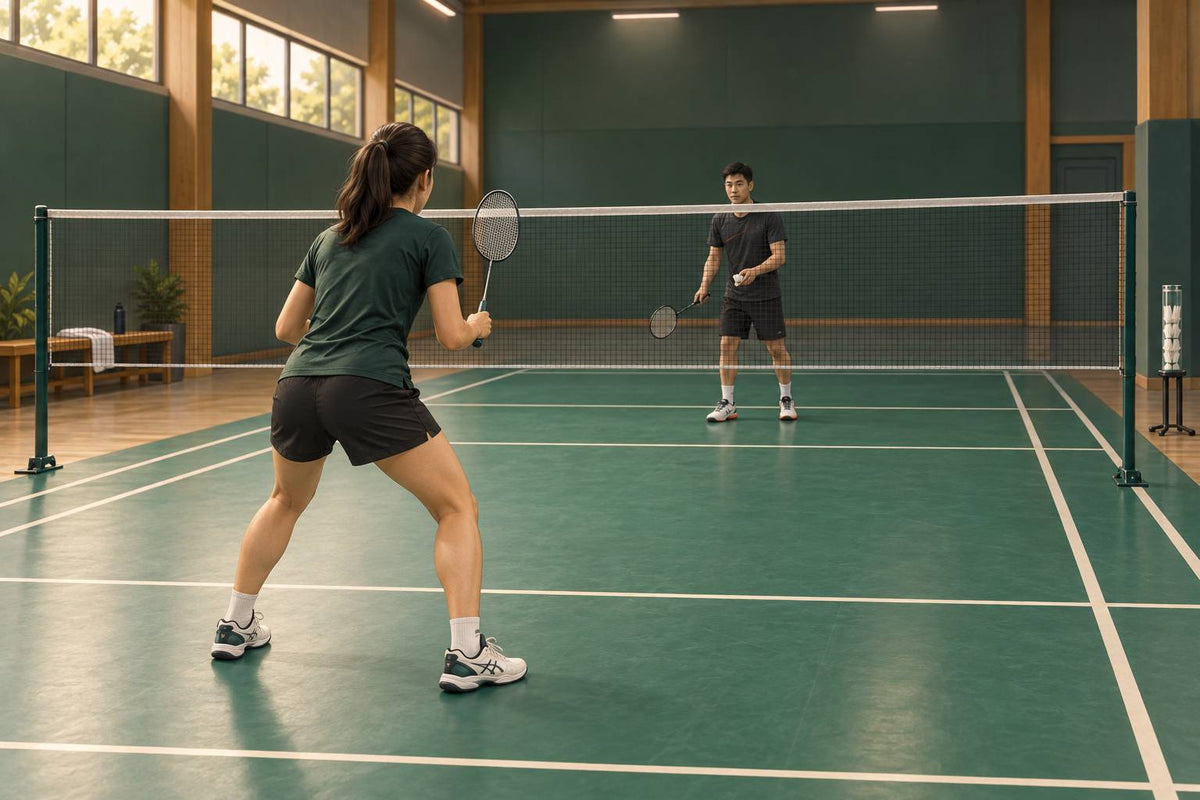
A receive split step is a small counter-movement — a quick drop of no more than a few centimetres, started just before your opponent hits — that pre-loads your legs so you can push toward the shuttle. Think explosive, not high. If you jump upward, you must wait to come down before you can move, so keep the movement no higher than about the width of a racket grip.
From your low, wide base, let your bodyweight drop slightly into soft knees, then push off the opposite leg from the direction you want to move. If the shuttle is going to your right, load and push from the left leg. If it is going to your left, load and push from the right leg. That push gives you momentum without needing a big fitness-only scramble.
For most side receives, avoid landing both feet at the exact same time. The faster pattern is to let the leg farthest from the shuttle land first, because it naturally starts your body moving toward the receive. For example, on a right-side receive, your left foot touches first and helps drive you across; on a left-side receive, your right foot touches first.
Receive cue
Drop a little, load the outside leg, and go. If your head rises first, the counter-step is too big.
There is one important exception: a smash straight into your body. If you do not need to move sideways, both feet may land together, or you may not need a split step at all. In that situation, the priority is staying compact, keeping the racket in front, and controlling the shuttle instead of forcing unnecessary foot movement.
If you are still building the footwork pattern, review the basic movement shapes in Badminton Footwork Basics, then come back to this receive-specific timing. The receive load should feel like a quick spring from the floor, not a full jump.
Court grip matters for this step. If your shoes slide during the load or first push, browse badminton footwear built for indoor court traction and lateral support. Badminton House ships across Canada.
Quick self-check
- Too high: if you feel like you are jumping, shrink the movement until it feels like a quick drop-and-go.
- Too late: if your feet are still in the air when the shuttle passes you, start the load earlier and keep it lower.
- No push: if you only reach with the racket arm, exaggerate the opposite-leg push for a few reps.
- Body smash: if the shuttle comes straight at you, stay compact instead of forcing a side step.
- Sliding feet: clean the soles and reset before the next rep.
How Do You Cover Side and Front Receives Without Reaching Late?

Once your low, wide base is set, the next job is not to admire it — it is to use it. Good badminton receive footwork lets you cover the side channels and the front court without stretching from a dead position.
After you lift or clear, expect the opponent to attack. A practical defensive habit is to position yourself slightly behind your normal base so you have a little more time to read the smash direction before committing. From there, your widened stance gives you better coverage against attacks to the body, left side, right side, and steeper angles.
Side receives: push, don’t reach
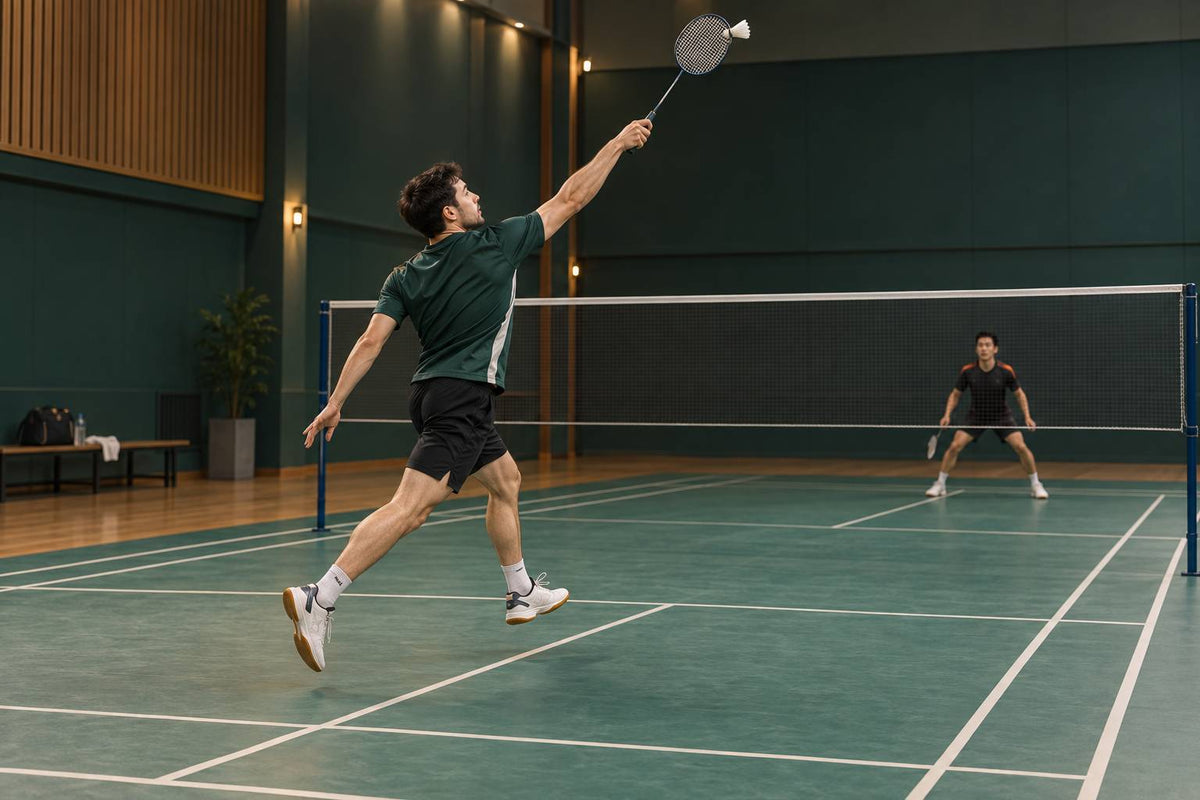
For a smash outside your hip, the first move should come from the floor. If the shuttle is going to your right, load the opposite leg and push across. If it is going to your left, do the same in reverse. The goal is to shift your body behind the racket, not leave your feet behind and flick the arm late.
A wide defensive stance helps because you are already closer to both side lanes. You can lunge or step out with less delay, and your racket can stay compact rather than making a long emergency swing.
| Attack you read | Footwork cue | Receive goal |
|---|---|---|
| Body smash | Stay grounded and absorb with soft knees. | Block, drive, or lift without opening a big swing. |
| Smash to either side | Push off the opposite leg and move your body with the racket. | Meet the shuttle beside or slightly in front of you, not behind your hip. |
| Steep attack | Drop the hips, keep the stance wide, and step out only as much as needed. | Keep the racket face stable for a controlled lift or soft block. |
| Late forward shuttle | Step forward from the wide base instead of reaching with only the arm. | Catch the shuttle early enough to lift with control. |
Front receives: arrive under control
The front-court problem is different. You may read smash, then see the shuttle slow into the forecourt from a block, net reply, or last-second touch. If your weight is too far back on your heels, you will reach late and scoop. If your knees are soft and your base is active, you can step forward and catch the shuttle with a controlled lift.
Keep the first forward step short enough that you can still stop. Many late lifts happen because the player dives forward with the upper body, then contacts the shuttle beside the knee or behind the front foot. Instead, move the foot, bring the racket in front, and let the lift come from a stable base.
Use the base to buy time, then recover
If your shoes slide during these side and forward pushes, your timing will feel late even when your read is correct. Indoor court grip matters for this pattern; browse badminton footwear if you need court shoes with better traction for Canadian club play.
For more on reading and returning hard attacks, see our guide to badminton smash defense.
Keep Contact in Front for Compact Blocks and Lifts
Good badminton receive footwork is not just about getting your feet to the shuttle. It is about arriving balanced enough that your racket can meet the shuttle in front of your body. Soft knees, a low centre of gravity, and a wide base give you the stability to control the racket face instead of making a late, reaching swing.
This matters most against smashes and fast downward shots. A compact block is a defensive shot used to regain the attack by returning the shuttle low over the net. If your contact point is beside your hip or behind your body, the block usually becomes a panic jab: the shuttle pops up, your racket face opens, and your opponent gets another attack.
Shot-technique companion: for the racket-face details behind the block, lift, and body-smash return, use this together with our badminton smash defence guide.
What “contact in front” should feel like
- Your knees stay soft. You should feel ready to absorb pace, not locked upright.
- Your chest stays balanced over your base. Avoid falling backward as the shuttle arrives.
- Your racket starts in front of your body. The receive should be a short guide or punch, not a full swing.
- Your non-racket hand helps balance. If that arm collapses or flies behind you, you are probably reaching late.
- Your feet support the shot. For a side receive, push from the opposite leg and let the racket-side foot create space so the shuttle is still in front of your hitting shoulder.
For lifts, the same rule applies. A front contact point lets you use a compact upward action and stable racket face. A late contact point forces you to scoop from beside the body, which makes the lift harder to control and slows your recovery.
A simple cue for Canadian club nights
On busy drop-in courts, do not think “swing faster.” Think: load, place the foot, show the strings early. If your strings are visible to the shuttle before it crosses your hitting zone, you can block low, lift cleanly, or steer the receive into space without over-hitting.
Court grip also affects this contact point. If your shoes slide on a dusty gym floor, your body often arrives late and your racket has to rescue the shot. Dedicated indoor badminton shoes give you the traction and lateral support needed for small defensive pushes and quick recoveries; you can browse current options in our badminton footwear collection.
How Do You Recover After the Receive?
The receive is not finished when your racket touches the shuttle. In practical badminton receive footwork, the shot and the recovery are one pattern: make contact, push back, and arrive in a balanced base before your opponent hits again.

The simplest cue is receive, push, reset. If you lunge or step wide to receive, recover by reversing that movement: push out of the lunge with the racket-side leg, bring that leg back toward the non-racket leg, then step back toward your middle base. Do not watch the shuttle travel. Do not jog upright. Push back with badminton footwork so your hips, knees, and racket are ready for the next ball.
What the reset should feel like
- After a side receive: push from the outside leg and come back into a low, wide base instead of letting your feet stay stretched apart.
- After a front receive: push back from the lunging leg, bring the body underneath you, and avoid standing tall as you retreat.
- After a body receive: you may not need a big step, but you still need a quick re-balance so both feet are active again.
- After a good block: expect the next shot. A block can help you regain the attack, but only if you recover early enough to cover the lift, net reply, or push.
Recovery cue for club play
Say this in your head during drills: “hit, push, base.” If you are still admiring the block or drifting back upright when the opponent contacts the shuttle, your recovery was late.
| Common mistake | Better recovery habit |
|---|---|
| Watching the shuttle after a block or lift | Push back immediately, then read the opponent from a balanced base. |
| Jogging back upright | Stay low and use a badminton push step so your next split or counter-step is ready. |
| Leaving the lunging foot planted | Reverse the lunge: drive from the lunging leg and bring the feet back under your hips. |
| Resetting to a narrow stance | Return to a low, wide base so you can cover the follow-up to either side or the front court. |
A useful self-check: after every receive, ask whether you could move again without taking an extra “setup” step. If the answer is no, your recovery is too slow or too tall. The goal is not to sprint back to a perfect dot on the floor; it is to return to a balanced central base for the rally situation, with your feet active and your weight ready to move.
Grip under your feet matters here because the recovery push has to happen instantly. If your shoes slide or lack lateral support during the push-off, browse our badminton footwear selection.
For more on the defensive shape before the receive, see our badminton defense ready position guide. To connect the reset with the next attacking chance, read Badminton Defence to Attack Transition.
Practice the Pattern With Shadow Footwork and Court Grip
Badminton receive footwork improves fastest when you rehearse the whole pattern, not just the first move. Think: low base, small counter-step load, move to the shuttle, compact receive, then push back to balance immediately. That sequence should feel sharp and repeatable, not like jogging around the court.
Shadow badminton is ideal because it removes the pressure of hitting a perfect shot. You can focus on whether your hips stay low, whether your knees stay soft, and whether your recovery step happens right after the receive instead of after you admire the shot.
Shadow the receive-move-recover sequence
- Start in your receive base: feet wide, hips hinged, racket up, weight ready to load into either foot.
- Add the small counter-step: make it explosive and compact. A big jump wastes time because your body has to come back down before it can push sideways or forward.
- Call a direction: right side, left side, front-right, or front-left. Move with one or two purposeful steps, not a lazy reach from the waist.
- Shadow the receive: keep the imaginary contact point in front of your body, using a short block or lift motion rather than a long swing.
- Recover right away: push back into a balanced stance before the next call. The drill is not complete until you are ready again.
For no-court days, use the off-court shadow ideas in Badminton Drills at Home. They fit Canadian winter training well because you can rehearse the timing and posture without needing a full gym booking.
Use shuttle-run style practice, but keep it badminton-specific
Shuttle-run style drills can build agility, but only if every repetition still looks like badminton. Sprinting back and forth with upright posture teaches a different habit than receiving a smash, blocking, and recovering for the next attack.
- Place markers like receive targets: one at each side receive and one or two in the front court. Move to the marker, shadow the receive, then recover.
- Stop under control: arrive with your body balanced enough to play a compact shot. If you slide past the marker, the rep is too rushed.
- Recover with footwork: push back from the lunge or side step instead of standing up and jogging to the middle.
- Train quality before volume: stop the set when your stance rises, your racket drops, or your recovery turns into a casual run.
Court grip is part of the footwork pattern. Fast receive recovery depends on clean stops and lateral push-offs, so use badminton court shoes with indoor grip and side support rather than relying on general running shoes. Browse current options in Badminton House footwear, with Canadian pricing shown in CAD.
A quick self-check before you add speed
- Can you hold the low, wide base without your racket dropping?
- Does your counter-step stay small, or are you bouncing upward before every receive?
- Can you reach the side and front targets without leaning late from the shoulders?
- After each shadow block or lift, are you balanced again before the next command?
When those answers are yes, add speed gradually. The goal is not to look busy; it is to make the receive-move-recover sequence automatic enough that your next defensive shot starts from balance.
Which Badminton Receive Footwork Cue Should You Choose?
Use the receive cue that matches the shuttle you are defending. Good badminton receive footwork is not one move repeated blindly: body smashes, side smashes, front lifts, and recovery steps all need slightly different timing.
For the full defensive setup, pair this with the badminton defense ready position guide and the smash defense guide.
| Choose this if... | Best receive cue | Why it works | Avoid this mistake |
|---|---|---|---|
| You have lifted or cleared high | Switch quickly into a low, wide defensive stance, slightly behind your base. | A low centre of gravity over a broad base helps you stay balanced, read the smash, and cover wider angles. | Standing tall at your normal base position and reacting only after the shuttle is already past you. |
| The smash is going to your body | Stay compact and land both feet together, or skip the split step if you do not need to move. | A body smash does not require a big directional move, so the priority is balance, racket position, and a short receiving action. | Jumping up or drifting sideways when the shuttle is already coming straight at you. |
| The smash is wide to one side | Use a small explosive split step, then load the foot opposite the direction you want to move. | Pushing off the opposite leg creates momentum, and landing the far leg first can help the body start moving in the right direction sooner. | Making a high jump; anything more than a small counter-movement slows the next move. |
| You need a last-second front receive | Keep the base wide enough to step forward, keep the knees soft, and take the shuttle in front. | A wider, lower stance helps you step forward for a lift or block without collapsing your posture. | Reaching late with the arm instead of moving the feet first. |
| You can block the smash low over the net | Choose the compact block when contact is in front and you can stay balanced after contact. | A defensive block can help regain the attack by returning the shuttle low over the net. | Swinging big from behind the body and giving up recovery time. |
| You have just lunged or stretched for the receive | Recover immediately: push out of the lunge, bring the racket leg back toward the non-racket leg, then step back to the middle. | Returning to a central base maintains control, balance, and readiness for the next shot. | Watching your shot or jogging back instead of recovering with footwork. |
Gear note for Canadian courts. Technique comes first, but grip and lateral support matter when you are stopping, loading, and pushing sideways on receive. If your shoes are holding back your footwork, browse badminton footwear; the Babolat Shadow Tour Men’s Badminton Shoes – Orange is a non-marking indoor court shoe with lateral midfoot support worth comparing.
Get new badminton guides by email
Join the Badminton House list for occasional emails with new guides, technique tips and news from our club in Moncton.
By subscribing, you agree to receive Badminton House emails and can unsubscribe anytime.
Clean badminton receive footwork is not about guessing faster — it is about building a balanced base, loading lightly, contacting in front, and recovering with purpose. We play badminton ourselves, so if you are unsure whether your court shoes, stance habits, or recovery pattern are holding you back, contact us for practical gear and training advice.
Ships across Canada · 14-day returns · Canadian badminton specialty shop

Leave a comment
This site is protected by hCaptcha and the hCaptcha Privacy Policy and Terms of Service apply.