
Last updated: July 2026 · Written by the team at Badminton House
Quick Answer: Fix a Short Clear
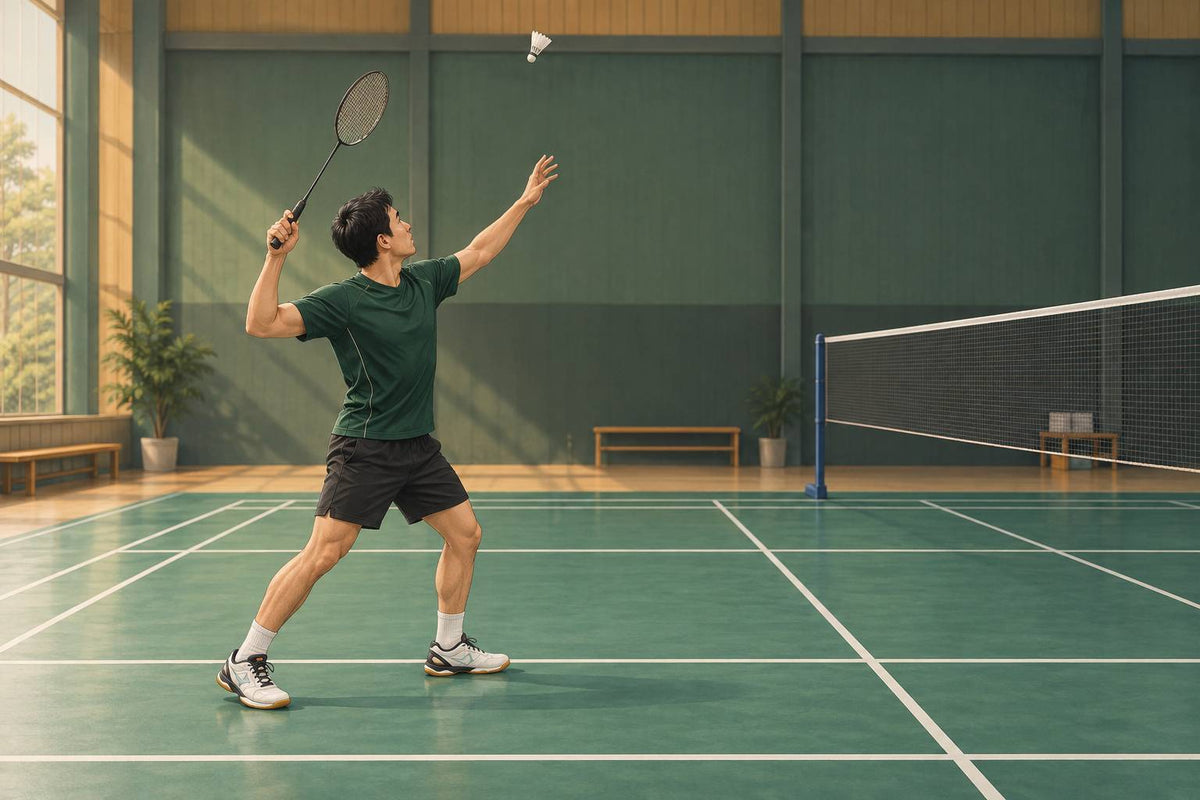
Turn side-on early, then rotate forward into a high contact point instead of trying to swing your arm harder.
Side-on + high
Best choice: Use the ground, trunk and arm in sequence for a deeper clear with less effort.
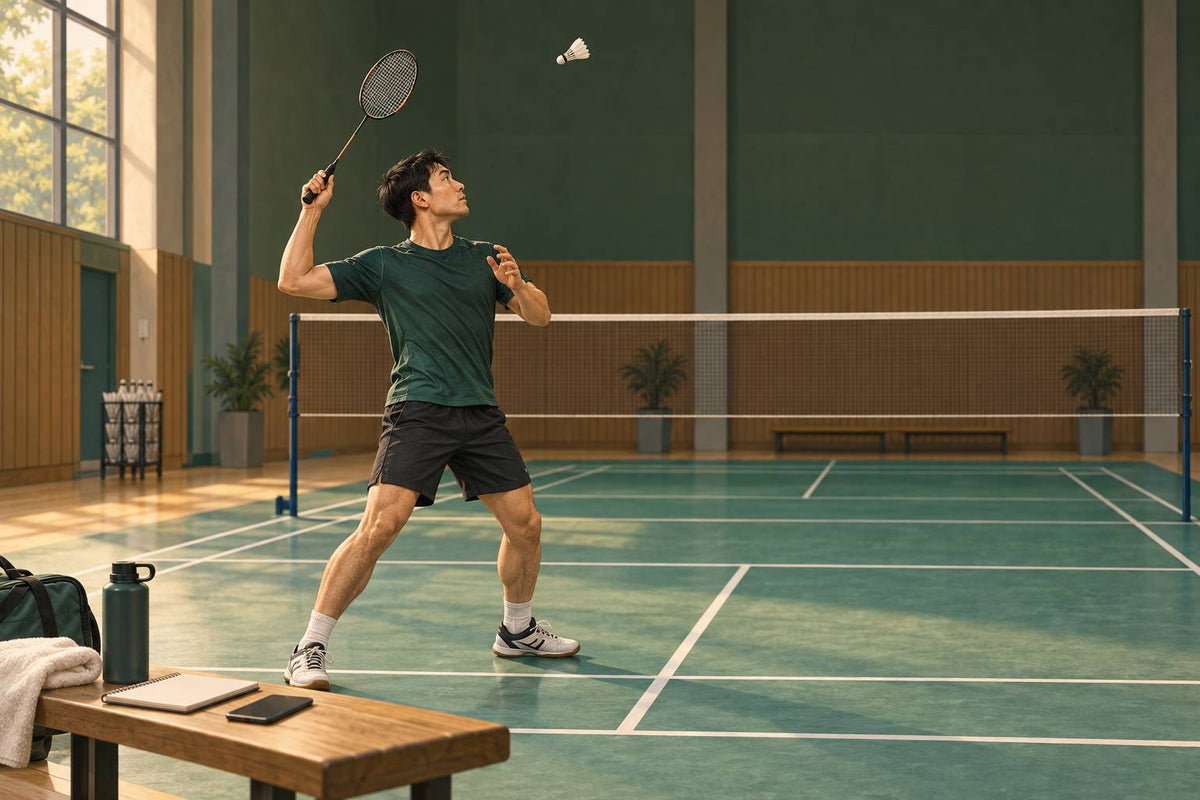
Side-on + late
The turn helps, but contact behind your head still limits forward rotation and clear length.
Square-on
Facing the net removes trunk rotation, leaving the arm to produce most of the power.
If your forehand clear keeps dying around midcourt, watch what your body does before contact. Many players swing harder while their chest stays facing the net; that removes the trunk-rotation stage and leaves the arm trying to create the whole shot.
The first fix is turning sideways in badminton preparation: place the non-racket side forward, draw the racket back like pulling a bow, then push from the floor and let the trunk lead the arm through. Also check whether contact has drifted behind your head, because late contact blocks the forward rotation you need. This guide gives you one video checkpoint, three drills, and an honest court test for whether the clear actually gained length.
In This Guide
Film the Frame Before Contact
Place your phone on a tripod at the side of the court, far enough away to capture your full preparation. Hit several clears and watch them first at normal speed to judge the overall rhythm. Then switch to slow motion, advance frame by frame, and pause on the final frame before the racket contacts the shuttle.
Look for three checkpoints:
- The racket shoulder sits behind the non-racket shoulder.
- The hips are turned rather than square to the net.
- The back foot is loaded, ready to drive the rotation forward.
Do not confuse a missing turn with late contact. You can prepare side-on yet still meet the shuttle behind your head, which limits forward rotation and can shorten the clear. High-clear guidance ranges from contact directly above the racket shoulder to slightly in front; the clear warning sign is contact behind the head. Use the pre-contact frame to judge preparation and the contact frame to judge timing.
Why Turning Sideways in Badminton Adds Distance
Facing the net keeps your hips and shoulders nearly square, leaving little room for trunk rotation before the hit. Your shoulder and arm must then create most of the racket speed, and swinging them harder cannot fully replace the missing body sequence.
Turning side-on restores that sequence: push from the ground, then let the legs, hips, trunk, shoulder, arm and racket accelerate in order. Force travels through the body instead of beginning at the shoulder. The broader sequence is explained in the badminton kinetic chain power guide.
Hip–shoulder separation, sometimes called the X-factor, means the shoulders turn relative to the hips during preparation. That separation creates room for a longer, whip-like rotation into contact. A 2016 biomechanics study linked greater trunk rotation with higher shuttle release speed in the forehand smash. That is evidence from the shared overhead throwing action—not a direct study of clear length—but it supports why restoring trunk rotation can help a short clear travel farther.
Three Drills to Train the Turn


1. Shadow and soft-ball throw
Without a shuttle, rehearse turning side-on and drawing the racket arm back as though pulling a bow. Then throw a soft ball overhead. Push from the ground, rotate the trunk and let the arm come through last; prioritize a smooth sequence over throwing hard.
2. Easy feeds from mid-court
Begin side-on while a partner sends comfortable feeds within reach. Clear each shuttle without adding recovery footwork yet. Reset fully between feeds: pull the bow, push from the ground, rotate the trunk, then allow the arm to finish the action.
3. Repeated clears to the back tramlines
Have the feeder send consecutive shuttles toward your rear court and aim each clear into the opposite back tramlines. Keep the same cue under repetition: side-on, pull the bow, ground push, trunk rotation, arm last. Stop the set when you begin facing the net or forcing the shot with your arm.
Measure Clear Length Without Fooling Yourself
Use the back tramlines as your target: the 0.76 m band between the doubles long service line and the back boundary line. That band is out for a doubles serve, but it is in during rallies. A clear landing on the back boundary line is also in.

Run a before-and-after test under matching conditions. Use the same type and speed of shuttle, choose fresh shuttles with consistent flight, and hit equal sets from the same feeding position. Mark where each shuttle first lands rather than judging by where it rolls or is collected. Worn feathers, damaged skirts, or a different shuttle speed can change flight enough to make the technique comparison misleading.
Track two outcomes: how often your clears reach the target band and how hard the swing feels. After improving the turn, look for deeper, more repeatable clears with less arm effort—not a guaranteed numerical increase. A few unusually long hits matter less than a cluster of controlled landings near the back boundary.
Which Fix Should You Choose?
Use the frame before contact and the shuttle’s flight to identify the main fault. Do not simply swing harder: choose the correction that restores the missing part of the overhead action.
| Condition | Choose this fix if... |
|---|---|
| Broken power sequence | Your feet and chest remain facing the net, so the clear is driven mainly by the arm. Prioritize turning side-on, pushing from the ground and rotating before the arm comes through. |
| Wrong contact point | You turn correctly but meet the shuttle behind your head, producing height without enough depth. Move earlier and contact high above the racket shoulder rather than letting the shuttle pass behind you. |
If both appear, fix the turn first at low speed, then adjust spacing and timing. A late shuttle can prevent forward rotation, so cleaner movement may improve both faults together.
Get 10% off your first order
Join the Badminton House list and we’ll email you a 10% welcome code — plus training guides, technique advice, and badminton updates.
By subscribing, you agree to receive Badminton House emails and can unsubscribe anytime.
We play badminton too, and we know a short clear is usually easier to fix when you isolate one movement fault instead of simply swinging harder. If you want help interpreting your footage or choosing a sensible next step, contact us for practical advice.
Keep your clear-length test consistent: use fresh shuttles of the same type so changing flight does not distort your comparison.
Check Live Shuttlecock Availability

Leave a comment
This site is protected by hCaptcha and the hCaptcha Privacy Policy and Terms of Service apply.