

Last updated: July 2026 · Written by the team at Badminton House
Quick Answer: Changing Badminton Technique
Expect a temporary dip; choose how consciously the player should manage the change before adding pressure.
Openly agreed and monitored
Best default: use when the player can accept short-term misses and track match transfer.
Introduced through practice design
Use representative tasks to guide the pattern without constant technical instructions.
Hidden inside constraints
Use when conscious rules create tension or overthinking; keep the task game-like.
You clean up an overhead action in practice, then frame the shuttle or lose timing as soon as a feeder adds flight, choice and pace. That does not automatically mean the change is wrong. Slow, repetitive work can improve today’s execution without creating a pattern that survives rallies. When changing badminton technique, the first honest test is not whether it looks cleaner in shadow swings, but whether it can reconnect to the moving shuttle.
A sound change therefore needs more than the right technical idea. It needs the right timing, practice design and expectations for the temporary drop. This guide helps you decide whether to begin now, choose how consciously to introduce the new pattern, recognise normal disruption, and keep it available when fatigue, speed and scoreboard pressure return.
In This Guide
Should You Change Your Technique Now?

Knowing what to change matters less than choosing the right time and method. Before committing, assess eight factors: your response to temporarily playing worse; the point in your season; how deeply the old movement is grooved; whether the adjustment can be introduced subtly; how much explanation helps rather than overloads you; whether player and coach share expectations; whether the new movement raises injury risk; and what poorer execution could cost in upcoming competition.
Go: You accept the likely dip, have time to relearn, understand the purpose and can test the pattern without unacceptable physical or competitive consequences. Wait or reduce the scope: important matches are close, pain appears, buy-in is weak or the old and new patterns keep competing.
The preparatory phase is normally the better window for correcting larger weaknesses and building a new technical base. During the competitive phase, favour refinement and maintenance—or a small adjustment that preserves dependable match options—rather than rebuilding a heavily grooved action.
Three Ways to Introduce a Technical Change
Use one of three routes, chosen with the player rather than imposed mid-session:
- Openly agreed and monitored. Explain the reason, accept the likely short-term dip and agree on one check. For a grip switch, verify thumb position and whether forearm rotation presents a flat racket face; see the grip-switching guide. Buy-in matters, while choosing drill order or when to request a demonstration preserves autonomy.
- Introduced through practice design. Move from rehearsal into varied feeds that change height, pace and placement. This restores shuttle flight, perception and timing. Avoid correction after every attempt; let the player search, then review a small sample.
- Hidden inside constraints. Play a normal game in which a point can be won only through a successful backhand. The scoring rule invites a solution without prescribing every joint action. An analogy or external-focus cue can direct attention toward the shuttle’s effect; see cue guidance.
Constraints-led methods show clearer advantages for tactical learning than technical skill, so treat this as an option, not a universal upgrade.
What the Performance Dip Feels Like—and How It Resolves


Practice performance is not the same as durable learning. A corrected overhead may look clean in a controlled drill yet disappear when the player must read a moving shuttle. In one badminton example, a young player learned the swing against a suspended shuttle, then completely missed the first four or five gentle feeds because real flight restored the timing problem.
A technique is not learned merely because it works in the easiest version of practice.
Judge progress by capability, not an invented timetable: the pattern holds in shadow work, then against feeds, then in pressure drills, and finally during matches. Fatigue and pressure usually expose the old pattern first. Badminton fatigue testing has also found that smash precision can decline more than shuttle speed, so late-session faults may appear before an obvious loss of pace. If a drill looks solved but rallies remain unchanged, examine the wider practice-to-match transfer problem.
How to Hold the New Pattern Under Pressure
Practise the change early in the session while fresh. Use one concise external cue—what the shuttle, racket or floor should do—rather than running through a list of body mechanics. Then add representative variation gradually: changing feeds, movement, decisions and scoring. Introduce fatigue only after the pattern survives pressure drills without constant correction.
Tight matches invite reinvestment: consciously trying to control a partly automatic movement with explicit rules. Agree before competition whether results or learning take priority. If one league result must be protected, deliberately use the old pattern for that match instead of alternating mid-rally or half-committing. Old and adapted patterns can remain stored, but switching between competing motor memories can create interference.
Keep equipment constant while judging the change. Do not change racket mid-change; revisit racket options once the new pattern survives match play.
Which Approach Should You Choose?
Choose according to how clearly the movement can be specified, how the player responds to conscious instruction, and whether the change must transfer into realistic rallies.
| Choice | Choose this if… |
|---|---|
| Openly agreed and monitored | The correction is discrete and checkable, and the player understands why short-term performance may decline. Prior buy-in can reduce frustration and resistance. |
| Introduced through practice design | Transfer is the main problem. Use representative variation and avoid feedback after every attempt so the player must adapt rather than merely repeat. |
| Hidden inside constraints | Conscious mechanical rules create overload or pressure-related disruption. Shape the task so the desired solution emerges without prescribing the movement. |
The best route is the least intrusive one that still produces a stable change beyond practice.
Get 10% off your first order
Join the Badminton House list and we’ll email you a 10% welcome code — plus training guides, technique advice, and badminton updates.
By subscribing, you agree to receive Badminton House emails and can unsubscribe anytime.
We play badminton, so we know a technique change can feel convincing in shadow work yet disappear when rallies speed up. Treat match play and late-session fatigue as the honest tests: when the new pattern survives both, it is beginning to settle. If you want a second opinion on your next step, contact us for practical advice.
Keep your racket constant while learning the new pattern. Once it holds up in match play, revisit your equipment without confusing a racket change with technical progress.
Explore Badminton Rackets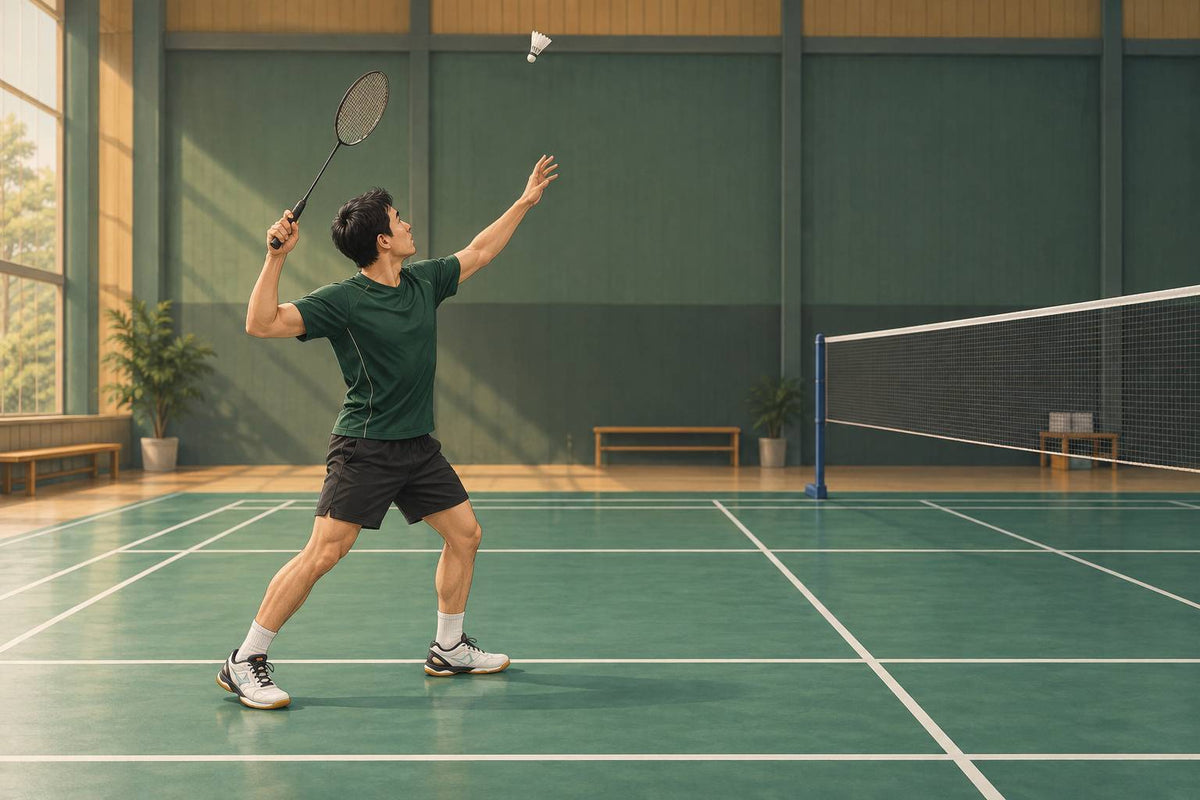

Leave a comment
This site is protected by hCaptcha and the hCaptcha Privacy Policy and Terms of Service apply.