
Last updated: June 2026 · Written by the team at Badminton House
Quick Answer: Badminton Kinetic Chain Power
For easier power, stay relaxed and let the shot build from legs and trunk rotation into the shoulder, elbow, forearm, wrist, and fingers instead of trying to muscle the shuttle with your arm.
Default
Best choice: use a relaxed whip sequence—legs, hips and trunk first, then arm, forearm rotation, and a brief finger squeeze at impact.
Arm
If your shoulder and forearm burn out quickly, you are probably starting the stroke too late in the chain and trying to create speed from the smaller links.
Gear
A suitable racket can support your timing, but it cannot replace trunk rotation, relaxed grip pressure, and clean contact in front of the body.
If your smash feels like it comes mostly from your shoulder or wrist, you can train harder and still feel stuck. The shuttle leaves flat, your arm tightens, and by the third game your timing disappears. That is usually not a strength problem first — it is a sequencing problem.
Badminton kinetic chain power is the way your body sends speed from bigger, stronger segments to smaller, faster ones. Your legs start the drive, your hips and trunk rotate, your shoulder and elbow carry the motion forward, and your forearm, wrist, and fingers add the final snap. When the links fire in order and stay relaxed enough to pass energy along, the racket head accelerates like the end of a whip.
That same idea applies whether you are trying to hit a deeper clear, a steeper smash, or a softer disguised drop. Canadian biomechanics work from the University of Lethbridge has also highlighted how skilled players use trunk rotation as part of this whip-like sequence.
Build the chain before blaming the racket. Technique creates the speed, but the right frame can support your timing — browse our live badminton racket collection in CAD, with free Canadian shipping on orders over $200.
In This Guide
- Why Swinging Hard With Your Arm Feels Weak
- The Whip Model: Legs to Trunk to Arm to Fingers
- Relaxation Is What Lets Each Link Accelerate the Next
- Trunk Rotation: The Hidden Engine of Easy Power
- Same Chain, Different Shot: Clear, Smash, and Drop
- Feel Drills for Whip-Like Sequencing
- Gear Can Support the Chain, But It Cannot Replace It
- Which Kinetic-Chain Fix Should You Choose First?
Why Swinging Hard With Your Arm Feels Weak
If you feel like you are swinging as hard as possible but the shuttle still floats short, the problem is usually not “weak wrists.” In badminton kinetic chain power, the arm is supposed to be the fast final link, not the only engine. When the wrist and forearm try to create all the pace by themselves, the swing often feels tense, noisy, and tiring — but the shuttle does not leave with the speed you expected.
The wrist joint is simply too small to create explosive smash power on its own. Wrist action matters, but it is delayed until the last possible moment before contact — a movement inside the larger movement. By itself, that late wrist action is not enough to hit a shuttle end-to-end with quality. That is why a player can “snap” hard, feel strain in the forearm, and still produce a clear that lands mid-court.
Arm getting tired fast? If your elbow, forearm, or wrist is sore after overhead practice, check our badminton elbow and wrist pain guide before adding more high-volume hitting.
A stronger stroke comes from sequential joint action. The larger body segments start the motion, then each segment helps accelerate the next: lower body drive, hip and trunk rotation, shoulder movement, elbow extension, forearm rotation, then the final hand and finger squeeze. The racket head becomes fast because speed has been passed along the chain, not because the hand has been tense from the beginning.
What “arming it” usually looks like
- Tight grip from the start: the racket feels controlled, but the arm cannot accelerate freely.
- Little body turn: the player faces the net too early, so the trunk cannot contribute much to the swing.
- Bent, cramped contact: the arm works hard, but the racket-head path is short and the hitting point is late.
- Early wrist effort: the wrist “fires” before the rest of the swing has delivered speed, so the last link has nothing useful to amplify.
The result is a stroke that feels powerful to your body but weak to the shuttle. You may hear a flat or dull contact, feel your shoulder and forearm tightening, and still watch the shuttle sit up for your opponent. That is a classic sign that the chain is broken: the final link is working before the earlier links have done their job.
The better cue: throw first, squeeze last
For most club players, the easiest correction is to stop thinking “hit harder with the wrist” and start thinking “throw the racket head, then squeeze at impact.” Keep the arm loose enough that the shoulder, elbow, and forearm can move in sequence. As the racket approaches the shuttle, the grip firms briefly to stabilize the racket face and transfer speed into the shuttle. After contact, relax again so you are ready for the next shot.
This does not mean the wrist is unimportant. It means the wrist and fingers are the finishing link. When they arrive late, relaxed, and connected to the rest of the body, they add sharpness. When they try to do the whole job alone, they create fatigue without much shuttle speed.
The Whip Model: Legs to Trunk to Arm to Fingers

Badminton kinetic chain power is easiest to understand as a whip. The powerful part of the body starts the motion, then each smaller, faster link receives that speed at the right moment: legs, hips, trunk, shoulder, upper arm, elbow, forearm, wrist, hand, and finally the fingers.
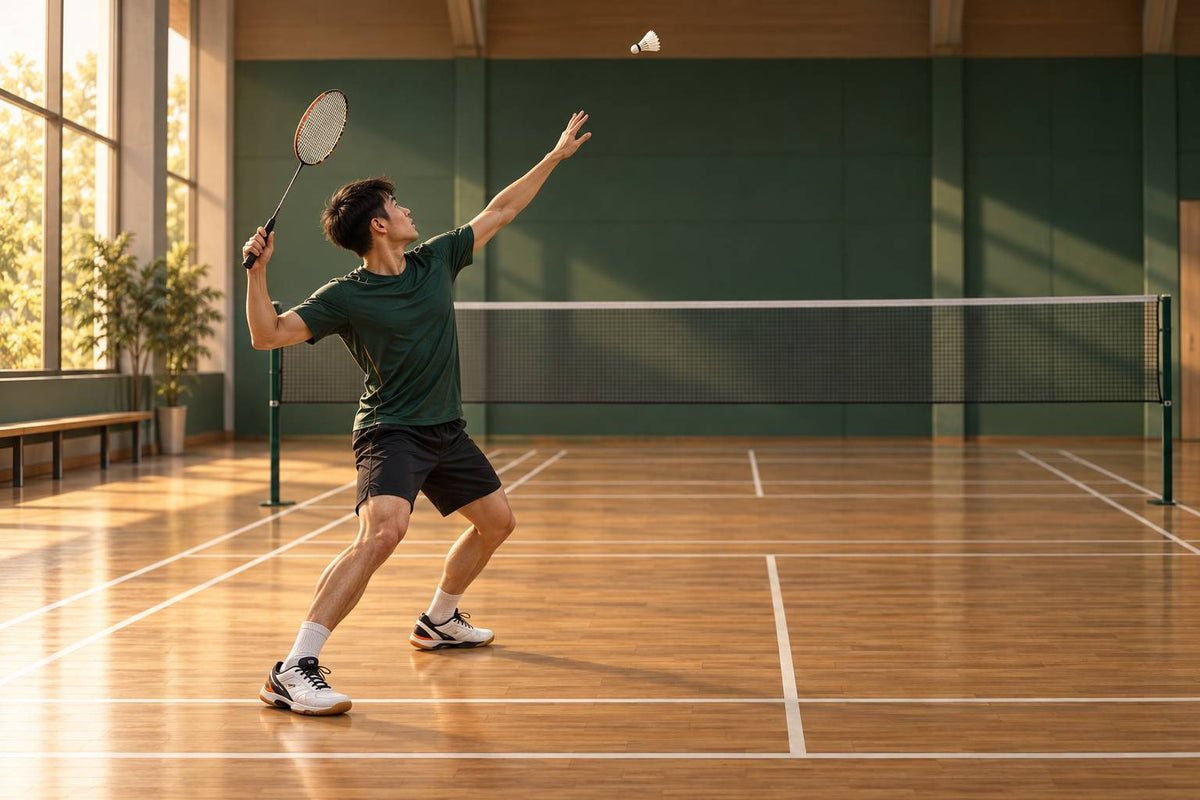
The important detail is timing. In a smash power chain, the firing order runs from knee → hip → shoulder → elbow → wrist. For the practical upper-body feel on court, many players can simplify that to waist → shoulder → elbow → wrist → fingers. If everything fires at once, the chain becomes a push. If each link fires in sequence, the racket head gets whipped through the shuttle.
Quick feel cue
Do not try to make the racket fast from the first instant. Start from the floor, let the body rotate, let the arm lag, then squeeze and snap late.
| Chain link | What it contributes | On-court cue |
|---|---|---|
| Legs and knees | Start the action from the ground and help drive the body into rotation. | Load lightly, then push up and through instead of standing flat. |
| Hips and waist | Turn the lower-body drive into trunk rotation, setting up the bigger power source for the arm. | Feel the waist begin the throw before the hand rushes forward. |
| Trunk and shoulders | Rotate the upper body so the racket arm is pulled into the stroke instead of muscling the shuttle alone. | Let the chest and shoulder turn carry the arm forward. |
| Upper arm and elbow | The upper arm follows the shoulder, then the elbow extends so the forearm can accelerate late. | Keep the arm relaxed enough to lag, then let the elbow unfold. |
| Forearm | Adds the fast rotational release. For forehand overhead power, forearm pronation is a key late movement. | Think rotation, not bending the wrist. For more detail, see our forearm pronation guide. |
| Wrist, hand, and fingers | Add the last snap and stabilize the racket face at impact. | Stay loose, then squeeze late with the fingers through the shuttle. |
The whip does not work because every part keeps accelerating forever. It works because the bigger segment accelerates, then briefly slows or brakes so speed can pass into the next, lighter segment. That is why a good overhead stroke feels smooth before it feels explosive: the arm is not forcing the shuttle from the start; it is receiving speed from the links before it.
Canadian biomechanics work from the University of Lethbridge describes this as a whip-like proximal-to-distal sequence, where momentum transfers from larger body segments toward smaller ones to maximize racket speed. In plain club-court language: if the legs and trunk do their job, the hand gets to be fast without the shoulder having to fight for every kilometre per hour.
A simple way to feel the order
Shadow a clear or smash slowly and say the links as you move: knees, hips, shoulder, elbow, wrist, fingers. If your hand arrives first, slow down. If your shoulder tenses before your body turns, reset. The goal is not a bigger arm swing; it is a cleaner delay between the body turning and the racket releasing.
- Early phase: legs and hips start the stroke while the racket arm stays relaxed.
- Middle phase: waist and trunk rotate, pulling the shoulder and upper arm forward.
- Late phase: elbow extension, forearm rotation, wrist, hand, and fingers finish the strike.
This is also why a lighter or better-balanced racket can feel easier to accelerate, but it cannot create the sequence for you. If you are experimenting with racket feel, start with our live badminton rackets collection and compare weight concepts in our 3U vs 4U vs 5U racket weight guide. For shot-specific timing, pair this model with our smash technique guide.
Relaxation Is What Lets Each Link Accelerate the Next

The whip model only works if the links are free to move. In badminton, that means your shoulder, arm, wrist area, hand, and fingers need enough looseness for speed to travel through them instead of getting trapped in tension.
Think of your grip as firm and pliant, not limp and not locked. It should strengthen as the swing progresses, with the tightest moment arriving around contact. A useful feel is:
Relaxed arm → swing → squeeze → impact → relax
That brief squeeze stabilizes the racket face at the moment you need it, then you let go of the tension so the racket can recover for the next shot.
The common mistake is trying to be “strong” from the start of the swing. If you death-grip the handle before the chain has accelerated, the racket stops behaving like the light, fast end of a whip. Your fingers are already tight, your forearm tightens with them, and the final acceleration becomes smaller instead of sharper.
What relaxed actually means
Relaxed does not mean floppy. A floppy grip gives you a moving racket face and inconsistent contact. Relaxed means you can still guide the racket, but you are not squeezing hard enough to block the chain.
- Before the swing: hold the racket securely, but leave space in the hand and fingers so the head can move freely.
- During the swing: let the arm travel with the body’s rotation instead of forcing the racket forward with early hand tension.
- Just before contact: add the squeeze. This is where finger power helps the racket face firm up and transfer energy into the shuttle.
- After contact: release the tension again so your racket can recoil and return toward ready position.
If you are working on grip basics, start with our badminton grip how-to guide. If the handle feels too slippery, too built-up, or too thin to control without squeezing, our overgrip vs replacement grip guide can help you choose a setup that supports a softer hand.
A simple court cue: squeeze late, not long
On clears, smashes, and drops, try to notice when your hand becomes tight. If it is tight before your body starts the swing, you are likely cutting off the chain early. If it tightens late, near impact, the racket can still accelerate through the hitting range.
One practical cue is “soft hand, fast squeeze.” Say it before the feed, then hit with one goal: keep the arm and hand easy until the final beat of the stroke. The shuttle should feel like it comes off a sharper contact, not from a harder push.
Player cue: if your forearm feels locked before you swing, loosen the fingers first. Death-gripping kills speed because it turns the last link of the chain into a brake.
This is also why a lighter, well-matched racket can feel easier to accelerate, but equipment cannot create relaxation for you. Use gear that lets you hold the handle comfortably, then train the timing: relaxed arm, swing, squeeze, impact, relax. For Canadian players comparing racket feel, our 3U vs 4U vs 5U racket weight guide is a useful next read, and you can browse current options in the live badminton rackets collection. Badminton House ships Canada-wide, with free Canadian shipping on orders over $200.
Trunk Rotation: The Hidden Engine of Easy Power
If your arm is relaxed but the shuttle still does not travel, look one link earlier in the chain: your trunk. In the Canadian University of Lethbridge 3D motion-capture study of forehand smashes, skilled players used significantly more trunk rotation than novices. That larger trunk rotation helped create the whip-like proximal-to-distal sequence: big body segments start the motion, then speed transfers toward the arm, racket, and shuttle.
The key finding is hard to ignore: trunk rotation contributed more than 50% of the racket head’s forward velocity, while the shoulder, elbow, and forearm actions helped position and direct the arm toward the target. In plain court language, your arm is not supposed to be the engine. Your trunk is a major driver, and your arm is the fast, loose end of the whip.
Canadian coaching cue: do not think “swing harder.” Think “turn, then throw.” Load your body sideways, let the trunk unwind, and allow the shoulder, elbow, forearm, wrist, and fingers to release after the body has started the shot.
Why trunk rotation makes the racket feel faster
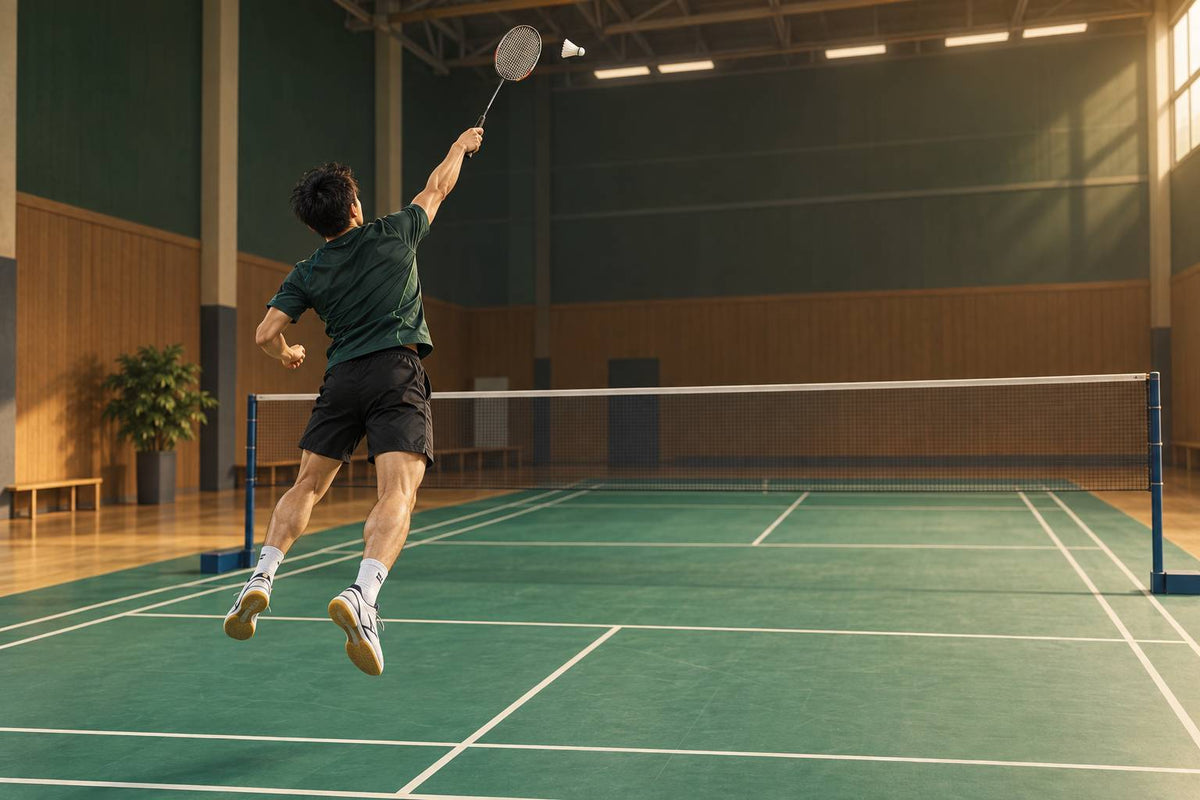
A longer, better-timed chain gives the racket head more room to build speed. The same University of Lethbridge study identified two major factors behind smash speed: the forward-swing speed of the arm-racket chain and the effective length of that chain. That is why contacting the shuttle high with a fully extended arm is so important. A bent arm shortens the chain; a fully extended arm lets the racket head travel on a larger, faster arc.
This does not mean locking your elbow stiffly or reaching so far that you lose balance. It means creating a tall, athletic contact point: trunk rotating, shoulder open, elbow extending, forearm turning, and fingers tightening at the last moment. For a stroke-specific breakdown of this contact position, see our badminton smash technique guide.
What skilled players do differently
| Player pattern | What happens in the chain | Court feel |
|---|---|---|
| Skilled sequence | Trunk rotation helps start the whip, then speed transfers from larger body segments toward smaller, faster segments. | The shot feels heavy without feeling forced. The arm can stay loose until the final squeeze. |
| Novice pattern | The whip-like proximal-to-distal pattern is not clearly present, so the arm often tries to create speed by itself. | The swing feels tight, tiring, and inconsistent, especially late in games. |
A simple way to test this in your next Canadian club-night warm-up: hit half-speed clears while exaggerating the body turn. Start sideways, let the non-racket shoulder point roughly toward the shuttle, then unwind your trunk before the arm releases. If the shuttle travels deeper with less arm effort, you are starting to feel the hidden engine.
Same Chain, Different Shot: Clear, Smash, and Drop

A clear, smash, and drop should not feel like three unrelated overhead swings. They are three finishes built on the same shot shape: a sideways body setup, high contact slightly in front, and a throwing action that lets the racket arrive late and fast.
That is why badminton kinetic chain power matters even when you are not trying to hit hard. The whole-body coordination gives you options. From the same preparation, you can send the shuttle deep, steep, or softly over the net without announcing the choice too early.
One preparation, three finishes
- Clear: keep the throwing action long and send the shuttle high and deep, using full extension rather than arm-only effort.
- Smash: use the same loaded preparation, but contact in front and finish with a sharper, more downward strike. For more detail, see our badminton smash technique guide.
- Drop: start like a clear or smash, then change the finish so the shuttle loses pace late. For the soft-contact details, see our badminton drop shot guide.
The common setup is the part many players skip. Turn sideways to the net with your non-racket shoulder facing forward, let your weight load onto the back foot, use the non-racket arm for balance and shuttle tracking, and contact the shuttle high and in front of your body. This gives your stroke a throwing shape instead of a reaching or pushing shape.
Once that shape is consistent, deception becomes much easier. A disguised drop should use the same swing as a clear or smash, then vary the finish. In practical terms, your opponent should read “overhead attack” from your preparation, not “soft drop” from the first half of your swing.
| Shot | What stays the same | What changes late |
|---|---|---|
| Clear | Sideways preparation, high contact, throwing action, relaxed acceleration into contact. | The finish sends the shuttle high and deep, with enough length to move the opponent back. |
| Smash | Same loaded body position and high, in-front contact point. | The strike is sharper and more downward, with a shorter, more aggressive finish. |
| Drop | Same early swing as a clear or smash, especially for disguise. | The finish becomes controlled and softer so the shuttle slows late and falls near the front court. |
A useful self-check: if your opponent can tell you are dropping before your racket begins the forward phase, your preparation is probably different. If your clear needs a huge arm swing but your smash feels cramped, your contact point may be inconsistent. If your smash is hard but your drop has no disguise, you may be changing the swing too early.
For club players in Canada, this is especially valuable in doubles, where opponents are close enough to punish obvious preparation. The goal is not to make every overhead look identical forever; it is to make the first part of the stroke believable enough that the final choice happens late.
Technique first, gear second. A racket can support your timing, but it cannot create the chain for you. If you are comparing options, browse our badminton rackets and badminton accessories; Badminton House ships Canada-wide, with free Canadian shipping on orders over $200.
Think of the clear, smash, and drop as one family. Build the same preparation, keep the chain relaxed, contact high in front, then choose the finish late. That is the difference between simply having three shots and having three shots your opponent must respect.
Feel Drills for Whip-Like Sequencing
These drills are not about hitting harder right away. They are about learning the feeling of the chain: loose setup, smooth swing, fingers closing at the right instant, clean contact, then letting tension disappear again. Practise them slowly first, especially in a cold Canadian gym where tight shoulders and rushed warm-ups can make players muscle the shot.
One important rule runs through every drill: the release is forearm rotation and pronation, not bending the wrist forward. The wrist should feel firm enough to support the racket face while the forearm turns through the hit. For a deeper breakdown, see our badminton forearm pronation power guide.
Feel before force. If the racket feels slow, do not squeeze earlier. Stay loose longer, then close the fingers near contact so the racket head can accelerate at the end.
Drill 1: Open Hand to Late Squeeze
Stand sideways as if preparing for an overhead clear or smash. Hold the racket with a relaxed grip: not floppy, not crushed. Make a slow shadow swing and keep the hand soft until the final hitting range. Just before the imagined contact point, close the fingers briefly around the handle, then let the hand soften again after the follow-through.
- What to feel: the racket head catches up because the grip closes late, not because the arm tenses early.
- Common mistake: squeezing from the start of the swing. That turns the whole chain rigid and makes the racket feel heavy.
- Useful cue: carry the racket loosely, close the fingers for the strike, then release the pressure again.
Drill 2: Finger Timing Without Arm Speed
Take the shuttle out of the drill. Hold the racket in front of you and make a tiny forearm rotation, as if turning a doorknob. Keep the arm movement small. Now add the fingers: start soft, rotate the forearm, then tighten the fingers near the end of the rotation. The goal is to separate arm movement from grip tightening so the squeeze becomes a timed action, not a constant habit.
- What to feel: the fingers stabilize the racket face at the end of the motion.
- Common mistake: trying to flick by bending the wrist forward. Keep the wrist firm and let the forearm rotate.
- Where it helps: clears, smashes, fast drops, drives, and any shot where you need a clean final release.
Drill 3: Contact Then Controlled Stop
Shadow an overhead stroke and imagine the contact point high and slightly in front of your body. After the strike, do not let the racket fly away without control. Feel a small stop or pull-back after impact, like the handle of a whip being checked so the tip can move fast. The same action also helps the racket come back toward a ready position for the next shot.
- What to feel: acceleration into contact, then a controlled braking action after contact.
- Common mistake: forcing a huge follow-through that leaves the racket late for the next ball.
- Match cue: strike, check, recover.
Quick Feel Checklist
| Part of the swing | What you should feel | What to avoid |
|---|---|---|
| Preparation | A pliant grip and loose arm that can receive power from the body. | Death-gripping the handle before the swing begins. |
| Forward swing | The arm travels smoothly while the hand stays relaxed enough for the racket head to lag. | Trying to create all the power with the shoulder or elbow. |
| Release | Forearm pronation turns the racket through contact while the fingers close late. | Snapping by bending the wrist forward. |
| After impact | A controlled stop or pull-back that finishes the whip and helps the racket reset. | Staying tense after the shot and being late to recover. |
Free shipping on $200+ · 14-day returns
If your fingers cannot relax because the handle feels slippery or built up incorrectly, refresh the grip before blaming your swing. If you are comparing racket weight or balance for power strokes, start with the live badminton rackets collection and use technique as the main upgrade path, not a substitute for the chain.
Gear Can Support the Chain, But It Cannot Replace It
Once your badminton kinetic chain power starts to feel like a whip instead of an arm swing, racket choice becomes easier to understand. A head-heavy racket can suit whip-sequenced power strokes, especially overhead clears and smashes, because the frame is being accelerated by the whole chain rather than forced by the shoulder and wrist alone.
But the important order stays the same: technique and timing create the chain; gear only supports it. If the legs, trunk rotation, upper arm, forearm, and fingers arrive out of sequence, a “power” racket will usually make the problem feel heavier, later, or more tiring rather than magically adding speed.
Shop after you know the feel you want. Check the live badminton rackets collection for current availability, and use our 3U, 4U, and 5U racket weight guide if you need more context on weight and balance before choosing.
How gear fits into the chain
- Head-heavy rackets: Can suit players who already sequence power well from the lower body through trunk rotation and into the arm-racket chain. They are not a shortcut for players who are muscling the shuttle with a tense arm.
- Racket weight and balance: Choose a frame you can accelerate on time. If your contact is consistently late, your timing problem matters more than the label on the racket.
- Grip setup: Your grip should help you stay loose, then squeeze briefly at impact. If the handle makes you clamp down early, browse badminton grips and accessories so your hand can support the relaxed-then-snap rhythm.
| What you feel | Common gear reaction | Better next step |
|---|---|---|
| Arm swing feels weak | Look for a more powerful racket | First rebuild the sequence: legs and trunk rotate, arm follows, forearm and fingers finish. |
| Racket head feels late | Assume head-heavy is the problem | Check timing and relaxation first. A head-heavy racket can work well when the chain is loose and on time. |
| Forearm gets tight | Squeeze harder for control | Practise the relaxed arm → swing → squeeze → impact → relax rhythm, and keep your grip setup comfortable enough to avoid early tension. |
The best racket for kinetic-chain power is the one that lets you stay relaxed until the final acceleration. If it encourages you to rush, grip early, or swing only from the shoulder, it is not supporting the chain yet.
Browse Badminton Rackets — Check Live Availability
Canadian shipping · Free Canadian shipping on $200+ · 14-day returns
Which Kinetic-Chain Fix Should You Choose First?
If you are trying to build badminton kinetic chain power, do not start by simply swinging harder. Choose the fix that matches what you feel on court, then layer the next one on top.
| Choose this focus | Best if... | What to feel | Helpful next step |
|---|---|---|---|
| Relaxed sequencing first | You are trying hard, but the shuttle still feels heavy off the strings. | Start loose, let the swing build smoothly, tighten the fingers through contact, then release again so the racket does not feel locked in your hand. | Pair this with a clean grip foundation and forearm pronation practice. |
| Trunk-led power | Your arm and shoulder do most of the work, but your hips and torso barely turn. | Use the legs and rotating trunk to organize the whip-like sequence before the arm accelerates. This is the difference between arm-hitting and whole-body hitting. | Build the base with badminton footwork basics and explosive power training. |
| High, extended contact | You contact the shuttle late, low, or with a bent arm. | Reach high and slightly in front. Smash speed depends heavily on the speed of the arm-racket chain and the length of that chain, so a fully extended contact is more powerful than a cramped one. | Work this into your overheads with the smash technique guide. |
| Forearm rotation | You are bending the wrist and hoping for a bigger “snap.” | Keep the wrist firm and rotate the forearm inward through the hit. In the forehand smash, shoulder internal rotation and forearm pronation are principal power movements. | Use the cues in Badminton Forearm Pronation. |
| Same swing, different finish | Your drops are obvious, or you change your preparation for clears, smashes, and drops. | Use the same sideways body setup and throwing action, then change the finish. A disguised drop should share the same swing as a clear or smash. | Apply it with drop shot technique and deception practice. |
| Racket support | Your timing is improving and you want gear that supports power strokes without replacing technique. | A head-heavy power racket can support whip-sequenced overheads, but it will not create the kinetic chain for you. | Check the live badminton rackets collection and compare feel with the 3U vs 4U vs 5U racket weight guide. |
Gear note for Canadian players. Badminton House lists head-heavy Astrox power rackets in CAD when available, but racket stock changes. Start with the live rackets collection, then add strings, grips, or shuttles as needed; Canadian orders over $200 qualify for free shipping.
One more practical filter: if power work starts turning into elbow, wrist, or shoulder discomfort, stop chasing a harder swing and check your technique, recovery, and load. These guides on elbow and wrist pain and shoulder pain prevention are useful companions to kinetic-chain training.
Get new badminton guides by email
Join the Badminton House list for occasional emails with new guides, technique tips and news from our club in Moncton.
By subscribing, you agree to receive Badminton House emails and can unsubscribe anytime.
Badminton kinetic chain power is easier to build when you stop trying to muscle the shuttle and start feeling the timing from the floor, through the trunk, into a relaxed arm and fingers. We play badminton ourselves, so if you are choosing a racket, string, grip, or training setup to match that style of power, contact us for practical gear advice.
Free Canadian shipping on orders over $200 · Ships Canada-wide · Canadian badminton specialty shop

Leave a comment
This site is protected by hCaptcha and the hCaptcha Privacy Policy and Terms of Service apply.