Buying Guide

Best Yonex Badminton Racket in Canada (2026)

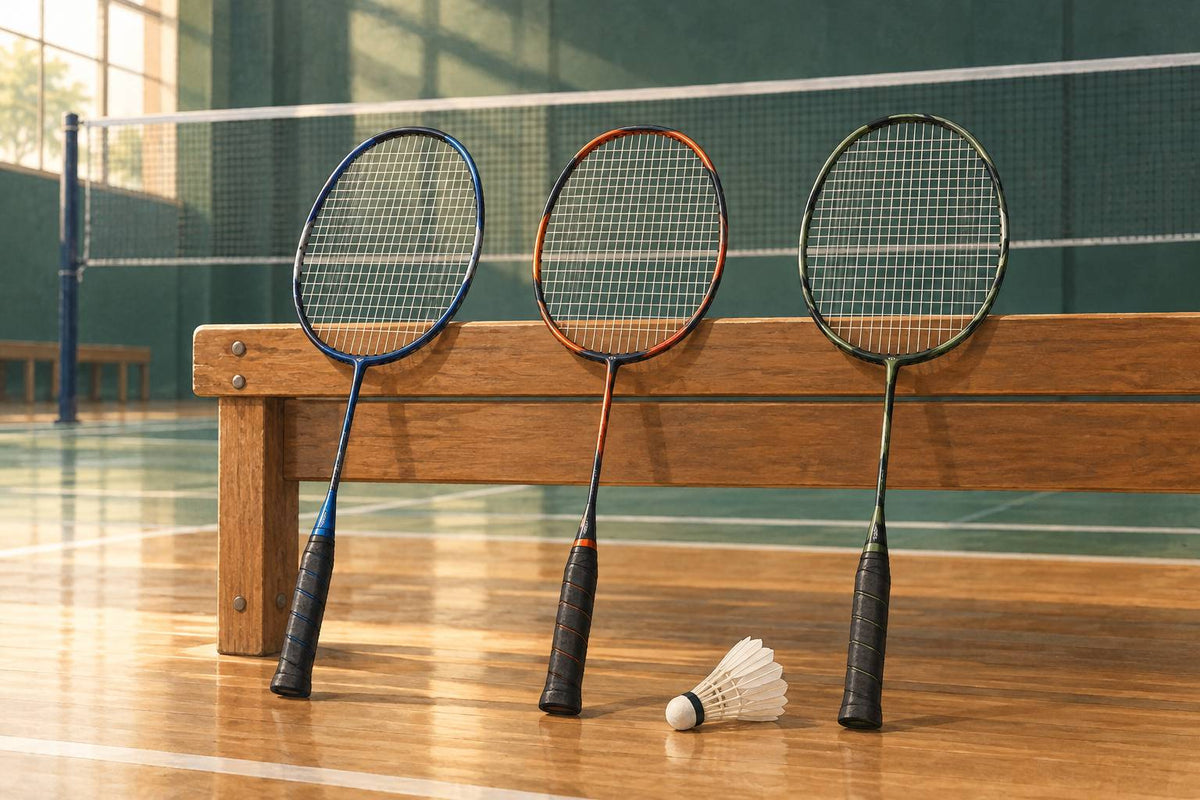
Illustrated badminton court with three racket silhouettes representing power, control, and speed choices

Last updated: June 2026 · Written by the team at Badminton House

Quick Answer: Best Yonex Badminton Racket

For most players, start with Arcsaber if you want one Yonex racket to cover the most situations; choose Astrox for smash power or Nanoflare for fast doubles exchanges.

Arcsaber

Best default: the control/even-balance Yonex family, and the safest starting point if you want accurate placement, steady defence, and an all-round feel.

Astrox

Choose Astrox if your game is built around steep smashes, rear-court pressure, and a head-heavy power feel.

Nanoflare

Choose Nanoflare if you play quick doubles, like flat drive exchanges, and want a head-light racket that moves fast in defence and at the front court.

Canadian note: check live CAD availability in the badminton rackets collection; Badminton House offers free shipping within Canada on orders over $200.

Choosing the best Yonex badminton racket is harder than it looks because Yonex does not make one “best” frame for everyone. A rear-court singles attacker, a front-court doubles player, and an improving club player usually need very different things from the same brand: power, control, speed, or a safer all-round blend.

This guide is built for Canadian players who want a practical shortlist instead of a wall of model names. We’ll start with Yonex’s three main racket personalities — Astrox for power, Arcsaber for control, and Nanoflare for speed — then narrow the choices by playing style, level, strings, grip, and Canadian buying realities like CAD pricing and changing stock.

A quick note before you pick: availability on Yonex rackets can move quickly in Canada, especially on popular Astrox models. Use the recommendations here to decide the right type of racket first, then check live availability and stringing options before you buy.

Shopping from Canada? Check live racket availability in Badminton House’s badminton racket collection — pricing is in CAD, and orders over $200 ship free within Canada.


Start With the Yonex Series: Power, Control, or Speed

Three badminton rackets side by side showing head-heavy, even, and head-light balance points labelled Astrox, Arcsaber and Nanoflare.
The three Yonex racket personalities by balance point: Astrox (power/head-heavy), Arcsaber (control/even), Nanoflare (speed/head-light).

The fastest way to find the best Yonex badminton racket is to choose the right series first. Yonex rackets generally narrow into three playing priorities: power, control, and speed. That does not pick the exact model for you, but it prevents the classic mistake: buying a great racket that is built for someone else’s game.

For the full series-by-series breakdown, start with our dedicated guide: Yonex Astrox vs Arcsaber vs Nanoflare: Which Series Fits Your Game?. This article stays focused on the model-level shortlist: which Astrox, Arcsaber, or Nanoflare makes sense for your level and playing style.

Yonex series Primary feel Best fit Quick shot test
Astrox Power-focused, typically head-heavy Singles players, rear-court doubles attackers, and players who want more help on steep smashes Choose Astrox if two of your favourite shots are smashes or heavy rear-court attacks.
Arcsaber Control-focused, typically even-balanced All-round players, improving intermediates, and doubles players who value repeatable placement Choose Arcsaber if your best shots are placement clears, drops, blocks, and controlled rallies.
Nanoflare Speed-focused, typically head-light Fast doubles players, front-court interceptors, and players who win with quick drives and defence Choose Nanoflare if your game is built around flat drives, quick blocks, and net interceptions.

Simple starting point. If you are unsure, Arcsaber is usually the safest family to test first because the even-balance control profile suits a wider range of players. If you already know you want maximum rear-court attack, start with Astrox. If you play mostly fast doubles, start with Nanoflare.

One important Canadian buying note: series choice should come before live availability and price comparison. Yonex availability can move quickly, and Badminton House lists Yonex rackets in CAD with free shipping within Canada on orders over $200. Check the current badminton rackets collection when you are ready to buy, then use the sections below to narrow the exact model, weight, flex, and string setup.


Best Astrox Picks for Power Players

Choose Yonex Astrox if your game is built around power: steep smashes, heavy clears, rear-court pressure, and singles patterns where you have time to load the racket. In the Yonex lineup, Astrox is the power-focused family, commonly associated with a head-heavy feel that helps the racket carry more momentum through the shot.

That extra attacking weight is a real advantage if you contact the shuttle early and cleanly. It can also punish late timing, especially in fast doubles defence, so the best Astrox racket is not simply the most powerful one — it is the one you can swing on time for a full match.

Power-player shortcut. If you want a deeper series breakdown before choosing, compare Astrox with Arcsaber and Nanoflare in our Yonex series guide, or browse the live Yonex Astrox Series collection.

Best advanced power pick: Yonex Astrox 100 ZZ

The Yonex Astrox 100 ZZ is the serious attacking option in this group. It is best suited to advanced or elite singles players who already have efficient technique, strong timing, and the physical strength to benefit from a stiff, head-heavy power frame.

Badminton House product pages show current pricing and availability for Astrox models when they are listed. The product page lists 4U average 83 g and 3U average 88 g versions, stiff flex, head-heavy balance, G5/G6 grip sizing, and recommended string tensions of 20–28 lb in 4U and 21–29 lb in 3U. It also lists Yonex technologies including Rotational Generator System, Namd™ Graphite, Energy Boost Cap PLUS, and a slim shaft.

For most club players, the key question is not “Can this racket smash hard?” — it can. The better question is whether you can still defend, recover, and hit your third and fourth attacking shots with the same timing. If your contact is late or your shoulder tires quickly with head-heavy rackets, this may be too demanding as a first premium Yonex racket.

Best rear-court doubles power pick: Yonex Astrox 88D Pro

For doubles players who do most of their damage from the back court, the Astrox 88D Pro is the more doubles-specific attacking reference. It is positioned for rear-court doubles attackers who want steep power while keeping enough manoeuvrability for defensive recovery and drive exchanges.

Think of the 88D Pro as the “back player” choice: full smashes, punch clears, steep drops, and follow-up pressure after your partner forces a lift. If you rotate to the front often or play a flatter, interception-heavy style, you may be better served by the speed-focused Nanoflare section or the control-oriented Arcsaber section of this guide.

Current Badminton House Astrox anchors

Yonex racket stock changes quickly in Canada, so treat these as CAD price anchors and check the live product pages before assuming availability. At the time this section was prepared, both listed Badminton House Yonex racket anchors were marked unavailable.

Model Best fit Listed specs CAD anchor
Yonex Astrox 100 ZZ Advanced or elite attacking singles players who want a stiff, head-heavy power racket. 4U avg. 83 g / 3U avg. 88 g; stiff flex; head-heavy balance; G5/G6; 20–28 lb in 4U and 21–29 lb in 3U. check product page for current price and availability.
Yonex Astrox 100VA Game Intermediate to advanced all-court players who want an Astrox nameplate but not a purely head-heavy feel. 4U 83 g / 3U 88 g; stiff flex; even balance; G5/G6; 20–28 lb in 4U and 21–29 lb in 3U. check product page for current price and availability.

The 100VA Game is worth noting because it is listed as even balance, not head-heavy. That makes it a useful reminder: Astrox is the power lane in Yonex’s family structure, but individual models can feel different. If you are shopping for maximum rear-court punch, confirm the balance and stiffness on the exact racket page before you buy.

Both listed CAD anchor prices are above Badminton House’s free-shipping threshold for Canadian orders over $200, which matters when comparing total landed cost against ordering from outside Canada. If the Astrox model you want is not available, the safest move is to check the live Astrox collection and choose based on fit first: timing, balance, shaft stiffness, and whether you mainly attack from singles or the doubles rear court.


Best Arcsaber Picks for Control and All-Round Play

If Astrox is the power path and Nanoflare is the speed path, Arcsaber is the safe, control-first Yonex family. It is the even-balance line built for repeatable placement: clears that land deep, drops that stay tidy, blocks that reset the rally, and front-court touches that do not feel rushed.

That makes Arcsaber especially useful for doubles defence, front-court play, and players who are still figuring out whether they are naturally a rear-court attacker, a speed defender, or an all-round rally builder. If you want the racket to feel predictable from shot to shot, start here.

Control-first shortcut. Choose Arcsaber if your favourite points come from placement, defence, pushes, drops, and controlled drives rather than only winning rallies with raw smash power. For the broader series comparison, see Yonex Astrox vs Arcsaber vs Nanoflare.

Arcsaber pick Best fit Why it makes sense
Arcsaber 11 Pro Improving intermediates and control/all-round players A trusted Arcsaber choice when you want a more precise, all-round control racket rather than a pure smash or pure speed frame.
Arcsaber 11 Play Beginners to intermediates who want the Arcsaber feel at a more accessible level The affordable version of the Arcsaber 11 Pro, with medium flex, even balance, and Control-Assist Bumper.

Arcsaber 11 Pro: the control/all-round benchmark

The Arcsaber 11 Pro is the one to look at if you are past the beginner stage and want your next Yonex racket to help you build rallies instead of forcing a single attacking style. It suits players who value a stable, repeatable response: defend the smash, guide the block, push into space, then take the next lift early.

For improving intermediates, that predictability matters. A very head-heavy racket can reward a strong smash but feel slower in flat exchanges. A very head-light racket can feel quick but may not give the same calm feedback on clears and controlled drops. Arcsaber sits in the middle: easier to adapt to if you play both singles and doubles, or if your club nights include different partners and tempos.

Arcsaber 11 Play: the more accessible control option

The Arcsaber 11 Play is the better starting point if you like the Arcsaber concept but do not need a top-tier pro model. Its medium flex and even balance make sense for players who are still developing timing, because the racket is not asking you to commit to an extreme head-heavy or head-light feel.

It is also a smart option for players who are not sure of their style yet. If you are still learning whether you prefer rear-court power, quick doubles interceptions, or patient point construction, an even-balance control racket gives you room to improve without locking you into one narrow identity.


Who should choose Arcsaber over Astrox or Nanoflare?

  • Choose Arcsaber if your best rallies come from placement clears, drops, blocks, pushes, and controlled drives.
  • Choose Astrox if your game is built around power and explosive smashes.
  • Choose Nanoflare if you want speed for fast doubles exchanges, quick blocks, and front-court interceptions.
  • Choose Arcsaber if you are undecided because the even-balance control profile is the most neutral starting point of the three Yonex families.

If control is your main priority, you may also find our best badminton racket for control in Canada guide useful. For live Canadian availability, check the badminton rackets collection; Badminton House lists prices in CAD and offers free shipping within Canada on orders over $200.


Best Nanoflare Picks for Speed and Fast Doubles

Nanoflare is Yonex’s head-light speed family. If Astrox is built around a heavier attacking feel and Arcsaber is built around control, Nanoflare is the line for players who want the racket to get through the air quickly: flat drives, quick blocks, fast counter-punches, and front-court interceptions.

The defining Nanoflare use case is the doubles drive exchange. When both pairs are locked in a flat, fast rally and you have only a split second to react, a head-light racket can help you get the face in front of the shuttle earlier. That does not automatically make it the most powerful choice, but it often makes it the easier choice for defensive speed and quick transitions.

Quick pick: which Nanoflare should you shortlist?

1000 Z

Best speed pick: the standout Nanoflare choice for fast doubles players who want maximum racket speed in flat exchanges.

800 Pro

The speed option to consider if you still want a more controlled response for placement, blocks, and drive direction.

Nextage

A speed/control stepping stone for defensive players who want Nanoflare quickness without jumping straight into the most demanding models.

1. Yonex Nanoflare 1000 Z: the standout speed racket

If your best rallies happen at shoulder height or below — drives, pushes, blocks, and counter-drives — the Nanoflare 1000 Z is the first model to shortlist. It is positioned as the standout speed racket in the Nanoflare range, making it a strong fit for fast doubles players who value preparation speed more than a heavy smash feel.

Choose it if you are the player who wants to take the shuttle early, hold the front half of the court, or punish loose flat replies before your opponent can reset. If your game is mostly rear-court smashing, compare it carefully against Astrox instead; the Nanoflare advantage is speed, not a head-heavy attacking feel.

2. Yonex Nanoflare 800 Pro: speed with more control

The Nanoflare 800 Pro is the better Nanoflare shortlist if you like the speed idea but do not want every rally to feel like a pure reaction contest. It is positioned as a speed racket with more control, which makes sense for doubles players who defend, redirect, and place drives rather than only trying to hit through the opponent.

This is the Nanoflare profile for players who care about the quality of the block after a smash, not just the speed of the swing. In practical terms, think of it as a strong doubles option for quick hands, controlled counters, and cleaner flat-rally placement.

3. Yonex Nanoflare Nextage: defensive speed/control stepping stone

The Nanoflare Nextage belongs on the shortlist for defensive players moving toward a faster Yonex setup. It is positioned as a speed/control stepping stone, especially for players who want easier defensive handling and quick racket recovery.

If you are improving quickly but still building timing, the Nextage route can be more sensible than buying the most aggressive speed racket immediately. It gives you the Nanoflare direction — head-light handling, quick response, and defensive usefulness — while keeping the focus on controllable rallies.

Model Best fit Why choose it
Nanoflare 1000 Z Fast doubles and flat exchanges The standout speed pick when quick swing response is the main priority.
Nanoflare 800 Pro Speed players who want control A better fit if you rely on blocks, drive placement, and controlled counters.
Nanoflare Nextage Defensive intermediate players A speed/control stepping stone for players building confidence in faster defensive rallies.

One important caution: do not choose Nanoflare just because it is easier to swing in the shop. On court, the question is whether your winning shots are fast drives, interceptions, and counter-defence. If your two favourite shots are smash and follow-up smash, Astrox may still make more sense. For a deeper series-by-series breakdown, read Yonex Astrox vs Arcsaber vs Nanoflare, or compare the feel difference in our head-heavy vs head-light racket balance guide.

Buying in Canada? Check live racket availability before deciding on a specific Nanoflare model. Badminton House prices in CAD and offers free shipping on Canadian orders over $200.


Best Yonex Racket Fit by Player Level

Badminton court diagram with arrows mapping rear-court smashes to Astrox, placement clears and drops to Arcsaber, and front-court drives and interceptions to Nanoflare.
A quick shot-pattern test: which winning shots point you toward Astrox, Arcsaber, or Nanoflare.

Once you know the Yonex series you like, choose by player level rather than chasing the most expensive model. The best Yonex badminton racket for a developing player is usually the one that gives enough help on timing, defence, and clean contact — not necessarily the stiffest or most demanding frame.

Quick shot test: if two of your favourite shots are smashes, start with Astrox. If they are flat drives or net interceptions, look at Nanoflare. If they are placement clears and drops, start with Arcsaber. For a deeper series breakdown, read our Yonex Astrox vs Arcsaber vs Nanoflare comparison.

Player level Yonex fit to consider Why it makes sense
Beginner to early intermediate Arcsaber 11 Play or a Nextage option Start here if you are still building consistent clears, drops, defence, and timing. Arcsaber is the safer control-first family if you do not yet know whether you are a power, speed, or placement player.
Improving intermediate Arcsaber 11 Pro or Astrox Nextage Choose Arcsaber 11 Pro if your game is built around control, placement, and repeatable shot quality. Choose Astrox Nextage if you are starting to win more points from rear-court attack and want a more power-oriented direction.
Fast doubles player Nanoflare family or Nanoflare Nextage Look this way if your best rallies happen in flat exchanges, quick blocks, drive battles, and front-court interceptions. Nanoflare is the speed-first Yonex family for fast handling.
Advanced attacking player Astrox 100 ZZ This is the serious power pick for players with clean timing who want a demanding Astrox for steep attacking pressure. It is not the easiest place to start, but it fits advanced players who already create power reliably.

A practical way to choose is to name the two shots that win you the most points. If the answer is smash plus follow-up smash, you are probably an Astrox player. If it is drive plus interception, Nanoflare is the cleaner fit. If it is clear to the corner plus drop into space, Arcsaber will usually feel more natural.

For Canadian buyers, check live availability before getting attached to a specific model. Yonex stock can move quickly, so use live Badminton House product pages for CAD pricing and availability. Start with the badminton rackets collection, then use the level-based shortlist above to avoid overbuying.

Shop Badminton Rackets — Check live availability

10% off first order · Free shipping on $200+ · 14-day returns


Canadian Buying Notes: CAD Pricing, Stock, Strings, and Grip

For Canadian buyers, the practical details matter: Badminton House prices products in CAD and ships free within Canada on orders over $200. That makes it easier to compare a Yonex racket against your full setup cost — racket, strings, grip, and any accessories — without doing currency conversion or guessing at cross-border shipping.

Check live racket availability before choosing a model. Yonex racket selection changes, so use the live badminton rackets collection for current availability.

Yonex racket listed CAD price when listed Current note
Yonex Astrox 100 ZZ Check product page Check live availability
Yonex Astrox 100VA Game Check product page Check live availability

If the Yonex model you want is out of stock, do not rush into the closest-looking racket just because the name is familiar. Keep the series fit from this guide in mind first — Astrox for power, Arcsaber for control, Nanoflare for speed — then check weight, balance, flex, and grip size before buying.


Do not forget strings

Some rackets are sold unstrung, and a fresh string job can change how a racket feels as much as the frame itself. Before you buy, decide whether you want the convenience of a pre-strung racket or the control of choosing your own string and tension. For the full breakdown, read the Strung vs Unstrung Badminton Racket Guide.

Check G5 and G6 grip sizing

The Yonex rackets listed at Badminton House use G5/G6 grip sizing, so grip size should be part of your buying decision — especially if you build up the handle with overgrip or prefer a smaller handle for quick finger control. If you are unsure which one fits your hand, use the Badminton Grip Size Guide before ordering.


Pro Setup References and Next Reads

Pro racket setups are useful reference points, but they should not be copied blindly. A world-class player’s racket, string, and tension are chosen around elite timing, strength, technique, and training volume. For most Canadian club players, the better question is: what part of that setup matches your game?

How to use pro setups properly

  • Use the racket family as the clue. If a pro uses Astrox, that points toward power and a more attacking profile; if your game is faster drives and interceptions, Nanoflare may still fit you better.
  • Do not assume the same string tension is right for you. Pro-level tension can feel harsh, reduce your sweet spot, and punish late contact if your timing is not consistent.
  • Match the weight to your real matches. A racket that feels powerful in warm-up can feel slow after three games of doubles defence.

For player-specific context, start with our An Se Young racket and gear guide. An Se Young plays the Yonex Astrox 77 Pro with BG80 string, which makes her setup a useful reference for players who want controlled power rather than simply the stiffest, most demanding Astrox available.

If you are comparing this guide against the men’s singles power end of Yonex, read our Viktor Axelsen racket setup guide. It covers his Yonex setup and gives useful context for players looking at Astrox-style attacking rackets.

Still deciding whether Yonex is the right brand family for you? The next best read is Yonex vs Victor vs Li-Ning: Canadian Racket Brand Guide. It helps you compare the major racket brands by feel and buying priorities instead of choosing only by the logo on the frame.


Helpful next reads

Check Racket Availability in Canada

10% off first order · Free shipping on $200+ · 14-day returns


Which Yonex Badminton Racket Should You Choose?

The easiest way to find the best Yonex badminton racket for your game is to start with your shot pattern, not the model name. If your best rallies come from steep smashes, start with Astrox. If you win with placement and consistency, start with Arcsaber. If you live in fast doubles exchanges, start with Nanoflare.

Choose this path Best fit Why it makes sense Model direction
Two of your three favourite shots are smashes Astrox Astrox is the power-focused, head-heavy Yonex family for players who want help loading the smash, especially in singles and rear-court attack. Advanced attacking singles players can look at the Astrox 100 ZZ direction; rear-court doubles attackers can look at the Astrox 88D Pro direction.
You want the safest all-round choice Arcsaber Arcsaber is the even-balance control family, built for repeatable placement, doubles defence, and front-court play. It is the safe bet if you cannot decide your style yet. Control and all-round players can look at the Arcsaber 11 Pro direction; beginners and intermediates can consider the Arcsaber 11 Play direction.
Your rallies are mostly flat drives, blocks, and interceptions Nanoflare Nanoflare is the head-light speed family for fast swings, quick reflexes, and doubles drive exchanges. Fast doubles players can look at the Nanoflare 1000 Z direction; players who want speed with more control can look at the Nanoflare 800 Pro direction.
You are stepping up from beginner gear Arcsaber or Nextage A medium or more forgiving all-round direction is easier to adapt to than jumping straight into a very demanding head-heavy attacking racket. Arcsaber 11 Play is an affordable Arcsaber 11 Pro version with medium flex and even balance. Nanoflare Nextage focuses on speed/control, while Astrox Nextage emphasizes power.

Badminton House availability note. Badminton House product pages show current pricing and availability for models such as the Yonex Astrox 100 ZZ: 3U or 4U, stiff flex, head-heavy balance, and 20–28 lb tension for 4U or 21–29 lb for 3U. Check the badminton rackets collection for live Canadian availability and remember that orders over $200 ship free within Canada.

Still stuck between the three Yonex families? Read the deeper series breakdown: Yonex Astrox vs Arcsaber vs Nanoflare: Which Series Fits Your Game?

Get Canadian badminton gear advice + availability updates

Join the Badminton House list for buying checklists, availability updates, and practical gear advice for Canadian players.

By subscribing, you agree to receive Badminton House emails and can unsubscribe anytime.

Still deciding between Astrox power, Arcsaber control, and Nanoflare speed? We play badminton ourselves, so if you want a second opinion before choosing your next Yonex racket, contact us with your level, main event, current racket, and what you want to change. We’ll help you narrow it down without pushing you into a frame that does not fit your game.

Find your next badminton racket from a Canadian specialty shop

Shop Badminton Rackets

10% off first order · Free shipping on $200+ · 14-day returns · Canadian badminton specialty shop

Reading next

Three badminton rackets on a warm indoor court representing power, speed, and control options for Victor-style racket lines.
Illustrated Canadian badminton players on a warm indoor court with subtle maple leaf detail

Leave a comment

This site is protected by hCaptcha and the hCaptcha Privacy Policy and Terms of Service apply.