
Last checked: August 2026 · Written by the Badminton House player-led team.
Quick answer: sit out while sick, then make the first session back easy
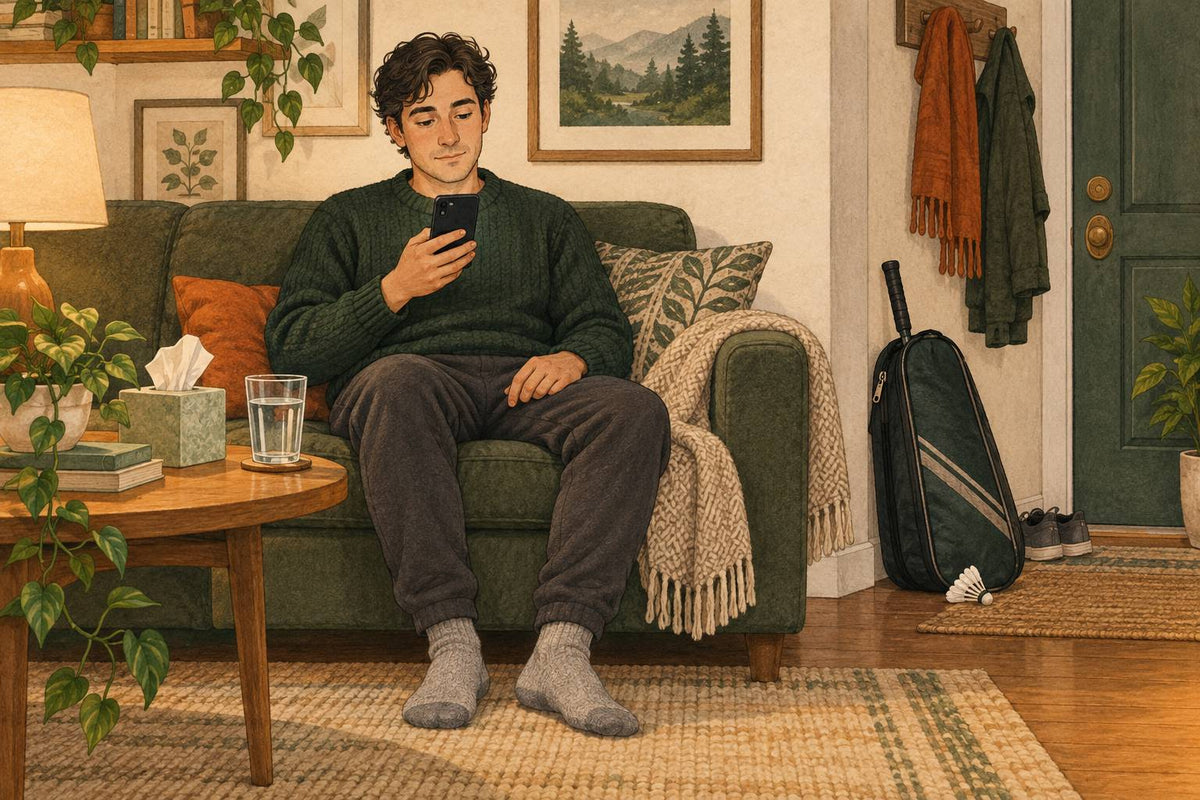
Skip an indoor session while you have respiratory-virus symptoms. Return to normal activities only when symptoms are improving overall and you have been fever-free without fever-reducing medicine for 24 hours. Use added precautions around other people for the next five days, and stop exercise if abnormal symptoms appear.
Playing badminton with a cold is not only a question of whether you can survive a few rallies. It is also a question of what you may bring into a shared indoor hall, whether your body is ready for quick changes of direction, and whether hard exercise could hide a meaningful warning sign. Missing one club night is frustrating. Spreading a respiratory illness through a doubles rotation is a worse trade.
This guide cannot tell you which illness you have. Cold-like symptoms can also occur with flu, COVID-19, and RSV, so do not use the word cold as a diagnosis or a reason to dismiss new symptoms. The CDC common-cold overview explains that several respiratory illnesses can look similar.
When should you skip badminton with cold-like symptoms?
Stay home and away from others while you are sick with respiratory symptoms. A badminton hall combines shared air, close doubles positioning, water breaks, shuttles touched by several people, and conversation between games. Sitting out protects the group and removes pressure to judge a hard physical effort while you feel unwell.
The public-health return threshold is practical: symptoms should be improving overall, and you should have had no fever for at least 24 hours without fever-reducing medicine. Once you resume normal activities, take added precautions for the next five days because you may still spread the virus. Options include cleaner air, hygiene, a well-fitted mask when practical, distancing, or testing around others. Read the current CDC respiratory-virus precautions.
A useful message to your group: “I have respiratory symptoms, so I am sitting this one out. I will come back once I am improving and fever-free without medicine.” It is clear and considerate without asking you to diagnose yourself.
Do not rely on the familiar above-the-neck rule, which says a runny nose or sore throat permits exercise while chest or body symptoms require rest. The IOC review of respiratory illness in athletes reports that this neck-check shortcut lacks scientific evidence. Symptom severity, your medical history, and your response to activity matter more than one slogan.
What should you do before thinking about court time?
For an uncomplicated common cold, the useful work is unglamorous: rest, drink fluids, and let symptoms improve. Over-the-counter products may provide temporary symptom relief, but they do not cure the illness. Follow the label and ask a pharmacist or clinician whether a product fits your situation, particularly if you take other medicines or have a health condition.
Avoid turning recovery into a fitness test. A hard multi-shuttle session, repeated jumping, or competitive singles asks more than an easy walk, and badminton gives you few quiet moments once rallies begin. Save your return for a day when everyday activity feels manageable and your symptoms are moving in the right direction.
If you have a higher risk of severe flu or COVID-19 illness, contact a healthcare provider promptly even when symptoms feel mild because early treatment may matter. The CDC cold-management page also lists symptom care and reasons to seek medical help.
| Question | Return signal | Reason to wait |
|---|---|---|
| Are symptoms improving overall? | The daily trend is clearly better. | Symptoms are unchanged, worsening, or returning. |
| Have you had a fever? | No fever for 24 hours without fever-reducing medicine. | Fever remains or medicine is masking it. |
| Can you protect others? | You can use sensible added precautions during the five-day period. | The session setup makes those precautions unrealistic. |
How should you handle your first badminton session back?
Your first return should answer one question: does light badminton activity feel normal today? It is not the night to prove that you lost no fitness. Start with an easy warm-up, simple hitting, and enough freedom to stop without letting down a partner. The goal is to notice your response, not win the last game.
The IOC consensus on acute respiratory illness in athletes uses a cautious exercise-challenge approach rather than a fixed return day. For a mild illness example, it describes beginning at roughly 60–70% of normal exercise intensity, checking the response after 10–20 minutes, and stopping if abnormal symptoms appear. That is an athlete-health framework, not universal self-clearance or a badminton prescription.
| At the return session | Choose | Avoid |
|---|---|---|
| Warm-up | Easy movement, gentle clears and drives, and a gradual check of breathing and energy. | Jump smashes, repeated court sprints, or a punishment-style footwork block. |
| Play choice | An easy hit or controlled doubles with an early exit available. | A long singles ladder, tournament simulation, or a session you feel obliged to finish. |
| Afterward | Notice symptoms, fatigue, breathing, and the next-day response. | Assuming one tolerable rally proves readiness for normal training. |
Use the early, easier stages of our badminton warm-up guide before hitting. Once fully well, a session-RPE log can show whether normal training feels harder than expected without turning one score into a diagnosis.
When does medical care come before badminton?
A club-night decision is not a diagnosis. Seek emergency care for trouble breathing or chest pain. Contact a healthcare professional for dehydration, fever lasting more than four days, symptoms lasting more than ten days without improvement, symptoms that improve and then return or worsen, or a chronic medical condition that gets worse.
Stop a return session and arrange medical advice if you develop excessive fatigue, unusual breathlessness, chest discomfort, dizziness, palpitations, unusual muscle or joint pain, much higher effort than normal for the same activity, or simply feel unwell. Do not test those symptoms with one more game.
The short version is simple: protect your partners while symptomatic, let recovery take priority, and make the first session back deliberately easy. Badminton will still be there when you are ready to enjoy it.

Leave a comment
This site is protected by hCaptcha and the hCaptcha Privacy Policy and Terms of Service apply.