injury prevention

7 Badminton Warm-Up Exercises for Cold Gyms

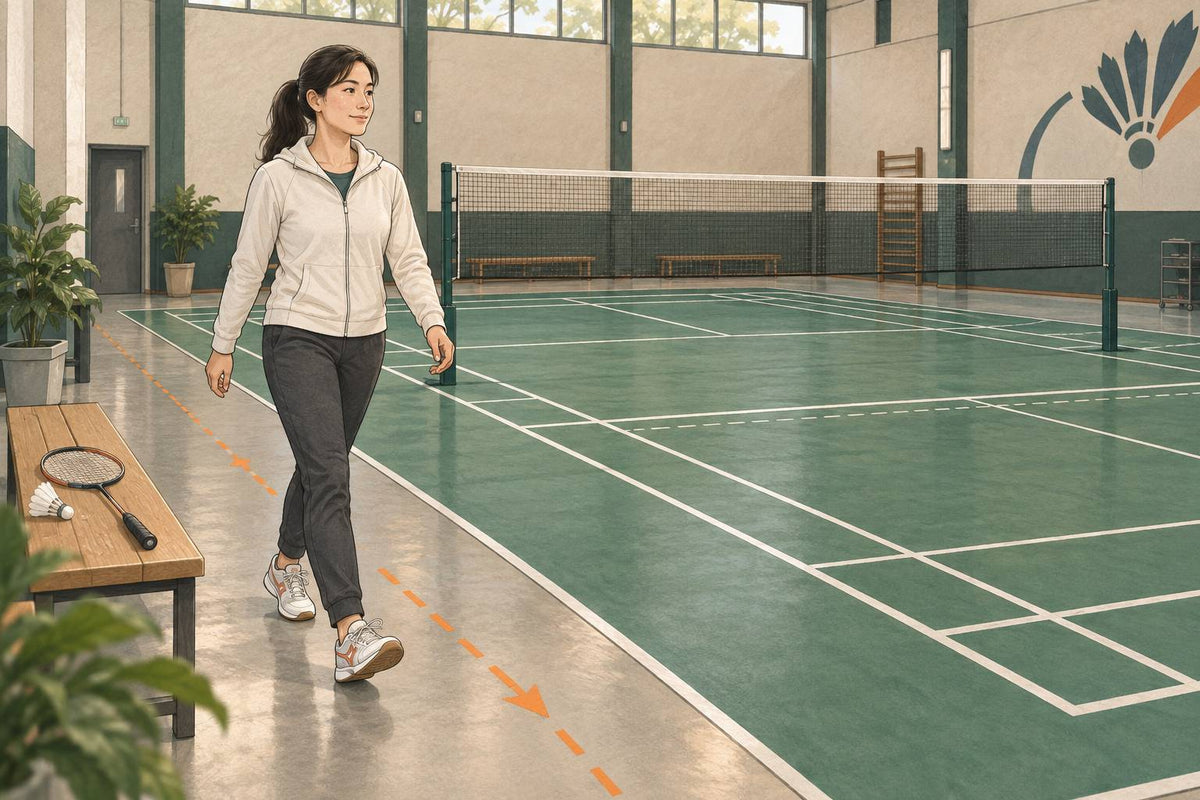
Two badminton players warming up court-side in a cold Canadian indoor gym

Last updated: June 2026 · Written by the team at Badminton House

Quick Answer: Badminton Warm Up Exercises

For most players, use a 10-minute dynamic warm-up that raises your heart rate first, then mobilizes the shoulders, wrists, hips, ankles, and finishes with badminton-specific footwork.

Default

10 minutes dynamic: start easy, build gradually, then finish with side shuffles, forward lunges, and backpedals so your body is ready for badminton’s sudden stops, jumps, and changes of direction.

Cold gym

If the Canadian school gym or community court feels cold, extend the warm-up and keep light layers on until you are sweating; cold muscles, tendons, and ligaments lose elasticity and can react more slowly.

Avoid

Do not make long static holds your main pre-game routine; dynamic stretching better matches running and jumping sports, while static stretches fit better after play in the cooldown.

You walk into a school gym or community centre in January, pull your racket out of the bag, and your first few lunges feel stiff. That is exactly when badminton warm up exercises matter most: badminton is not a slow build. Within the first rally you may be reaching overhead, braking hard, pushing sideways, or dropping into a deep front-court lunge.

Cold muscles and connective tissues can feel less elastic, and your timing can feel a step behind until your body temperature rises. Instead of standing at the back of the court doing long static stretches, use a short dynamic routine that raises your pulse, opens the shoulders, wakes up the wrists, and finishes with badminton-specific footwork.

This guide gives you seven practical movements you can do court-side in about 10 minutes, with a cold-Canadian-gym mindset: start easy, build gradually, and do not go full-speed until your body actually feels ready.

Cold gym tip. Keep your warm-up gradual and play in supportive indoor footwear; if your shoes are worn down, browse our cushioned court shoes before your next club night.


Why Dynamic Warm-Ups Beat Static Stretching Before Badminton

Good badminton warm up exercises are not just about “getting loose.” An efficient warm-up should gradually raise your heart rate, body temperature, and circulation while waking up your nervous system and helping your joints move more freely. That matters in badminton because the first rally can demand a deep lunge, split step, jump, overhead swing, or sudden recovery step before your body is fully ready.

The injury-prevention case is strong enough to take seriously. A meta-analysis of 15 studies found that warm-up intervention programs produced an injury rate ratio of 0.64 with a 95% confidence interval of 0.54–0.75 — a 36% reduction when exposure hours were accounted for — and significantly reduced upper- and lower-limb sports injuries in children and adolescents. That does not mean one quick routine guarantees injury prevention for every adult club player, but it does support the bigger point: structured warm-ups are not optional fluff.

Knees deserve extra respect. Badminton’s repeated lunges, stops, and direction changes put real demand on the lower body. If knee soreness is already part of your game, read our badminton knee pain prevention guide before adding more intensity.

Dynamic warm-ups fit badminton better than long pre-game holds because they combine mobility with movement. Recent reviews have found that dynamic warm-ups consistently improve strength, speed, and agility, while sport-specific warm-up protocols can enhance performance and reduce injury risk. That lines up with what players feel on court: after progressive movement, your first few lunges and swings usually feel sharper than they do after standing still and stretching.

Warm-up choice Best use before badminton Why it matters
Dynamic movement Use before play Builds heat, circulation, joint range, and sport-specific readiness for lunges, jumps, swings, and fast changes of direction.
Long static holds Save mostly for cooldown Pre-event static stretching can reduce performance in explosive tasks, especially when the muscles you are about to use are held for longer durations.
Short static stretches Use sparingly if needed The nuance: strong evidence suggests static stretches under 60 seconds may have only trivial negative effects on later strength and power.

The static-stretching point needs that nuance. Research summaries note that stretching immediately before exercise does not appear to prevent injury and can have a detrimental effect on muscle performance, while the same evidence base also notes that static stretches below 60 seconds may produce only trivial negative effects on strength and power. In plain badminton terms: if a calf or hip flexor feels unusually tight, a short gentle hold is not the end of the world — but your main warm-up should still be moving, not parking on the floor for long stretches.

"Before badminton, the goal is not maximum flexibility — it is to feel warm, reactive, balanced, and ready to change direction."

This is even more important in cold Canadian gyms. Cold conditions can make muscle tissue less elastic, reduce blood flow, stiffen joints, and slow coordination; one ACSM-cited cold-temperature note reports that an 8°C drop in muscle temperature can reduce muscle power output by 31%. So if you have just walked into an under-heated school gym or community centre in January, treat the first minutes as preparation — not as wasted court time.

The practical takeaway: start easy, keep moving, and build intensity in layers. Your warm-up should move from general heat to joint mobility to badminton-specific patterns, so your shoulders, wrists, hips, knees, ankles, and footwork are ready before the rallies get serious.


The 10-Minute Court-Side Sequence

The easiest way to organize badminton warm up exercises is to think in three phases: raise your temperature first, mobilise the joints you need for badminton, then potentiate with movements that look like the first rally. In coaching language, that means light aerobic work, then dynamic movement-based stretching, then badminton-specific movement prep.

A common structure is 5–7 minutes of light aerobic activity, followed by 5–8 minutes of dynamic stretches and specific movements. If you only have 10 minutes before court time, use the shorter end of each range and keep it continuous. In a cold Canadian winter gym, do not rush it: cold-condition protocols often require 50–100% longer preparation time than normal, so a 10-minute warm-up may become 15–20 minutes when the gym is under-heated and your body still feels stiff.

Phase Time What it should feel like Badminton examples
Raise 0:00–5:00 Easy rhythm. You should feel warmer, not tired. Brisk walking around the court, light jogging, side steps, gentle arm swings, bodyweight squats.
Mobilise 5:00–8:00 Joints moving through range without forcing end positions. Arm circles, wrist work, leg swings, ankle bounces, hip openers, lunges with rotation.
Potentiate 8:00–10:00 Sharper and more court-specific, but still controlled. Split-step rhythm, side shuffle, forward lunge, backpedal, short shadow footwork to the net and rear court.

The key is progression. Start with movements that raise heart rate and circulation, then move the shoulders, hips, ankles, wrists, and spine, then finish with short badminton patterns. That order matters because badminton asks for sudden lunges, jumps, changes of direction, and overhead swings; going straight from the parking lot to full-speed clears and net kills is the risky version of saving time.

Cold-gym rule of thumb. If you are still wearing layers comfortably, your hands feel stiff, or your first lunges feel choppy, extend the raise phase before moving into faster footwork. In winter, keep building intensity gradually until you are warm enough to move explosively without guarding.

For a normal club night, this 10-minute version is enough for many players when done properly. For an under-heated school gym or community centre in January, treat 10 minutes as the minimum, not the target. Add a few extra minutes of easy movement before the dynamic work, then only increase speed once your steps feel springy and your shoulders feel ready to swing.


Exercises 1–2: Pulse Raiser and Arm Circles

Start your badminton warm up exercises with movement that feels almost too easy. The goal is not to stretch deeply or prove your fitness in the first minute — it is to gradually raise body temperature, increase circulation, and make your shoulders, ankles, knees, and hips feel ready for the first rally.

Cold gym rule: if you walk into a chilly Canadian school gym or community centre, spend a little longer on this opening pulse raiser before you swing hard. Cold muscles and joints do not love sudden clears, smashes, or lunges.

Exercise 1: Light rhythmic pulse raiser

Pick light, continuous movements that build heat without spiking your intensity. Good options include brisk walking around the court, easy hops, skips, relaxed arm swings, or controlled bodyweight squats. You can use one movement or rotate through a few of them.

  • Brisk walk or easy jog: move around the court perimeter and gradually let your arms swing naturally.
  • Small hops or skips: stay light on the balls of your feet instead of pounding the floor.
  • Arm swings: swing forward and back loosely to start opening the shoulders without forcing range.
  • Bodyweight squats: keep them shallow at first, then go slightly deeper as your knees and hips feel warmer.

For badminton, this first exercise should feel rhythmic and repeatable. You are preparing for acceleration, stopping, jumping, and lunging — not doing a conditioning test. If your breathing rises slightly and your joints feel less stiff, you are on the right track.

Movement How it should feel Common mistake
Brisk walking Smooth, easy, gradually warmer Standing around until the first game starts
Hops or skips Light feet, quiet landings Jumping too high before your ankles and calves are warm
Arm swings Loose shoulders, no strain Forcing the shoulder into a painful range
Bodyweight squats Controlled knees and hips Dropping deep immediately while still cold

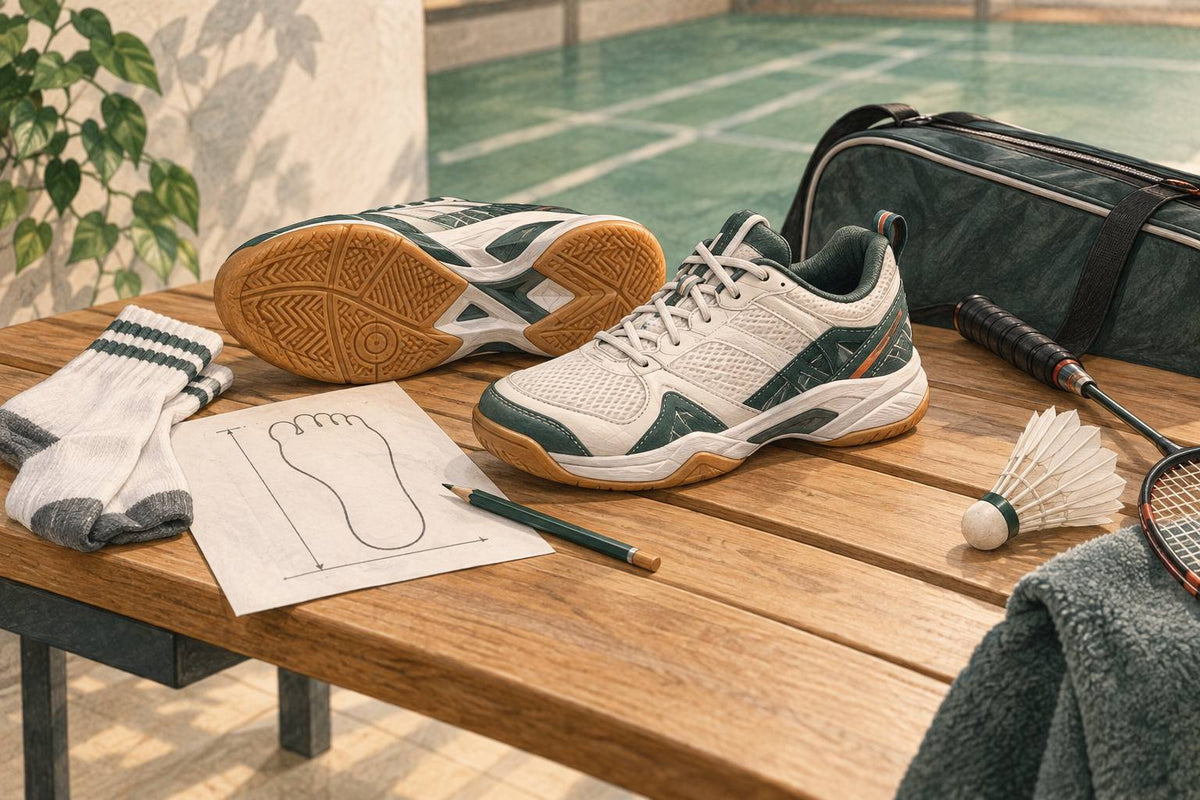
If your shoes slide, feel harsh on landing, or lack lateral support, your warm-up will not fix that. Badminton involves quick starts, stops, and sideways movement, so use proper indoor court footwear rather than outdoor running shoes. For more detail, see our guide to badminton shoes vs running shoes, or browse current cushioned court shoes.

Exercise 2: Arm circles

Once you feel warmer, move into arm circles. This is a simple shoulder mobility drill, but it matters in badminton because nearly every overhead clear, drop, lift, and smash asks your shoulder to move quickly through range.

  • Set your stance: stand with your feet hip-distance apart.
  • Extend your arms: reach both arms out to the sides at shoulder height.
  • Go clockwise: rotate your arms clockwise for 30–60 seconds.
  • Reverse direction: rotate counter-clockwise for 30–60 seconds.
  • Build the range: start with small circles and gradually increase the circle size as your shoulders loosen.

Arm circles bring blood flow to the deltoids, triceps, and biceps, help activate the shoulder joints, and improve swing mobility. Keep the movement smooth. If you feel pinching, shrugging, or sharp discomfort, reduce the circle size and slow down.

"The first two exercises should make you feel warmer and looser — not tired. Save the hard hitting for after your shoulders are ready."

A useful cue: imagine you are preparing the shoulder for a clean overhead stroke, not windmilling as fast as possible. Start small, open the range gradually, then carry that same relaxed shoulder feeling into your first clears and drives.


Exercises 3–5: Wrist Work, Leg Swings, and Ankle Bounces

Once your heart rate is up and your shoulders are moving, shift into the joints that quietly decide a lot of badminton points: wrists, hips, and ankles. These three badminton warm up exercises prepare you for forearm rotation on clears and drives, hip movement for lunges and recovery steps, and ankle stiffness-to-spring when you split step, push off, or brake hard.

This part matters even more in cold Canadian gyms. If you arrive from outside, change shoes, then stand around waiting for a court, your lower body may still feel stiff when the first rally starts. Keep these movements smooth and progressive rather than forcing range right away.

Exercise 3: Wrist Work — 30 Seconds Each Direction

Badminton asks your wrist and forearm to twist, rotate, and stabilize quickly: think last-second net kills, backhand blocks, forehand drives, and defensive lifts. Wrist work helps engage the forearm flexors and extensors before you start hitting at match speed.

  • Wrist circles: hold your arms in front of you and make controlled circles with both wrists for about 30 seconds, then reverse direction.
  • Open-close hands: spread your fingers wide, then make a light fist. Keep the movement quick but relaxed.
  • Racket-free pronation and supination: bend your elbows near 90 degrees and rotate your forearms as if turning a doorknob. Keep your shoulders relaxed.

Do not squeeze hard or crank the wrist into a static stretch here. The goal is heat, control, and readiness — not testing how far you can pull the joint.

Exercise 4: Leg Swings — Front/Back and Side-to-Side

Leg swings loosen the hip joints and help your lower body move through the ranges badminton actually uses. Start small, then gradually increase the height as the movement feels easier.

  • Forward/backward swings: stand beside a wall, net post, or stable bench for balance. Swing one leg forward and back for about 30 seconds, keeping your torso tall. Switch legs.
  • Side-to-side swings: face your support and swing one leg across your body, then out to the side. Keep the movement controlled instead of whipping the leg.
  • Badminton cue: imagine you are preparing for a deep lunge, then recovering back to base. Your hip should feel freer with each repetition.

If your hips feel tight, reduce the range and add a few more easy swings. A warm-up should make the first rally smoother, not leave you feeling stretched or fatigued before you start.

Exercise 5: Ankle Bounces or Calf Raises — 30 to 45 Seconds

Badminton needs ankle range of motion for split steps, lateral pushes, jump landings, toe-off into the forecourt, and quick braking. Ankle bounces and calf raises are simple, court-side ways to wake up that spring without needing equipment.

  • Ankle bounces: stand tall with knees soft and make small, rhythmic bounces on the balls of your feet. Keep the heels light and the movement quiet.
  • Calf raises: rise onto the balls of your feet, pause briefly, then lower under control. Use a wall for balance if needed.
  • Progression: move from two-foot bounces to gentle alternating bounces only if both ankles feel warm and stable.

This is not the place for maximum-height jumping. Keep it elastic and low. You are preparing the ankle and calf complex for repeated quick contacts, not doing a conditioning set.


Why This Middle Block Is So Lower-Limb Focused

Badminton injuries cluster heavily around the lower body. In one survey, the knee was the most common badminton-related injury site at 18.7%, with the ankle second at 13.4%. Another study of 150 amateur players recorded 221 injuries, with the highest proportion affecting the lower limb at 40.3%.

The ankle deserves special attention because it can influence more than the ankle itself. Research on young badminton players found that a previous ankle injury increased the odds of later ankle, knee, and shoulder injuries. That does not mean a few ankle bounces prevent every problem, but it does support taking ankle preparation seriously before hard rallies.

Quick form check before moving on

  • Wrists feel warm, not strained.
  • Hips swing freely without twisting your lower back.
  • Ankles feel springy, not sharp or unstable.
  • Breathing is elevated, but you are still fresh enough for footwork.

If ankle, knee, or foot discomfort keeps showing up during warm-ups, treat it as useful feedback rather than something to ignore. You may need to reduce intensity, check your footwear, or look at your movement patterns before playing full speed. For more detail, see our guides to badminton knee pain prevention and why indoor badminton shoes matter.

If your shoes feel flat, unstable, or slippery during these drills, compare cushioned court options in our badminton footwear collection before your next session.


Exercises 6–7: Lunges With Rotation and Badminton Footwork

The last two badminton warm up exercises should feel the most like badminton. You have already raised your pulse and loosened the smaller joints; now you are bridging mobility into activation, then finishing with sport-specific movement so your first rally is not your body’s first hard change of direction.

Exercise 6: Dynamic deep lunge with rotation

A deep lunge with rotation mobilises the hips and spine while waking up the glutes, core, quads, and shoulders. That combination matters in badminton because lunges, split steps, overhead shots, and recovery steps all ask your lower body and trunk to work together.

  • Step forward into a controlled lunge. Keep the front foot planted and lower only as far as you can control without wobbling.
  • Rotate toward the front leg. Turn through the upper back and chest rather than forcing the lower back.
  • Return to standing and switch sides. Keep it rhythmic: this is still a warm-up, not a held stretch.
  • Progress gradually in a cold gym. Start with a shorter range of motion, then sink deeper once your hips and ankles feel warmer.

Coaching cue

Think “lunge, rotate, recover.” If the movement feels slow or stiff, reduce the depth before you add speed.

Exercise 7: Badminton footwork finisher

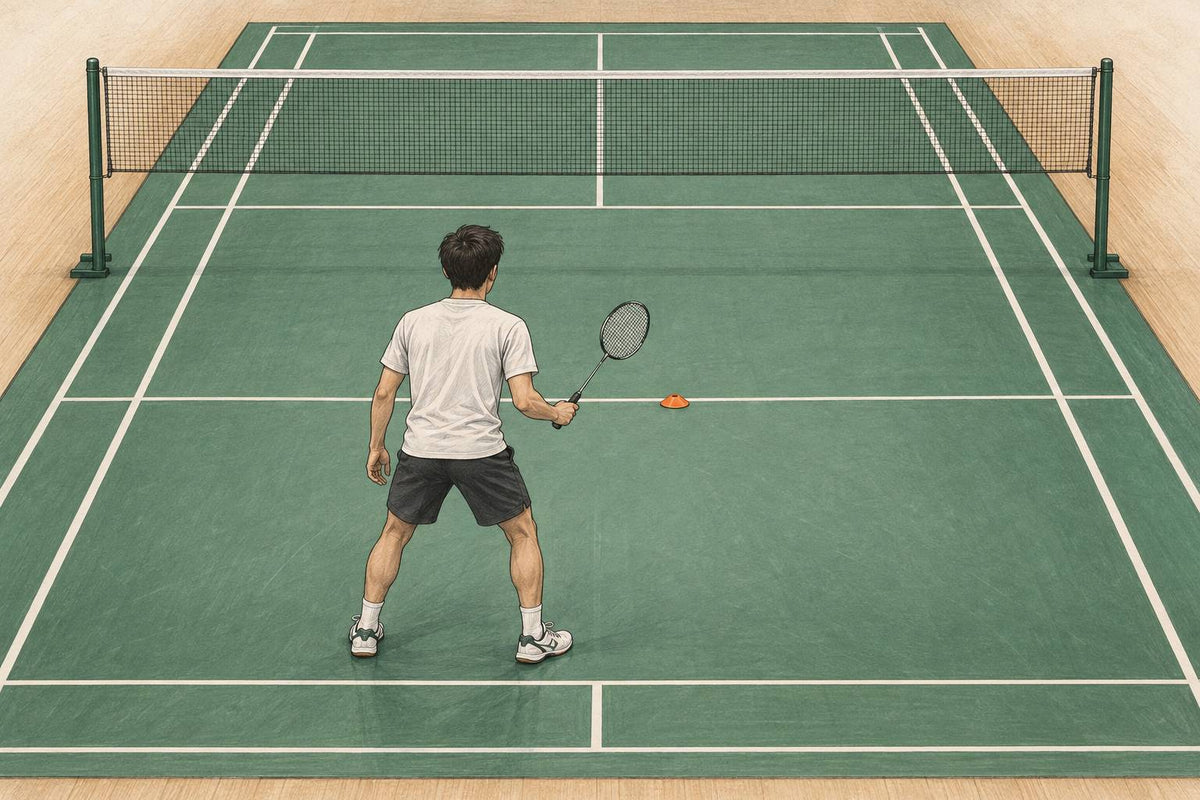
This is the potentiation stage of the warm-up: the point is to rehearse the exact movement qualities you need on court. Footwork drills such as side shuffle, forward lunge, and backpedal are used to develop agility and speed, and cones or simple markers can create a short course that mimics match movement.

  • Side shuffle: move laterally as if covering a flat drive or defending in doubles. Stay low and avoid crossing your feet.
  • Forward lunge: push toward an imaginary net shot, land under control, then recover back to base.
  • Backpedal: retreat under balance, then reset your stance before changing direction again.
  • Build intensity: begin at practice speed, then finish closer to rally speed once your movement feels sharp.

Footwork needs court grip. This finisher includes lateral push-offs, lunges, and quick braking, so reliable cushioned court shoes matter before you start moving at rally speed.

If you only have a narrow space beside the court, shrink the pattern instead of skipping it: two lateral steps, one forward lunge, one controlled backpedal, then reset. The goal is not to get tired; it is to make your first explosive badminton movement feel familiar before the game starts.


Cold Canadian Gym Gear Check

If your school gym, community centre, or club court feels under-heated in winter, treat the first rallies with extra respect. As covered earlier, cold muscle loses significant power output; the practical takeaway is simple: keep moving, keep your layers on until you are genuinely warm, and build intensity before you start smashing or lunging at full speed.

Cold changes how your body responds to badminton movement. It increases muscle-tissue viscosity, making fibres less elastic. Tendons and ligaments lose flexibility, and nerve conduction slows, which can delay muscle activation and coordination. That matters in badminton because the risky moments are sudden: a split step, a deep forehand lunge, a fast lateral push, or a jump to intercept a flat drive.

Cold-gym issue Why it matters for badminton Gear and warm-up response
Lower muscle temperature An 8°C drop in muscle temperature can reduce muscle power output by 31%. Start with light rhythmic movement and extend the build-up before full-speed rallies.
Stiffer muscles, tendons, and ligaments Less elastic tissue can make hard stops, lunges, and jumps feel harsher. Keep a warm layer on during the first few minutes; check current stock for apparel layers.
Slower nerve conduction Delayed activation and coordination are not ideal when you need quick first-step reactions. Finish your warm-up with badminton footwork patterns before playing points.

Gear check. On cold courts, do not rely on warm-up alone: pair it with cushioned court shoes that can handle badminton stops and lateral pushes. At the time of writing, the in-stock Babolat Shadow Tour Men's Badminton Shoes – Orange are $119.99 CAD, regular $139.99, and feature KPRS-X cushioning, a Kompressor dual-density EVA midsole that absorbs impact and protects joints, and a Michelin rubber outsole for sudden sprints and lateral movements.

For especially chilly sessions, your normal 10-minute sequence may need a little more runway. Cold-condition warm-up protocols often require 50–100% longer preparation time than normal, so add a few easy minutes rather than jumping from the parking lot straight into match pace. The goal is not to sweat through your shirt before game one; it is to make your first explosive movement feel prepared, not forced.


Save Static Stretches for the Cooldown

Static stretching is not the enemy — it is just better placed after badminton, not before your first rally. Before you play, the goal is to raise temperature, move joints through range, and rehearse badminton patterns. After you play, static stretches are useful for slowing things down and giving tight areas dedicated attention.

Once your session is finished, choose a few calm stretches and hold each one for at least 30 seconds. Cover the areas that worked hardest on court: thighs, calves, hamstrings, wrists, and shoulders.

Simple post-badminton cooldown checklist

  • Thighs: stretch the front of the thigh after repeated lunges, split steps, and jumps.
  • Calves: give the lower legs time after all the pushing, braking, and quick direction changes.
  • Hamstrings: include the back of the legs, especially after deep reaches and rear-court recovery steps.
  • Wrists: gently stretch both directions after grip changes, net shots, drives, and smashes.
  • Shoulders: finish with controlled shoulder stretches after overhead hitting and repeated racket acceleration.

Think of the split this way: dynamic warm-up before badminton, static stretching after badminton. That keeps your pre-game routine focused on movement readiness, while your cooldown gives flexibility work its own place at the end of the session.


Which Warm-Up Should You Choose?

Use the full seven-exercise sequence as your default, then adjust the emphasis based on the court, your body, and the session ahead. The goal is the same every time: raise your pulse, mobilize the joints badminton uses most, then finish with movements that look like the first rally.

Situation Choose this emphasis Why it fits
Normal club night or drop-in Do the full 10-minute court-side sequence. A structured warm-up moves from light aerobic work into dynamic stretches and badminton-specific movement, helping raise heart rate, body temperature, circulation, and joint readiness before sudden lunges, jumps, and swings.
Cold Canadian gym Extend the pulse raiser and keep intensity gradual before you sprint or jump. Cold gyms need a noticeably longer build-up; see the cold-gym section for why colder muscles, tendons, ligaments, and joints need extra time before explosive badminton movement.
History of ankle trouble Do not rush ankle bounces, leg swings, and the footwork finisher. Badminton injury research identifies the ankle as a common injury site, and previous ankle injury has been linked with higher odds of later ankle, knee, and shoulder injuries in young badminton players.
Knee-sensitive player Prioritize controlled lunges with rotation, gentle ankle bounces, and progressive badminton footwork. The knee was the most common badminton-related injury location in one surveyed group, while lower-limb injuries made up the highest proportion in a study of amateur players.
Shoulder or wrist feels stiff Spend extra care on arm circles and wrist work before hitting clears, smashes, or drives. Arm circles bring blood flow to the deltoids, triceps, and biceps while activating the shoulder joints; wrist work engages the forearm flexors and extensors for the twisting and rotating demands of badminton.
Fast doubles or league match Finish with side shuffles, forward lunges, and backpedals before the first rally. Footwork drills such as side shuffle, forward lunge, and backpedal are used to develop agility and speed, and they work well as the badminton-specific final stage of the warm-up.
Tempted to static stretch first Keep pre-game work dynamic; save longer static holds for the cooldown. Reviews report that dynamic warm-ups are better suited to strength, speed, agility, running, and jumping performance, while static stretching is more useful when flexibility is the main goal and is better placed after play.
Shoes feel worn or slippery Warm up carefully, then check whether your court footwear is still giving you enough grip and cushioning. Badminton involves sudden sprints and lateral movement, so court-specific support matters. If your shoes are due for replacement, compare current options in our footwear collection or read our badminton shoes vs running shoes guide.

Simple rule: if you only remember one thing, start general and finish specific. A few minutes of easy movement should come before mobility work, and mobility work should come before hard lunges, jumps, shuffles, and rallies.

Get Canadian badminton gear advice + restock alerts

Join the Badminton House list for buying checklists, restock alerts, and practical gear advice for Canadian players.

By subscribing, you agree to receive Badminton House emails and can unsubscribe anytime.

We play badminton too, so our advice is practical: warm up gradually, keep moving until your body feels match-ready, and do not ignore your shoes when the gym floor is cold. If you are unsure what gear fits your level, footwork, or injury history, contact us and we will help you choose.

Build your cold-gym badminton kit with cushioned, non-marking court shoes.

Shop Badminton Footwear

10% off first order · Free shipping on $200+ · 14-day returns · Canadian badminton specialty shop
Reading next

Illustrated beginner badminton player practising split step and six-corner footwork on an indoor court
Illustration of a beginner badminton player comparing proper court shoes with running shoes on an indoor court

Leave a comment

This site is protected by hCaptcha and the hCaptcha Privacy Policy and Terms of Service apply.