
Last updated: July 2026 · Written by the team at Badminton House
Quick Answer: Return to Badminton
Restart with controlled sessions, then add capped footwork, then partial matches only if your next-day response stays normal.
Rebuild base
Best choice: rebuild with shorter, moderate sessions before chasing old timing, speed, or shot quality.
Add movement
Add footwork with a rep cap; stop before fatigue changes lunges, braking, or landings.
Restore matches
Restore games in pieces; hold the level if soreness, sleep, or movement quality worsens.
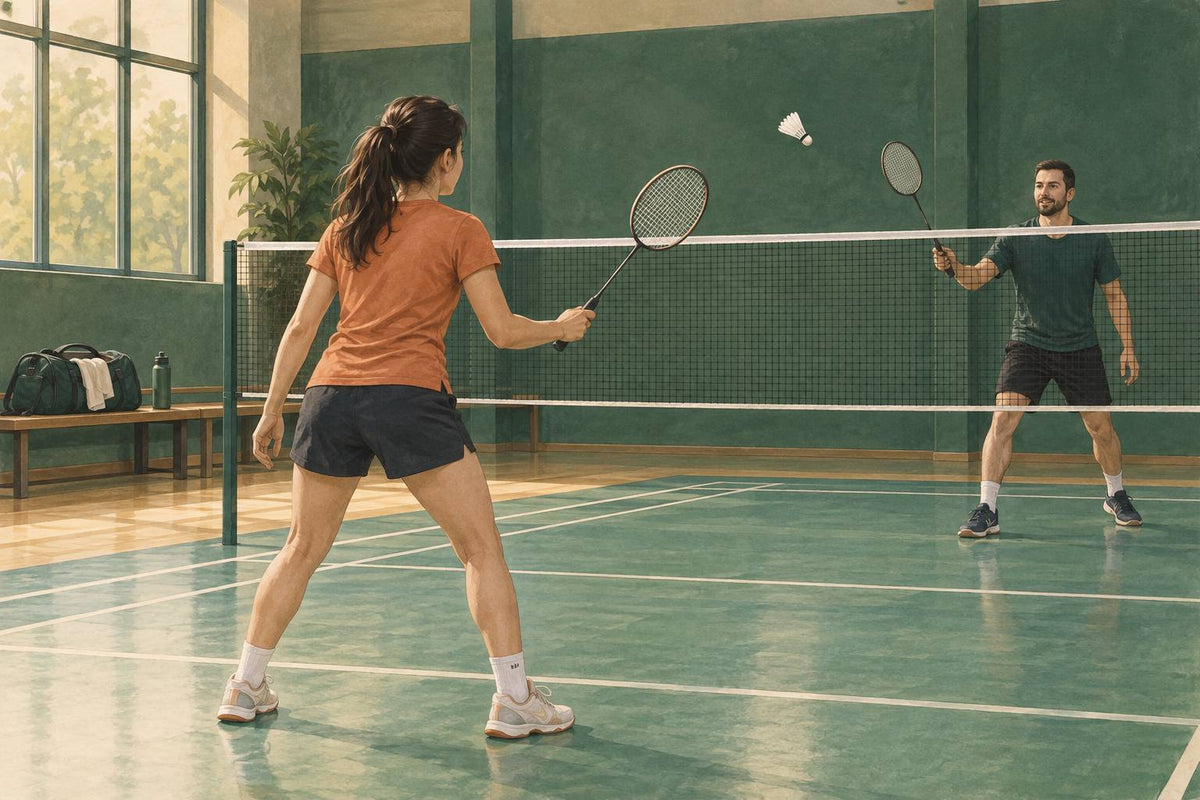
If you’ve been away from badminton for a month or a season, don’t make your first night back a two-hour doubles marathon. Your timing may feel okay after a few rallies, but your lungs, calves, knees, ankles, and landing control are not all returning at the same speed. A safe return to badminton after a long break is less about finding the perfect comeback timeline and more about controlling the first few exposures.
Use this plan for ordinary time away from play. Rebuild by session length, effort, movement quality, and next-day response instead of trying to prove that your old game is still there.
In This Guide
Set the return rules before the first hard session

Detraining is the partial or complete loss of training adaptations after reduced or stopped activity. That matters because the shift from relative inactivity back to regular training is a higher-risk period, especially when the first sessions try to copy your old pace. This guide covers ordinary inactivity only: return after injury, illness, pregnancy, surgery, heat or cardiorespiratory events, or cardiopulmonary symptoms needs individualized clinical clearance before you use a training plan.
Before the first hard hit, choose the dials you will actually change: total session length, intensity, next-day response, footwork volume, and staged match exposure. If one dial jumps, hold the others steady. A longer hit-around should not also become a maximum-effort multi-shuttle session and a full match night.
Rebuild base: use session length and effort before chasing form
After a long break, your strokes may still “feel” familiar before your engine is ready to support them. Aerobic qualities fade early: VO2max reductions can appear within 2 to 4 weeks of detraining, while muscle glycogen and lactate threshold can decline in as little as one week. Muscle mass and strength usually change later, so feeling strong in a few rallies does not mean you are ready for a full hard session.
Make the first base block boring on purpose: moderate, repeatable sessions that finish with something left in the tank. Start by controlling total session length and effort, then add more time or intensity gradually over several sessions. A useful long-term baseline is the adult activity guideline: 150 to 300 minutes of moderate aerobic activity, or 75 to 150 minutes vigorous activity, plus strength work on 2 or more days each week. Treat that as a rebuild destination, not your first-week badminton target.
Add movement: cap footwork volume before fatigue changes mechanics
Badminton-specific movement is the point where “I feel fitter” can become “my legs are not ready.” Lower-limb injuries account for 52.15% of badminton injuries, and a recent review reported footwork drills as the largest of four tracked injury contexts. That makes early footwork volume a load-management decision, not just a technique block.
Start with small sets of shadow movement: split step, one controlled lunge, recover, reset. Add lunges, deceleration steps, and low jumps only while landings stay quiet, knees track cleanly, and recovery steps do not turn into stumbling. This matters because demanding lunges can create impact loads up to 2.5 times body weight, and fatigue increases lower-limb load and injury risk during jump landings.
Use a proper court warm-up before this work; the badminton warm-up exercises guide gives a simple sequence. For movement detail, build from badminton footwork basics before adding speed.
Restore matches: progress exposure by response, not the calendar
Do not pick a fixed week and declare yourself match-ready. After a long break, your tissue capacity and chronic training load have dropped, even if your timing starts to feel sharp again. The common 10% increase rule can help you avoid big jumps, but it is only a guideline: it does not account for rally intensity, jump volume, or how much fitness you lost during the layoff.
Reintroduce matches in stages: controlled half-court rallies, then short games with clear limits, then fuller play. Move up only when the previous level feels controlled, your next-day response stays normal, sleep and wellness are steady, shot quality is consistent, and movement still looks clean under pressure. If effort spikes or your landings, recoveries, or split step start falling apart, reduce game volume or return to drills for the next session.
Which Return Stage Fits Now?
Do not advance by calendar week alone. Choose the stage that matches how your last session felt and how you responded the next day.
| Stage | Use it when | Next step |
|---|---|---|
| Rebuild base | Short court sessions still feel hard to repeat. | Keep movement controlled and finish with energy left. |
| Add movement | Base sessions are repeatable without a worse next day. | Introduce small footwork sets and stop before mechanics fade. |
| Restore matches | Drills and movement stay stable under added pressure. | Add controlled rallies and short games, then reassess. |
Get 10% off your first order
Join the Badminton House list and we’ll email you a 10% welcome code — plus training guides, technique advice, and badminton updates.
By subscribing, you agree to receive Badminton House emails and can unsubscribe anytime.
Coming back is easier when you treat the first weeks as rebuilding, not proving. We play badminton, so if you are unsure how to adjust your workload, racket setup, or shoe choice for your return, contact us and tell us how long you have been away and what sessions you are planning.
Returning play reloads the knees and ankles on lunges, stops, and landings. If your shoes are worn down, start there before increasing court volume.
Check Court Footwear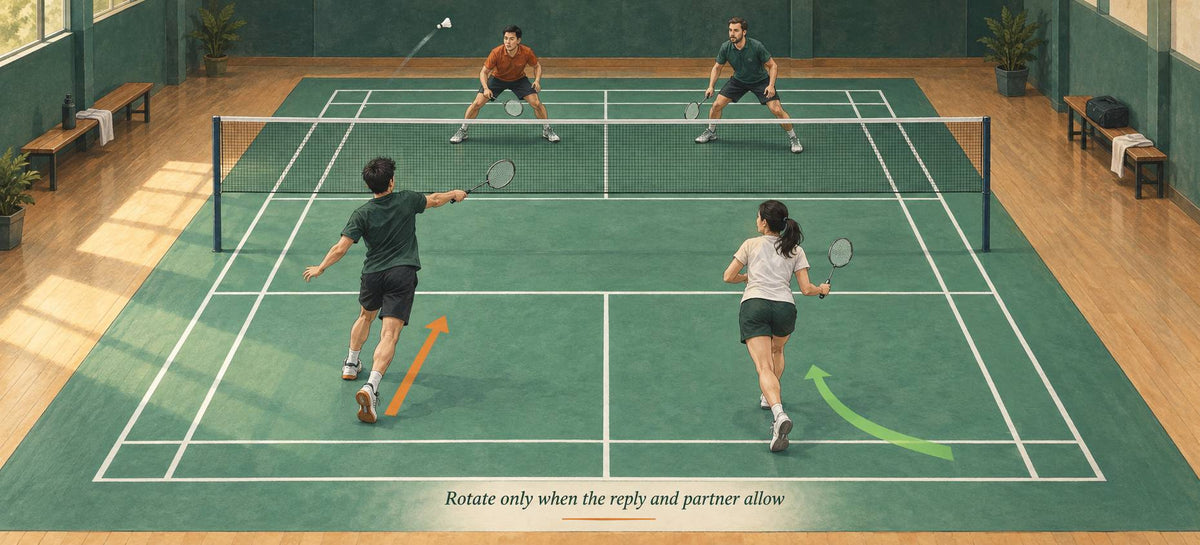

Leave a comment
This site is protected by hCaptcha and the hCaptcha Privacy Policy and Terms of Service apply.