
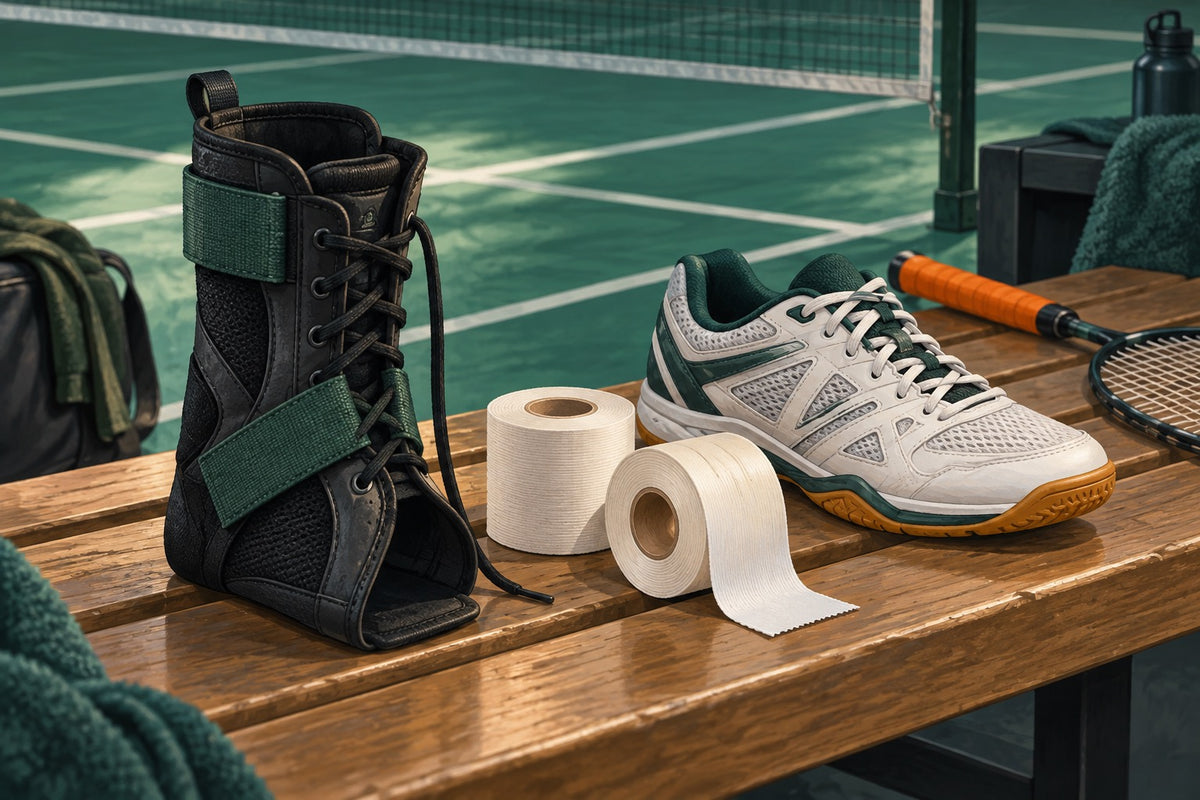
Ankle Brace vs Taping for Badminton: Which, and When
Both ankle braces and taping may help some previously injured badminton players reduce repeat sprain risk, but neither is a universal winner or a replacement for rehabilitation and return-to-sport ...

Badminton Hip Impingement: Deep Groin Pain Explained
Deep groin pain can be hip-related, but FAI syndrome requires matching symptoms, clinical signs and imaging; use this guide to choose a safe next step.
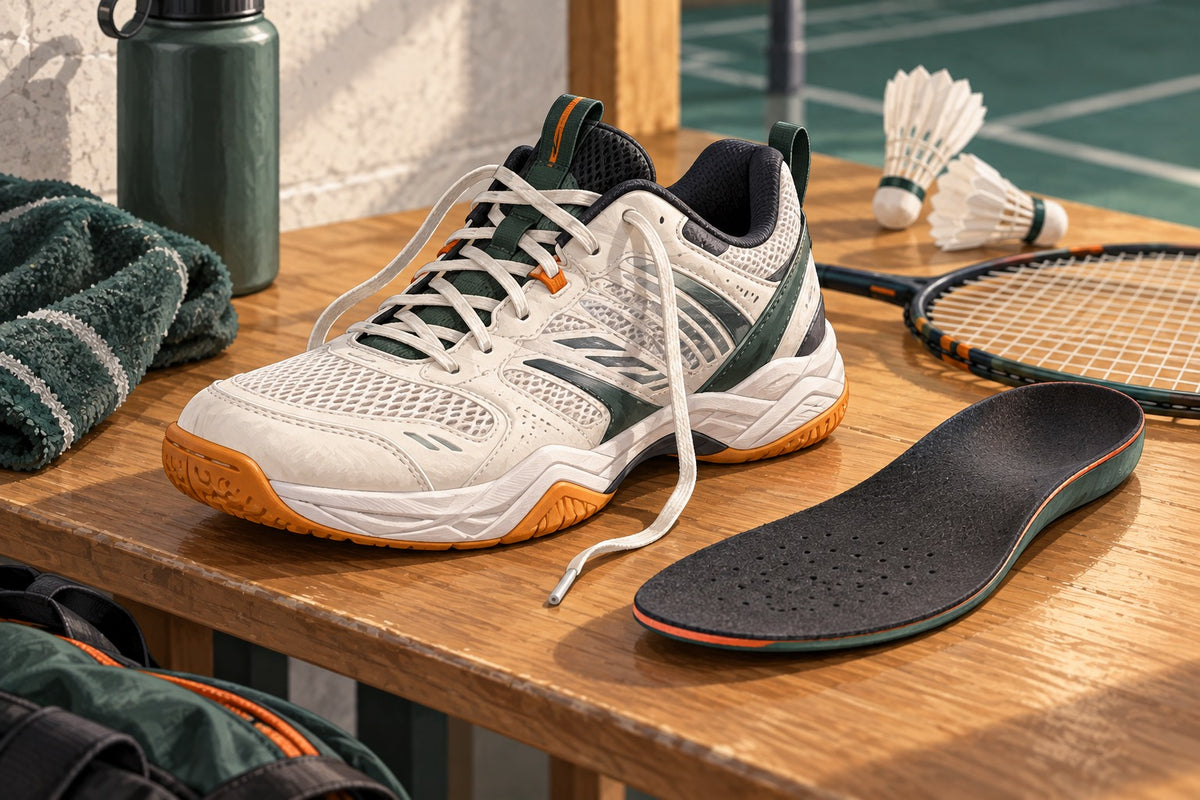
Badminton Shoes for Bunions: Playing With a Painful Big Toe
Choose a less compressive badminton shoe, reduce upper pressure and manage court load without treating fit advice as a diagnosis or cure.

Badminton Calf Strain: Tennis Leg Signs and Return to Court
Understand what tennis leg means, recognize calf symptoms that need urgent assessment, and follow a clinician-led return-to-badminton ladder.

Coming Back From a Badminton Injury: The Mental Side
A practical mental return plan for injured badminton players, with clear roles for the player, club, family, and first session back.
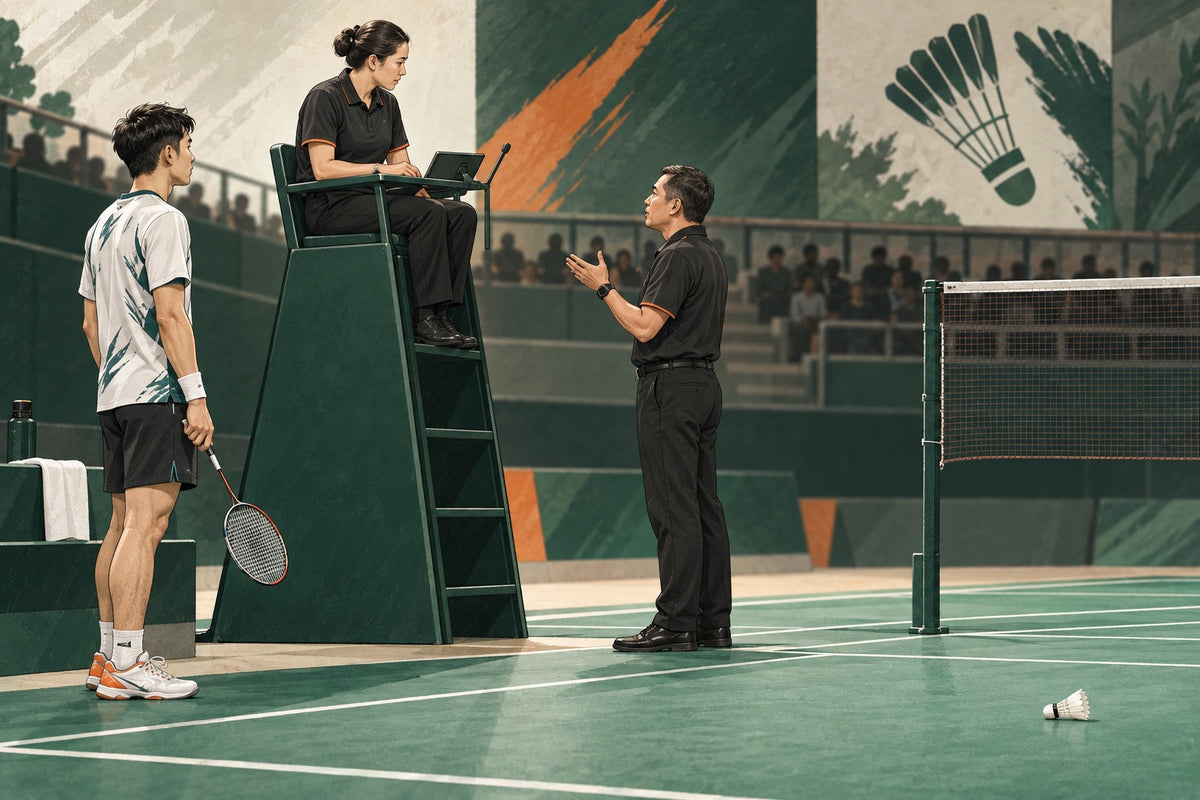
Badminton Injury Rules: Cold Spray, Taping and Retiring
Current badminton injury rules do not grant a fixed medical timeout; the Referee controls the process while, in ordinary cases, the player makes a quick continue-or-retire decision.
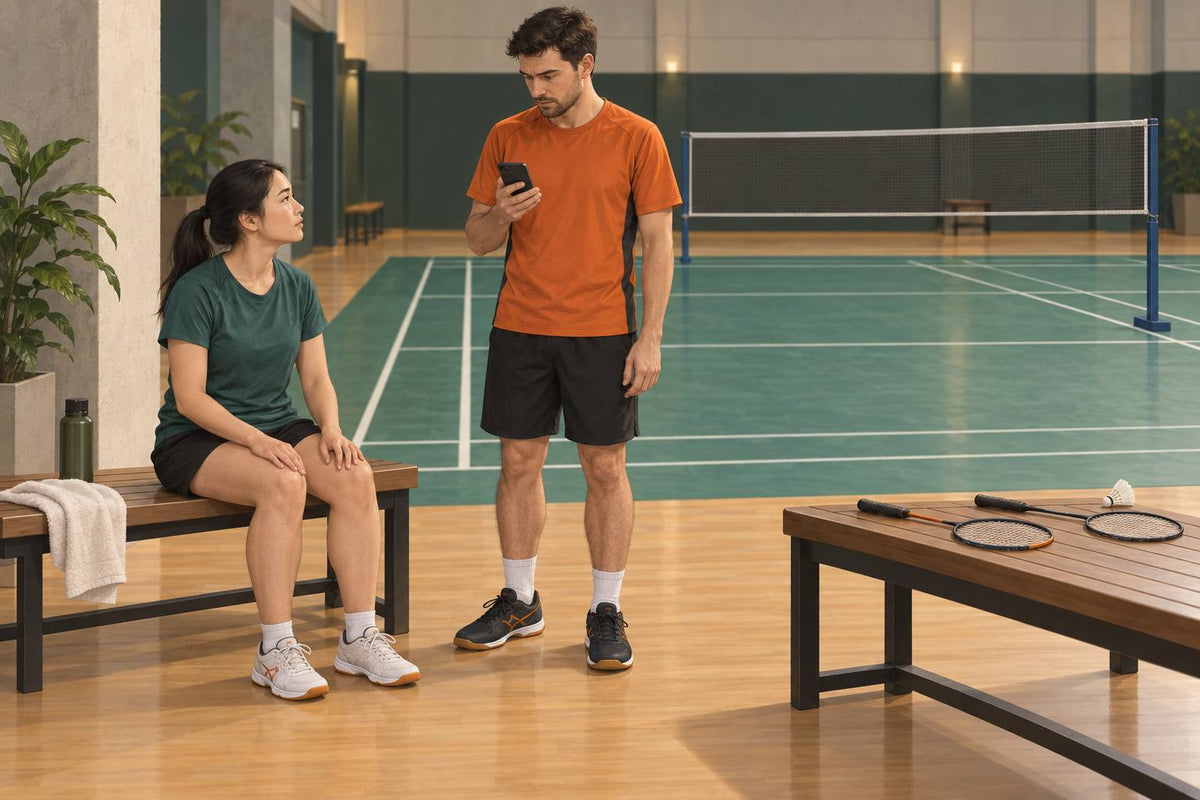
When to Stop Playing Badminton: 7 Warning Signs
Seven warning patterns tell a badminton player to stop, with a clear split between prompt medical assessment and immediate emergency action.
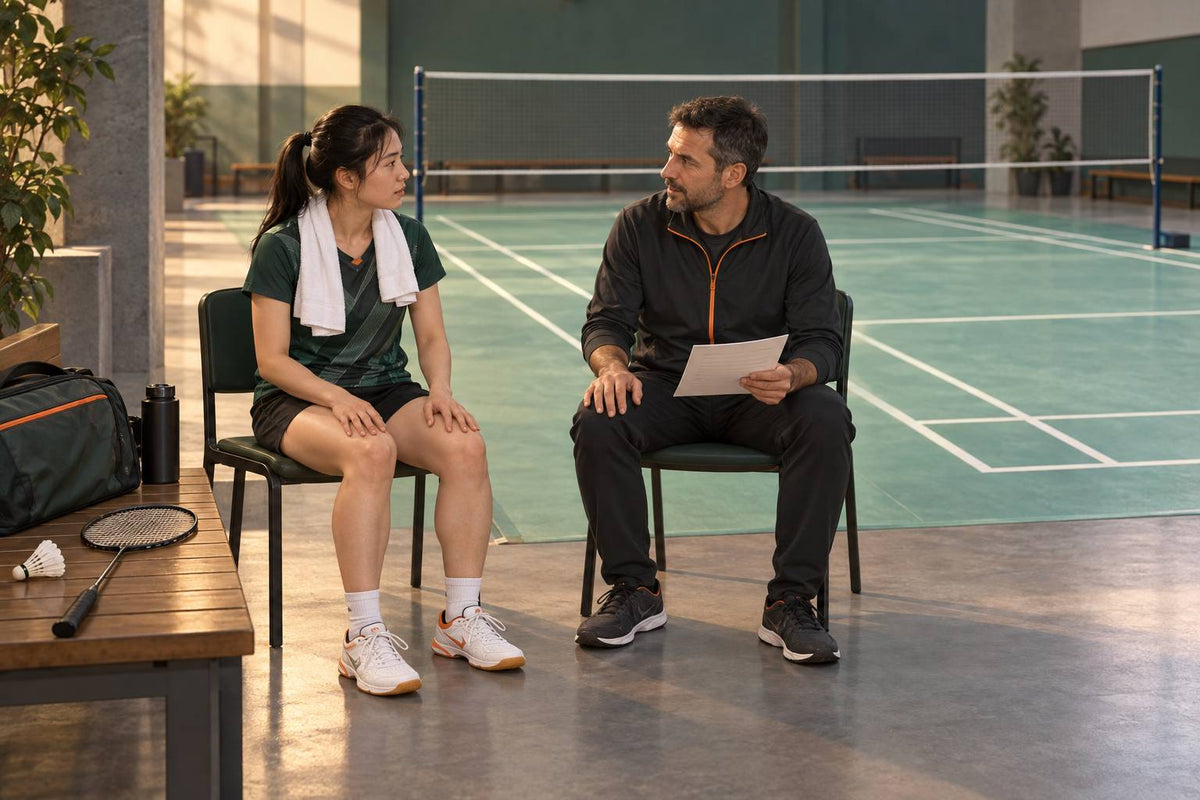
Badminton Fatigue Injury Risk: Why the Last Match Bites
Accumulated badminton fatigue can alter balance, landing control and leg force, but it cannot predict injury; use symptoms and familiar movement to decide whether to withdraw.
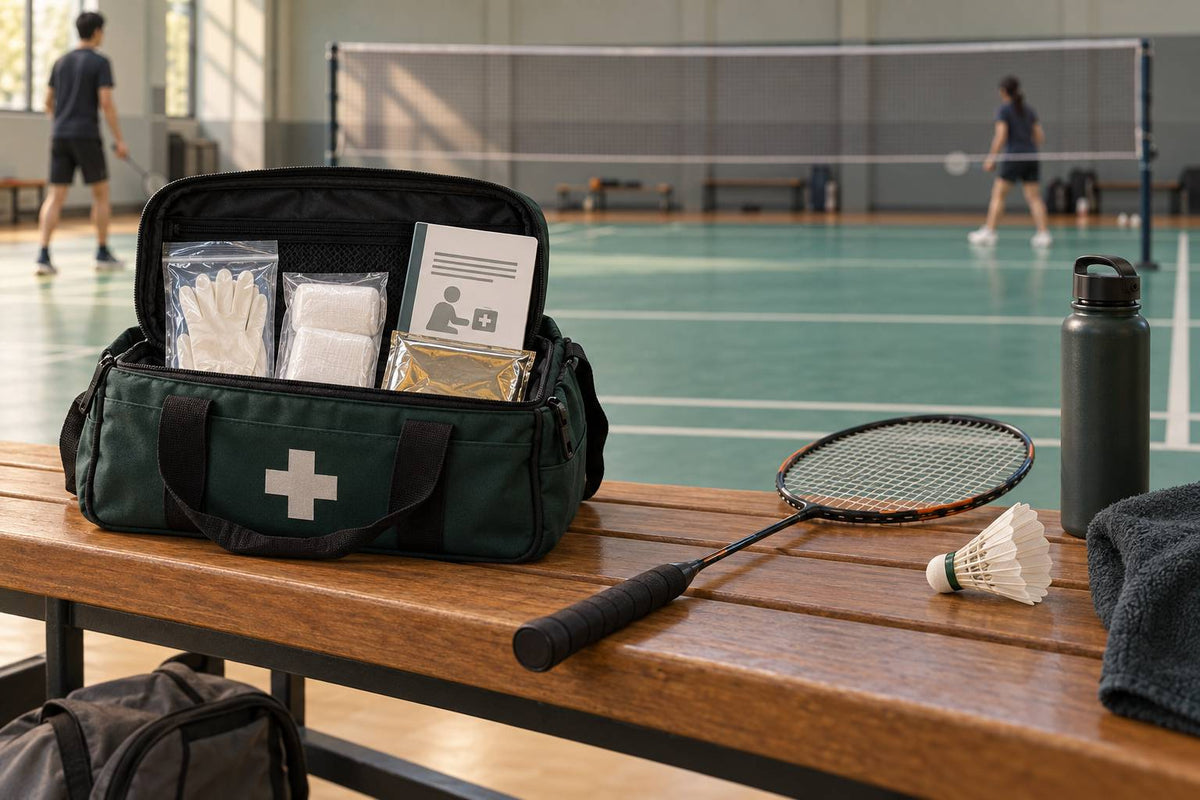
Badminton Injury First Aid: The First 48 Hours
Use a cautious first-48-hours decision path after an acute badminton injury: emergency screening first, PEACE for roughly 1–3 days, then clinician-guided LOVE.
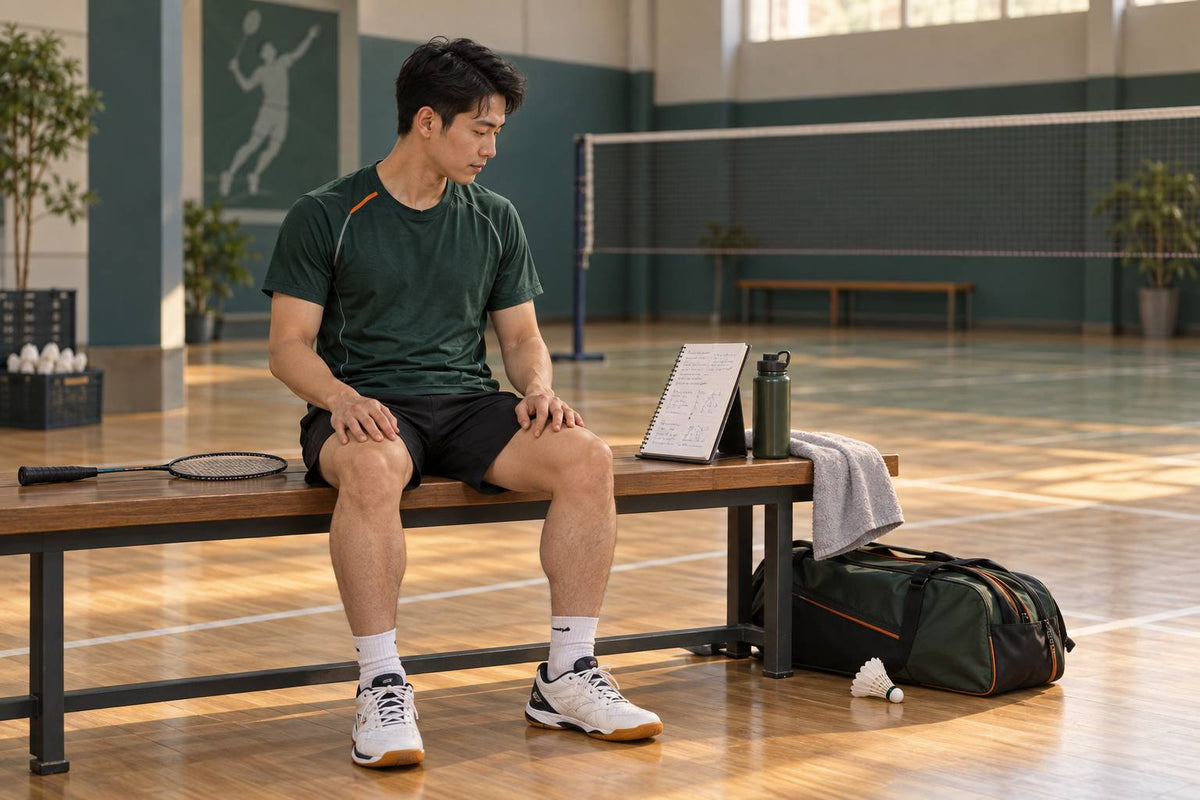
Badminton Neck Pain During Overheads: What to Do
A safety-first guide to neck pain during badminton overheads: when to stop, how to reduce provoking load, what technique can and cannot explain, and when to seek care.

Growth Spurt Badminton Slump: Why Juniors Get Clumsy
Why some juniors lose timing and movement accuracy during rapid growth, with practical coaching adjustments and clear pain red flags.

Badminton Leg Cramps: Mid-Match Fixes and Prevention
A conservative stop-stretch-reassess sequence for calf and hamstring cramps, warning signs, and a practical prevention plan for long badminton days.