
Last updated: July 2026 · Written by the team at Badminton House
Quick Answer: Badminton Doubles First Three Shots
Treat serve, return, and third shot as a decision tree. Serve to narrow likely replies, read the return, then cover together: the server hunts short replies near the net and T while the partner intercepts pushes or covers a lift.
Straight low to T
Best choice: default for fewer return angles and a clear interception lane.
Front-foot low
Use to slow the receiver’s forehand-or-backhand decision.
Wide/flick surprise
Use sparingly; wide serves open straight replies, while flicks punish anticipation.
If your doubles rallies feel chaotic after the serve, the problem is usually not your smash — it is the opening exchange. In doubles, the serve, return, and third shot often decide whether your pair gets to hit down or has to defend. Many rallies are effectively shaped before anyone settles into a normal pattern, so treating the first three shots as a planned mini-rally is a faster upgrade than simply “reacting better.”
Plan branches, not a winner. Agree who covers the net return, flat push, and lift before serving, then read the actual reply instead of guessing one guaranteed outcome.
In This Guide
Why the badminton doubles first three shots decide the attack
The badminton doubles first three shots are the serve, the return of serve, and the serving side’s first shot after that return. That third contact is where the rally often tilts: one pair earns a downward shot and moves into attack, or one pair is forced to lift and settles into defence.
This is why doubles can feel brutally fast before the “real rally” even starts. In many casual and amateur games, points can finish within those opening hits, and even longer rallies are often shaped by which pair earns the first downward contact.
Still, treat the sequence as a decision tree, not a guaranteed script. Serve direction, receiver grip, footwork, anticipation, and habits create too many combinations for one perfect pattern. The goal is to prepare likely replies, then choose quickly.
Shot one: choose the serve that shapes likely return lanes
In doubles, the serve is not a trick shot to win outright. Its job is to help your pair gain the first attack by forcing a lift, a loose net reply, or a push you can intercept.
Make the straight low serve to the T your default. It travels the shortest route, limits the receiver’s angles, and brings many net shots or flat pushes through the server’s hitting area. Mix in a serve at the receiver’s front foot to create a forehand/backhand decision. Use the wide low serve only as a surprise, because it opens straight replies into the tramlines. Flick occasionally to stop receivers crowding the line; drive serves are high-risk and break down quickly against skilled receivers.
Signal the target behind your back so your partner can shade early. Match analysis of 20 men’s doubles matches found that return landing area can be predicted partly from service direction, receiver footwork, and grip. Its “crossing areas” are aggregate court landing zones, not a claim that returns travel cross-court; coaching observation still finds many common return patterns travel straight. Serve choice should narrow the next two shots—not script them. Need the mechanics first? Read the low and flick serve guide.
Shots two and three: divide coverage, then branch by the reply
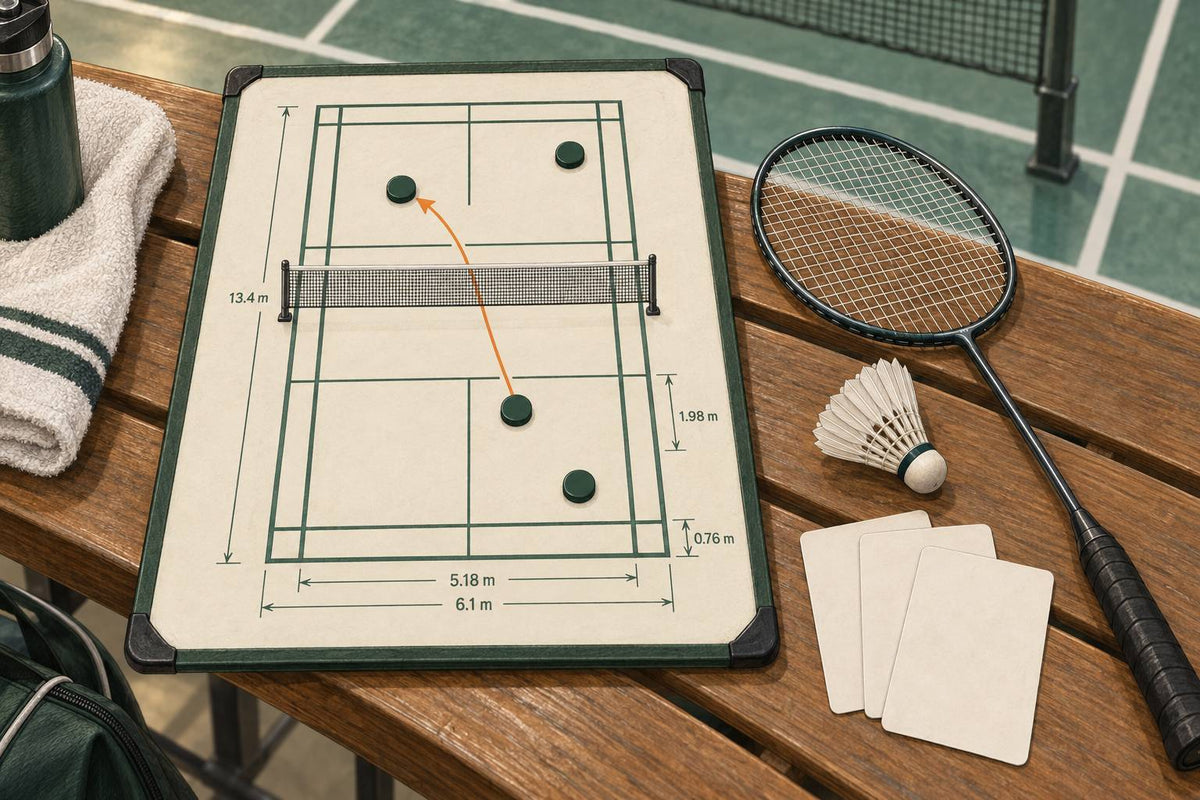
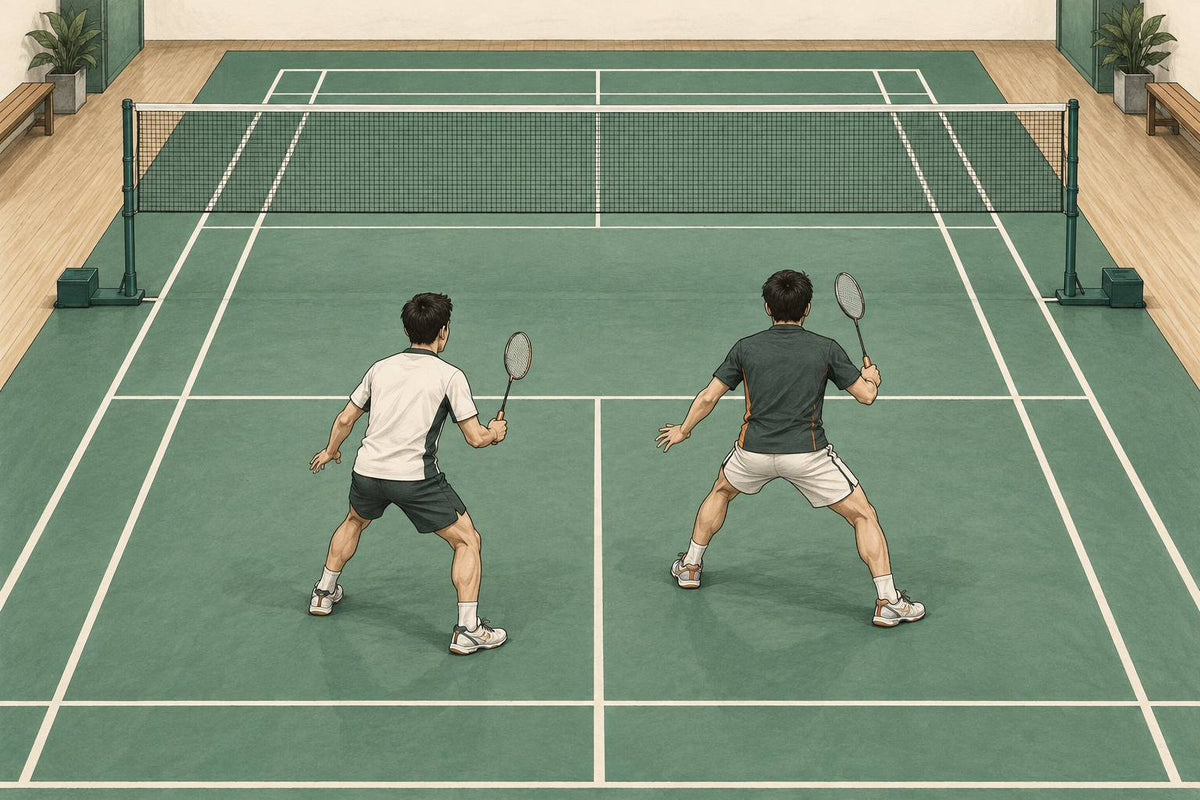
After your serve, expect controlled pressure rather than a gift: soft net returns, flat pushes toward the sidelines, or quick drives at the body. Because many common return-of-serve patterns travel straight rather than cross-court, divide the court early: the server steps toward the net and T to threaten short interceptions, while the partner stays close enough around midcourt/rear court to cut off half-court pushes instead of waiting too deep.
- Loose or reachable net reply: play tight, move in, and make the threat of a kill force the lift.
- Receiver is stealing the net: push straight into the tramlines just past the short service line, fast enough to beat the front player but not so fast that it sits up.
- You are forced to lift: accept the formation change and recover into defence.
For the rotation background behind that last branch, see the badminton doubles positioning and rotation guide.

Practice it: a four-player drill that scores the complete exchange
Run this with two full pairs, not one feeder. Before each serve, the server gives the partner a behind-the-back signal or quick verbal cue for the serve target. The receiver then chooses from agreed return lanes: soft net, flat sideline push, or body drive. Stop the rally immediately after the third shot so the pair practises serve → return → third shot as one decision chain.
- Serving pair scores: the third shot is a controlled downward hit or reaches the agreed attacking target.
- Receiving pair scores: the return forces a lift on the third shot or prevents a controlled third contact.
- No score: spectator mode after hitting, fixed left/right thinking while attacking, middle clashes, or late calls such as “mine,” “yours,” “switch,” or “watch the flick.”
Use these as local practice criteria: play to 10 scored exchanges, then swap server and receiver roles so every player reads both sides of the pattern.
Which opening choice should you use?
Choose the serve by the return you are trying to make predictable, not by hoping for an ace.
| Choice | Use it when | Third-shot mindset |
|---|---|---|
| Straight low to T | You want the safest default: shortest path, fewer angles, and returns passing near the server. | Server hunts the net/T; partner stays close enough to cut off half-court pushes. |
| Front-foot low serve | You want to slow the receiver’s forehand/backhand decision and grip change. | Expect a rushed push, drive, or loose net reply; cover more than one answer. |
| Wide low or wide flick | Use only as a surprise when the receiver over-commits to the straight low serve. | Be ready for wider straight replies; the wide flick makes attacks come from a corner. |
| Drive serve | Only against low-level receivers who are late; it is high-risk against skilled receivers. | Do not build your main pattern around it; practise the complete serve-return-third-shot exchange. |
Get 10% off your first order
Join the Badminton House list and we’ll email you a 10% welcome code — plus training guides, technique advice, and badminton updates.
By subscribing, you agree to receive Badminton House emails and can unsubscribe anytime.
We play badminton, so our last note is practical: train the opening as a decision tree, not a promise. If you want advice on the setup you use for this drill, contact us.
Drill the pattern with reliable shuttles.
Consistent flight makes the serve, return, and third-shot exchange easier to judge across repeated reps.
Browse Shuttlecocks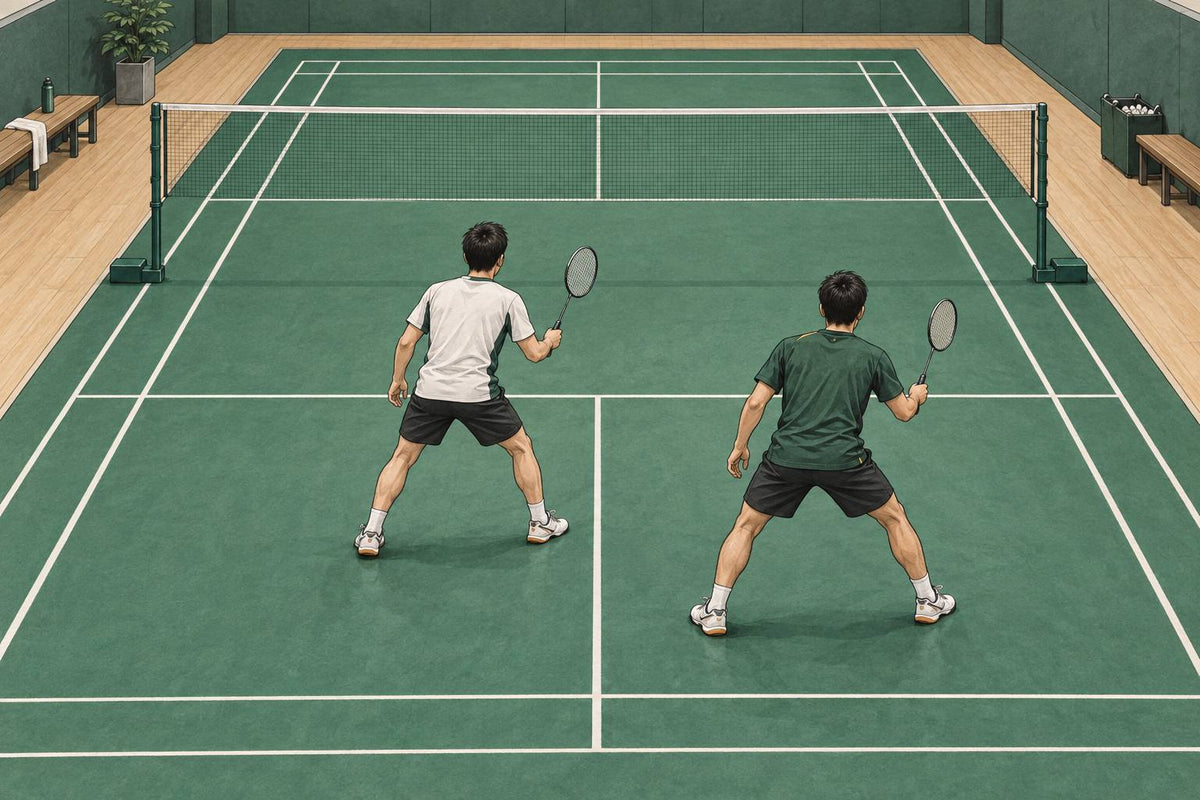

Leave a comment
This site is protected by hCaptcha and the hCaptcha Privacy Policy and Terms of Service apply.