

Last updated: July 2026 · Written by the team at Badminton House
Quick Answer: Badminton Doubles Flat Rally Positioning
Treat the flat rally as a side-by-side, slightly staggered shape until your shot clearly changes the phase.
The straight-line player shades a half-step forward and wider; the partner stays behind and inside to protect the centre seam.
Hold flat
Best choice: Stay side-by-side, connected through the middle, and shade straight pressure while both pairs are driving.
Earn front-back
Move one player forward only after your pair hits down or forces a weak lift.
Retreat to defence
If you lift or clear, drop into a wider side-by-side base ready for the smash.
In a fast doubles drive exchange, the mistake is rarely “bad hands” alone. More often, one partner freezes, both drift into the same lane, or the pair leaves the middle inviting the next flat push. Badminton doubles flat rally positioning is the answer to that awkward neutral phase where neither side is clearly attacking or defending: the shuttle is travelling flat around chest height, and one loose lift can hand the attack away.
Think of your pair as a connected shape that keeps changing with the shuttle. You are not trying to stand in one perfect dot on court; you are trying to stay close enough to cover width, react to straight speed, and avoid clashing when the next drive comes through the seam.
In This Guide
- Badminton doubles flat rally positioning is a moving shape, not a fixed spot
- Use depth, width, and stagger to cover straight pressure
- Protect the centre seam with a connected side-to-side seesaw
- Know the exits: earn front-back, retreat to defence, then train it in lanes
- Diagnose the spacing error you can see
Badminton doubles flat rally positioning is a moving shape, not a fixed spot
A neutral flat rally is the in-between phase of doubles: neither pair has clearly won the attack, neither pair is fully defending, and the shuttle is being driven or pushed fast and flat around chest height. Because the shuttle is not travelling steeply down, both partners usually start from a side-by-side midcourt base rather than a front-back attacking shape.
The mistake is treating that base like two fixed dots on the floor. In real badminton doubles flat rally positioning, the pair moves as a connected shape that follows the shuttle. If the shuttle is in front of your partner, you are not simply “standing on your half”; you are adjusting so the next fast reply does not split you, jam you, or leave one player covering too much court. For the wider rotation picture, see our badminton doubles positioning and rotation guide.
Use depth, width, and stagger to cover straight pressure
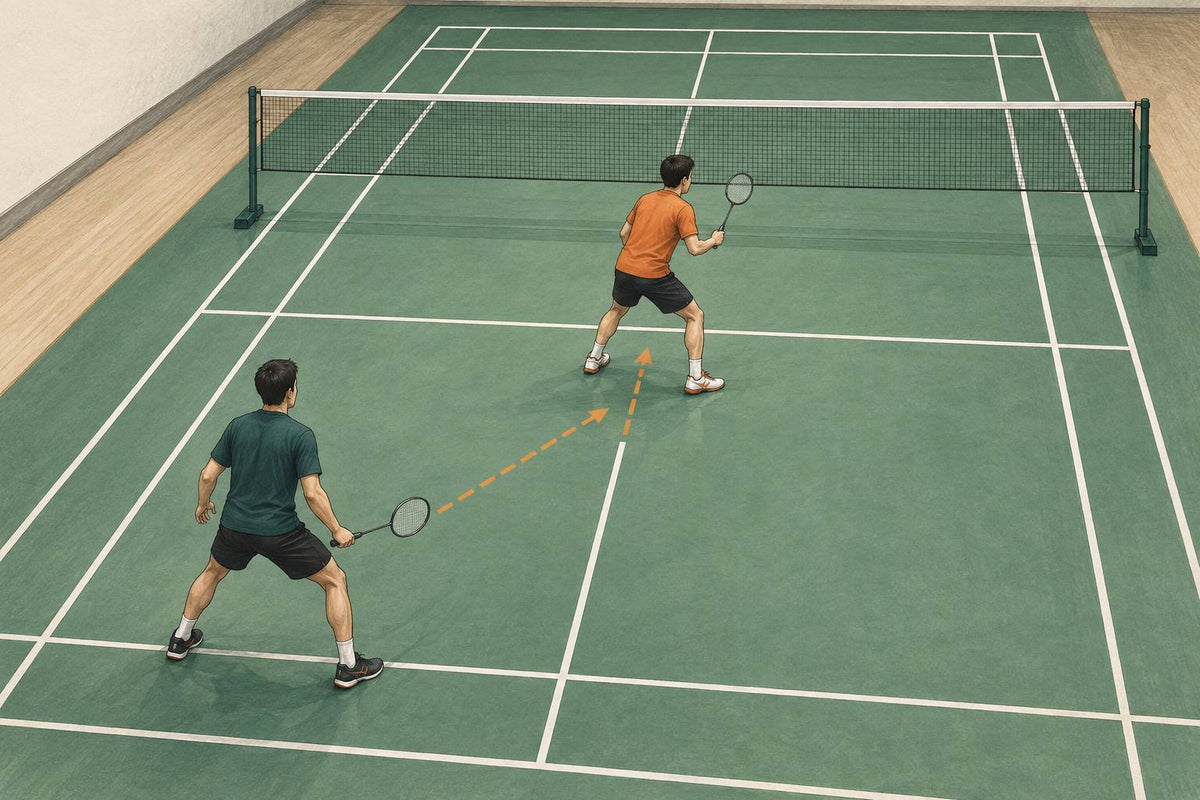
In a flat rally, start from a side-by-side base because the pair needs to cover the full width of the doubles court. But do not make the two players perfectly level. The player on the shuttle’s straight line should be a half-step forward and slightly wider, ready to meet the most common reply: the straight drive, push, or body shot.
The off-shuttle partner stays slightly behind and inside. That small stagger gives cover if the straight player is beaten, while keeping the middle connected enough to avoid both players reaching for the same shuttle. Think of it as “wide player pressures, inside player insures.”
Adjust the depth to the quality of the opponent’s contact. If they can hit down, both players should sit about one step back from the middle to gain reaction time. If the shuttle is truly flat and neither pair is attacking, hold midcourt depth and keep your racket in front.

Protect the centre seam with a connected side-to-side seesaw
In flat doubles, the off-shuttle partner is not resting; they are guarding the centre seam and the diagonal space behind the hitter. Opponents often attack the middle because it creates hesitation: both players reach, both stop, or rackets clash. Decide early who owns the shuttle that crosses your shared line, then keep your racket up enough that a fast body drive or middle push is met in front of you, not beside your hip.
Think of the pair as a side-to-side seesaw. When the shuttle is on your partner's right lane, they shade toward it while you narrow the middle and cover the open left-half danger. If the rally switches sides, you both shift together: one player stays ready for the next shuttle, the other fills the space that just opened. The mistake is crossing into your partner's lane or crowding the same zone. For a deeper middle-shot framework, see Who Takes the Middle Shot in Badminton Doubles?
Know the exits: earn front-back, retreat to defence, then train it in lanes
Badminton doubles flat rally positioning needs clear exits. Do not rush into front-back just because your partner hit a drive; earn that shape only when your pair gets downward contact or forces a weak lift. If you lift, clear, or the opponents get the shuttle above tape height with time to hit down, retreat into defensive side-by-side and cover width first.
Train the decision with a constrained four-player lane drill:
- Straight lanes first: two pairs rally in fixed straight channels, one touch per player, keeping every shot low without popping it up.
- Rotate, do not collide: the goal is reading who takes the next shuttle and who fills the open lane, not re-teaching drive technique.
- Add cross-court: once the straight version is calm, use a cross variation so partners practise switching lanes under pressure.
If the rally breaks because players cannot keep the shuttle flat, separate the skill work with the badminton drive shot guide before returning to the lane drill.
Diagnose the spacing error you can see
Watch what breaks first, then make one positional adjustment. This keeps the feedback about pair spacing rather than turning the rally into a lesson on shot selection.
| Visible symptom | Likely spacing error | One adjustment |
|---|---|---|
| Both players swing at the middle shuttle. | The off-shuttle partner is too level or too wide. | Tuck half a step behind and inside before the opponent hits. |
| A straight drive keeps arriving late at the racket hip. | The shuttle-line player is too central or too deep. | Shade half a step wider and forward while the shuttle stays on that line. |
| The opposite lane opens when the rally changes sides. | One partner moved alone or crossed behind the other. | Shift together in the same direction and rebuild the stagger. |
Get 10% off your first order
Join the Badminton House list and we’ll email you a 10% welcome code — plus training guides, technique advice, and badminton updates.
By subscribing, you agree to receive Badminton House emails and can unsubscribe anytime.
Flat rally positioning gets easier when your pair treats every drive as a shared shape: one player pressures, the other protects the gap. We play badminton and think about these small doubles problems every week, so if you are unsure whether your racket setup is helping or slowing your fast exchanges, contact us for advice.
Build a quicker setup for drive exchanges, interceptions, and compact doubles swings.
Shop Badminton Rackets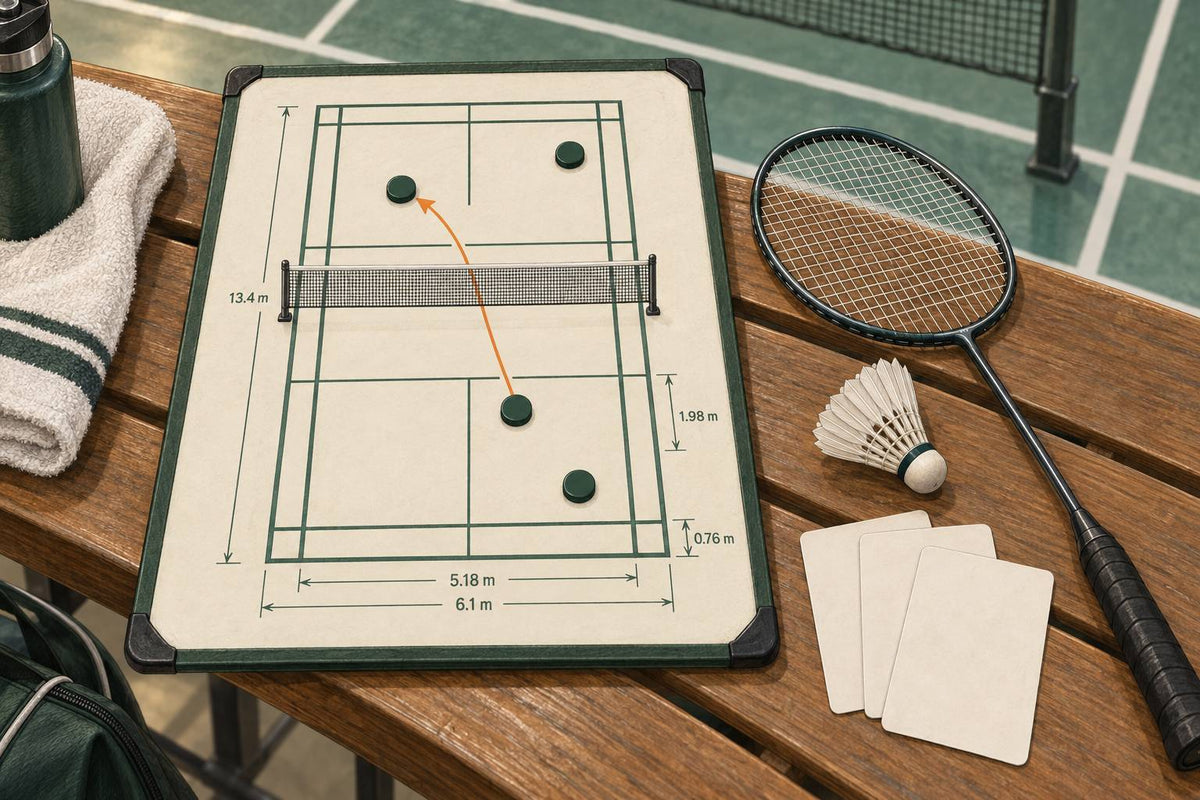

Leave a comment
This site is protected by hCaptcha and the hCaptcha Privacy Policy and Terms of Service apply.