
Last updated: July 2026 · Written by the team at Badminton House
Quick Answer: Badminton for Preschoolers
Start with slow, easy striking activities; add a low net and simplified play only after the child makes regular contact.
Not striking
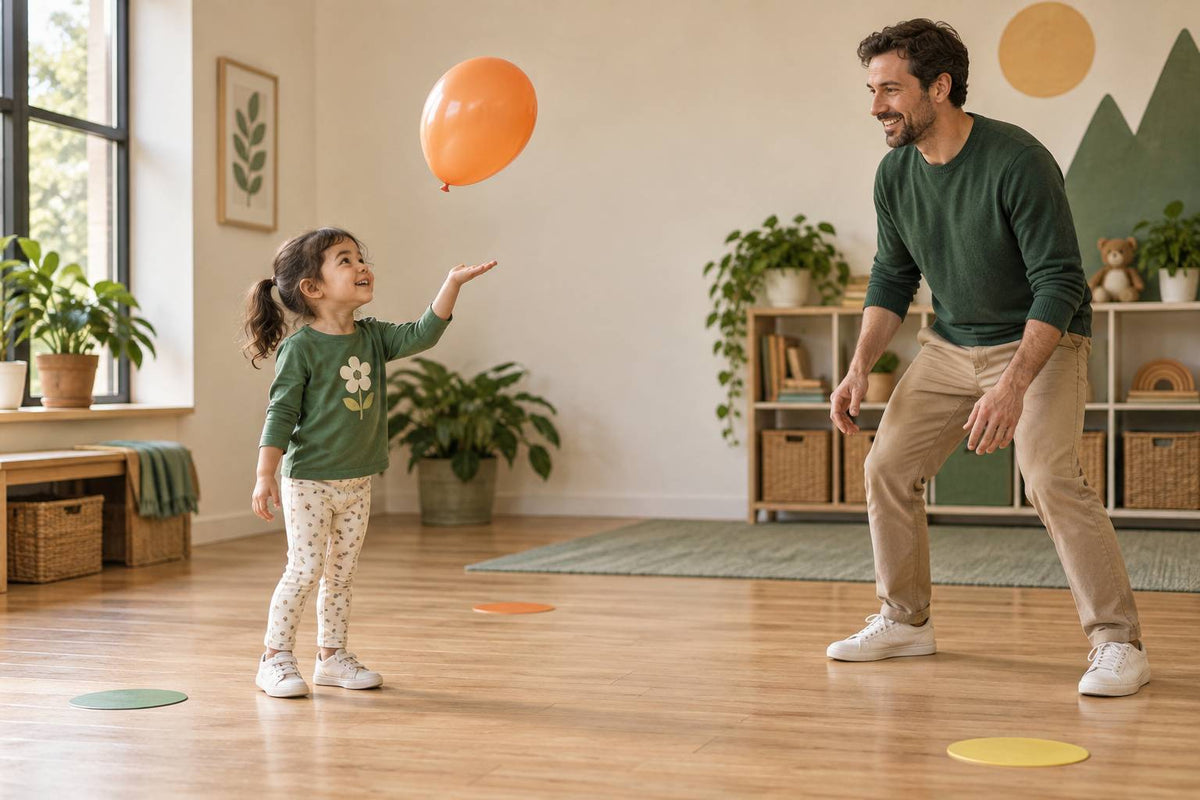
Start here: remove the net and tap balloons with hands or a short implement.
Making contact
Add a low net, close targets and a short racket while keeping success easy.
Rally-ready
Use a small space and simple rally goals; postpone formal scoring and serving rules.
Last updated: July 2026
If a preschooler swings once, misses, and wanders away, the problem usually is not a lack of interest—the adult-sized version is simply asking too much. Badminton for preschoolers works better as active play for roughly ages 3–7: bring the target closer, slow the object down, and make successful contact easier. That can mean tapping a balloon with a hand before using a racket, while a parent joins in rather than coaching from the sideline. Keep rules, legal serves, scoring, and full-court rallies for later. The immediate goal is to help children track, throw, catch, balance, move, and strike with growing confidence. Build those foundations first, and the recognizable game can emerge without turning an inviting activity into a test.
In This Guide
Set Up Badminton for Preschoolers Without Building a Full Court


This guide treats badminton for preschoolers as pre-game play for roughly ages three to seven. You do not need regulation court markings or a full-length playing area. Shorten the space so children can reach the object quickly, make frequent contact and avoid long waits between turns.
Simple equipment to gather
- A balloon plus a foam or other soft ball
- Fly swatters and short, light badminton rackets
- Tape or floor markers for small activity zones
- Hoops, cones or boxes as visible targets
Give each child their own racket early rather than asking children to share; continuous practice helps maintain attention. Parents should also join the activity as partners or gently toss and feed objects, not watch from the side. For broader questions about cues, expectations and parent involvement, see Teaching Kids Badminton: A Parent’s Guide.
Lower or Remove the Net: Heights and Safe Rigging
Start with no net so children can learn to send an object across a space without facing a barrier. Then test roughly 50 cm, 76 cm, and 1.02 m—about one third, one half, and two thirds of the regulation 1.524 m centre height. No federation codifies a separate preschool net height; these are coaching adjustments, so choose the lowest height that still creates an enjoyable challenge. See the full-size court and net comparison for context.
Rig it simply and visibly. Stretch rope, elastic cord, or tape between stable supports, then shorten the playing area so children have less ground to cover. Keep post bases and loose objects outside movement paths, clear shuttles from the floor, and leave enough space between pairs for safe racket swings.
A Sample 40-Minute Preschool Badminton Session
Adjust each block to the child’s attention and energy. Keep explanations short, avoid queues, and end every activity with a playful challenge.
| Time | Activity |
|---|---|
| 0–4 | Run, turn, jump and slide. Finish by freezing like a statue. |
| 4–11 | Tap a balloon with palm and back of hand. Count consecutive taps. |
| 11–18 | Use a fly swatter, then a racket held near the T. Keep the balloon up. |
| 18–25 | Throw and catch underarm, then strike upward. Land one in a target. |
| 25–33 | Parent and child exchange balloons over the low rope. Reach three crossings together. |
| 33–38 | Play keep-it-up or hit a large target. Let the child choose. |
| 38–40 | Walk, breathe, and name a favourite challenge. |
Stay with forecourt underarm contacts; overhead technique can wait until these close, slow contacts feel comfortable.
What Success Looks Like—and When to Add the Real Game

A good preschool session is not measured by formal rallies, perfect technique or a final score. Look instead for frequent successful contacts, continuous participation, safe spacing, growing comfort with the racket and shuttle, and an enjoyable back-and-forth exchange with the adult.
Ready for the next step? Add one simple aim: send the shuttle over the divider so it lands in the other area. Stop there while control is still developing.
For an older child who can manage lower-net play consistently, a net around 1.30 m can serve as an optional bridge. Save the regulation 1.524 m centre height, diagonal serving rules and 21-point scoring for a later stage, when clearing a lower net and exchanging several controlled contacts no longer feels difficult.
When each child is ready for their own racket, check live availability.
Which Preschool Badminton Setup Should You Choose?
Choose the version that produces successful contacts now—not the one that looks most like regulation badminton.
| Choice | Choose this if… |
|---|---|
| No net | Children are still learning to track and strike. Begin with hands and a slow balloon, then add a short-grip racket without requiring the object to cross a barrier. |
| Low net | They can make contact but rarely clear a standard net. Test roughly 50 cm to 1.02 m—one third to two thirds of the 1.524 m adult centre height—and shorten the court. Give each racket-ready child their own racket to keep practice continuous. |
| Real game | Children can rally and understand a simple objective. Introduce competition last, starting with a rotational format such as “winner stays on”; save full 21-point scoring, diagonal service boxes and serving rotation for later. |
Get 10% off your first order
Join the Badminton House list and we’ll email you a 10% welcome code — plus training guides, technique advice, and badminton updates.
By subscribing, you agree to receive Badminton House emails and can unsubscribe anytime.
We play badminton ourselves, and our best advice for preschoolers is to protect the feeling of success: keep each activity easy to reach, easy to repeat, and fun enough to request again. If you are unsure how to adapt equipment for a young child, contact us for practical advice. When children are ready, giving each one a short junior racket keeps practice moving instead of making them wait and share.
Ready for individual equipment? Check live availability when it is time to choose a child’s first frame.
Browse Badminton Rackets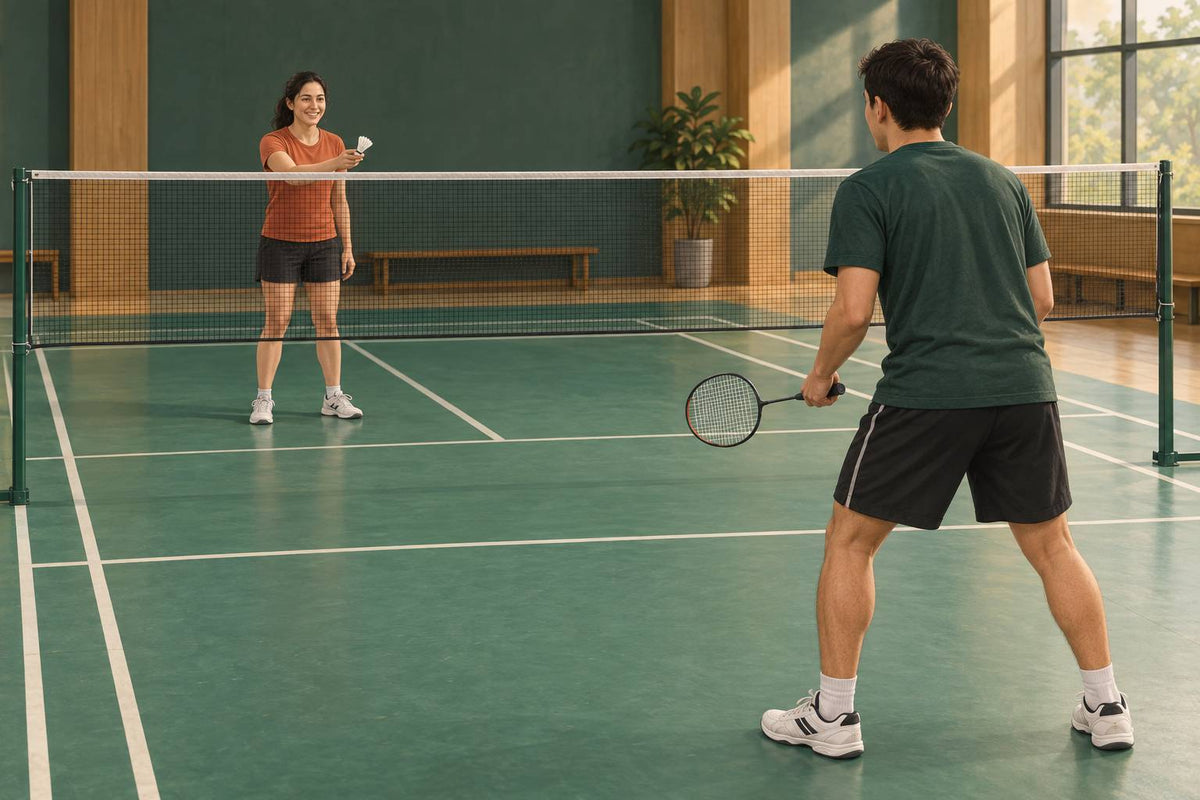

Leave a comment
This site is protected by hCaptcha and the hCaptcha Privacy Policy and Terms of Service apply.