Last updated: July 2026 · Written by the team at Badminton House
Quick Answer: Badminton Punch Clear
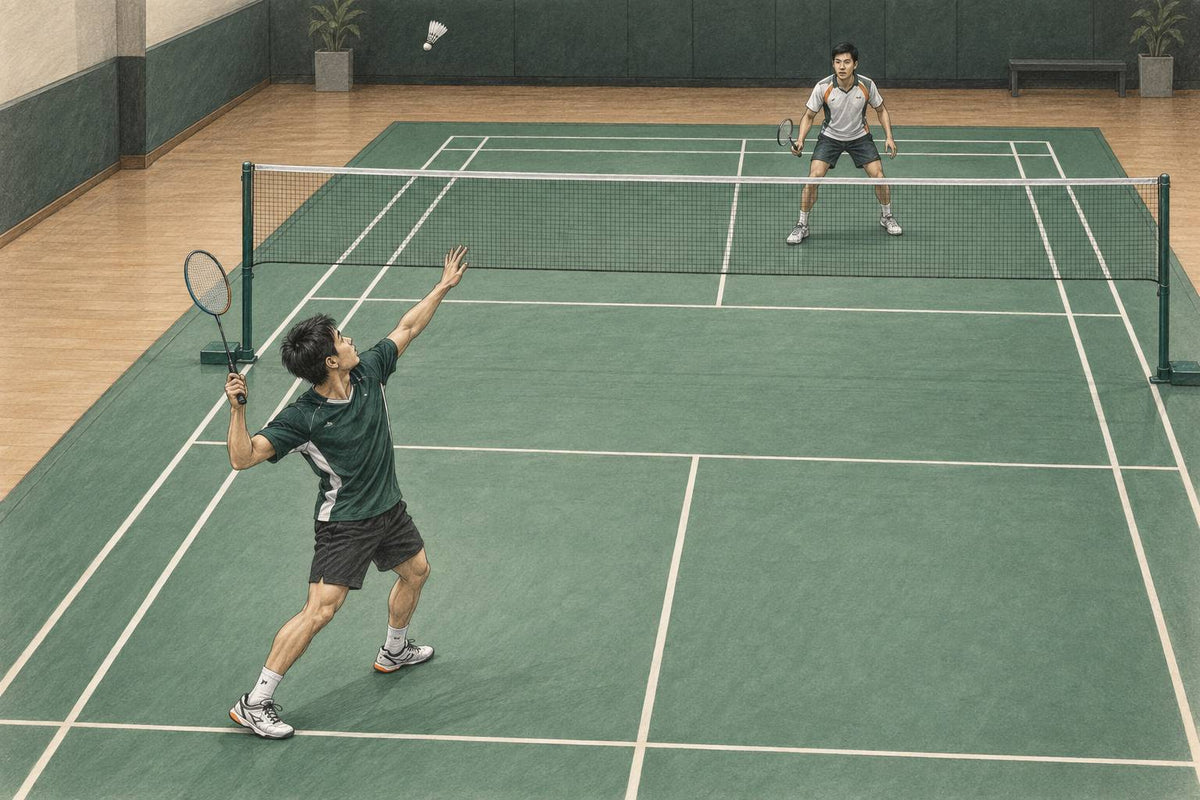
Use the punch clear only when you are balanced, behind the shuttle, and can make your preparation look like a smash or drop. There is no fixed ideal height: the shuttle must clear your opponent’s comfortable interception point and still reach the back tramlines.
Punch
Best choice: fast, deep, flatter clear when the opponent is off balance or leaning forward.
High
Safer defensive clear when you are late, tired, or need time to recover.
If your badminton punch clear keeps getting cut off, fix its timing and trajectory before adding power. The shot should begin like a smash or drop, pass beyond the opponent’s reach, and still land deep. A very high path becomes a defensive clear; a path that is too flat or short invites an interception.
Use the shot when you are balanced behind the shuttle and can punish an opponent who is leaning forward or out of position. When you are late or need recovery time, choose the safer high clear.
In This Guide
Badminton Punch Clear vs High Clear
A badminton punch clear is an attacking clear: you hit the shuttle fast and deep into the opponent’s rear court, using a flatter racket-face contact than a normal high clear. It is not simply a weak, low clear. The shot still has to travel safely over the opponent and land deep enough to stop an easy attack.
A high clear is the defensive version. You send the shuttle much higher, often toward the ceiling, so you can recover your base position and prepare for the next shot. The tradeoff is obvious: the extra height gives you time, but it also gives your opponent time to move back, get balanced, and choose a full stroke.
The punch clear does the opposite. By taking time away on the rear-court move, it can lift rally tempo and pressure an opponent who is late or leaning forward. If you need the broader clear foundation first, start with how to hit a badminton clear.

When the Punch Clear Is the Right Choice
Choose the punch clear when it can punish movement, not when you simply want to survive. If you are late, under pressure, or tired, the safer high clear gives you time to recover. If your opponent is off balance, out of position, slower to turn, or leaning forward because your preparation suggests a smash or drop, a flatter attacking clear can make them reverse their body weight and chase deep.
The key condition is your own position: you should be balanced, behind the shuttle, and threatening enough that a smash or drop would also be believable. Used from a weak body position, the deception disappears and the shot often becomes an easy interception. In singles and mixed doubles, the punch clear is often used cross-court to move an opponent out of position, but the same rule applies: use it only when the flat, fast path still reaches the rear court safely.
Technique: Preparation, Contact, and Racket Speed
Prepare the punch clear like your smash or drop. Get behind the shuttle, show a threatening overhead shape, and draw the racket back into a throwing-style position behind the shoulder. Shared preparation keeps the opponent waiting for a downward shot instead of reading the clear early.
Reach up to contact at the highest comfortable point, slightly in front of your body. Swing with fast racket-head speed, but in the last millisecond keep the string bed flat instead of rolling down over the shuttle. Squeeze the grip at impact—not throughout the swing—so the racket stays loose, then accelerates through contact; for timing cues, see badminton grip pressure.
Power travels from the ground up: legs, hips, trunk, shoulder, elbow, then forearm. Think forearm pronation, not a simple wrist snap; similar overhead preparation can disguise a smash, clear or punch clear, while face angle, swing path and racket speed shape the final shot. For mechanics, read our forearm pronation guide. Finish with a full follow-through so the shot is repeatable under pressure.
Height and Timing: How Flat Is Too Flat?
There is no universal punch-clear height. The right flight depends on who is standing under it. Against a shorter opponent, you can usually play a flatter path because their interception point is lower. Against a taller opponent, the same shot may sit right in their hitting zone, so you need more height while still driving the shuttle deep.
Timing controls that balance. If you contact the shuttle too early, the clear tends to climb too much and loses attacking pressure. If you contact it too late, it becomes too flat and easy to cut off. The contact point should still let your body and racket move forward through the shuttle, not reach back or stab at it.
A punch clear becomes attackable when it is shallow or lands short of the back tramlines. If the opponent can jump up and intercept instead of turning to chase, they often get a decisive smash rather than a pressured rear-court reply.
Which Clear Should You Choose?
Use this as an on-court filter: choose the shot that matches your balance, your opponent’s position, and the safety of the trajectory.
| Choice | Choose it when... | Do not force it when... |
|---|---|---|
| Punch clear | You are behind the shuttle, balanced, and look threatening enough to disguise it like a smash or drop. Your opponent is off balance or out of position. | You are late, tired, or likely to leave it short. If the path is too shallow, the opponent can jump in and attack. |
| High clear | You need recovery time, are under pressure, or want a safer height toward the rear court. | You have a chance to pressure movement; a very high clear gives the opponent time to get back. |
For either clear, aim for useful depth without sending it out. A short clear can give the opponent an attacking opportunity; the risk depends on their position and reach.
Get 10% off your first order
Join the Badminton House list and we’ll email you a 10% welcome code — plus training guides, technique advice, and badminton updates.
By subscribing, you agree to receive Badminton House emails and can unsubscribe anytime.
A good badminton punch clear is not just “hit it flatter.” It is a balanced, disguised overhead that still reaches deep. We play badminton, so if you are unsure whether your racket, strings, or timing are helping the shot, contact us and tell us how you play.
Need a racket that supports fast overheads without fighting your swing?
Browse Badminton RacketsCheck live availability and choose by weight, balance, and feel.


Leave a comment
This site is protected by hCaptcha and the hCaptcha Privacy Policy and Terms of Service apply.