
Last updated: July 2026 · Written by the team at Badminton House
Quick Answer: Racket Paint and Performance
Choose the racket that fits your weight, balance, shaft feel, and swing—not the colourway.
Default
Ignore paint for performance: decorative paint barely changes speed, power, drag, or control in normal play.
Wear
Check uncertain damage; a small surface mark does not by itself establish the frame’s condition.
Compare
Prioritize swingweight, total weight, balance point, shaft stiffness, strings, and grip setup instead.
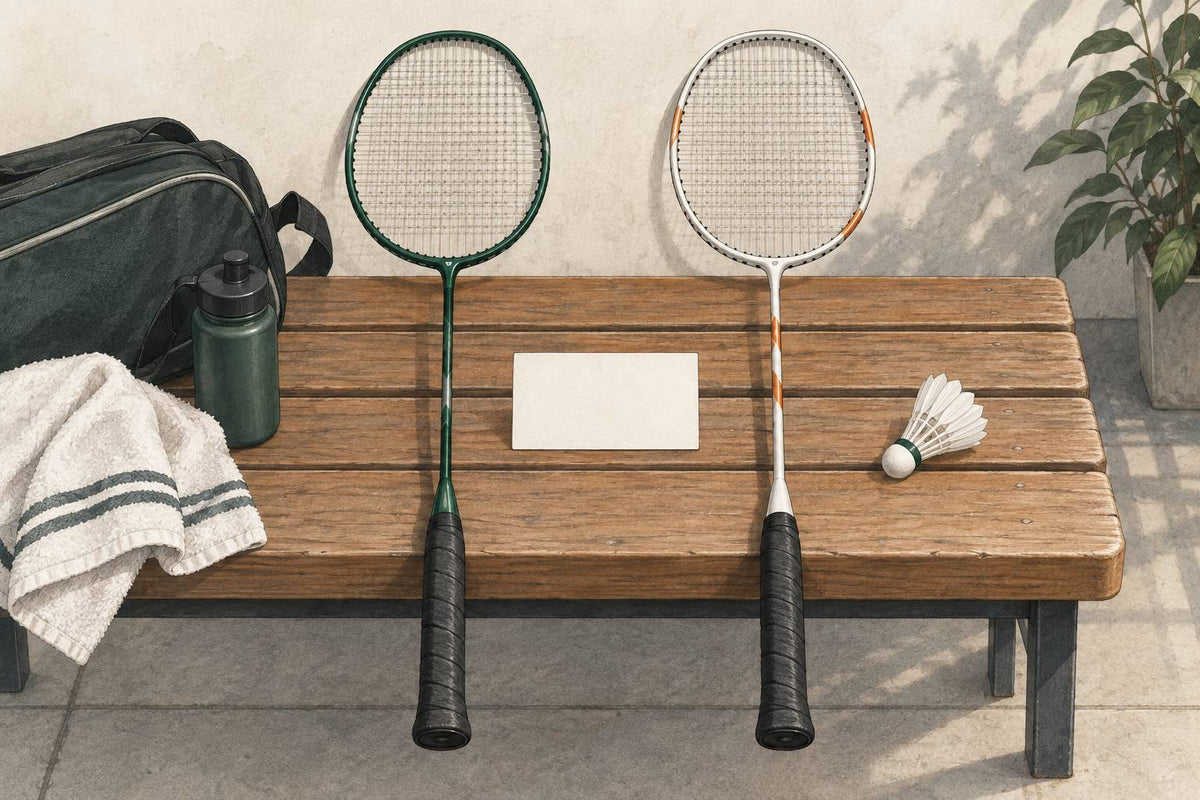
If you’re choosing between two badminton rackets that feel identical, don’t let the sharper colourway make the performance decision. A glossy factory paint finish can make a racket look faster, but your swing will notice weight, balance, shaft flex, string tension, and frame shape far more. Decorative paint is mostly a finish; functional coatings are a different subject. So does racket paint job affect badminton performance? In normal play, the honest answer is: almost never enough to choose one racket over another.
Paint as the tiebreaker? If two rackets truly match your preferred weight, balance, flex, and feel, choose the one you’ll enjoy picking up. If you’re still comparing real playing specs, browse our badminton rackets collection and check live availability.
In This Guide
Does racket paint job affect badminton performance?

Paint colour alone is not a reliable guide to speed, power or control; compare the finished racket’s actual specifications and condition. The useful myth-buster is a 2025 peer-reviewed review in Coatings, described by its authors as the first systematic review of badminton racket coatings. It explains that coating processes began with an aesthetic role and later developed into functional systems designed for more specific goals.
That distinction matters. A colourway can change how much you like picking up the racket, but the review places actual hitting behaviour mainly in the carbon fibre modulus, structural design, and shaft stiffness, with coatings acting as a secondary optimization layer. So if you are choosing between two paint schemes of the same racket, pick the one you enjoy. If you are choosing for performance, judge the racket underneath the paint.
Functional coatings are different from a colourway

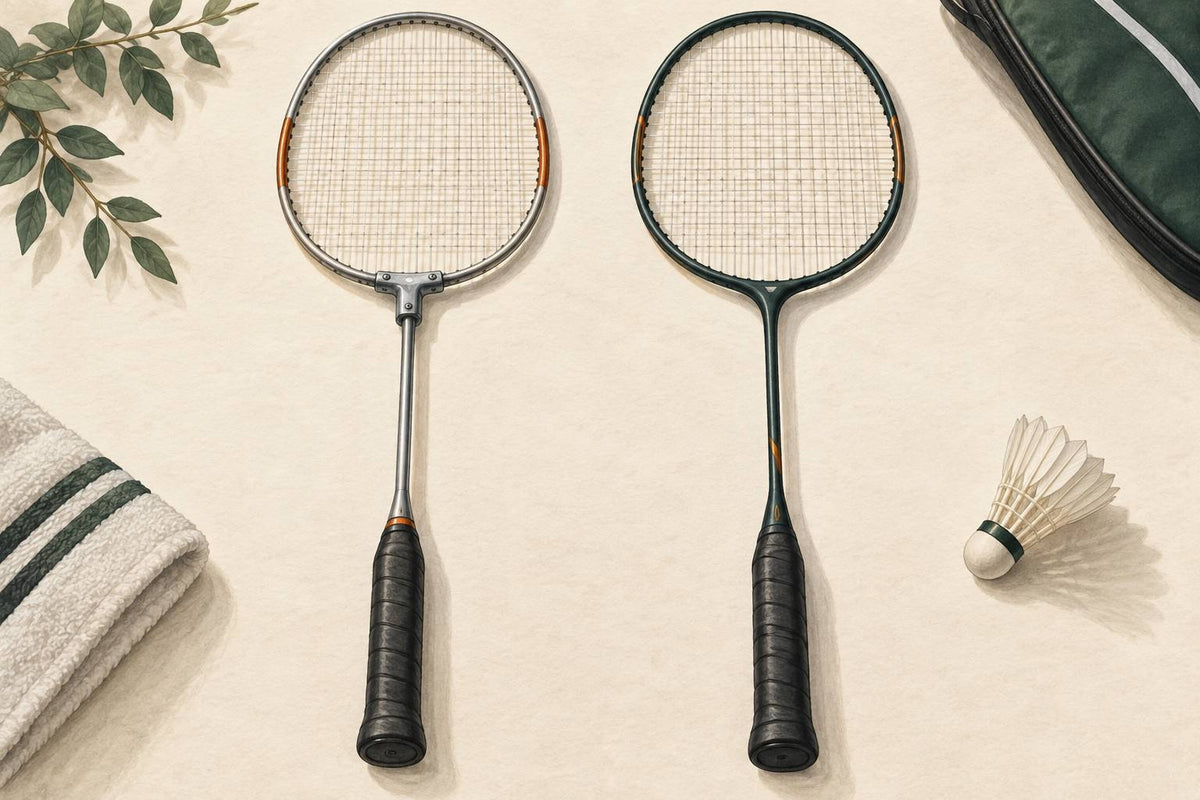
When coating science comes up, it is not talking about a black, red, matte, or limited-edition colourway by itself. A colourway is mainly the visible finish. Functional coatings are engineered surface systems aimed at specific problems:
- Superhydrophobic coatings: water-repellent surfaces for environmental adaptability, with very limited relevance to normal air drag.
- Anti-scratch coatings: protection against surface wear so the frame stays more consistent over time.
- Vibration-damping coatings: feel-focused layers that help reduce high-frequency feedback after impact.
- Strength-enhancing coatings: surface support intended to protect structural stability.
These layers sit on top of the racket’s core construction. Carbon-fibre modulus, frame design, and shaft stiffness still define the basic flex and response; coatings fine-tune edge cases rather than transforming how a racket hits.
Why paint barely changes speed, power, or drag

Frame profile affects airflow, and surface condition can also influence friction and separation. The review’s estimated drag contributions should not be treated as fixed percentages for every racket, swing direction and speed.
A water-repellent coating is not automatically a faster finish in air. The review also discusses an experiment applying conductive paint to strings, but that does not by itself measure the effect of a frame’s decorative paint. Compare the complete racket rather than inferring a performance gain from a coating label.
When surface condition can matter a little

The honest nuance: a small chip or isolated scratch in the paint is usually a cosmetic issue, not a meaningful performance change. You are unlikely to feel one mark in your swing speed, power, or shot quality.
Surface condition becomes more relevant when damage is widespread or the frame is coated with dirt, old grip residue, dust, or grime. At that point, the surface can slightly disturb airflow and add a bit of swing resistance. It is still a small effect, but it is more plausible than claiming one colourway is faster than another.
Protective coatings are best understood as preservation tools: they help maintain surface integrity, structural consistency, and stable friction over time. Damping layers aim to change vibration and feel; lower vibration alone does not establish reduced upper-limb injury risk.
For practical upkeep, see our badminton racket care guide.
What to compare instead of paint

Compare the specs that change how the racket moves: swingweight, total weight, balance point, shaft stiffness, and frame construction. In a 20-player smash study, five rackets with swingweights from 85–106 kg·cm² changed racket-head speed as swingweight rose, which is why timing can feel different even when shuttle speed does not; start with our swingweight guide.
- Total weight: a 4U racket is typically 80–84g, while 3U is typically 85–89g; compare the trade-off in our 3U/4U/5U guide.
- Balance point: head-heavy means the balance sits closer to the head; head-light means it sits closer to the handle.
- Shaft flex: shaft deflection contributed about +13.2% racket-head velocity in a full smash, so read the stiff vs flexible shaft guide before judging by colour.
Which should you choose?
Start with the spec that changes how the racket moves in your hand.
| Choose by | Pick this if... | Why it matters |
|---|---|---|
| Weight | Choose 4U, 80–84g, for faster handling; 3U, 85–89g, for more mass and smash momentum. | Total weight is one part of handling; balance, swingweight and setup also matter. |
| Balance | Head-light suits speed and defence; head-heavy suits players who want more rear-court weight. | Two rackets with the same total weight can feel different because of balance point. |
| Shaft feel | Match stiffness to your timing and ability, not the surface finish. | A stiffer shaft rewards precise timing; a more flexible shaft changes the timing and feel of the response; neither label guarantees a better shot. |
| Condition | Prioritize a clean, structurally sound frame over one with heavy dirt or surface wear. | Extensive dirt or damage can slightly increase swing resistance. |
Once your weight, balance, and shaft picks line up, compare current options in our rackets collection.
Get 10% off your first order
Join the Badminton House list and we’ll email you a 10% welcome code — plus training guides, technique advice, and badminton updates.
By subscribing, you agree to receive Badminton House emails and can unsubscribe anytime.
If a colourway makes you excited to pick up the racket, that still matters — just do not mistake it for performance technology. We play badminton ourselves, so if you are comparing rackets and want a second opinion on weight, balance, flex, or string setup, contact us.
Choose the racket spec that fits your swing — not just the paint job.
Browse Badminton RacketsCheck live availability and compare options for your playing style.

Leave a comment
This site is protected by hCaptcha and the hCaptcha Privacy Policy and Terms of Service apply.