
Last updated: July 2026 · Written by the team at Badminton House
Quick Answer: Stop Backpedaling in Badminton
Stop trying to run straight backward; turn your body first so you travel sideways to the rear court, then recover with your eyes up.
Turn
Best choice: split, pivot into a sideways half-body shape, then move to the shuttle instead of stepping back while facing the net.
Chassé
Use this for short rear-court adjustments or recovery when one foot can chase the other without crossing.
Crossover
Use this when you need more distance, but keep the turn first so the stride gets longer and steadier.
To stop backpedaling in badminton, start by checking your first two steps. Many players “go back” by staying square to the net and stepping straight backward, which makes each stride short and the hit feel wobbly. The practical fix starts with turning first: get your body side-on early so your legs can travel with power instead of shuffling under pressure.
Check the route before adding speed. Your first travel step should follow a body turn, not a straight backward step while you stay square to the net.
In This Guide
Why Backpedaling Breaks Your Rear-Court Movement

Backpedaling is the mistake of facing the net and literally running backward. That makes your steps short, your base narrow, and your hitting position unstable, especially when the shuttle is already behind you. You also need a route that lets you see the shuttle, organize your feet, and prepare a clean overhead.
That matters for control as much as speed. Badminton injury studies include rear-court incidents and side/backward stepping mechanisms, including plant-and-cut patterns and backward or lateral landings, but better footwork is not a guarantee against injury. The practical goal is simpler: arrive balanced enough to hit, land, and recover. For the broader pattern map, see our rear-court footwork distance guide.
How to Stop Backpedaling in Badminton: Turn First, Then Move
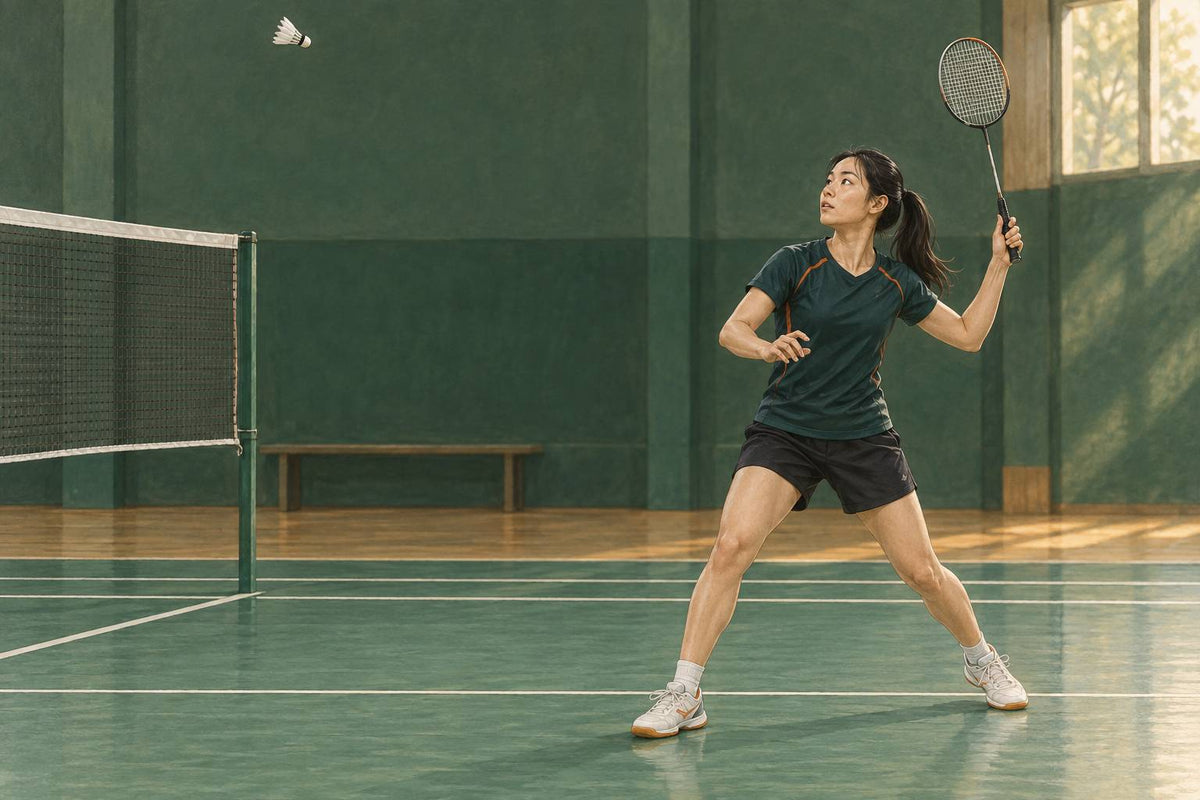
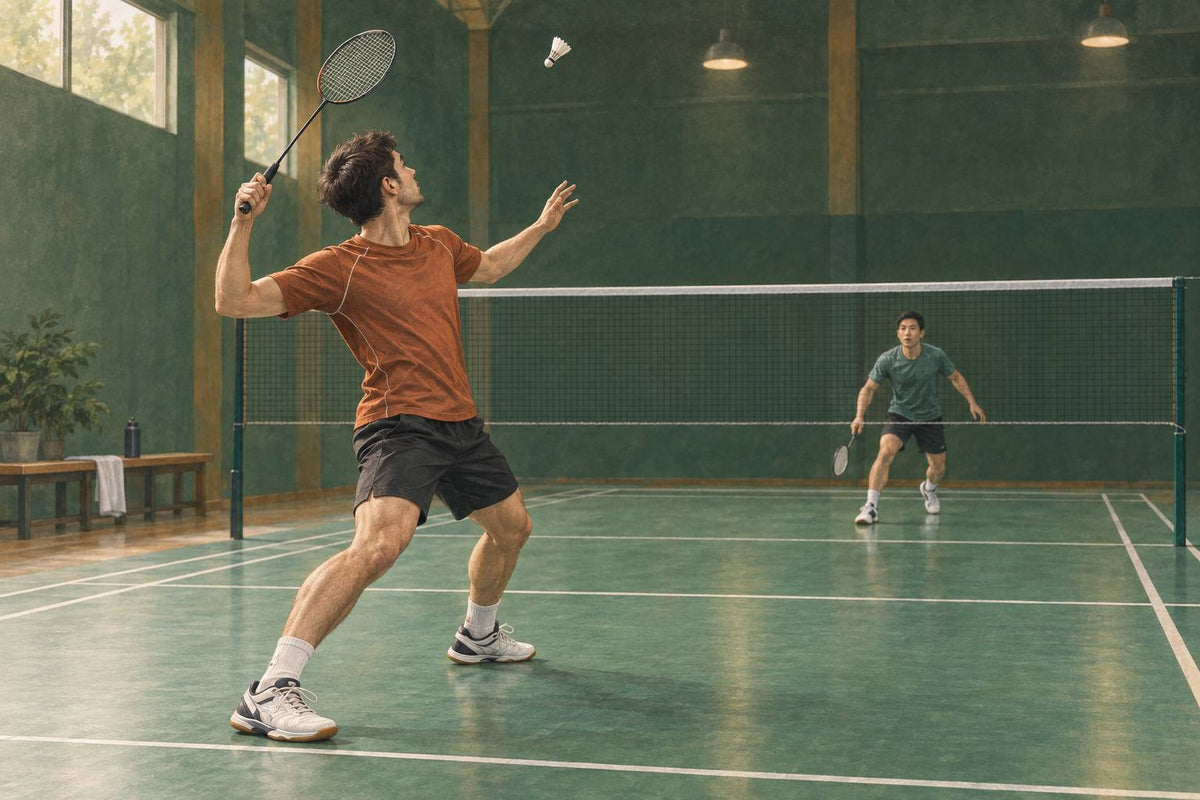
The first correction is not “move faster.” It is turn sooner. Start in a ready position, split as your opponent hits, then rotate into a sideways or half-body shape before you chase the shuttle. That turn lets your hips and feet travel toward the rear corner instead of forcing short, wobbly backward steps.
For a right-hander moving to the forehand rear corner, a useful skip/pivot rhythm is left–turn–left–right: push from the left, turn the body, land the left again, then place the right into a hitting stance. Keep the racket up and your head stable so you can still judge the shuttle.
On the round-the-head side, you may stay a little more forward-facing, but the same idea applies: split on time, then choose your first direction cleanly. If your first move feels late, work on the timing cues in our badminton split step guide.
Choose Crossover or Chassé Travel Instead of Straight-Back Steps
Once you have turned sideways, choose a travel pattern that actually covers ground. Many beginners learn crossover-style movement early because it lengthens the stride compared with straight-back stepping and helps reduce the number of steps needed to reach the rear court.
Chassé is different: it is a quick gliding step where one foot chases the other without crossing over. Use it for efficient short-distance movement, small rear-court adjustments, and recovery after the hit. A simple coach-taught rear-court sequence is: split step, pivot out, land, scissor kick, then chassé back toward base while keeping your eyes available for the next shot.
If you are unsure whether crossing your feet is always wrong, read Is Crossing Your Feet Bad Badminton Footwork?.
Practice Progression: Eyes Up, Controlled Landing, Clean Recovery
Build the habit in layers. First, use slow shadow reps and finish balanced in the rear court. Once that feels automatic, lengthen the stride slightly so you cover the same distance with fewer small steps. Only then add the scissor-kick recovery: load, rotate through the overhead stroke, land under control, and let the landing send your weight forward.
- Eyes up: recover while keeping the shuttle and opponent’s racket in view.
- No blind run: do not turn your back and sprint to base; losing visual contact can disturb balance and delay your next reaction.
- Landing check: finish wide enough to stabilize before pushing off again.
Which Rear-Court Movement Should You Choose?
Choose the pattern that lets you arrive sideways, balanced, and still tracking the shuttle—not the one that feels fastest for the first step.
| Choose | Use it when... |
|---|---|
| Chassé | Use for short rear travel or recovery; one foot chases the other without crossing, helping you glide under control. |
| Crossover step | Use when you need more court coverage than shuffle steps give, then arrive in a hitting stance. |
| Scissor kick | Use after reaching the forehand rear corner sideways; land balanced with the racket leg in front for recovery. |
| Avoid backpedaling | Facing the net while stepping straight back shortens stride, raises step count, and can leave you unstable on contact. |
Get 10% off your first order
Join the Badminton House list and we’ll email you a 10% welcome code — plus training guides, technique advice, and badminton updates.
By subscribing, you agree to receive Badminton House emails and can unsubscribe anytime.
Backpedaling is a habit you can retrain: turn first, travel sideways, land under control, then recover with your eyes up. We play badminton ourselves, so if you want help checking whether your rear-court movement issue is technique, timing, or setup, contact us and describe what happens in rallies.
Need better court grip for clean rear-court stops?
Check Footwear AvailabilityBadminton shoes can help with grip, lateral stability, and controlled landings while you practise the footwork.

Leave a comment
This site is protected by hCaptcha and the hCaptcha Privacy Policy and Terms of Service apply.