
Last updated: July 2026 · Written by the team at Badminton House
Quick Answer: Badminton Backhand Clear
Use the badminton backhand clear as a defensive rear-court escape: switch to a bevel grip, get behind the shuttle, contact high, and create power with a relaxed forearm snap instead of brute arm strength.
Default
Best choice: play the backhand clear with a bevel grip when the shuttle is behind you on the backhand side and you cannot take it round-the-head. Split, chasse, pivot, lunge on the racket foot, then hit high and recover to base.
Forehand
If you have time to move around the shuttle, choose the forehand or round-the-head clear instead. Most players can clear deeper and safer from the forehand side than from a pressured rear-court backhand.
Thumb
Use a flatter thumb-on-top backhand grip for shuttles level with you or in front, such as backhand defence and drives. For a rear-court backhand clear, that flat thumb grip restricts the wrist and forearm action you need for length.
If your badminton backhand clear keeps landing mid-court, you are not alone. For many intermediate players, this shot turns into a panic swing: the shuttle gets past your hitting shoulder, you cannot take it round-the-head, and the reply floats short enough for your opponent to attack.
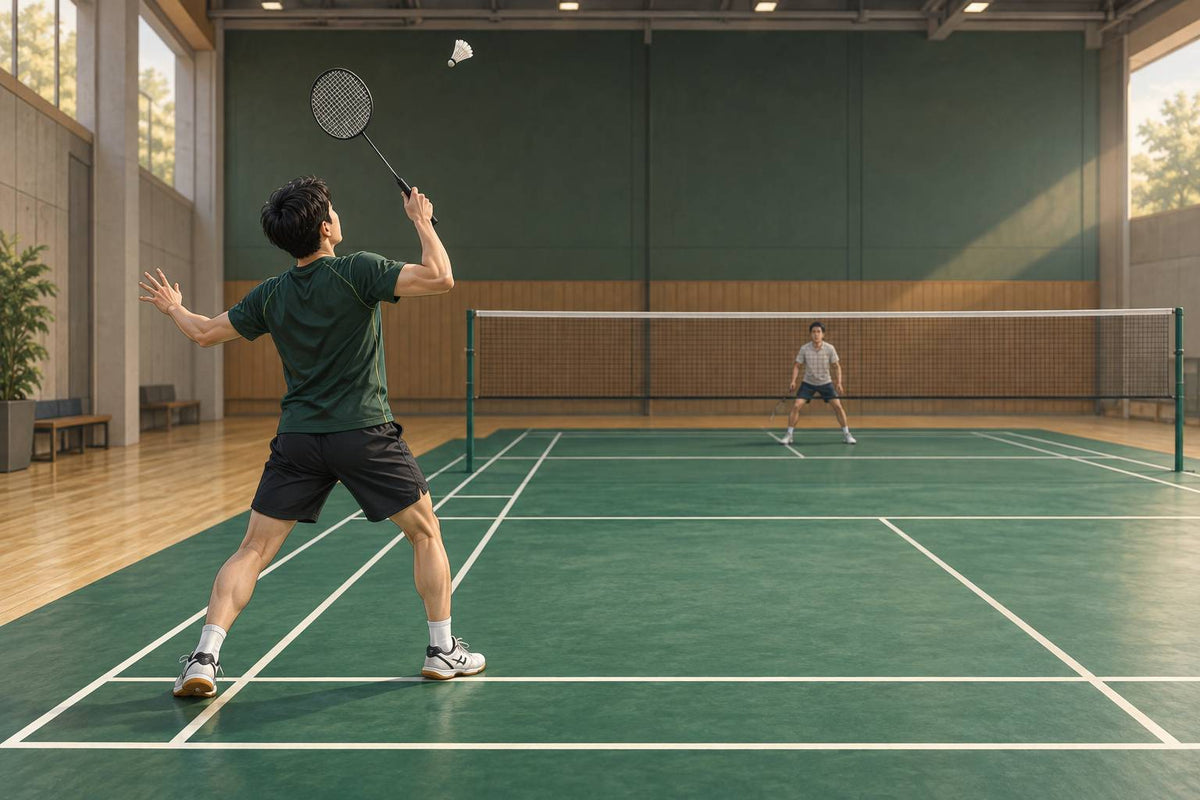
A good badminton backhand clear is not about muscling the shuttle with your whole arm. It is a defensive reset shot: when you cannot play a forehand or round-the-head stroke, you use the right grip, turn your back toward the net, contact the shuttle high, and send it high and deep toward your opponent's rear court.
This guide walks through the practical fix: bevel grip instead of a flat thumb grip, split-step to chasse to pivot to lunge footwork, relaxed forearm action, and simple practice progressions before you add match pressure.
Build the shot from the ground up. Stable indoor badminton shoes help the chasse, pivot, and racket-foot lunge that make a rear-court backhand possible. See current options in our badminton footwear collection.
In This Guide
- What Is a Badminton Backhand Clear For?
- Which Grip Should You Use for a Backhand Clear?
- How Do You Get Behind the Shuttle? Split, Chasse, Pivot, Lunge
- Where Does Backhand Clear Power Come From?
- How Should You Practice the Backhand Clear?
- What Gear Supports the Backhand Clear?
- Which fix should you choose first?
What Is a Badminton Backhand Clear For?
A badminton backhand clear is a rear-court defensive shot used when the shuttle is on your backhand side and you cannot get into position for a stronger forehand or round-the-head reply. In other words, it is not usually your first choice; it is the shot that keeps you alive when the rally has already put you under pressure.
The goal is still the same as a forehand clear: send the shuttle high and deep toward your opponent’s rear court. If the clear travels far enough, it forces your opponent back, buys you recovery time, and turns a rushed defensive situation into a neutral reset.
Think of it as a reset shot. A good backhand clear does not need to win the rally outright. Its job is to stop a short, weak reply from being attacked and give you time to recover to base.
Whenever you have enough time to move around the shuttle, a forehand or round-the-head overhead is usually the stronger option. The backhand clear matters because rallies do not always give you that time. When you are late in the rear court, a reliable backhand clear can keep the rally balanced instead of handing your opponent an easy attack. For the broader movement base behind this shot, see our badminton footwork basics guide.
Which Grip Should You Use for a Backhand Clear?

The most common badminton backhand clear grip mistake is using a flat thumb grip as if you were blocking a drive or making a simple backhand push. That thumb-on-the-back position can feel strong at first, but it restricts the wrist and forearm action you need for a rear-court clear.
For a rear-court backhand clear, use the bevel grip: the thumb sits diagonally on the slanted bevel of the handle, not flat behind it. This position gives your forearm room to rotate, which is where the clean “whip” in the backhand clear comes from.
Grip checkpoint. If your thumb is completely flat on the wide back panel of the handle, you are probably in a standard backhand thumb grip. For the rear-court clear, move the thumb onto the diagonal bevel so the racket can rotate freely through contact. For a full beginner grip breakdown, see our badminton grip guide.
How to find the bevel grip from a backhand grip
Start in a normal backhand grip. Your thumb will likely be resting on the broad back face of the handle, and the strings will feel square to the shuttle. From there, rotate the racket slightly so the strings face more diagonally. As the racket turns, let your thumb slide off the flat face and onto the slanted ridge of the handle.
That ridge is the bevel. You should still feel support from the thumb, but you should not feel “locked” into one straight pushing direction. A good bevel grip feels like it lets the racket head turn over quickly instead of forcing you to muscle the shuttle with the shoulder.
- Too flat: thumb pressed straight behind the handle, useful for some backhand defensive shots and drives, but limiting for the rear-court clear.
- Better for the backhand clear: thumb angled across the slanted bevel, with the grip relaxed enough for forearm rotation.
- Feel cue: you should be able to “snap” through the shuttle without squeezing the handle early.
Your thumb position changes with the contact point
The confusing part is that “backhand grip” does not mean one fixed thumb position for every backhand shot. Your grip should match where the shuttle is when you hit it.
| Shuttle position | Better grip choice | Why it matters |
|---|---|---|
| Level with you or in front | Standard backhand thumb grip | The thumb-on-top position can support compact backhand blocks, pushes, and defensive contacts. |
| Behind you in the rear court | Bevel grip | The thumb moves further around the handle so your forearm can rotate and the racket can travel through the shuttle. |
That second row is the key for the badminton backhand clear. When the shuttle has gone past your body into the rear backhand corner, a flat thumb grip tends to make the shot feel like a push. The bevel grip lets you turn the forearm and send the shuttle high and deep instead of floating it short.
A simple self-check before you hit
Before adding speed, pause in your rear-court backhand preparation and check three things:
- Thumb on bevel: your thumb is diagonal, not flat behind the handle.
- Relaxed hold: your fingers are secure, but you are not squeezing hard before the swing.
- Room to rotate: the shuttle is not jammed too close to your body, so your forearm can turn through contact.
How Do You Get Behind the Shuttle? Split, Chasse, Pivot, Lunge

For a right-handed player, the rear-court backhand clear starts with the feet, not the racket. If you arrive late and reach sideways, the shot becomes a panic swipe. If you get behind the shuttle first, you create the space, time, and body position needed to hit a higher, deeper clear.
Use this sequence as your default movement pattern:
| Step | What to do | Why it matters |
|---|---|---|
| 1. Split step | Time a small split as your opponent hits, then push toward your backhand rear corner. | You load both legs so the first movement is explosive instead of flat-footed. |
| 2. Chasse | Chasse diagonally back toward the shuttle without crossing your feet too early. | The chasse gets you behind the shuttle while keeping your balance available for the hit. |
| 3. Pivot | Turn your body so you face the rear court and your back is moving toward the net. | This lines up the shoulder, elbow, forearm, and racket for a proper backhand action. |
| 4. Lunge | Take the final step onto your racket foot, with your back facing the net at contact. | The lunge gives you reach and a stable base so you can contact high instead of collapsing into the shot. |
Key checkpoint: on a right-handed backhand clear, your final step is onto your right foot and your back should face the net as you strike. If your chest is still open to the net, you are probably reaching instead of getting behind the shuttle.
The common mistake is trying to swing harder while arriving beside the shuttle. That position leaves the shuttle too close to the body, cuts off forearm rotation, and usually produces a short clear. The fix is earlier movement: split on time, chasse with purpose, pivot fully, then lunge into a balanced hitting position.
- Too late? Make the split step smaller and sharper so you can push immediately.
- Too cramped? Pivot earlier so there is room between your body and the shuttle.
- Off balance after contact? Land the lunge under control, then push off the racket foot to recover toward base.
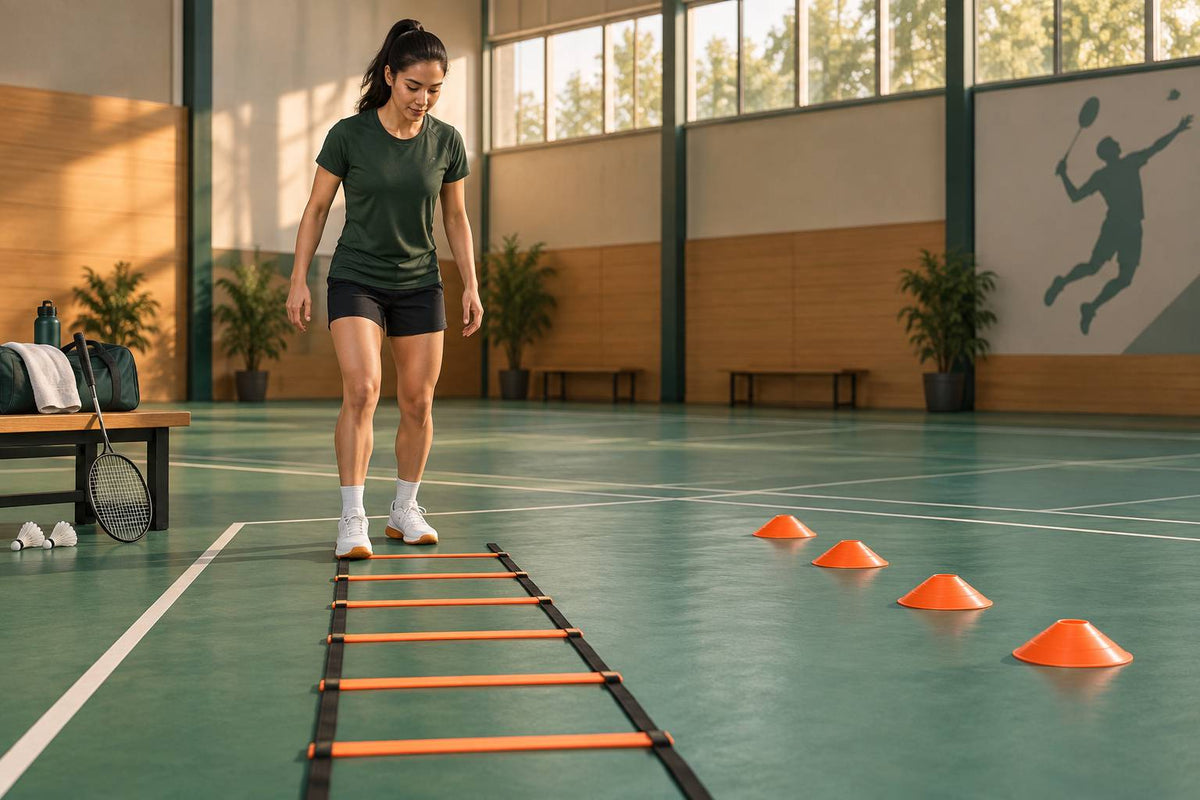
If this movement feels awkward, spend a few sessions drilling it without hitting: split, chasse, pivot, lunge, freeze the contact shape, then recover. For a broader breakdown of movement patterns, read our badminton footwork basics guide.
One practical note: rear-court backhand footwork asks a lot from your shoes because you are pushing, pivoting, and lunging in quick succession. If your current pair slips or feels unstable during the chasse-and-pivot movement, check the current badminton footwear collection before assuming the technique is the only problem.
Where Does Backhand Clear Power Come From?

The badminton backhand clear feels like an arm-strength shot when you are late. That is why so many intermediate players tense the shoulder, swing harder, and still send the shuttle short. The better pattern is almost the opposite: stay relaxed, arrive explosively with your feet, give yourself space, then let the forearm rotation and final snap do the work.
Think of the shot as a chain. Your split step helps you leave early, the chasse and pivot get your body turned, the final lunge puts your racket foot under control, and the bevel grip lets the forearm supinate through contact. If one link is missing, the swing usually becomes a cramped push instead of a clean clear.
Key feeling: the backhand clear is not a big shoulder swing. It is a relaxed preparation, a quick forearm rotation, and a crisp snap at the highest contact point you can reach.
Set the arm before you swing
In preparation, keep the shoulders relaxed and avoid lifting the whole arm too early. A low elbow in the preparation phase helps you stay loose, then the arm comes through as you lunge and rotate. If your shoulder is tight before the shuttle arrives, your racket head slows down before the important part of the swing.
The contact should not be jammed beside your ear or directly above your head. Give yourself enough room to rotate the forearm. A useful spacing cue is to meet the shuttle roughly an arm-plus-racket length away from the body. That distance lets the racket face square up through the shuttle instead of slicing weakly across it.
Lunge just before contact
The final lunge is not just transportation to the corner. It is part of the power source. As you step onto the racket foot, your body stabilizes and your back turns toward the net. That gives the hitting arm a platform to rotate from. If you reach with the arm first and lunge after the hit, the shuttle has already dropped and the shot becomes a rescue push.
Time the lunge so your foot plants just before contact. You should feel balanced enough to hit and recover, not falling sideways into the tramlines. The better your lunge timing, the less you need to muscle the shuttle with the upper arm.
Use forearm supination, then snap
For a right-handed player, the backhand clear uses forearm supination: the outward rolling action that turns the racket through the shuttle. The bevel grip matters because it gives your wrist and forearm room to rotate. A flat thumb grip can feel strong for short backhand blocks or drives, but it restricts the rear-court backhand clear when the shuttle is behind you.
The snap happens late. Stay loose during the approach, then accelerate through the shuttle at the last moment. If you squeeze and stiffen too early, the racket head loses whip. If you wait too long and contact the shuttle after it drops, even a fast forearm will usually produce a short clear.
Contact as high and early as possible
High contact is the difference between a deep defensive clear and a short invitation for your opponent to attack. Your goal is to find the shuttle early, reach up into the highest comfortable contact point, and send it high and deep before it falls below your striking zone.
- Relaxed shoulders: tension makes the swing slower and shorter.
- Low elbow in preparation: stay compact before the arm comes through.
- Lunge before the hit: plant the racket foot so the arm can rotate from a stable base.
- Room to rotate: avoid letting the shuttle get too close to your body.
- Arm-plus-racket spacing: meet the shuttle away from you, not cramped beside your head.
- Highest possible contact: the earlier you strike, the easier it is to clear deep.
If you want to understand the same power principle on the forehand side, read our badminton forearm rotation power guide. The movement direction is different on the backhand clear, but the lesson is similar: racket-head speed comes from efficient forearm action, not from forcing the shot with the shoulder.
How Should You Practice the Backhand Clear?
Do not try to repair your badminton backhand clear by playing full-speed games and hoping it appears. Under pressure, most players simply return to the same rushed habit: late movement, flat thumb grip, low contact, and a short clear. Build the motion in pieces first, then add the shuttle, then add decision-making.
Start slower than you think. For the first few sessions, separate the arm action from the footwork so your body can learn the elbow raise and forearm supination without the panic of chasing a shuttle.
Stage 1: No-shuttle arm-action reps
Stand still in a bevel grip and rehearse the hitting action without a shuttle. Keep the shoulder relaxed, raise the elbow, and feel the forearm roll outward through the imaginary contact point. The goal is not speed. The goal is a clean sequence: loose grip, elbow up, forearm supination, then a short snap through contact.
- Do 10 slow reps where you pause at the high contact position.
- Do 10 smooth reps where the forearm turns through contact without tightening the shoulder.
- Do 10 reset reps where you finish the swing, relax the hand, and return to a ready position.
Stage 2: Footwork without hitting
Next, practise the movement pattern on court without striking the shuttle: split step, chasse toward the backhand rear corner, pivot so your back turns toward the net, then lunge onto the racket foot. Hold the final position for a moment and check whether you have enough space between your body and the imaginary shuttle.
This is where many Canadian club players lose the shot. They arrive beside the shuttle instead of getting behind it, so the arm has no room to rotate. If your footwork is still inconsistent, review the movement basics in Badminton Footwork Basics and keep the backhand-corner pattern controlled before you add speed.
Stage 3: Combine movement and contact
Once the arm action and footwork feel separate and repeatable, add an easy feed. Ask a partner to lift slowly to your backhand rear court, or self-feed if you are working alone. Your first target is not maximum distance. Your first target is clean timing: arrive early enough to contact high, keep space for the forearm to turn, and send the shuttle upward with shape.
- Round 1: aim for height and clean contact, even if the shuttle lands mid-court.
- Round 2: add depth by improving timing, not by swinging harder.
- Round 3: recover immediately after the lunge so the shot does not leave you stuck in the corner.
Stage 4: Add light pressure, then real pressure
When the clear is consistent in feeding drills, add a simple constraint: the feeder can play either a backhand-corner lift or a neutral shot to the middle. Now you must split step, read the shuttle, and decide. Keep the pace moderate until you can still use the bevel grip and high contact point under movement.
Only after that should you test it in games. And keep the tactical choice simple: if the shuttle gives you enough time to move around it, a forehand or round-the-head clear is often the stronger option. Use the backhand clear when you need it, but train it well enough that it is not a panic reply.
Practice checklist
- Bevel grip set before the swing.
- Elbow rises before the forearm snap.
- Contact is high and away from the body.
- Final step lands on the racket foot.
- Recovery starts immediately after the hit.
For repeated chasse, pivot, and lunge work, proper indoor court shoes matter more than most players realize. The Babolat Shadow Tour Men’s Badminton Shoes – Orange is a non-marking indoor court shoe built for exactly that kind of stop-start lateral movement, and Badminton House ships across Canada.
What Gear Supports the Backhand Clear?
Technique matters most, but gear can either support the movement or fight against it. For a badminton backhand clear, the biggest equipment priority is not a “power racket” — it is getting your feet into position early enough to use the footwork and contact point from the earlier sections.
Start with court shoes. Proper badminton footwear supports the chasse-and-pivot footwork that gets your back turned toward the net and your racket foot into the lunge. Check the current footwear lineup at Badminton House footwear, which ships across Canada.
| Gear area | How it helps the shot | Where to check |
|---|---|---|
| Badminton shoes | Help you split, chasse, pivot, and lunge with more confidence on indoor courts. If your shoes slide or feel unstable when you turn your back to the net, your backhand clear will usually become rushed. | Footwear collection |
| Racket feel | A racket that feels too slow in the backhand corner can make late contact worse. If you are comparing balance points, read the head-heavy vs head-light racket guide before browsing live racket stock. | Badminton rackets |
| Grip setup | A grip that is too slippery, too bulky, or worn flat can make the grip change less reliable. Use the earlier grip section for the bevel-grip position, then fine-tune your handle feel with the overgrip, replacement grip, and towel grip guide. | Accessories |
If you are upgrading one item specifically for this shot, prioritize stable non-marking court shoes first. The Babolat Shadow Tour Men’s Badminton Shoes – Orange is the most directly relevant gear item for supporting the footwork behind this shot.
Which fix should you choose first?
If your badminton backhand clear keeps breaking down, do not try to fix everything at once. Match the miss to the most likely cause, clean that piece up in practice, then add pressure later.
| What happens | Choose this fix first | Why it helps | Next practice cue |
|---|---|---|---|
| You arrive late or feel jammed | Fix the movement pattern before the swing. | Getting behind the shuttle gives you the space, time, and body position needed to produce a stronger clear. | Shadow the split-step, chasse, pivot, and racket-foot lunge without hitting. |
| Your clear lands short | Prioritize earlier, higher contact. | A high contact point with enough room away from the body makes it easier to send the shuttle deep instead of floating a weak reply. | Use controlled feeds and aim for clean contact before trying to hit harder. |
| Your swing feels tense or forced | Slow down the arm action. | Backhand clear power is not mainly about brute arm strength; it comes from relaxed preparation, efficient footwork, and sharp forearm rotation. | Drill the elbow raise and forearm rotation slowly without a shuttle first. |
| It works in drills but fails in games | Delay match pressure. | Controlled repetition lets you lock in the movement and hitting sequence before the shot turns into a rushed defensive response. | Move from shadow swings to easy feeds, then to pressure feeds only after the contact is reliable. |
| You slip, skid, or cannot push off | Check your court shoes. | The rear-court backhand depends on sharp chasse-and-pivot footwork and a solid racket-foot lunge. | The Babolat Shadow Tour Men's Badminton Shoes – Orange is built for exactly this kind of chasse-and-pivot court movement. |
Gear helps most after the technique is organized. If you are also reviewing your setup, check the live badminton rackets and accessories pages, but treat footwork, contact timing, and relaxed forearm action as the first upgrades.
Get 10% off your first order
Join the Badminton House list and we’ll email you a 10% welcome code — plus subscriber-only restock alerts, giveaways, and honest gear advice from players.
By subscribing, you agree to receive Badminton House emails and can unsubscribe anytime.
A reliable badminton backhand clear is built patiently: bevel grip, early footwork, high contact, and relaxed forearm rotation before you add match pressure. We play badminton ourselves and are happy to help Canadian players choose gear that supports better movement and cleaner technique — if you want a second opinion, contact us here.
Need court-ready gear for better rear-court footwork?
Shop Badminton FootwearShips across Canada · 14-day returns · Canadian badminton specialty shop

Leave a comment
This site is protected by hCaptcha and the hCaptcha Privacy Policy and Terms of Service apply.