
Last updated: July 2026 · Written by the team at Badminton House
Quick Answer: Badminton Deception Technique
To disguise a badminton shot, make two or three shots look identical until contact, then change only the finish: grip pressure, wrist angle, racket face, or contact speed.
Default
Best choice: make your clear, smash, and drop preparation look the same, then change the wrist and racket face at contact so your opponent cannot move early.
Net
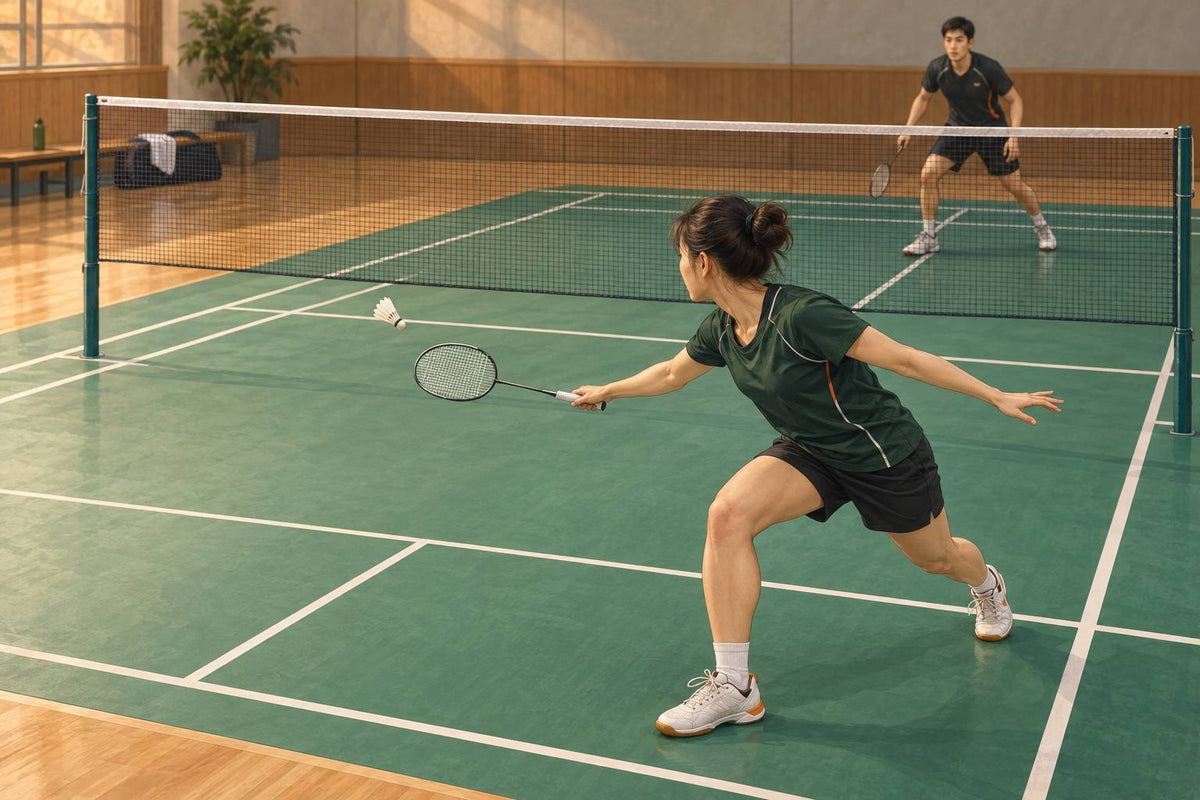
If you reach the shuttle early in the forecourt, show a net shot, hold the posture, then flick late and flat once your opponent starts moving forward.
Advanced
Use double-motion or racket-head fakes only after your basic strokes are consistent; they require fine racket control and enough time to redirect the shot.
If opponents always move before you hit, the problem is usually not power. Your preparation is giving the shot away. A smaller drop swing, a tense grip before a flick, or a racket face that opens too early tells them where to go before the shuttle leaves your strings.
Badminton deception technique fixes that by hiding your intention longer. The goal is not a highlight-reel trick shot; it is to make several shots share the same first picture, then change the finish late enough that your opponent commits early, freezes, or takes a weaker first step.
This guide shows how to disguise badminton shots in a way you can actually train: identical overhead preparation, disguised slice drops, net hold-and-flicks, racket-head fakes, and practice cues that make late changes possible without losing control.
Sharper deception starts with clean preparation. A fast, maneuverable racket can make late racket-face changes feel easier; browse our badminton rackets when you want a frame that stays quick through short swings.
In This Guide
- Why Does Deception Work in Badminton?
- The Core Rule: Identical Preparation, Different Finish
- Disguised Slice Drop: Show Power, Play Short
- Net Hold-and-Flick: Delay, Then Send It Past Them
- Double-Motion and Racket-Head Fakes
- Practice Cues and Gear That Help Late Changes
- Which Deception Technique Should You Choose First?
Why Does Deception Work in Badminton?
A badminton deception technique is any shot played so your opponent cannot confidently read the outcome from your body shape, stroke path, racket movement, or contact timing. In plain English: you show one believable option, then play another before they can react.
The best deception creates one of two reactions: your opponent commits early to the wrong court area, or they freeze because they are unsure where the shuttle is going. If they commit early, they may lose the point immediately because they cannot change direction quickly enough. If they freeze, even for a moment, you still gain time and space for the next shot.
The real goal: do not think of deception as trick shots. Think of it as delaying your opponent’s first step so your straight drop, cross drop, punch clear, or net flick becomes harder to cover.
This is especially powerful in singles, where one wrong first step can open the full court. If you are still building your rally structure, pair this guide with Badminton Singles Strategy for Beginners in Canada so your deceptive shots fit into a clear game plan instead of becoming random risks.
- Commit early: they move before your shot is decided, giving you space behind them or across from them.
- Freeze: they wait too long to read the shuttle, so even a normal-quality shot becomes harder to reach.
- Delay movement: even strong players who avoid guessing can be held back slightly when your preparation looks the same for multiple shots.
The Core Rule: Identical Preparation, Different Finish

The heart of any effective badminton deception technique is simple: your opponent should see the same body shape, racket carriage, and swing preparation for a whole family of shots until the very last moment.
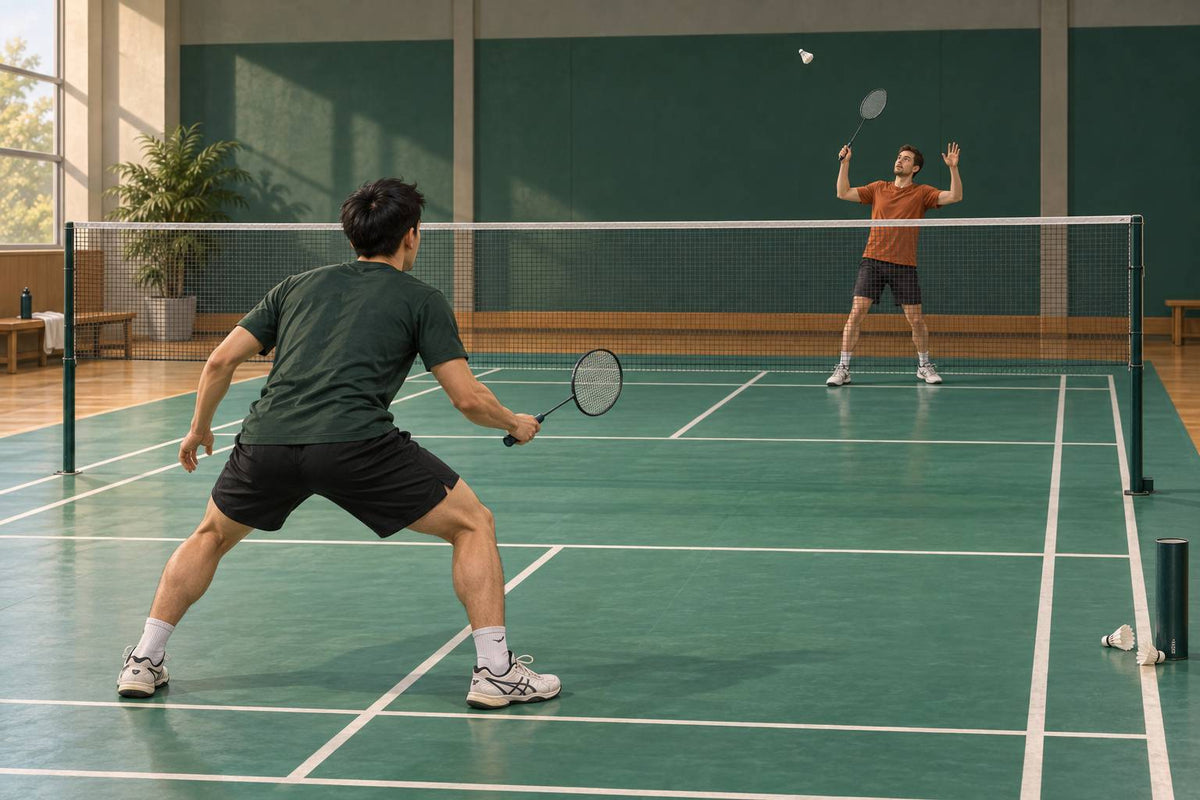
This matters most on overheads. A clear, smash, and drop should begin from the same basic preparation: get behind the shuttle, turn the body, raise the non-racket arm for timing and balance, prepare the racket high, and start the hitting action as if any of the three shots could be coming. If your drop preparation is smaller, slower, or more cautious than your smash preparation, stronger opponents will start moving before you even contact the shuttle.
Think in shot families, not single shots
- Overhead family: clear, smash, stick smash, fast drop, and slice drop should share the same early preparation.
- Forecourt family: net shot, push, lift, and flick should begin from a similar early racket position.
- Midcourt family: drive, block, and soft push become harder to read when the racket stays quiet until the shuttle is close.
The change happens late, not early
Good deception is not a giant fake. If the fake is too big, it slows you down and gives the opponent time to recover. The deceptive action happens in the last milliseconds before contact: a small wrist pivot, a change in racket-face angle, or a softer grip pressure changes the shuttle path after the opponent has already read your original preparation.
For an overhead, that could mean preparing like a full smash, then relaxing the fingers and changing the racket face just before contact to play a drop. For a clear and drop pairing, the early swing should look committed and athletic in both cases; only the final contact quality changes.
"The opponent should read your preparation, not your intention."
Relaxed grip, relaxed wrist, sharper disguise
A tense hand makes deception clumsy. When you squeeze the handle too early, the racket face gets locked and your swing becomes obvious. A relaxed grip lets you keep the same preparation longer, then use the fingers and wrist to adjust the shuttle direction at contact.
That does not mean a loose, unstable grip. It means holding the racket with enough control to guide the face, while staying relaxed enough to tighten at the moment of impact. This is why grip fundamentals are part of deception, not a beginner-only detail. If your bevels, thumb placement, or forehand-backhand changes are inconsistent, the final wrist pivot will be unreliable under pressure.
If the last-instant change feels messy, revisit the foundation first: learn how to hold the badminton racket for forehand, backhand, and neutral grips. Once the grip is clean, the same preparation can produce very different finishes.
Disguised Slice Drop: Show Power, Play Short

The disguised slice drop is one of the most useful examples of badminton deception technique because it starts like a clear or smash, then finishes soft. Your opponent sees the high arm, loaded shoulder, elbow back, and full overhead preparation, so they begin preparing for pace or depth. At the last moment, you take speed out of the swing and guide the shuttle short instead.
The key is not to “look tricky” early. Prepare like a full-power overhead: get behind the shuttle, turn your body, keep your non-racket arm up, and show the same hitting shape you would use for a clear or smash. Then, just before contact, soften the wrist and adjust the racket face so the shuttle is brushed rather than hit cleanly.
Simple cue: sell the power with your preparation, then remove the power at contact. For the full mechanics of a non-disguised drop, see our badminton drop shot technique guide.
How the slice creates the disguise
On a normal overhead, the racket face travels through the shuttle more directly. On a sliced drop, you brush the shuttle sideways. That sideways brushing creates a cutting effect, so the shuttle loses pace and changes angle while still coming from a preparation that looked powerful.
Think of the contact as “shave the side of the shuttle,” not “push the shuttle over.” If you push, the shot often floats and becomes easy to read. If you swing fully through it, the shot may travel too deep. The useful middle ground is a committed overhead shape with a controlled, glancing contact.
Step-by-step: clear or smash preparation, short finish
- Move early and get side-on. You need enough time to make the preparation believable. If you are late, the opponent can often tell you are only surviving the rally.
- Show the same overhead shape. Use the same body turn, shoulder load, and arm preparation you would use before a clear or smash.
- Keep your swing convincing until contact. Do not slow down too early. If the racket speed disappears before the hit, the drop becomes readable.
- Soften the wrist at the last instant. Let the racket face brush across the shuttle instead of striking through it cleanly.
- Recover immediately. A good disguised drop may force a late lunge, but you still need to cover the net reply or lift.
Straight slice vs cross slice
Do not use the same sliced drop every time. Mix straight and cross slices so your opponent cannot settle into your rhythm. If every overhead preparation turns into the same soft diagonal drop, better players will start moving before you hit.
| Variation | Use it when | Main risk |
|---|---|---|
| Straight slice drop | You want the shuttle to fall quickly in front of the opponent after showing a clear or smash shape. | If you over-slice, the shuttle may sit up instead of dropping tight. |
| Cross slice drop | You have pulled the opponent backward or toward one side and want to send the shuttle away from their first movement. | The longer diagonal path gives the opponent more time if the shot is too high or too slow. |
For most Canadian club players, the straight version is the safer starting point: it teaches the same preparation and the soft contact without adding a big angle change. Once the contact feels reliable, add the cross slice so the opponent cannot simply lean forward in one direction.
Common mistakes to avoid
- Changing the preparation too early: if your arm slows down before contact, the opponent reads “drop” instead of “smash or clear.”
- Trying to cut too much: excessive slice can make the shuttle drift wide, sit up, or fail to cross cleanly.
- Using it without a real clear or smash threat: deception works best when the opponent respects the other shots from the same preparation.
- Repeating the same pattern: if you always slice after a big overhead shape, the disguise disappears.
Net Hold-and-Flick: Delay, Then Send It Past Them
The net hold-and-flick is a forecourt badminton deception technique: you arrive as if you are about to play a soft net shot, keep the same posture for as long as possible, then flick the shuttle at the last moment after your opponent has started moving forward.

The key is that your lift preparation must look like your net-shot preparation. If the racket face, grip pressure, body height, and lunge all scream “lift” too early, the disguise is gone. If you show net shot first, the opponent has to respect the front court — and that creates the space behind them.
Build the net shot first. The hold-and-flick only works if your normal net shot is believable. If you need the foundation, start with our badminton net shot technique guide, then add the flick variation.
How the hold-and-flick should feel
- Reach the shuttle early. Early contact gives you more choices at the net: kill, drop, net shot, crosscourt, or flick. If you arrive late, the opponent can read your limited options more easily.
- Show a soft net shot. Keep the racket quiet and the action short. The deception comes from delaying the hit, not from making a big fake.
- Hold the shape. Stay balanced in your lunge and keep the racket face presented as if you are about to guide the shuttle tight to the tape.
- Flick late. Once the opponent commits forward, use a short wrist and finger action to send the shuttle past them.
- Keep the lift flat. A flat lift needs less power and gives the opponent less time. A high, slow lift gives them time to recover and turns your deception into a defensive shot.
The common mistake: waiting without balance
Many players “hold” by freezing their whole body, then lose stability and push the shuttle upward. A better cue is: arrive early, stay relaxed, and keep the racket ready. Your body is calm, but your fingers and wrist are still alive.
In singles, this shot is especially useful because one opponent has to cover both the front court and the rear court. In doubles, use it carefully: the front player may already be hunting the shuttle, so the flick has to be quick, flat, and well placed.
| Cue | What it does | If it goes wrong |
|---|---|---|
| Arrive early | Gives you multiple shot options at the net. | Late contact makes the flick predictable or weak. |
| Same preparation | Makes the lift look like a net shot. | Big backswing tells the opponent to move back. |
| Late flick | Punishes the opponent after they step forward. | Flicking too early removes the deception. |
| Flat lift | Takes time away from the opponent. | A high lift gives them time to recover. |
A simple practice pattern for Canadian club nights: ask a partner to feed tight net shuttles, then alternate between a real net shot and a hold-and-flick without announcing which one is coming. Your goal is not to win the drill with power; it is to make both shots look identical until the last instant.
Double-Motion and Racket-Head Fakes

Double-motion deception is exactly what it sounds like: you begin your racket swing in one direction, withdraw or pause the racket, then hit in a different direction. A common version is to show a crosscourt angle, make the opponent lean that way, then play straight. You can also reverse it: show straight, then send the shuttle crosscourt.
This is one of the more counter-intuitive deception skills because the fake is not just a tiny wrist adjustment. You are asking your hand to start one shot, stop it cleanly, and restart another shot without losing balance, timing, or shuttle control. If the first motion is too big, you arrive late. If the second motion is rushed, the shuttle floats or sits up.
Simple way to understand the difference
- Double-motion fake: start one swing path, pull back or interrupt it, then hit another direction. Bigger deception, but it needs more time and cleaner racket control.
- Racket-head fake: keep the initial motion going, but turn the racket face during the hit. The direction change is smaller, but it is faster and easier to fit into a real rally.
- Triple motion: occasionally used by very skilful players, but rare and usually unnecessary unless your opponent is already reading your simpler fakes.
For most club players, the racket-head fake is the better first step. Instead of making a dramatic second swing, prepare as if you are playing one direction, then change the racket face late with your fingers, wrist, and forearm. That smaller change is usually enough to make an opponent hesitate without making your own contact point messy.
Use double motion when you are early to the shuttle and stable. At the net, that might mean showing a crosscourt net shot before pushing straight. In the midcourt, it might mean shaping for a straight block before turning the racket head to redirect the shuttle away from the opponent’s movement.
The key is still control before trickery. A relaxed grip and short hitting action make late changes easier; if your racket feels slow through these small changes, compare weight and balance notes in our badminton racket selection guide or browse badminton rackets with manoeuvrability in mind.
Practice Cues and Gear That Help Late Changes
Deception is not a trick you add after the stroke. It is built from repeatable preparation, relaxed fingers, and the ability to change the racket face very late without changing your body shape too early. If your setup already tells your opponent what is coming, no amount of wrist flair at contact will save the disguise.
Start your practice with one rule: make the first part of the action identical. For overhead deception, that means your clear, smash, and drop preparation should share the same shoulder turn, arm preparation, and shuttle tracking. For forecourt deception, your net shot and flick should begin from the same calm, early racket position. Only the finish changes.
A simple staged progression
| Stage | Main cue | How to practise it |
|---|---|---|
| 1. Same preparation | Do not worry about fooling anyone yet. | Shadow the same overhead preparation for clear, smash, and drop. At the net, arrive early and hold the same racket position before choosing net shot or flick. |
| 2. Late wrist change | Keep the grip relaxed until the hit. | Use controlled wrist snaps, resistance-band work, or shadow practice to build quick racket-face changes without a big arm swing. |
| 3. Random feeds | Remove the pattern. | Have a partner feed random drives, drops, and flicks. Your job is to show the same preparation, then choose the finish late under match-like pressure. |
| 4. Add consequences | Quality still matters. | Play conditioned rallies where a deceptive shot only counts if it lands with good length, height, or net clearance. A fake that sits up is just a gift. |
Three cues that transfer to matches
- Hold the picture longer. On a disguised drop, show the same smash or clear shape, then soften the wrist and racket face at the last moment. If you change too early, the opponent reads it; if you wait too long, the shuttle may drop too low.
- Shorten the hitting action. The shorter your swing, the longer you can keep multiple shot options alive. This is especially important for net hold-and-flicks, where a compact flick can send the shuttle past an opponent who has already stepped forward.
- Train the hand, not just the arm. Repetitive wrist snaps, resistance-band work, and shadow swings help you change direction quickly without telegraphing the finish with a large shoulder or elbow movement.
Coach yourself with one question: could a partner tell the shot before contact? If yes, slow the drill down and rebuild the identical preparation before adding speed.
Racket setup: why light and fast helps
A light, fast-feeling racket can make deception easier because it supports short hitting actions and late wrist changes. You still need timing and technique, but a racket that moves quickly through small adjustments helps you hold the same preparation longer before changing the face angle or direction.
For Canadian players building this part of their game, browse badminton rackets with manoeuvrability in mind: weight, balance, shaft feel, and how easily the head changes direction in your hand. If you like a more attacking frame but still want quick racket-head acceleration, the Yonex Astrox Series is a useful collection to compare without assuming one racket alone will create deception for you.
Browse Badminton Rackets — Build Faster Late Changes
Free Canadian shipping on $200+ · Ships Canada-wide
Which Deception Technique Should You Choose First?
Pick the deception that fits a shot you already play reliably. If your basic preparation changes from shot to shot, start with identical preparation before adding bigger fakes; deception only works when the opponent believes the first option is real.
| Choose this | Best if... | Main cue | Watch out for |
|---|---|---|---|
| Identical preparation | You are still building consistency, or opponents read your clear, smash, and drop before you hit. | Make the same body and racket preparation for whole families of shots, then change the outcome just before contact. | Skipping the foundation. Solid footwork and basic strokes come first. |
| Disguised slice drop | You can show a full-power overhead action and want the opponent to prepare for a smash or clear. | Use smash-like preparation, then soften the wrist and racket face at the last moment; for slice, brush the shuttle sideways instead of hitting cleanly. | Using the same rhythm too often. Mix straight and cross slices so the drop does not become predictable. For fundamentals, see the drop shot guide. |
| Net hold-and-flick | You reach the shuttle early in the forecourt and can show a net shot before sending the shuttle past an opponent moving forward. | Prepare like a net shot, hold the posture as long as you can, then flick at the last possible moment. | Lifting too slowly. Forecourt deception works better when the lift is flat because it gives the opponent less time. |
| Racket-head fake | You want a quicker fake than double motion and only need a smaller change of direction. | Continue the initial motion, but turn the racket during the hit. | Expecting a huge directional change. This fake is faster, but the change in direction is usually smaller. |
| Double motion | Your opponent reads simpler deceptions, and you have enough time and racket control to fake one direction before playing another. | Start the racket swing in one direction, withdraw it, then swing in a different direction. | Rushing it into matches. Double motion is counter-intuitive and needs plenty of practice. |
| Gear and grip support | Late changes feel slow, or you rely on a large swing to create power. | Use a relaxed grip, train wrist control, and look for a fast, maneuverable racket when checking the Badminton Rackets collection. Orders over $200 ship free in Canada. | Blaming the racket before the technique. Short-swing power and last-instant wrist control are the real enablers. |
Badminton deception FAQ
Get 10% off your first order
Join the Badminton House list and we’ll email you a 10% welcome code — plus subscriber-only restock alerts, giveaways, and honest gear advice from players.
By subscribing, you agree to receive Badminton House emails and can unsubscribe anytime.
Deception is one of those skills that feels small in practice but huge in a rally: a relaxed grip, identical preparation, and a late wrist change can turn a predictable shot into a freeze or wrong-foot. We play badminton ourselves, so if you are working on disguise shots and are not sure whether your racket, grip, or string setup is helping, contact us for gear advice and we will point you in the right direction.
Free Canadian shipping on orders over $200 · 14-day returns · Canadian badminton specialty shop

Leave a comment
This site is protected by hCaptcha and the hCaptcha Privacy Policy and Terms of Service apply.