
Last updated: July 2026 · Written by the team at Badminton House
Quick Answer: Badminton Shoulder Pain
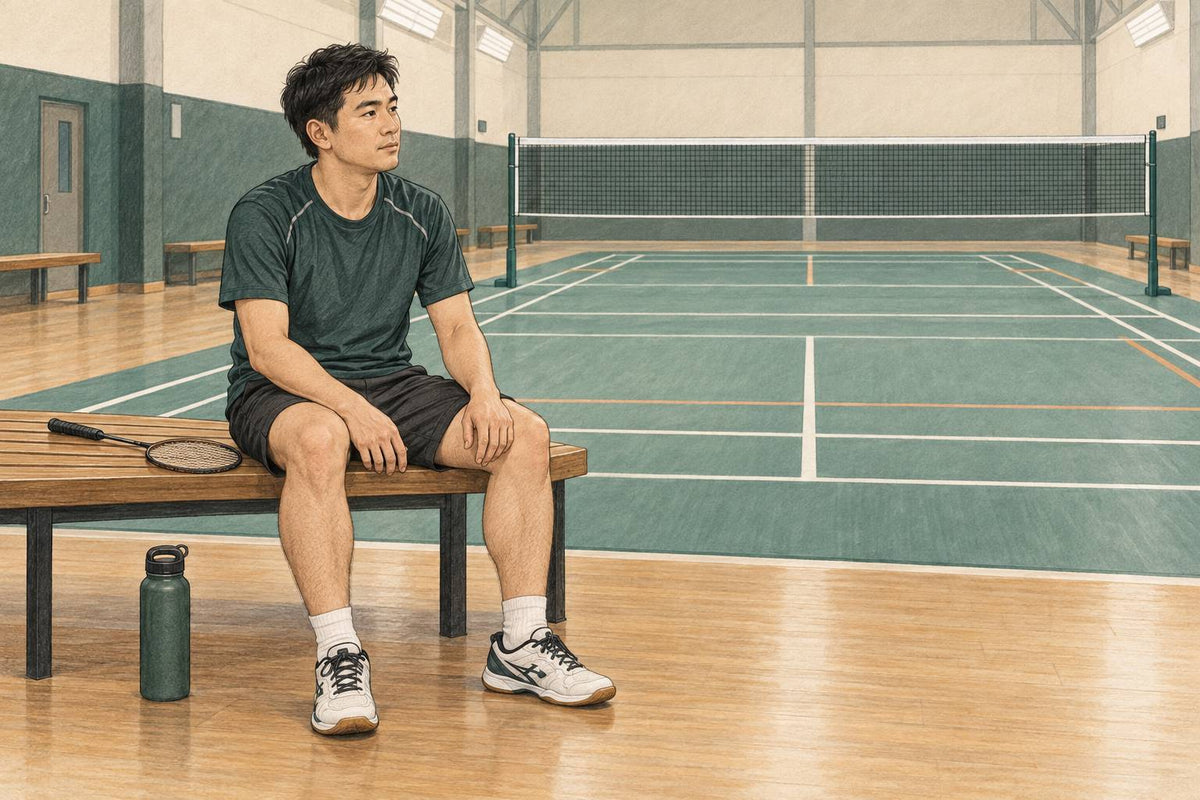
If badminton shoulder pain is mild and gradual, reduce overhead volume first, clean up technique, and check whether your racket setup is adding unnecessary load.
Default
Best first move: take a short break from repeated smashes and clears, add a dynamic warm-up, and rebuild with rotator-cuff and scapular strengthening before increasing intensity again.
Gear
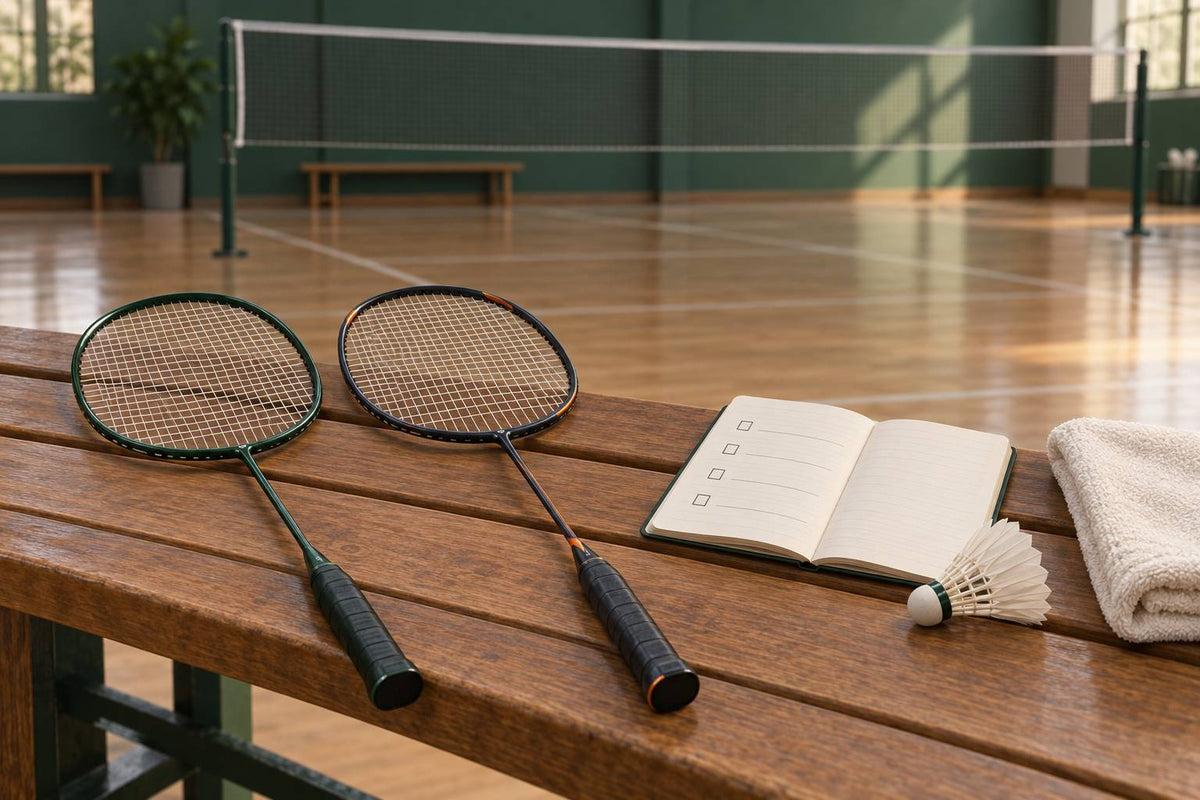
If pain shows up after changing rackets or strings, review racket weight, frame stiffness, grip pressure, and string tension; record any setup change alongside your playing load and symptoms, without assuming that stiffness or tension caused an injury.
Assess
Get your shoulder assessed if pain limits daily activities, you notice swelling or loss of strength, or symptoms do not improve after 2 weeks of conservative care.
Badminton shoulder pain can sneak up fast: one week your overhead clear feels normal, the next you feel a deep ache when you smash, serve, or reach behind your head. Because badminton is built around repeated overhead actions, the shoulder has to generate speed, absorb force, and stay stable through hundreds of swings in a single session.
The shoulder is the most mobile joint in the body, and it relies heavily on the rotator cuff muscles and tendons for control. When technique, training load, recovery, or equipment are off, those tissues can take repeated stress and gradually become irritated. That is why badminton shoulder pain often feels less like one dramatic injury and more like a soreness that keeps returning after club night, league matches, or tournament weekends.
This guide walks through the common causes, technique mistakes, equipment checks, prevention routine, and warning signs that matter for Canadian players training in cold gyms, busy clubs, and back-to-back weekly sessions.
Start with the setup, not just the symptom. If your strings feel harsh or your racket setup may be adding arm load, our Canadian stringing service can help you think through tension and feel before your next restring. Badminton House ships across Canada.
In This Guide
- Why Do Badminton Shoulders Get Sore?
- What Causes Badminton Shoulder Pain?
- Which Technique Mistakes Add Shoulder Load?
- Can Your Racket Setup Cause Shoulder Pain?
- How Do You Prevent Badminton Shoulder Pain?
- What to Do When Shoulder Pain Starts
- When Should You Get Your Shoulder Assessed?
- Which Shoulder-Pain Fix Should You Choose First?
Why Do Badminton Shoulders Get Sore?
Badminton shoulder pain usually starts because the shoulder has to do two difficult jobs at once: move through a huge range of motion and stay stable while the racket accelerates overhead. No joint in the body gives you more freedom of movement than the shoulder, so it depends heavily on the rotator cuff and surrounding muscles to keep the joint controlled during fast strokes. The rotator cuff is a group of four muscles — supraspinatus, infraspinatus, teres minor, and subscapularis — that keep the ball of the shoulder joint centred in its socket during overhead strokes. See AAOS’s rotator cuff overview for the joint anatomy and assessment context.
That is why badminton can be tough on the shoulder even when there is no single dramatic injury. Overhead clears, drops, and especially high-speed smashes repeatedly load the shoulder; drives and serves involve different stroke actions. Over time, those repetitions can create small amounts of tissue stress. If your technique, strength, warm-up, recovery, or equipment setup is not keeping up with your court load, that stress can build into irritation.
Think load, not just pain. A sore shoulder after badminton often reflects repeated overhead loading more than one bad swing. If your symptoms appear after hard smash sessions, long club nights, or back-to-back play days, reduce volume first and rebuild gradually.
In practical terms, the shoulder can become inflamed, stiff, or harder to move through its normal range. Players often notice this as a deep ache when reaching overhead, less power on smashes, or a feeling that the arm does not move as freely the next day. Those early signs matter because gradual microtrauma is a common pattern in badminton shoulder problems.
For Canadian players training through busy club seasons, tournaments, school teams, or winter drop-in schedules, the goal is not to avoid overhead strokes entirely. The goal is to manage the total stress on the shoulder: better warm-up, cleaner mechanics, enough recovery, and a racket setup you can control without excessive effort. If you are also dealing with other overuse issues, our common badminton injuries prevention guide gives the bigger picture across the shoulder, elbow, knee, and ankle.
What Causes Badminton Shoulder Pain?

Most badminton shoulder pain falls into a few patterns. The name matters less than the behaviour you notice on court: overhead discomfort, loss of strength, pain that shows up after play, or a feeling that the shoulder is not moving cleanly.
| Shoulder problem | What is happening | What a badminton player may notice |
|---|---|---|
| Rotator cuff strain or tendonitis | The shoulder-stabilizing tendons become irritated from repeated swings, especially when the shoulder is asked to control fast overhead actions again and again. | A deep shoulder ache during overhead actions, weakness, or night pain. |
| Shoulder impingement | The rotator cuff tendons become compressed against the shoulder blade during arm lifting positions. | Pain and inflammation that are most noticeable when lifting the arm overhead, such as on clears, smashes, and high defensive shots. |
| Labral tear | The labrum, the cartilage that helps stabilize the shoulder, is damaged. Repeated overhead motion can contribute to this type of injury. | Pain, instability, or a catching feeling during movement. |
These patterns can overlap. For example, a player may describe a deep ache on overhead shots and also feel weaker late in a club-night session. Another player may feel less pain at first, but notice that the shoulder catches or feels unstable during certain movements.
Look at the whole injury picture. Shoulder pain can show up alongside other badminton overuse problems, including elbow and wrist pain. If your arm feels overloaded from shoulder to hand, compare the pattern with our badminton elbow and wrist pain guide and the broader common badminton injuries prevention guide.
Use the table as a way to describe what you feel, not as a self-diagnosis. The practical next step is to reduce the aggravating overhead load, then check the technique, equipment, and recovery factors covered in the next sections.
Which Technique Mistakes Add Shoulder Load?

If your badminton shoulder pain shows up most on clears, smashes, or overhead recovery, look closely at technique before blaming fitness alone. Three patterns worth reviewing are late preparation, gripping too tightly throughout the swing, and an arm-dominant stroke without coordinated body rotation; a video check cannot diagnose the source of pain.
Quick technique check. Film one overhead clear or smash from the side. If the racket arm looks rushed at contact, the grip stays clenched the whole swing, or the elbow drives forward without body rotation, reduce intensity and rebuild the movement pattern before adding more volume.
1. Late preparation
An overhead stroke uses coordinated body and arm rotation, with a relaxed hand during preparation. When contact drifts too far behind the hitting shoulder, a last-second attempt to force the racket through can disrupt the sequence.
- What it feels like: the shot still goes over, but the shoulder and upper arm feel like they are yanking the racket through contact.
- Why it adds load: rushed preparation can leave less time for coordinated acceleration.
- What to cue instead: prepare earlier, contact the shuttle in front of your hitting shoulder, and let the arm and forearm rotation follow preparation by your footwork and body turn, rather than forcing an isolated wrist snap.
For smash-specific timing cues, use the technique breakdown in our badminton smash guide. Even if shoulder pain appears during clears more than smashes, the same idea applies: earlier preparation usually beats a last-second arm whip.
2. Gripping too tightly
Many players squeeze the handle from ready position through follow-through. That constant tension makes the arm less fluid and can turn an overhead stroke into a stiff push instead of a smooth whip.
- What it feels like: the forearm tires early, the racket head feels slow, and the shoulder works harder to create power.
- Why it adds load: constant gripping can make the swing feel tense and tiring.
- What to cue instead: hold the racket loosely during preparation, then tighten briefly through contact. Think relaxed setup, firm finish.
Grip setup matters here. A grip that is too slippery, too small, too bulky, or worn down can encourage over-squeezing. If your hand never feels secure unless you clamp down, review our badminton grip guide and consider whether an overgrip, replacement grip, or towel grip would let you hold the racket with less tension.
3. Rushing the arm without coordinated body rotation
The elbow can lead during a coordinated overhead stroke, so its position alone is not a fault. Review whether early positioning and body rotation contribute to the action, especially if you are repeatedly forcing the shot with the arm from a late position.
- What it feels like: you reach up with the arm, swing mostly from the elbow, and finish off-balance or falling away from the shuttle.
- Why it adds load: an arm-dominant effort may feel more demanding than a coordinated stroke.
- What to cue instead: turn the shoulders, load the hips, get behind the shuttle earlier, and let the arm follow the body rather than dragging the body behind the arm.
A simple self-check: after an overhead shot, ask whether your chest, hips, and feet helped create the stroke. If the answer is no and all the effort came from the hitting arm, treat that as a technique warning sign, especially if shoulder soreness is already starting.
On-court adjustment for your next session
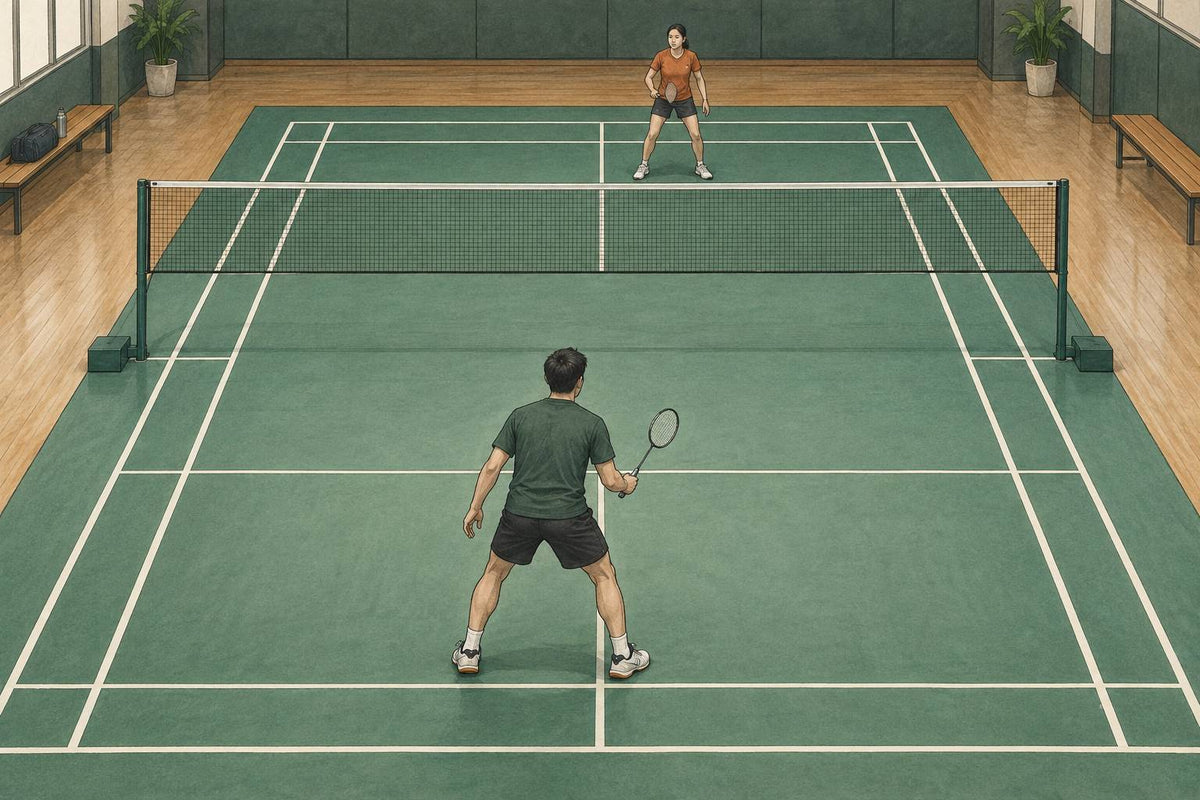
- Warm up first, then hit half-speed clears while staying relaxed in the hand.
- Focus on early preparation and contact in front of the hitting shoulder.
- Add power only when the stroke feels smooth through the shoulder, hips, and follow-through.
- If pain changes your swing, stop the overhead work and use the next sections on pain response and assessment.
Technique fixes are not instant, but they can remove a major source of unnecessary shoulder load. If the same shoulder pain keeps returning even after you relax the grip, prepare earlier, and use more body rotation, the issue may involve workload, strength, recovery, or equipment setup rather than technique alone.
Can Your Racket Setup Cause Shoulder Pain?
A setup change can alter how a racket feels and how much effort you use, but weight, stiffness, or string tension alone cannot identify the cause of shoulder pain. Record whether symptoms began after a change, alongside your training volume and recovery, and discuss persistent symptoms with a qualified clinician.
Use this as a simple equipment audit, not a diagnosis. If your shoulder is sore after club nights in Canada, check the three gear variables below before assuming you need the most powerful racket you can find.
1. Racket weight: know what you are actually swinging
If your racket starts to feel slow or tiring late in a session, weight is the first thing to review. Learn the common weight labels in our 3U vs 4U vs 5U badminton racket guide, then compare that against how your shoulder feels during long rallies and repeated overheads.
For a sore shoulder, do not automatically chase a heavier, stiffer, power-focused setup. A racket that feels impressive for one smash may not be the right choice if it increases fatigue over a full match.
2. Frame stiffness: compare feel without diagnosing pain
Frame stiffness changes flex and timing feel. Compare how comfortably you control a familiar setup, and avoid making a new equipment trial during a painful flare-up; changing flex is not a substitute for assessment or load management.
3. String tension: tight is not always better
Excessively tight strings make the string bed harsher, especially on off-centre hits. If your shoulder flares after a fresh restring, or your racket suddenly feels harsh on clears and smashes, talk to a stringer before replacing the racket.
| Gear factor | Why it matters for the shoulder | Practical check |
|---|---|---|
| Racket feels heavy | More swing mass means more force to accelerate and stop on every overhead stroke, and more fatigue late in a session. | Review your weight category and compare it with how your shoulder feels late in games. |
| Frame is very stiff | Frame flex affects timing and feel; stiffness alone does not establish shoulder loading or injury risk. | Be cautious about stiff, power-focused setups if your shoulder is already irritated. |
| Strings feel too tight | A tighter string bed can feel firmer and less forgiving on off-centre contact; that sensation does not establish the cause of shoulder pain. | Ask for stringing advice before your next restring, especially if pain started after a recent string job. |
Need help reviewing your string setup? Visit our stringing service for tension advice, or browse current badminton rackets after you know which weight and feel make sense for your shoulder.
How Do You Prevent Badminton Shoulder Pain?
For badminton shoulder pain, prevention works best when it becomes part of your normal playing rhythm: warm the joint before overhead hitting, strengthen the rotator cuff and shoulder blade muscles, and leave enough recovery between hard sessions.
Keep it simple. Your goal is not to tire out your shoulder before club night. The goal is to prepare it for clears, drops, serves, drives, and smashes so the first hard overhead swing is not your warm-up.
1. Start with a dynamic shoulder warm-up
A dynamic warm-up helps boost blood flow before you ask the shoulder to handle fast overhead movement. Use this before matches, league nights, lessons, and higher-intensity drilling.
- Arm circles: 30 seconds forward and 30 seconds backward.
- High-knee skips: use them to raise body temperature before you hit.
- Shadow smashes: 2 sets of 10 reps, focusing on smooth rhythm rather than maximum speed.
If you play in a cold Canadian gym, give yourself enough time to warm up before the first game. For a fuller court-ready sequence, see our badminton warm-up guide.
2. Add rotator cuff and shoulder-blade strength work
The rotator cuff helps stabilize the shoulder during overhead strokes, and the surrounding shoulder-blade muscles help keep that movement controlled. These exercises are useful because they target the stabilizing muscles badminton players rely on repeatedly.
| Exercise | What it supports | Badminton-friendly cue |
|---|---|---|
| External rotations | Rotator cuff control | Move slowly and keep the shoulder from shrugging upward. |
| Band-resisted external rotations | Rotator cuff strength against light resistance | Use controlled tension; this should feel precise, not like a max-effort lift. |
| Scapular push-ups | Shoulder-blade control | Think about moving the shoulder blades, not dropping into a full push-up. |
| Scapular stabilisation drills | Stable overhead positioning | Keep the neck relaxed and avoid forcing painful overhead ranges. |
| Shoulder presses | Surrounding shoulder strength | Keep the movement smooth and stop if overhead pressing reproduces shoulder pain. |
This work fits well on non-match days or after a short warm-up, especially if your weekly badminton includes repeated smashing, long doubles sessions, or lots of overhead feeding drills.
3. Protect recovery days like training days
Playing too often without rest can fatigue the shoulder muscles and raise injury risk. A practical target is to schedule 1–2 rest days each week, using light activity such as yoga or swimming instead of another hard hitting session.
If your shoulder tends to flare up after busy weeks, look at the full pattern: number of playing days, smash volume, warm-up quality, and whether your strength work is actually happening. Prevention is not one magic drill; it is the combination of preparation, stable movement, and enough recovery to let the shoulder adapt.
What to Do When Shoulder Pain Starts
If shoulder pain shows up during badminton, do not try to “play through it” for one more game of smashes. Early, conservative action can reduce swelling, limit further irritation, and stop a small overuse problem from becoming a longer layoff.
First response checklist
- Stop the painful strokes: especially full-power smashes, steep overheads, and repeated high clears if they reproduce the pain.
- Use RICE: rest, ice, compression, and elevation can help manage pain and inflammation after an acute flare-up.
- Keep the shoulder moving gently: avoid aggressive stretching, but do not force the joint into positions that increase pain.
- Skip heavy upper-body loading: give the shoulder a break from gym pressing, pull-ups, and high-volume hitting until symptoms settle.
- Track the pattern: note whether pain appears during overhead strokes, after play, at night, or when lifting the arm.
Once the painful phase calms down, the goal is not just to “rest until it feels okay.” Badminton shoulder pain often needs a gradual return: restore comfortable range of motion, rebuild the rotator cuff and shoulder muscles, and address the technique or equipment factor that overloaded the joint in the first place.
Physical therapy can help with that process. A good shoulder-focused plan usually works on range of motion, rotator-cuff strength, scapular control, and progressive return to overhead hitting. That is especially useful if your pain comes back every time you increase smash volume or play multiple club nights in a week.
Check the whole arm-load picture. Shoulder pain often overlaps with grip, elbow, wrist, racket weight, and string tension choices. For broader injury context, see our common badminton injuries prevention guide. If your symptoms also travel into the forearm, read Badminton Elbow Pain in Canada: Is Your Racket to Blame?.
How to return without restarting the pain
When you feel ready to test the shoulder again, start with lower-load badminton before you go back to full matches. Try gentle drives, net shots, short clears, and relaxed shadow swings first. Add overhead volume slowly, and leave full-power smashes until the shoulder tolerates lighter work without a next-day flare-up.
If the pain is sharp, you feel weakness, you lose range of motion, symptoms affect daily activities, or the shoulder does not improve after a short period of conservative care, get assessed by a qualified health professional. A proper assessment is the safest way to separate a simple irritation from something that needs a more structured rehab plan.
When Should You Get Your Shoulder Assessed?
Most mild badminton shoulder soreness should trend better when you reduce overhead volume, warm up properly, and stop pushing through painful smashes. The point of an assessment is not to scare you — it is to catch the cases where the shoulder is not settling the way a normal training flare-up should.
Book an assessment if any of these apply:
- Pain limits daily activities. If reaching, dressing, carrying a bag, sleeping, or work tasks are affected, do not treat it as normal post-game soreness.
- You notice swelling or loss of strength. A shoulder that feels suddenly weak, unstable, or visibly irritated deserves a professional look.
- It is not improving after 2 weeks of conservative care. If rest, load reduction, and sensible self-care are not changing the trend, get it checked before ramping back into full club nights or tournaments.
Keep the conversation practical: tell the clinician what strokes hurt, whether the pain came on suddenly or gradually, how often you play, and whether you changed racket weight, string tension, grip size, or training volume recently. That gives them a clearer picture of the badminton-specific load on your shoulder. Seek urgent medical assessment for sudden severe pain, inability to move the arm, or a changed shoulder shape, especially after an injury; see the NHS shoulder-pain guidance.
If shoulder pain is happening alongside other recurring issues, it may help to review the bigger injury pattern in our common badminton injuries guide. If your symptoms also involve the forearm, elbow, or wrist, our badminton elbow and wrist pain guide can help you separate equipment load from technique load before your next gear change.
A gear change should not be used to mask a shoulder problem that meets the assessment thresholds above. Once you are ready to adjust your setup, start with our 3U vs 4U vs 5U racket weight guide and, if string tension may be part of the issue, our Canadian badminton stringing service.
Which Shoulder-Pain Fix Should You Choose First?
Use this as a practical decision helper, not a diagnosis. The right first move depends on whether your shoulder feels like normal training soreness, an equipment-load problem, a technique issue, or a sign that you should pause and get assessed.
| Choose this path | Best if... | What to do next |
|---|---|---|
| Load management first | Your shoulder is generally sore after badminton, but you do not have obvious weakness, instability, night pain, or a catching feeling. | Reduce repeated overhead volume for a short period, avoid stacking hard sessions without recovery, and keep the warm-up and prevention routine from this guide consistent. |
| Technique check | Pain appears mostly on smashes, clears, or serves, especially when you grip too tightly, contact late, or rush the stroke without coordinated preparation and body rotation. | Back off max-power hitting and rebuild cleaner mechanics. If your hand pressure feels excessive, review the badminton grip guide and your hold before blaming only the shoulder. |
| Equipment reset | Your shoulder pain worsens after switching to a heavier racket, a very stiff frame, or a tighter string setup. | Compare racket weight classes in our 3U vs 4U vs 5U guide, then consider a string-tension review through our stringing service instead of pushing through the same setup. |
| Assessment first | You have deep shoulder ache on overhead actions, weakness, night pain, swelling, loss of strength, or pain that limits daily activities. | Stop treating it as normal soreness and book an assessment. Physical therapy is commonly used to restore range of motion, strengthen the rotator cuff and shoulder muscles, and reduce repeat injury risk. |
| Pause hard play | You feel instability or a catching sensation during movement, especially with overhead strokes. | Avoid hard smashing and repetitive overhead sessions until a qualified clinician checks it. Catching and instability can point to something more than routine post-game soreness. |
| Get help after 2 weeks | You have tried conservative care, but symptoms are not improving after 2 weeks. | Book an assessment rather than cycling through random fixes. If you also feel elbow or wrist symptoms, compare the pattern with our badminton elbow and wrist pain guide. |
Gear note for sore shoulders. Do not upgrade into a demanding setup while your shoulder is irritated. For context, the Yonex Astrox 100 ZZ is a head-heavy, stiff racket in 4U average 83 g or 3U average 88 g; treat that kind of spec as a useful load reference point, not a shoulder-pain recommendation.
For the bigger injury picture around ankles, knees, elbows, and shoulders, see our common badminton injuries prevention guide.
Get 10% off your first order
Join the Badminton House list and we’ll email you a 10% welcome code — plus subscriber-only restock alerts, giveaways, and honest gear advice from players.
By subscribing, you agree to receive Badminton House emails and can unsubscribe anytime.
Shoulder pain can come from training load, technique, recovery, or equipment that asks too much of your arm. We play badminton too, so if you are unsure whether your racket weight, grip, or string setup is making things worse, contact us and we will help you think through a practical gear path before you buy.
Build a setup your shoulder can handle
Browse badminton gear, then ask us if you need help choosing a racket, string tension, or grip setup that fits your level and playing style.
Browse Badminton RacketsCanadian badminton specialty shop · Check current shipping and return terms

Leave a comment
This site is protected by hCaptcha and the hCaptcha Privacy Policy and Terms of Service apply.