
Last updated: June 2026 · Written by the team at Badminton House
Quick Answer: Best Badminton Racket Under $100 CAD
For most beginners, the best value under $100 CAD is an entry full-graphite, pre-strung racket around $75 CAD; Badminton House's own racket collection leans toward premium models, so use these specs when comparing options elsewhere, or ask us for buying advice.
$75
Best choice: look for entry full-graphite, pre-strung rackets with a flexible shaft; choose head-light for speed and defence or a beginner attacking frame for easier power.
$50
Only consider this tier if the listing clearly states graphite, carbon/fiberglass composite, or composite construction; skip aluminum and steel frames even when the price looks tempting.
$100
Best if you want upper-entry graphite or plan to pair a budget frame with proper stringing; beginners usually get more forgiveness from 18–21 lbs, and Moncton players can use our racket stringing service.
If you are searching for the best badminton racket under $100 in Canada, the hard part is not finding options — it is knowing which ones are actually worth playing with. In the $50–$100 CAD range, a good beginner racket should help you learn timing, clears, defence, and net shots without feeling like a dead metal frame in your hand.
The big mistake is buying only by brand name, paint job, or marketplace price. Under $100 CAD can still get you into useful beginner specs: graphite or graphite-composite construction, a forgiving flex, a manageable weight, and factory stringing that is playable enough to start. But the same budget can also land you with a heavy aluminum or steel frame that vibrates badly on off-centre hits and can be rough on your elbow over time.
We will be straight with you: Badminton House's racket collection is built around premium Yonex Astrox models, not budget frames under $100. So this guide is not a disguised product pitch — it is a practical Canadian buying framework to help you judge budget rackets properly, avoid false bargains, and understand when a budget frame plus a proper restring is the smarter value.
Need help choosing before you buy? If you are comparing under-$100 CAD rackets, send us the models you are considering through our contact page and we will help you sanity-check the specs.
In This Guide
- What Do $50, $75, and $100 CAD Actually Buy?
- Best Speed and Defence Style: Head-Light Beginner Graphite
- Best Power Style: Beginner Attacking Graphite
- Avoid False Bargains: Aluminum, Steel, and No-Name Frames
- Should You Buy a Strung or Unstrung Budget Racket?
- Brand Budget Reality Check: Yonex, Victor, and Li-Ning
- Which Under-$100 Racket Should You Choose?
What Do $50, $75, and $100 CAD Actually Buy?
The best badminton racket under $100 CAD is usually not the flashiest model on the wall. At this budget, your goal is simple: get a frame that is light enough to learn with, forgiving enough for off-centre hits, and built from graphite or a graphite-composite material rather than heavy metal.
Badminton House's racket collection is not built around this budget tier, so treat this as a buying-spec guide rather than a product list. You can browse the racket collection here: badminton rackets.
| Budget | What to expect | Best use |
|---|---|---|
| Around $50 CAD | Composite or fiberglass-blend frames, sometimes low-end full graphite. Usually pre-strung at a low factory tension. | Casual beginners who want a real learning racket without stepping into metal-frame bargain territory. |
| Around $75 CAD | Entry full-graphite frames from major badminton brands. This is where beginner-focused, flexible, pre-strung rackets start to make more sense. | New club players, adult beginners, and juniors moving beyond recreational sets. |
| Around $100 CAD | Upper-entry graphite frames. At this point, an unstrung or poorly factory-strung frame can be worth pairing with a proper restring. | Beginners who play regularly and want a racket they can grow with for lessons, drop-in nights, and early league play. |
If you are unsure where to land, start with the safe beginner spec: a forgiving 4U, even-balance or slightly head-light racket with medium or flexible shaft behaviour. That setup is easier to swing, easier to recover with in doubles, and less punishing while your timing is still developing. For a fuller breakdown, see our badminton racket choosing guide and 3U vs 4U vs 5U weight guide.
The biggest mistake under $100 CAD is chasing a fake “premium” look instead of checking the fundamentals: material, weight class, shaft flexibility, balance, and string setup. We will cover the aluminum, steel, and no-name frame problem in the Avoid False Bargains section below.
If you are in the Greater Moncton area, an upper-entry budget frame can also pair well with a proper restring through our badminton stringing service.
Best Speed and Defence Style: Head-Light Beginner Graphite
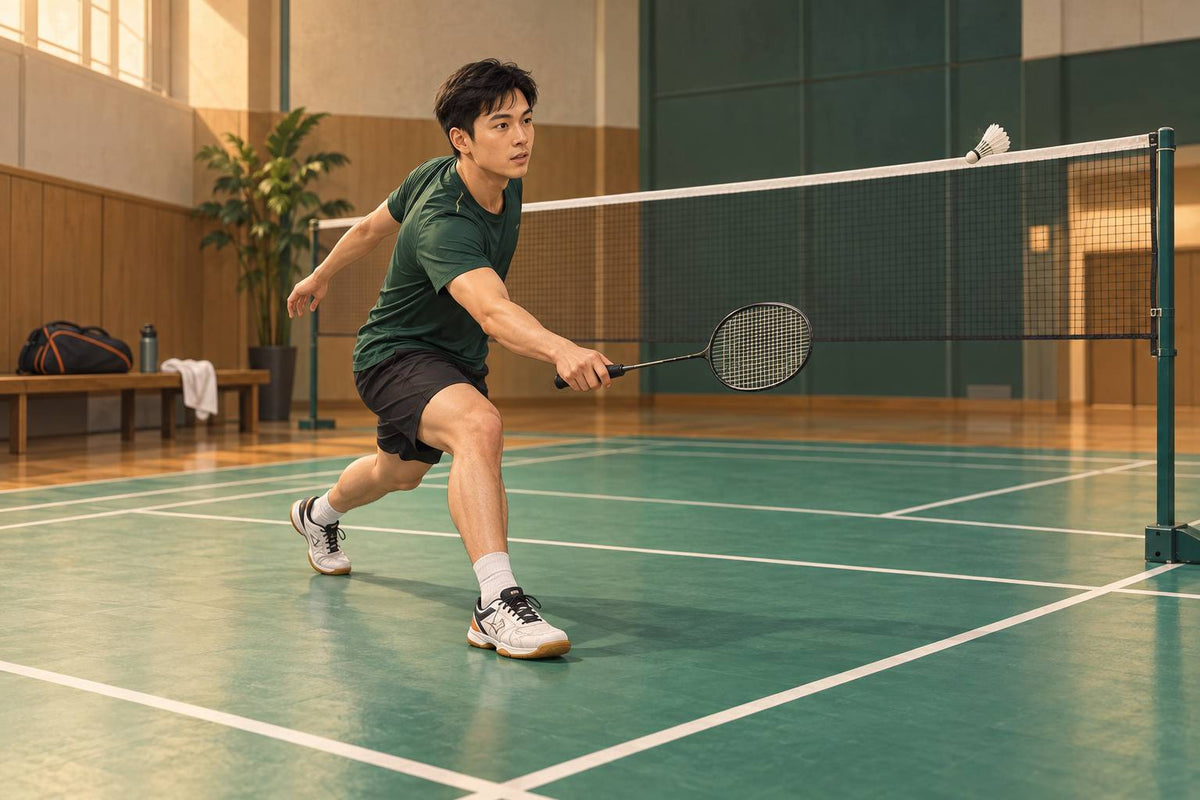
If your priority is quick defence, easy drives, and getting the racket up in time during doubles exchanges, the best badminton racket under $100 to look for is a head-light beginner graphite racket. The key is the spec profile, not the name on the shaft.
A useful benchmark for this category is the Yonex Nanoflare 001 Feel. Yonex lists it as designed for beginner players, head-light, and sold strung. It also uses the Sonic Flare System for swing speed and maneuverability, with high modulus graphite at the frame’s top and bottom. That combination is exactly the archetype Canadian buyers should keep in mind when comparing entry-level rackets from Canadian badminton specialty retailers.
Speed/Defence Spec Checklist
- Balance: head-light, so the racket feels faster in the hand.
- Player level: beginner-focused, not an extra-stiff advanced frame.
- Material: graphite or graphite-composite construction, not aluminum or steel.
- Stringing: ideally sold strung if you want ready-to-play value.
- Feel: forgiving flex rather than a stiff shaft that punishes slower developing technique.
For beginners, head-light does not mean “weak.” It means the racket is easier to reposition between shots. That matters when you are late on defence, blocking a smash, reacting to flat drives, or trying to recover after a loose lift. A beginner-friendly head-light graphite frame can help you build cleaner timing because you are not fighting a heavy-feeling racket head on every exchange.
| Spec | What to look for under $100 CAD | Why it helps |
|---|---|---|
| Head-light balance | A racket marketed for speed, manoeuvrability, or defence | Easier racket preparation on blocks, drives, and quick doubles rallies |
| Beginner design | A forgiving beginner model rather than an extra-stiff advanced racket | Helps developing players generate length without perfect timing |
| Graphite frame | Graphite, carbon, or graphite-composite wording from a known badminton brand | Keeps the racket lighter and more comfortable than metal budget frames |
| Pre-strung setup | A strung racket if you want immediate value and no extra setup step | Ready to play for drop-in nights, lessons, and recreational club sessions |
The main compromise is rear-court power. A head-light beginner racket is usually easier to swing quickly, but it will not give the same natural weight through the shuttle as a more attacking frame. If you already know you want effortless clears and heavier smashes more than fast defence, you may prefer the power-style category instead.
Not sure which beginner spec fits you? Start with our beginner badminton racket guide for Canada, which breaks down weight, balance, flex, and CAD budget tiers in plain language.
Choose the head-light graphite archetype if you want speed, defence, and easy handling first. Choose the next category if your game is built around clears, lifts, and learning to attack from the back court.
Best Power Style: Beginner Attacking Graphite

If the head-light speed pick is for defence, drives, and quick doubles exchanges, the power-side alternative is a beginner attacking graphite racket. The clean benchmark here is the Yonex Astrox 01 Feel: it is crafted for beginner players, designed for aggressive play, sold strung, and built around Yonex’s Rotational Generator System with Namd graphite for snapback power.
That makes it a useful reference point when comparing the best badminton racket under $100 options in Canada, even though this is not a Badminton House product recommendation — it is a spec benchmark drawn from the manufacturer's own positioning. Use it as a spec template: beginner-friendly flex, graphite construction, pre-strung convenience, and an attacking feel that helps newer players generate more confident clears and smashes without jumping into extra-stiff advanced frames.
| Spec to look for | Why it matters for beginner power |
|---|---|
| Beginner-focused design | Keeps the racket forgiving enough while you are still building timing, grip changes, and overhead technique. |
| Aggressive-play positioning | Better fit if your first goal is deeper clears, stronger rear-court shots, and learning to attack loose lifts. |
| Sold strung | Ready to play immediately, which is useful in the entry tier if the factory string bed still feels consistent. |
| Rotational Generator System + Namd graphite | A power-oriented benchmark because the design focuses on weight distribution and graphite snapback power. |
Beginner power tip. Do not confuse “attacking” with “advanced”: beginners should avoid extra-stiff shafts because they make clean technique harder to learn.
Choose this style if you naturally like hitting from the back court, play more singles than fast front-court doubles, or feel that very light, head-light rackets make your clears land short. If you mostly play quick doubles, defend smashes, and win points through flat drives, the head-light speed option is usually the easier first buy.
If you are unsure where you fit, start with the broader racket selection guide and then check the beginner string tension guide. The frame gives you the power bias, but the string bed still decides how forgiving the racket feels on real Canadian club nights.
Avoid False Bargains: Aluminum, Steel, and No-Name Frames

The cheapest racket is not always the best badminton racket under $100. The main trap is buying a no-name frame on an online marketplace because the photo looks fine and the price looks low, then discovering it feels heavy, harsh, and tiring after a few games.
The material matters. Aluminum and steel rackets are heavy, vibrate excessively, and can damage your elbow over time. That vibration is especially noticeable on off-centre hits, which is exactly what beginners produce most often while learning timing, clears, drops, and defensive blocks.
Quick safety rule: if a budget racket feels unusually heavy or harsh, do not ignore it. Elbow-conscious players should also read our badminton elbow and wrist pain guide before choosing a frame.
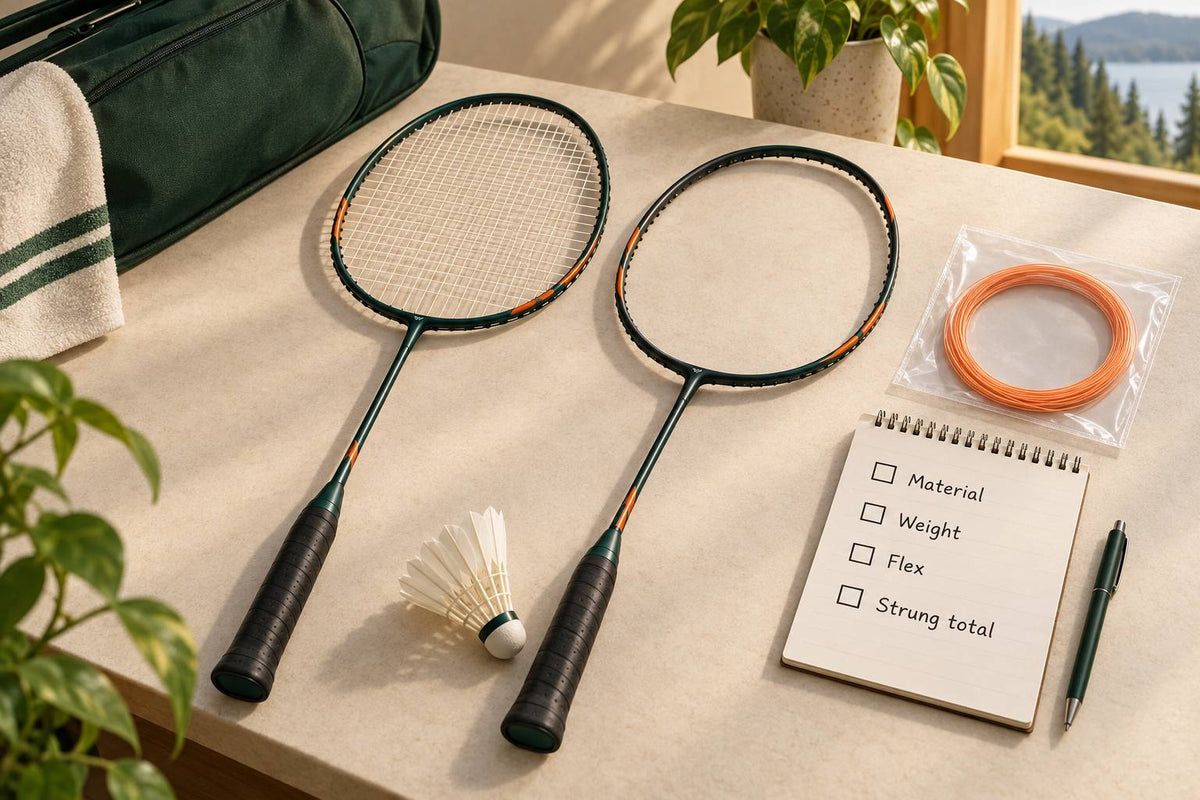
The 30-second field test: weigh the racket
Weighing helps you compare the finished rackets, but it does not prove whether a frame is graphite, aluminum or steel. Confirm construction in the exact model’s published specification.
| Measured weight | What it likely means | Buying advice |
|---|---|---|
| Under 95 g | Weight alone does not establish the material | A better place to start for most beginners, especially if the frame also lists clear balance and flex information. |
| Over 100 g | Check the frame and shaft materials separately | Be careful. This is where a low price can turn into a racket that feels slow, vibrates more, and is harder on the arm. |
This is not about being snobby about brands. It is about avoiding a frame that makes the game harder than it needs to be. A beginner already has enough to manage: grip changes, timing, footwork, and contact point. A heavy metal frame adds extra swing weight and harsher feedback at the worst possible stage of learning.
What to skip when shopping under $100 CAD
- No listed material: if the page does not clearly say graphite, carbon, or composite, treat it cautiously.
- No listed weight: without a weight, you cannot tell whether you are buying a playable badminton racket or a heavy recreational frame.
- Steel or aluminum construction: these can be durable and affordable, but they are heavy and can send more vibration into the arm.
- Too-good-to-be-true no-name listings: if the specs are missing, inconsistent, or copied-looking, choose a clearer graphite option instead.
For most Canadian beginners, the smarter under-$100 target is a graphite, carbon, or composite frame with a forgiving flex and a weight that does not punish late contact. If you are unsure how weight labels translate into real feel, use our 3U vs 4U vs 5U racket weight guide before you buy.
Should You Buy a Strung or Unstrung Budget Racket?

For a budget racket, the word strung matters more than many beginners realize. A strung racket is ready to play out of the package. An unstrung racket arrives with no string at all, so you must have it strung before you can use it.
That changes the true cost of the racket. A $90 CAD unstrung frame is not really a complete under-$100 setup once you add string and labour. A $75 CAD factory-strung graphite racket, on the other hand, may be the better value for a new player because it gets you on court immediately.
Beginner default: choose a strung graphite racket unless you already know what tension and string you want. If you need help choosing tension, start with our badminton string tension guide.
Factory Stringing Is Not Automatically Bad
Factory tension varies and may not be disclosed. Start with a playable string bed, check the frame’s recommended range before restringing and choose a setting you can use consistently.
Lower tension creates a larger sweet spot. Higher tension creates a smaller sweet spot but gives more feel for players with cleaner timing and better technique. That is why a beginner does not need to chase high tension just because stronger club players use it.
| Setup | What it means | Best for |
|---|---|---|
| Factory strung | Strings installed; factory tension varies by model | Beginners buying their first proper graphite racket |
| Custom strung | You choose the string and tension before playing | Players who know their preferred feel or want a cleaner upgrade path |
| Unstrung | No string installed; must be strung before use | Players budgeting separately for stringing or upgrading a frame intentionally |
Where Custom Stringing Starts to Make Sense
At the very low end of the budget, a ready-to-play racket usually makes the most sense. Around the upper-entry range, an unstrung graphite frame plus a proper restring can become the smarter long-term setup — but only if you include stringing in your total budget.
String tension changes after installation and with use. The amount depends on the string and job, so compare feel and consistency rather than assuming a fixed loss in the first week.
If you are in the Greater Moncton area, Badminton House offers professional racket stringing with a 2–3 day turnaround and drop-off with no appointment. For many beginners, a durable, forgiving string such as BG65 at a beginner-friendly tension is a practical way to make a budget graphite frame feel more consistent.
Budget rule of thumb
- Under $75 CAD: a factory-strung graphite or graphite-composite racket is usually the cleanest value.
- Closer to $100 CAD: consider whether a better frame plus custom stringing fits your total budget.
- If buying unstrung: do not compare the frame price alone against a ready-to-play racket.
One Canadian shopping note: if you are building a complete setup, it can be worth planning the racket alongside practical add-ons like shuttles, grips, shoes, or stringing needs instead of treating the frame as the whole purchase.
Book Stringing — Tune Your Budget Racket
Professional restringing in Greater Moncton · 2–3 day turnaround · Drop-off with no appointment
Brand Budget Reality Check: Yonex, Victor, and Li-Ning
Yonex, Victor and Li-Ning offer entry-level rackets, but compare the current Canadian total for the exact model. Include strings and labour if required; a US price is not a Canadian quote.
A higher price does not produce a fixed percentage improvement in play. While you are learning, prioritize a frame you can prepare and recover with, a manageable grip and a usable string setup.
| Brand | Entry-level benchmark | What to look for under $100 CAD |
|---|---|---|
| Yonex | Check the current Canadian total | Look for beginner-oriented graphite options such as head-light speed frames or beginner attacking frames. Yonex’s Nanoflare 001 Feel is positioned for beginners as a head-light, strung racket, while the Astrox 01 Feel is positioned for beginner aggressive play and is also sold strung. |
| Victor | Check the current Canadian total | Victor is worth checking if you want a fast, forgiving feel. At this budget, prioritize easy handling and a flexible shaft over advanced pro-level specs. |
| Li-Ning | Check the current Canadian total | Li-Ning’s entry range can make sense for recreational players, especially if you find a full graphite or graphite-composite frame with beginner-friendly flex. |
For beginners, the trap is buying the most “serious” sounding racket instead of the easiest racket to use. With Yonex especially, avoid extra-stiff shafts when you are still building technique; they make timing and clean power harder to learn. A flexible or medium-flex racket will usually help you develop faster.
Brand matters, but it should come after the basics: graphite construction, manageable weight, beginner-friendly flex, and a balance that fits your style. If two rackets are both genuine beginner graphite frames, the one that matches your swing will beat the one with the flashier logo.
Comparing the big three? Read our full Yonex vs Victor vs Li-Ning racket guide for a deeper look at brand feel, beginner fit, and upgrade paths.
Which Under-$100 Racket Should You Choose?
If you want the safest under-$100 choice, start with the same practical baseline from our beginner racket guide: a forgiving graphite frame that matches how you actually play, not the flashiest paint job or the biggest claimed discount.
Badminton House’s racket collection is built around premium Yonex Astrox models over $100, so this section is a buying decision guide rather than a product-card recommendation.
| Choose this path | Best fit | Where to double-check |
|---|---|---|
| $75–$100 graphite all-rounder | Best default for most beginners who want one racket for lessons, drop-in, and club play. | Use the 4U, even-balance, medium-flex checklist. |
| Head-light beginner graphite | Choose this if you like quick drives, blocks, and defensive reactions more than rear-court power. | Revisit the speed and defence section. |
| Beginner attacking graphite | Choose this if you want help with clears, lifts, and a more assertive rear-court game. | Revisit the power-style section. |
| $50 CAD deal | Only consider it if the frame is composite or low-end graphite; skip metal-frame “bargains.” | Compare against the price-tier section and the false-bargain warning. |
| Near $100 CAD unstrung frame | Makes sense if you can budget for a proper restring instead of relying on unknown factory string quality. | Read strung vs unstrung value, then see our Moncton stringing service. |
| Brand-first shopper | Yonex, Victor, and Li-Ning all have credible entry-tier options; pick the spec profile before the logo. | Use the brand budget section and our brand comparison guide. |
If you are comparing a specific under-$100 model from a Canadian badminton specialty retailer, contact us and we can help you check whether the specs fit your level and playing style.
Get 10% off your first order
Join the Badminton House list and we’ll email you a 10% welcome code — plus subscriber-only restock alerts, giveaways, and honest gear advice from players.
By subscribing, you agree to receive Badminton House emails and can unsubscribe anytime.
We play badminton too, so our under-$100 advice is practical: prioritize a comfortable graphite frame, a forgiving flex, and strings you can actually control. If you are comparing two budget rackets, deciding whether to restring a frame you already own, or looking for a suitable beginner option, contact us and we will help you choose the right next step.
Need a beginner racket path that makes sense in Canada?
Browse our racket collection, then ask us if you want help matching weight, balance, flex, and string tension to your game.
Browse Badminton RacketsShips across Canada · 14-day returns · Canadian badminton specialty shop

Leave a comment
This site is protected by hCaptcha and the hCaptcha Privacy Policy and Terms of Service apply.