
How Long Does a Badminton Match Last? Court Booking Guide
Plan a badminton court booking with current scoring rules, evidence-bounded match times and transparent 60- or 90-minute arithmetic for 2, 4 or 8 players.
Badminton PE Unit Plan: 8 Lessons for School Classes
Run an eight-lesson beginner badminton PE unit with BWF-informed progressions, adaptable stations, safety checks, inclusion and assessment.
Badminton Handicap Rules: Fair Games for Mixed-Level Groups
Use transparent point starts and tactical constraints to create safe, competitive badminton games for players of different levels.
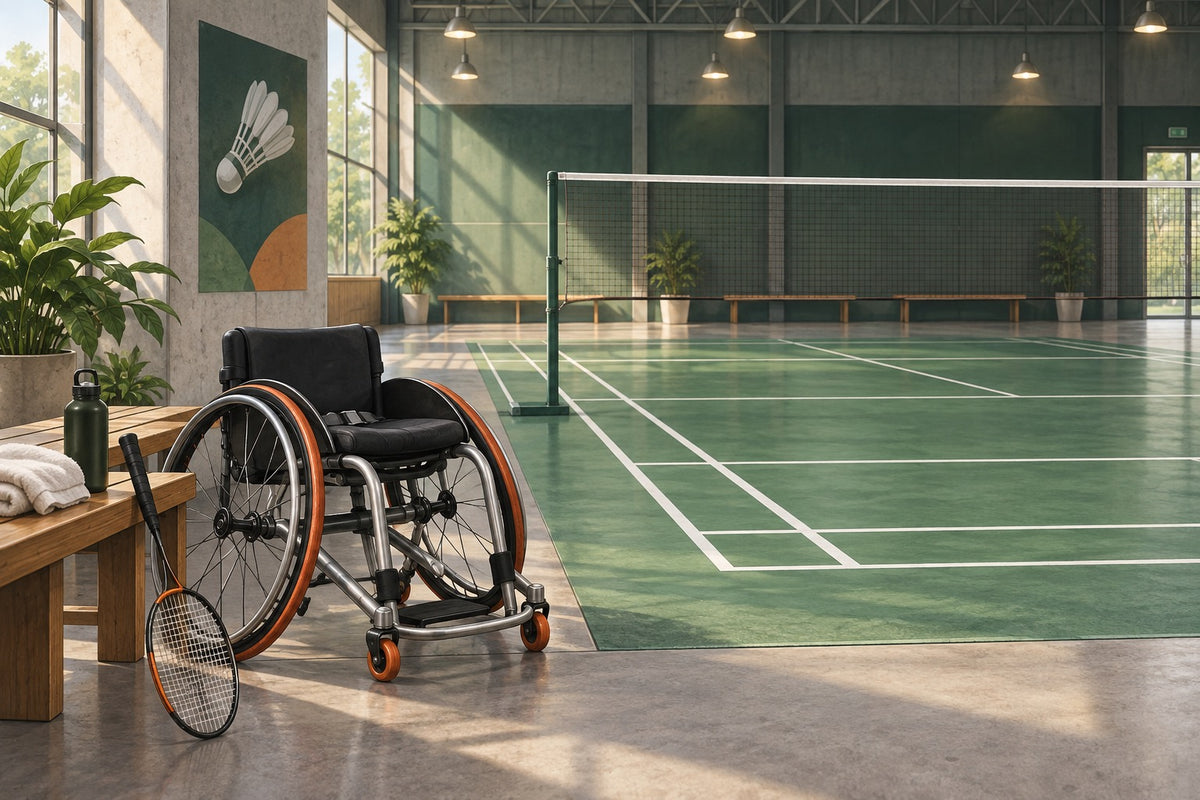
Para Badminton Court Size by Class: Half Court or Full
WH1 and WH2 use wheelchair court layouts, SL3 singles uses a standing half court, and SL4, SU5 and SH6 use standard boundaries.
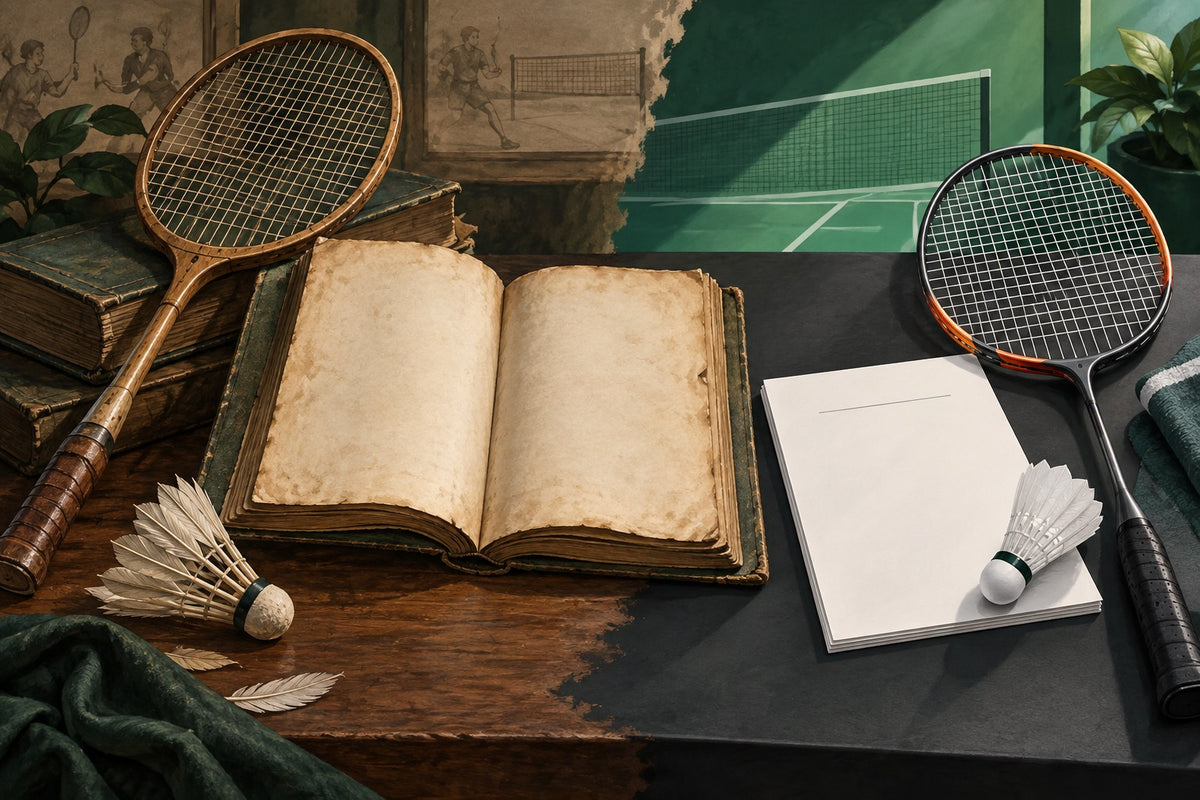
Old Badminton Rules That No Longer Exist: 6 Vanished Laws
Settle six club-night arguments with dated changes to the court, frame hits, net-cord serves, service misses, scoring and serve height.
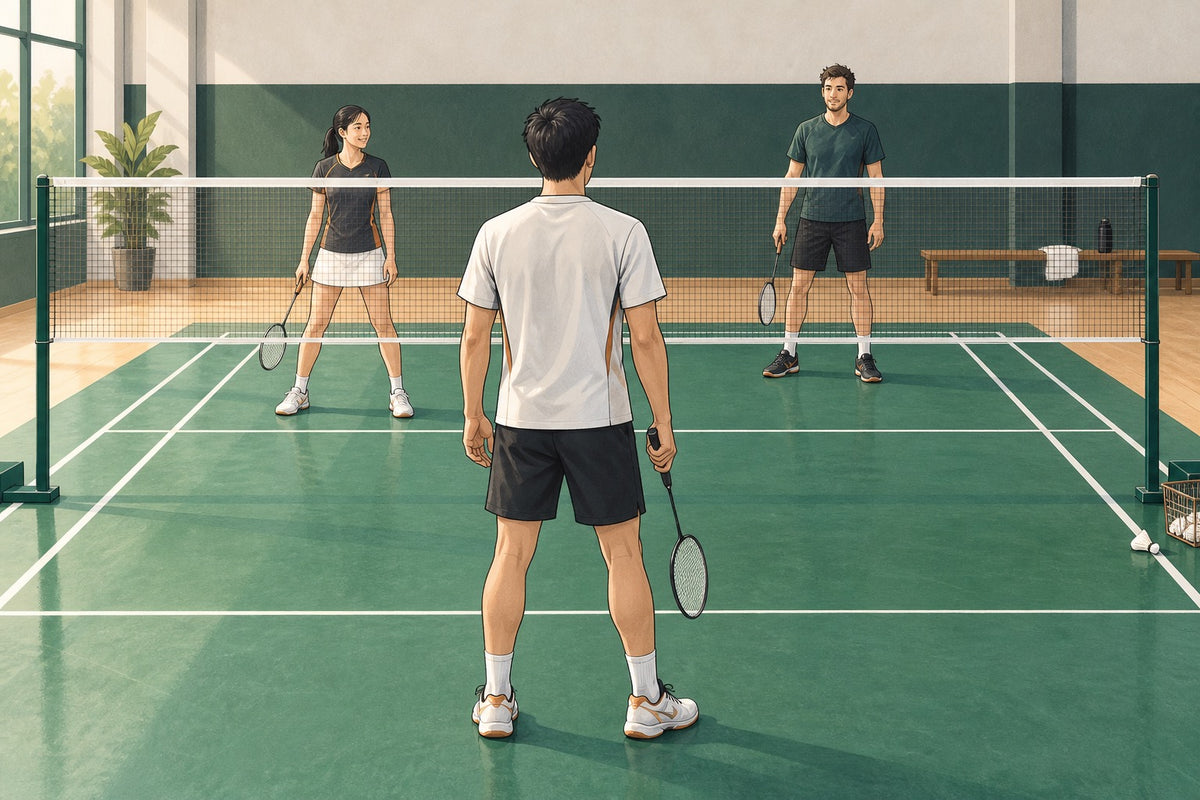
Badminton With 3 Players: 6 Formats That Actually Work
Keep three people active with six clearly labelled house-rule badminton formats, each with a court, score, rotation and balancing option.
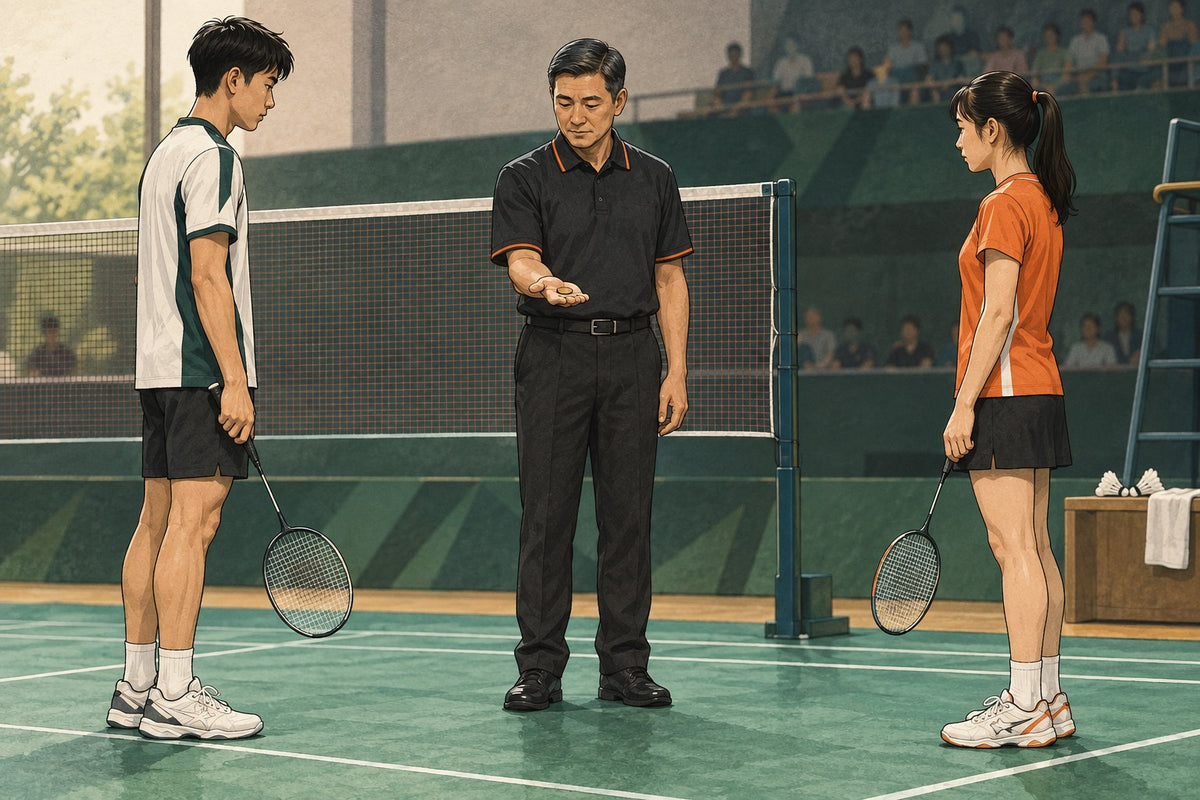
Badminton Toss Rules: Serve First or Choose Your End?
The toss winner chooses either serve or receive first, or the starting end; the loser then chooses within the remaining category.
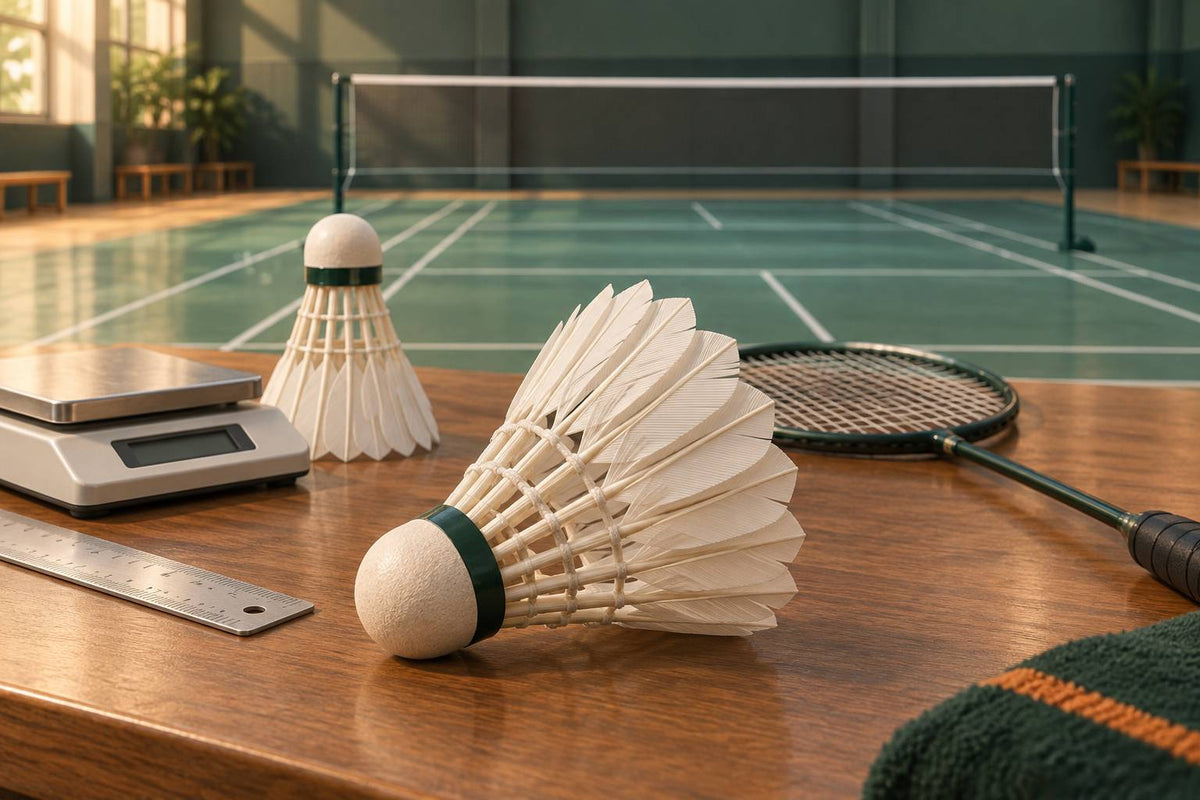
Badminton Shuttlecock Rules: Legal Specs and the Speed Test
Current BWF shuttle specifications, the exact 530–990 mm speed-test band, and the line between correct speed and full equipment compliance.
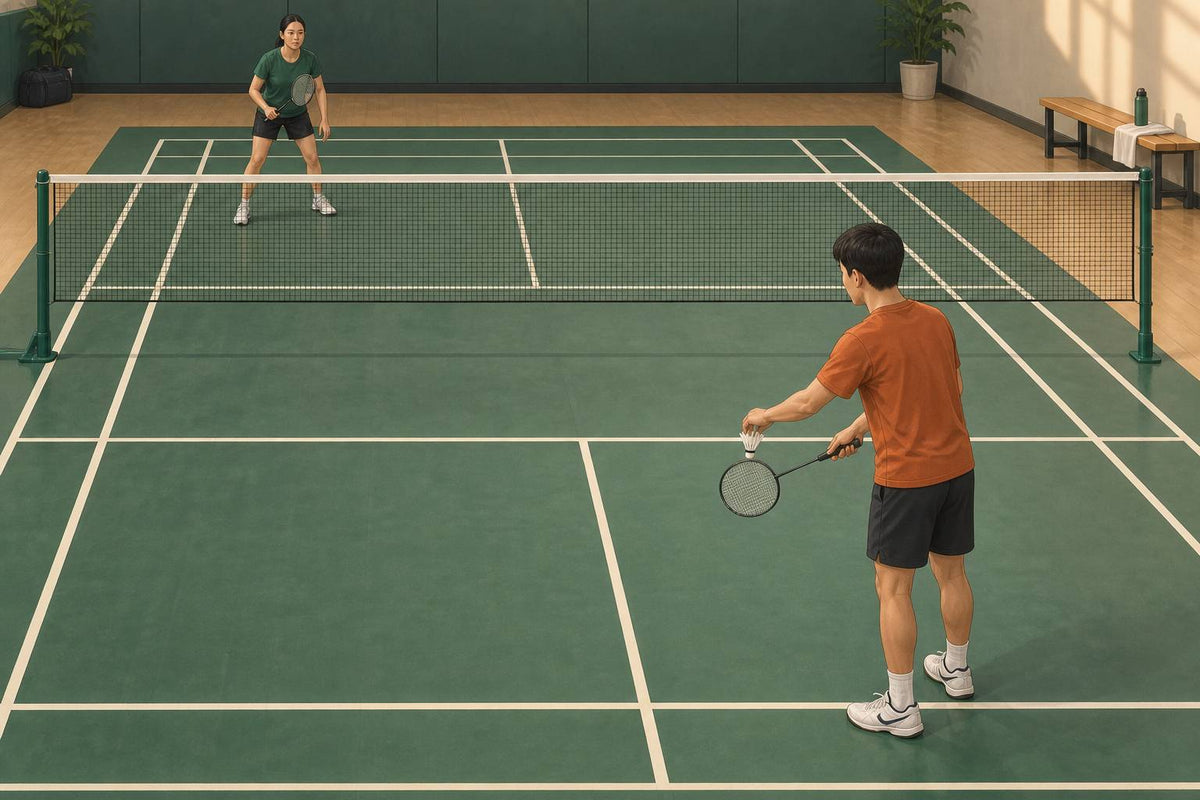
Badminton Rally Basics: Serve, Return, and Reset
Learn the first-rally loop: start with a legal serve, return the shuttle, reset into a ready position, and recognize when the point ends.
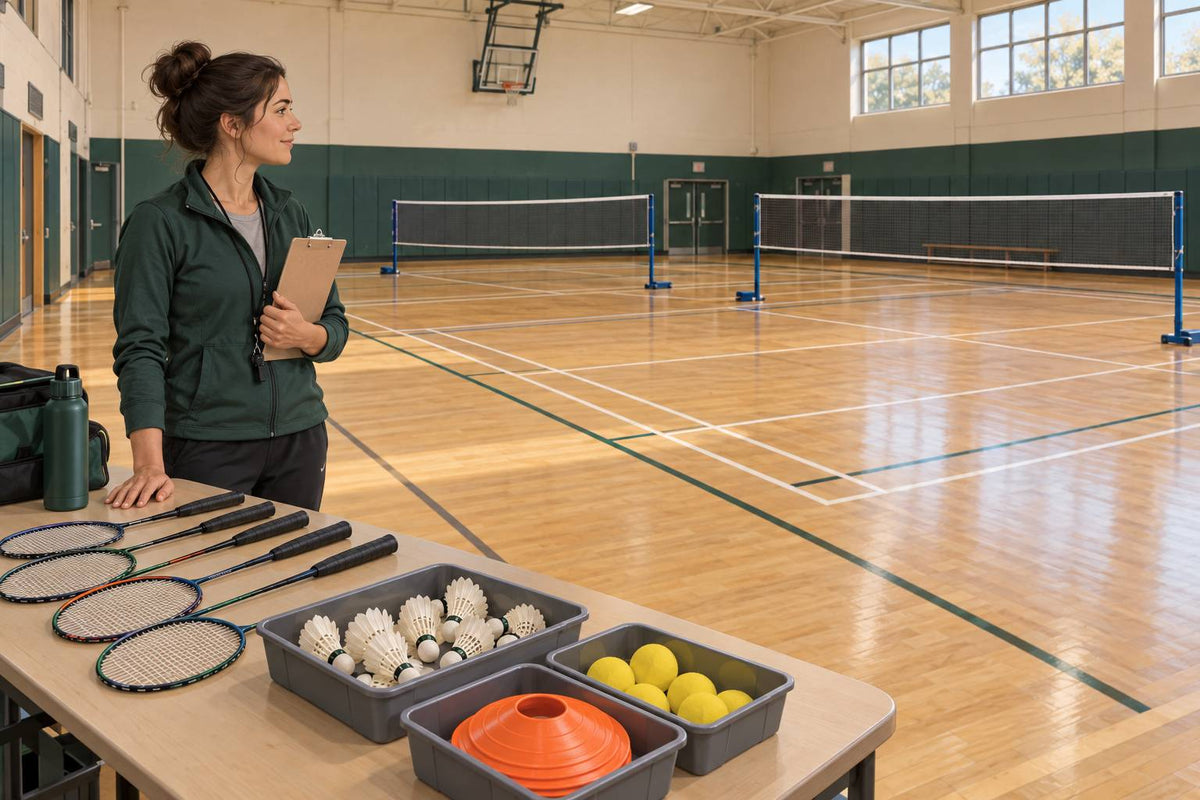
Badminton PE Lesson Plan: A Three-Lesson School Unit
A compact three-lesson indoor badminton unit for 25–30 students, with court rotations, timings, teaching cues, and mixed-ability options.
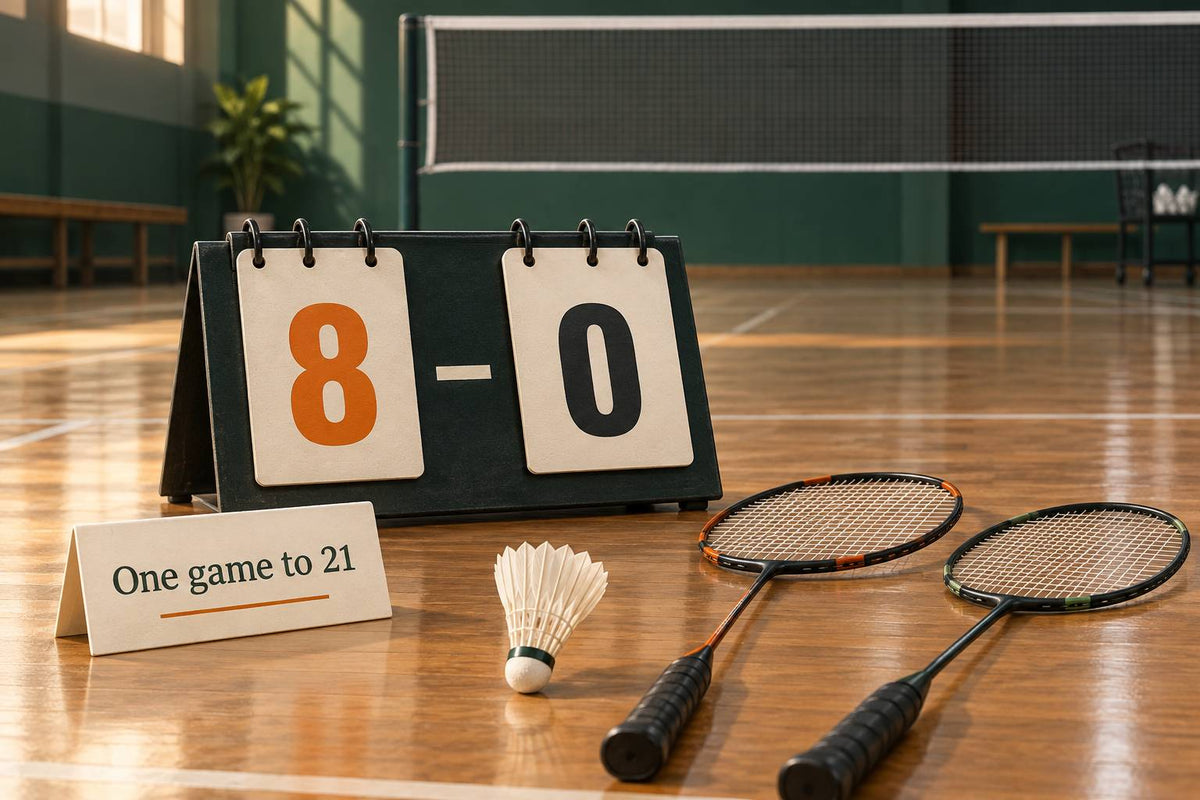
Handicap Badminton: How Head-Start Scoring Actually Works
Run a clear 21-point badminton head-start game, use the formal handicap 11-point triggers correctly, and adjust the local allowance from real results.
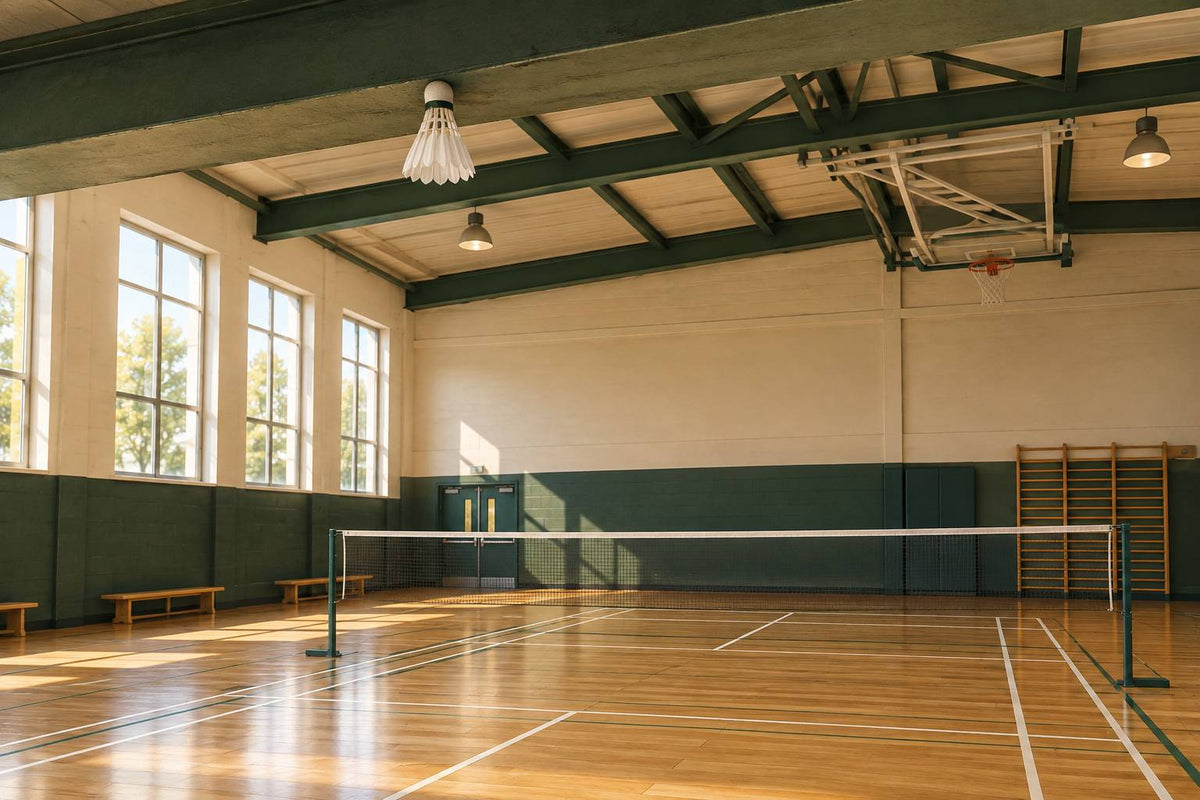
Shuttle Hits the Ceiling: Badminton Rules and House Rules
Learn the BWF fault for a shuttle hitting a ceiling or wall, when a local obstruction rule can apply, and how to agree a clear gym house rule.