
Last updated: July 2026 · Written by the team at Badminton House
Quick Answer: What to Wear for Badminton
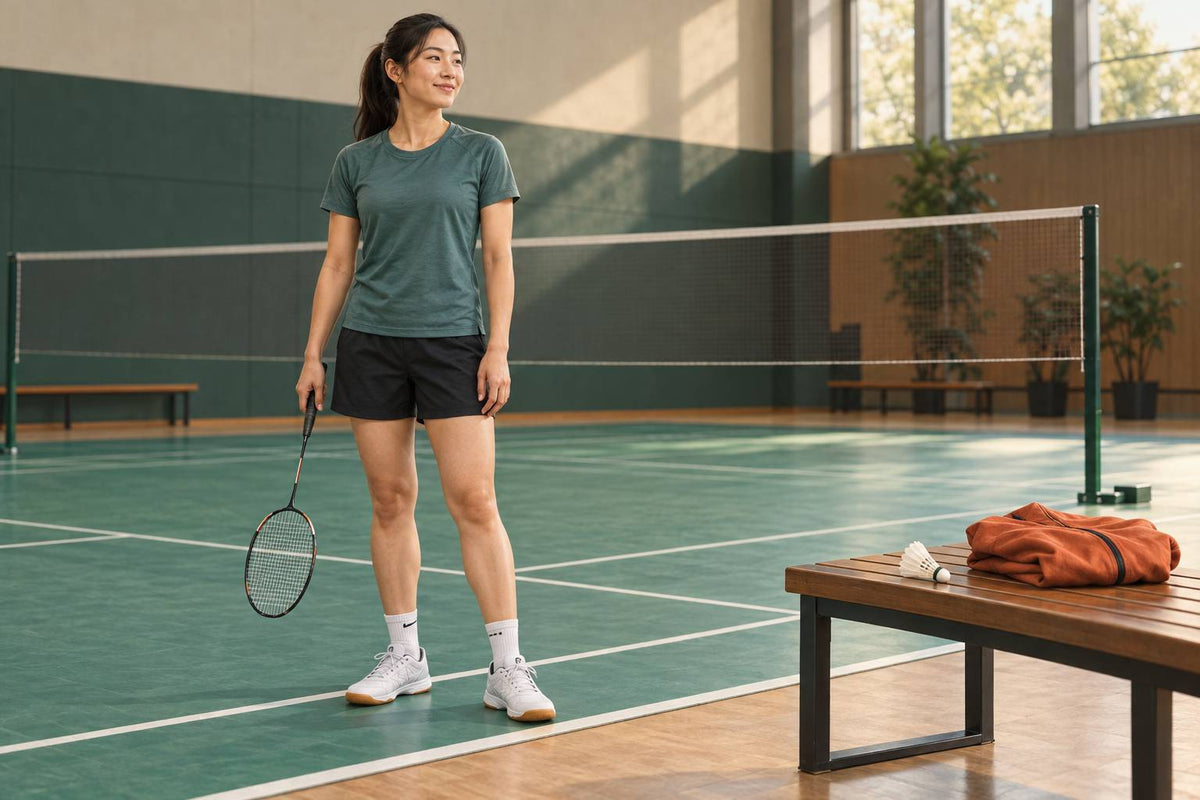
For most Canadian club nights, wear a breathable sweat-wicking top, shorts or a skort that lets you lunge freely, moisture-wicking padded socks, and proper non-marking badminton shoes.
Default
Best choice: nylon or polyester athletic tee, mid-thigh shorts or a skort, padded moisture-wicking socks, and non-marking court shoes for grip, cushioning, and lateral support.
Cold gym
Add a long-sleeve compression layer or light jacket before warm-up, then remove layers once you are moving so fabric does not restrict your swing or footwork.
Tournament
Use the same performance outfit, but check the event rules first because tournament dress codes can limit certain logos or non-badminton branding.
What to wear for badminton is less about looking like a pro and more about moving freely, staying dry, and protecting your feet through lunges, jumps, split steps, and quick changes of direction.
For Canadian players, there is one extra detail: many school gyms, community centres, and club halls feel cool before warm-up. You may want a light layer before play, but once the rallies start, cotton and bulky clothing can quickly feel heavy or get in the way of your swing and movement.
This guide breaks down what to wear for badminton from first drop-in night to tournament day, with practical notes on tops, bottoms, shoes, socks, warm-up layers, accessories, and dress-code checks.
Start with the shoes. Apparel matters, but non-marking court shoes are the biggest upgrade for grip and lateral support — browse our badminton footwear collection. Badminton House ships free within Canada.
In This Guide
- What to Wear for Badminton: The Basic Outfit
- What Kind of Top Should You Wear?
- What Shorts or Skirt Work Best?
- Court Shoes and Socks Matter Most
- How Should You Layer for Cold Gyms?
- Small Accessories and Club-Night Checks
- What Do Tournament Dress Codes Require?
- Which Badminton Outfit Should You Choose?
What to Wear for Badminton: The Basic Outfit

If you are wondering what to wear for badminton, start simple: wear a sweat-wicking athletic top, shorts or a skirt that lets you lunge freely, proper indoor court shoes, and comfortable socks. You do not need a full matching kit to play well, but you do need clothing that stays light, moves with you, and does not interfere with your swing or footwork.
- Top: choose a lightweight sports tee made from moisture-wicking fabric rather than a heavy cotton shirt that absorbs sweat.
- Bottoms: wear badminton shorts, athletic shorts, or a skirt/skort that allows lunges, split steps, and quick recovery steps.
- Shoes: use proper non-marking indoor court shoes that support side-to-side movement and help protect your feet and ankles.
- Socks: pick comfortable, moisture-wicking socks with enough cushioning to reduce rubbing during long rallies.
Fit matters as much as fabric. Clothing that is excessively baggy can catch during overhead swings or feel sloppy during quick changes of direction. Aim for a slim-but-not-tight fit: enough room for full shoulder rotation, deep lunges, and explosive first steps, without loose fabric getting in the way.
Building your badminton outfit in Canada? Check the Apparel collection for options, and pair your clothing search with badminton court shoes; Badminton House offers free shipping within Canada.
For a first club night, do not overthink the outfit. A clean synthetic sports tee, flexible shorts or a skort, non-marking court shoes, and good socks will cover the essentials. From there, you can upgrade based on what bothers you most during play: sweat, cold gyms, foot comfort, or freedom of movement.
What Kind of Top Should You Wear for Badminton?
For badminton, your shirt has to handle repeated lunges, overhead swings, quick stops, and sweat. A lightweight sports tee or jersey made from nylon or polyester is the safest default because those fabrics pull sweat away from your skin better than cotton, helping you stay drier and lighter as rallies get longer.
Cotton is comfortable before you start playing, but it can absorb sweat and get heavy during a session. Once that happens, the shirt can cling, feel cold between games, and make shoulder movement less comfortable. Choose a breathable, moisture-wicking top over a regular cotton T-shirt.
Good badminton shirt checklist
- Fabric: nylon or polyester sports material that moves sweat away from the body.
- Fit: slim enough that it does not catch during your swing, but not so tight that it restricts breathing or rotation.
- Shoulders: raglan sleeves or stretch shoulder panels help with clears, smashes, and overhead recovery.
- Ventilation: mesh or ventilation panels can help heat escape during long games or busy club nights.
Fit matters almost as much as fabric. Excessively baggy shirts can get in the way of your racket path or footwork, especially in doubles when you are reacting quickly at the front court. On the other hand, a compression-tight top is not necessary for most players unless you specifically like that feel. Aim for a clean athletic fit that lets you raise both arms fully without the hem pulling hard or the shoulders binding.
If you are building a badminton outfit from scratch, start with a sweat-wicking top, then match it with flexible shorts or a skirt and proper indoor court shoes. You can browse current options in the Badminton House apparel collection.
What Shorts or Skirt Work Best for Badminton?
For badminton bottoms, the goal is simple: move freely without extra fabric getting in your way. You need room for split steps, deep lunges, quick recovery steps, and rotation through the hips — but clothes that are excessively baggy can interfere with your swing and footwork.
Mid-thigh shorts are a practical default for many players because they give enough coverage while still allowing full lunges. If you prefer a skirt, many women choose skorts — skirts with built-in shorts — because they combine the look of a skirt with the security and coverage needed for court movement.
Fit check before you play
- Do a full forward lunge: the fabric should not pull across the hip, thigh, or waistband.
- Side-step both directions: the hem should not catch or twist when you push off laterally.
- Practice an overhead swing: loose pockets, oversized fabric, or a shifting waistband should not distract you.
- Check the length: mid-thigh shorts or a secure skort usually work better than long, heavy, or very wide bottoms for fast footwork.
Fabric matters too. Synthetic sports fabrics such as polyester or nylon are better suited to badminton than cotton because cotton can absorb sweat and feel heavy during play. If you are choosing from the Badminton House Apparel collection, look for lightweight, moisture-wicking pieces and the right cut first — not just the logo or colour.
When choosing badminton-specific shorts or skirts, apply the same fit rules no matter what is currently in the Apparel collection: breathable synthetic fabric, secure waistband, no excessive bagginess, and enough freedom for lunges. Examples include the Yonex Men’s Shorts 15204YX and Yonex Women’s Skirt 26181YX, but fit and movement should guide the final choice.
One last practical note: bottoms should work with your shoes and movement pattern. If your lunges feel restricted, it may not be your footwork — it may be the cut of your shorts or skort. For the movement side, see our Badminton Footwork Basics guide.
Court Shoes and Socks Matter Most

If you only upgrade one part of your badminton outfit, make it your shoes. Badminton footwork is full of split steps, lunges, side shuffles, jump landings, and quick direction changes, so your footwear has to do more than feel comfortable in a straight line.
Look for proper indoor badminton or court shoes with non-marking soles, enough cushioning for repeated impact, and lateral support to help keep your foot stable when you push hard sideways. A non-marking sole is a soft, light-coloured gum-rubber outsole that grips polished hardwood without leaving scuff marks — most Canadian gyms and badminton clubs require them for indoor play. Running shoes are built mainly for forward motion; they do not offer the same side-to-side support, which can raise your ankle-sprain risk during badminton movement. For a deeper breakdown, read our guide to badminton shoes vs running shoes.
Shop court-ready footwear. Badminton House carries indoor court shoes such as the Babolat Shadow Tour and the Yonex SHB65Z4M — check the collection for current sizes.
Socks matter too. Avoid cotton socks for serious play because they hold moisture; damp socks can slide, bunch, and contribute to blisters. Choose moisture-wicking athletic socks with enough padding around the heel and forefoot, especially if you play long club nights or back-to-back matches.
- For drop-in nights: bring clean indoor shoes so you are not tracking grit onto the court.
- For cold Canadian gyms: keep your feet warm before play, then retie your shoes after warm-up if the fit loosens.
- For blister-prone feet: use padded moisture-wicking socks and replace them before the cushioning packs down.
How Should You Layer for Cold Canadian Gyms?

In Canada, badminton often starts in a cool community gym, school gym, or club facility before your body is ready for fast lunges and overhead swings. That does not mean you should play in bulky clothing. It means you should arrive with layers you can remove as your temperature rises.
For cooler conditions, a practical setup is a long-sleeve compression shirt under your jersey, plus a light jacket during the first part of warm-up. The compression layer should feel close to the body without restricting your shoulder rotation, while the jacket should come off before full-speed rallies so it does not interfere with your swing or footwork.
- Before warm-up: wear the extra layer so you do not stand around cold while waiting for a court.
- During warm-up: keep the light jacket on for easy movement work, then remove it once you start sweating.
- During games: play in your breathable top and shorts or skirt so your clothing stays light and does not catch during lunges, jumps, or overhead shots.
- Between games: put the jacket back on if you are cooling down while waiting for the next match.
The warm-up matters as much as the clothing. A proper badminton warm-up takes about 15–20 minutes, and cold conditions can call for a slightly longer cardiovascular phase before you start hitting hard. If you are prone to rushing from the parking lot straight into smashes, use our badminton warm-up exercises for cold Canadian gyms as your pre-game routine.
The simple rule: layer while you are cold, remove bulk before you play fast, and give your body enough time to warm up before max-effort movement.
Small Accessories and Club-Night Checks
Once your main outfit is sorted, a few small extras can make club night much more comfortable. They do not need to be complicated: think dry feet, sweat control, warm layers before you start, and a quick bag check before you leave home.
| Item | Why it helps | Club-night note |
|---|---|---|
| Moisture-wicking padded socks | Good socks are easy to overlook, but padded, moisture-wicking socks can help reduce blister risk compared with sweat-heavy cotton socks. | Pack a spare pair if you are playing multiple matches or staying for a long drop-in session. |
| Headband or wristbands | They help manage sweat so you are not wiping your face or grip hand between every rally. | Especially useful in busy community gyms where the temperature rises once several courts are active. |
| Compression sleeve | Optional, but some players like a sleeve for a more secure, covered feel on the arm or leg. | Do not use it as a substitute for warming up properly or addressing pain. |
| Light jacket | Helpful for chilly Canadian facilities before warm-up, between games, or while waiting for your court. | Take it off once you are moving so it does not restrict your swing or footwork. |
Build a simple club-night kit. Browse small gear and restocks in our badminton accessories collection, and use our Badminton Club Night Checklist if you are preparing for drop-in play.
Before leaving for the gym, do one fast check: non-marking court shoes, breathable outfit, spare socks, water, racket, shuttlecocks if your session requires them, and a warm layer for the first few minutes in the facility. If you are ordering apparel, shoes, or accessories together, Badminton House offers free shipping within Canada.
What Do Badminton Tournament Dress Codes Require?
Club-night clothing and tournament clothing are not always the same. For drop-in play, a clean sweat-wicking shirt, athletic shorts or a skirt, and proper indoor court shoes are usually the main concern. For tournaments, the event rulebook can add extra requirements.
Check before match day. Tournament dress codes vary. Many events allow players to wear a shirt with shorts or a skirt, but some competitions ban clothing that advertises other sports or non-badminton brands. Read the tournament package or rulebook before you pack.
A simple tournament-safe approach is to keep your outfit clean, sport-specific, and easy to move in. Avoid anything excessively baggy, avoid distracting logos if the event has clothing restrictions, and bring a backup shirt so you are not stuck wearing a soaked top between matches.
- Top: choose a breathable athletic shirt rather than cotton, especially if you may play multiple matches.
- Bottoms: pack shorts or a skirt that let you lunge, split-step, and recover without fabric pulling at the hips.
- Shoes: use non-marking indoor court shoes; tournament venues may be stricter than casual gyms about footwear.
- Backups: bring extra socks and at least one spare shirt for long draws or delayed matches.
If you are entering your first event, read our first badminton tournament guide and use the badminton tournament bag checklist so your clothing, shoes, strings, grips, and match-day extras are covered.
Need to round out your kit? Browse badminton apparel, badminton footwear, and badminton accessories before your next club night or tournament.
Which Badminton Outfit Should You Choose?
Use this as a quick match-day filter. The best outfit is not the fanciest one — it is the one that lets you move freely, manage sweat, stay warm before play, and meet your club or tournament expectations.
| Choose this | If your session looks like... | What to check before you leave |
|---|---|---|
| Sweat-wicking tee + shorts | Default choice for club night, lessons, and most indoor play. Nylon or polyester helps pull sweat away better than cotton. | Make sure the fit is not excessively baggy, especially around the shoulders and legs. |
| Skort or skirt with built-in shorts | You prefer a skirt-style fit but still want coverage for lunges, split steps, and recovery movement. | Check that the built-in shorts stay comfortable through deep lunges and quick changes of direction. |
| Layered warm-up outfit | Your Canadian gym feels chilly before games, or you are playing early when your body needs more time to warm up. | Use a light jacket during warm-up or a long-sleeve compression layer under your top, then remove layers once you are warm. |
| Tournament-safe outfit | You are entering a sanctioned event, school competition, league final, or club tournament. | Check the event rulebook first, especially if your clothing has large logos or branding from another sport. |
| Shoes-first upgrade | Your shirt and shorts are acceptable, but your footwear is holding you back on indoor courts. | Prioritize non-marking court shoes, then add padded moisture-wicking socks to reduce rubbing and blister risk. |
Practical buying order: if you are upgrading one thing first, start with indoor court footwear. Badminton House carries non-marking options in the Footwear collection, and you can check the Apparel collection for badminton tops, shorts, and skirts. Badminton House ships free across Canada.
If you are unsure whether your current shoes are court-safe, read Non-Marking Badminton Shoes: Can You Use Running, Volleyball, or Pickleball Shoes?. For cold facilities, pair your clothing choice with the routine in 7 Badminton Warm Up Exercises for Cold Canadian Gyms.
Get new badminton guides by email
Join the Badminton House list for occasional emails with new guides, technique tips and news from our club in Moncton.
By subscribing, you agree to receive Badminton House emails and can unsubscribe anytime.
Still deciding what to wear for badminton? We play badminton ourselves, so if you are unsure about court shoes, socks, layering for a cold gym, or what to pack for club night, contact Badminton House and we will help you choose a practical setup for your level and playing style.
Free shipping in Canada · 14-day returns · Canadian badminton specialty shop

Leave a comment
This site is protected by hCaptcha and the hCaptcha Privacy Policy and Terms of Service apply.